

Business
Gold price prediction: Why are gold prices rallying again and what’s the outlook? Top levels investors should watch out for – The Times of India

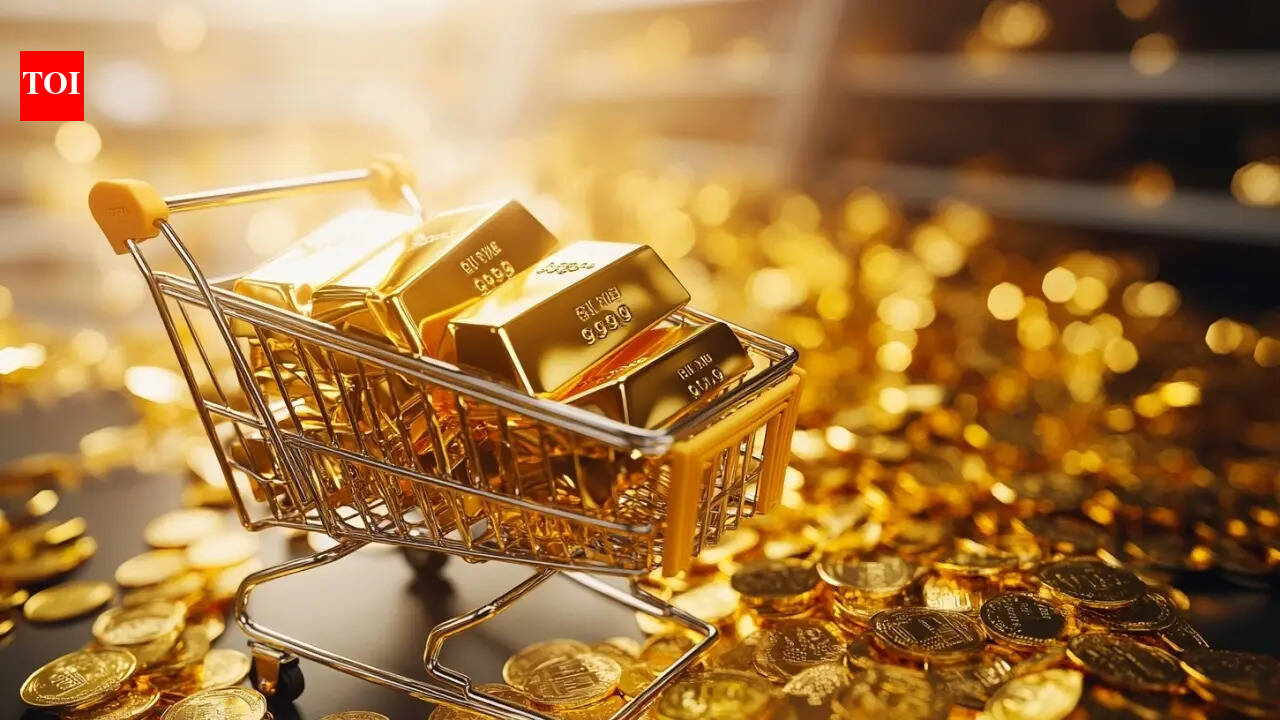
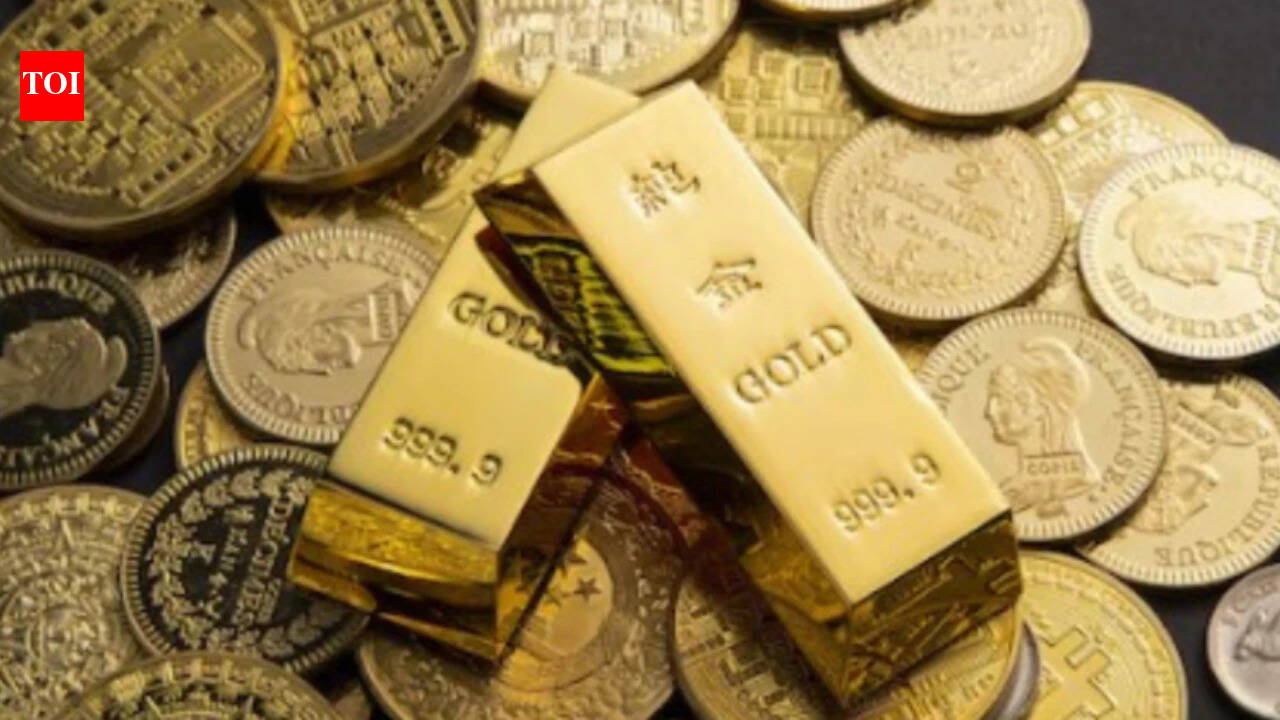
Gold price prediction: Gold prices are rallying again on the hopes of US Federal Reserve rate cut expectations, and China’s gold buying. However, Praveen Singh, Senior Fundamental Research Analyst- Currencies and Commodities at Mirae Asset Sharekhan recommends buying the dip, rather than chasing the rally. The analyst shares his views on gold price outlook and what levels investors should watch out for:Gold Performance:
- Although expectations of the ongoing US shutdown ending soon boosted risk appetite, spot gold extended its Friday’s rally to surge sharply higher on Monday on the Fed rate cut expectations, wobbly US Dollar and China’s Central Bank adding gold reserves for 12th month in a row in October.
- Gold gained on inflation concerns also as President Donald Trump once again floated the idea of sending Americans rebate checks of at least $2000 a person (excluding high income people) for the tariffs that his administration has collected.
- At the time of writing this article, spot gold was trading with a huge daily gain of 2.34% at $4,096, while
MCX Gold December contract at Rs 123,707 was up 2.07%. - In the week ending November 7, spot gold prices posted a weekly loss of $1 to close at $4001, which amounts to a third straight weekly loss per se.
US Shutdown likely to end:
- On November 9, the US Senate advanced a plan to end the longest-ever US government shutdown that entered the week. A faction of moderate democrats defied their party leaders and voted to support a deal to end the ongoing shutdown.
- As flight disruptions have worsened due heavy snow, the ongoing shutdown may intensify the stress on the US air-traffic system ahead of the busy Thanksgiving travel period as controllers may have to continue to work without pay checks.
Fedspeak:
- Federal Reserve Bank of St Louis President Musalem expects the US economy to bounce back strongly early next year due to rate cuts, fiscal support, deregulation and the government shutdown ending. He urged the Fed officials to be cautious on additional rate cuts as he thinks that the current Fed policy is close to the level where it would not put any downward pressure on inflation.
- On the contrary, Federal Reserve Bank of San Francisco President Mary Daly warned against keeping interest rates too high for too long due to softening labour market and moderating wage growth.
US Dollar Index and yields:
- At the time of writing this article, the US Dollar Index at 99.72 was up around 0.15% for the day. Day’s low has been 99.45.
- Ten-year US yields at 4.11% were up by around 1.50 bps, while 2-year yields at 3.59% were up by around 3 bps.
US Data roundup:
- US employment report has not been published in November, which makes it the second month without a national employment report.
- Bloomberg estimates that depending on the US government reopening date, September employment report may be published on November 19/November 26. Even then the report may not offer true picture due to uncertainty over Federal government employment figures. Other reports will also be delayed.
- October CPI report may not be released though.
- Data released in the week ending November 7 were largely mixed as US ISM manufacturing trailed the forecast and contracted for the seventh straight month in October, while ISM services at 52.40 beat the forecast of 50.80 to rise at the fastest pace since February.
- University of Michigan Consumer sentiment fell from 53.60 in October to 50.30 in November, near record-low and even lower than 2008 global financial crisis and Covid levels.
- It is to be noted that ADP data released last week showed that US companies added 42K jobs in October, which signalled a moderate stabilization in the US job market. Challenger job cuts report showed almost 950,000 US job cuts this year through September, the highest year-to-date total since 2020.
Gold ETFs and COMEX inventory:
- Total known global gold ETF holdings rose for two straight days through November 7 to 97.24 MOz, though were down for the third consecutive weeks. Nonetheless, holdings are up 17.36% this year and are hovering around 3-year high level.
- China’s domestic gold ETF holdings rose by 79.015 tons in January to September period, which is a steep rise compared to the 29.927 tons-gain during the same period last year.
- COMEX gold eligible inventory at 17.94Moz is around the lowest level since April.
China’s Central Bank buys gold for the 12th month in a row:
- China’s official gold reserves stood at 74.09 MOz at the end of October, up from 74.06 MOz a month earlier, which means that PBoC bought nearly one ton of gold in October.
- Uzbekistan’s gold reserves reached $47.85 billion October, a record high for the fourth straight month.
China’s gold consumption dips:
- According to a statement from the China Gold Association, the nation’s gold consumption dropped 7.95% y-o-y to 682.73 tons in the January-September period.
Gold Price Outlook:
- A possible end to the US government shutdown has turned investors’ attention back to the Fed rate expectations in October as the upcoming US data may show deteriorating economy.
- Gold is benefiting due to China extending its buying spree and inflation concerns, too.
- However, steady US yields and Dollar may limit the gains barring
- In the very short-term, gold is expected to test the strong resistance around $4160, a successful breach of which would open the way to test the resistance in $4190-$4200 zone.
- Dip buying is preferred over chasing the rally.
- Support is at $4075/$4025/$3990.
Silver: Sharply up
- MCX Silver December contract surged to 153,650, up 4% for the day.
- The metal may test the resistance around Rs 158,500 as it has taken out the strong resistance at $49.30 (Rs 150,000), which will act as a support now.
- Next support comes in at $48.50 (Rs 148,000).
- Dip buying is preferred over chasing the current rally.
(Disclaimer: Recommendations and views on the stock market, other asset classes or personal finance management tips given by experts are their own. These opinions do not represent the views of The Times of India)


Travelers walk through the terminal at Ronald Reagan Washington National Airport on May 1, 2026.
Leslie Josephs | CNBC
Higher fuel prices are testing how badly consumers want to travel this summer, whether flying or driving.
Airfare hasn’t been this high since May 2022, when airlines stumbled out of the pandemic with aircraft and employee shortages to face hordes of consumers ready for “revenge travel.” Gasoline is above $4 a gallon and could get closer to $5 a gallon this summer, AAA warned this week.
Jet fuel prices doubled in the span of less than three months this year after the U.S. and Israel attacked Iran, kicking off a conflict that has left a key shipping channel effectively closed.
Domestic round-trip airfares in April averaged $623, the highest in nearly four years, according to data from the Airlines Reporting Corporation, which tracks travel agency ticket sales. Jet fuel is the second-biggest expense for airlines after labor, and carriers say they are increasingly passing those costs along to customers.
Separately, airlines are also trimming their growth plans because of higher fuel costs. Even if a route isn’t cut, fewer flights on certain routes means that customers will have fewer seats to choose from and, with demand robust, that could drive up prices even more.
Spirit Airlines, the most famous budget carrier in the U.S., shut down earlier this month, and partially blamed jet fuel prices for its failure to emerge from near back-to-back bankruptcies. It was the biggest U.S. airline collapse in decades. Other airlines swooped in to snatch up those customers in the aftermath, but the carrier’s demise removes a main purveyor of low fares.
The fuel spikes have set the stage for higher fares and more expensive gas station visits this summer. The start of the peak travel season Memorial Day weekend will be a taste of how much travelers will shell out to fly while everything from groceries to clothing has become more expensive this year.
The Transportation Security Administration said it expects to screen 18.3 million people between Thursday and next Wednesday, compared with the 18.5 million it saw over a similar period last year.
Lackluster road trip growth
Road trips won’t be a bargain either. AAA this week forecast 39.1 million people will drive at least 50 miles between Thursday and Monday, up just 0.1% compared with last Memorial Day weekend. That was the least growth in a decade, AAA told CNBC.
Gasoline price site GasBuddy forecast this week that prices across the U.S. will average $4.48 on Memorial Day, up from $3.14 last year, and that prices could average $4.80 through Labor Day “if the Strait of Hormuz remains closed for a significant portion of the summer.”
A customer fills his vehicle with fuel at a gas station in Miami, April 13, 2026.
Joe Raedle | Getty Images
Still flying
Leisure travel intentions in the U.S. were slightly lower in March — at 82.8% compared with 83.1% the same month a year earlier — though they are still relatively high, UBS said in a note Monday.
“We believe the year-over-year moderation in travel intentions this year was likely due to higher jet fuel and other geopolitical concerns,” UBS airline analyst Atul Maheswari wrote. He added that the intent to travel is near the highest points in the past nine years.
So far, airline executives said, customers are still booking, and executives are optimistic about the summer travel season. They’ve also said they’re expecting a boost from the FIFA World Cup, which will be held in June and July in the U.S., Canada and Mexico, and from major concerts such as Harry Styles’ residencies in Amsterdam and London this summer.
United Airlines said it expects to carry 53 million travelers between June and August, up 3 million people from last year. American Airlines has forecast 75 million customers between May 21 and Sept. 8, after Labor Day, topping its previous record, in 2019.
Refueling trucks at LaGuardia Airport in New York, April 23, 2026.
Zhang Fengguo | Xinhua News Agency | Getty Images
‘What are you waiting for?’
Airlines have been pruning their schedules and axing unprofitable or less profitable routes but have been eager to fill in the gaps after Spirit’s collapse.
Travelers can still find deals if they’re flexible, said Kyle Potter, who runs the Thrifty Traveler website. He recommended using tools such as the “Explorer” tool in Google Flights that allows users to look up destinations by the length of trip and by month in a map view.
He also suggested flyers consider traveling on a Tuesday or Wednesday, when fares and traffic are often lower.
“That, in many cases, can save you hundreds of dollars per ticket, and multiply that by a family of four,” he said.
He had a simple message for travelers sitting on piles of frequent flyer miles.
“Now is the time to use your miles or your credit card points or both,” he said, warning that miles can end up devalued. “What are you waiting for? I think a lot of people hoard their miles because they want to go to to Europe in 2027.”
— CNBC’s Contessa Brewer contributed to this report.
Business
‘Potential to diversify’: US state secretary Rubio pushes for US energy supplies to India in meeting with PM Modi
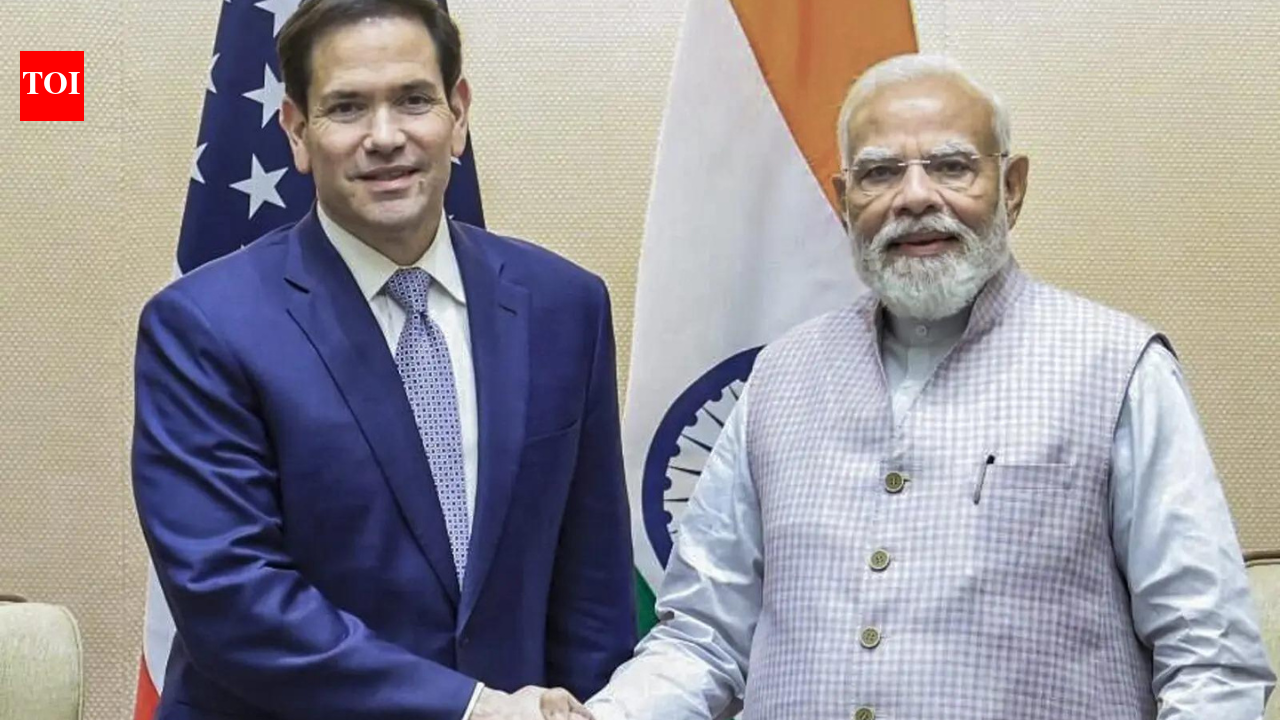
US Secretary of State Marco Rubio emphasised Washington’s intent to prevent geopolitical disruptions from distorting global energy markets, as tensions linked to the Iran conflict continue to affect oil supply routes and pricing dynamics.During discussions on energy security, Rubio’s office, quoted by Reuters, stressed that the US sees energy exports as a key instrument in strengthening partnerships, particularly with India, which remains a major crude importer navigating supply diversification challenges.In that context, Rubio said, “US energy products have the potential to diversify India’s energy supply.” He also emphasized a broader US position on global energy stability amid the Iran-related crisis, with his office adding, “the United States will not let Iran hold the global energy market hostage.”The remarks come as the Iran war has disrupted global energy flows and contributed to volatility in oil markets, complicating efforts by Washington to reduce India’s reliance on Russian crude imports. The instability has added a new layer of complexity to US energy diplomacy in Asia, where supply security has become increasingly central to strategic engagement.Officials indicated that the ripple effects of the conflict have not only impacted global pricing but also slowed parts of Washington’s broader effort to realign energy trade flows away from sanctioned or high-risk suppliers.Rubio’s comments were made alongside broader engagement in New Delhi, where he met Indian leadership to discuss energy cooperation, trade expansion under the “Mission 500” framework, and Indo-Pacific strategic alignment through the Quad.In earlier public remarks, Rubio had also signalled a more aggressive US commercial energy posture toward India, saying, “We want to sell them as much energy as they’ll buy.”Separately, he reiterated India’s importance in Washington’s strategic outlook, describing it as a key partner in shaping long-term regional stability while the US continues to manage the economic and geopolitical spillovers of the Iran conflict.

Rolfo | Moment | Getty Images
This summer, mega artist Harry Styles will take the stage at Madison Square Garden in New York City for an exclusive 30-show residency – his only planned stop in the country and a show that’s garnered intense attention since its announcement.
Despite her best efforts, Shira Elfassy won’t be there.
“His tickets were absurd,” Elfassy, 29, told CNBC. “It felt like an insult going in and seeing, like, not only can I not get in, not only are there no tickets left, but even then, the most basic price point is $500 for a nose-bleed seat — and this is becoming commonplace.”
Instead, Elfassy said she got tickets to see other artists live, like Florence + the Machine and Olivia Rodrigo, at far lower price points. She said feeling “priced out” of some concerts is now a common occurrence.
“It’s just a weird dynamic now. … At this point, if I have to make the decision between making more summer plans or hanging out with my friends — or even just [to] pay rent — or I can go to this concert, it’s a no-brainer,” she said. “But it didn’t used to be that way.”
Elfassy represents a growing cohort of consumers who aren’t willing to keep up with the rising prices for live music, creating a K-shaped demand curve where higher-income consumers are spending more — and keeping prices inflated — while lower-income consumers are pulling back.
That dynamic has played out across discretionary spending categories, like retail, dining and travel, as Americans grapple with persistent inflation, economic uncertainty and, now, soaring gas prices.
In live music, this K-shaped environment is spurring fears that the lower end of the market is falling out entirely.
Some are calling the demand shifts “blue dot fever,” named for the blue dots on Ticketmaster seating maps that denote an unsold ticket. For some artists, it’s forcing them to take a critical look at their performances. Post Malone, Zayn and The Pussycat Dolls are just a few examples of artists who have canceled shows or tours in recent months, with the last group openly admitting that poor ticket sales was the catalyst.
Last summer, even before the most recent pricing pressures, industry research suggested higher ticket prices were helping to prop up the overall health of the market. Goldman Sachs analysts wrote in a 2025 report that demand for live music was expected to grow at a 7.2% compounded annual growth rate between 2024 and 2030.
Average ticket price for a concert in one of the top 100 global tours, the report found, was $136 in 2024, up 50% from an average of $91 in 2019.
How inflation is changing concert spending
Several of the major ticketing companies told CNBC they’re not seeing more show cancellations this summer than an average year.
“Of all the shows Live Nation has on the books this year, less than 1% have been cancelled,” a spokesperson for the Ticketmaster parent said. “That’s not ‘blue dot fever’ — it’s a normal touring year; in fact, 2026 is shaping up to be a record with concert ticket sales up 11% for the year.”
The spokesperson added that roughly 70% of tickets sold on its platform are priced under $100.
Live Nation and Ticketmaster have faced scrutiny over the company’s ticketing practices and dominant influence in the music industry. The company faced legal challenges over alleged anticompetitive behavior and reached a settlement with the Department of Justice in March. A federal jury found last month that Live Nation held an anticompetitive monopoly, though the company said in a statement at the time, “The jury’s verdict is not the last word on this matter.”
The Live Nation website arranged on a laptop in New York, US, on Wednesday, April 17, 2024.
Gabby Jones | Bloomberg | Getty Images
StubHub, a ticket reseller, told CNBC that the company is seeing the K-shaped pattern take shape in live music, with demand diverging fast between various events.
While StubHub said overall concert demand is up nearly 10% year-over-year, it’s not across the board. Ticket demand for stadium-scale events is up significantly, while demand for mid-size and smaller venues is waning.
The events that are struggling to sell are facing a “supply-sizing problem,” according to Jill Gonzalez, head of consumer communications at StubHub. The events earning the strongest fan attention, she said, are stadium tours, residencies and marquee festivals.
“What our data makes clear is that fan demand for live music hasn’t softened, but it’s sharpened,” Gonzalez told CNBC. “Fans are making deliberate choices about where they spend, and when they decide a show is worth it, the demand signal is as strong as anything we’ve seen on our platform.”
Ticket platform SeatGeek said while more artists are announcing tours, the resale environment remains healthy.
“If you have more artists that are flooding the market with tours, you’re going to have the gross number of cancellations pick up year-over-year, so that’s expected,” said Oliver Marvin, the company’s senior director of strategic finance. “But the overall number, cancellations as a percentage of people who are out on tour, is not too much different than what we’ve seen in prior years.”
He added that the company is seeing some consumers dive in for last-minute tickets out of hope the prices will drop for tours that aren’t garnering as much immediate demand.
Why stadium tours still draw big demand
Experts say dropping demand for some shows may be more nuanced than what meets the eye.
As prices everywhere rise, and consumers begin to be more intentional about how they’re spending their money, the blame of unsold tickets may be more appropriately placed on the macroeconomic environment rather than on the artists themselves, according to Sam Howard-Spink, the director of music business at New York University.
“It’s really mostly to do with the economics of live performance and touring right now, which is also at the moment, I would say, very closely tied to economic conditions and cost-of-living questions,” Howard-Spink said.
Tighter spending among fans can turn a tour misstep into a disaster, he suggested, like if an artist plans dates at an inappropriately sizes venue or in an off-base market. While nostalgia for older acts can occasionally draw crowds, it’s struggling to outweigh all other factors.
And while bigger artists can still sell out a stadium, less-popular acts are falling short.
“Harry Styles, Bad Bunny, Lady Gaga, Ariana Grande — these are acts of, ‘I’m not really going to have too much trouble,'” he said. “But if you’re talking about like … an early 2000s band that might not just be able to pull in those crowds, maybe they are overconfident in the kinds of venues that they think that they can fill up.”
Artur Debat | Moment | Getty Images
Howard-Spink added that the business of music has long been considered largely “recession-resistant,” even weathering the pandemic well. But because concert tickets are a scarce resource, as opposed to music streaming, it’s allowed the prices to rise rapidly.
Music publicist Eric Alper noted artists couldn’t have foreseen these macroeconomic factors currently at play when booking out their tours months in advance. There’s also more artists on tour this year than past years, he said, crowding the schedule.
With prices broadly higher, fans are also seeking out more experiences that give them a bang for their buck, he added, as the live music scene sees a rise in residencies, along with unique new venues like The Sphere in Las Vegas.
“What people want, they want the choreography, they want the lights, they want the superior sound, they want great sightlines,” Alper said. “They’re not just going to sit there and spend $150 to go watch a band play with very bare bones.”
Still, Alper said, he believes the diehard fans are willing to pay up.
“If you’re a fan of an artist, I don’t think you care about the high ticket prices as much as people think that they do,” Alper said. “People want the experience, and they also want to tell people that they were there.”


Kyle Busch’s iconic No. 18 will appear in the Indianapolis 500 in tribute to late driver

Selena Gomez’s new adult film role leaves fans curious about Benny Blanco’s reaction

White House locked down after shooting involving Secret Service, suspect killed

-

 Entertainment1 week ago
Where Pete Davidson, Elsie Hewitt stand after breakup: Details revealed
-

 Entertainment1 week ago
Emilia Clarke recalls near-death incident while filming ‘Game of Thrones’
-

 Politics1 week ago
Rising diesel costs from Iran war strain US school budgets
-

 Politics1 week ago
UK’s Starmer faces survival battle as potential rivals circle
-

 Entertainment1 week ago
Drake drops highly anticipated "Iceman" album, plus two surprise albums
-

 Tech1 week ago
Greg Brockman Officially Takes Control of OpenAI’s Products in Latest Shakeup
-

 Tech7 days ago
Why Is Your Grill So Dumb? The Best Grills Set Temp Like an Oven
-
 Business1 week ago
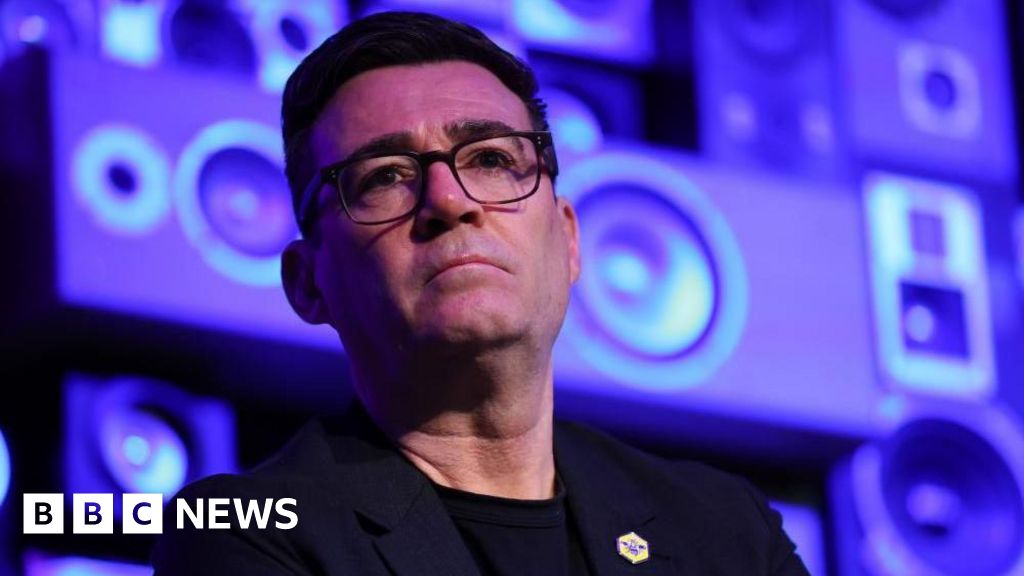
UK borrowing costs rise and pound falls as leadership drama continues