

Tech
Graffiti framework lets people personalize online social spaces while staying connected with others

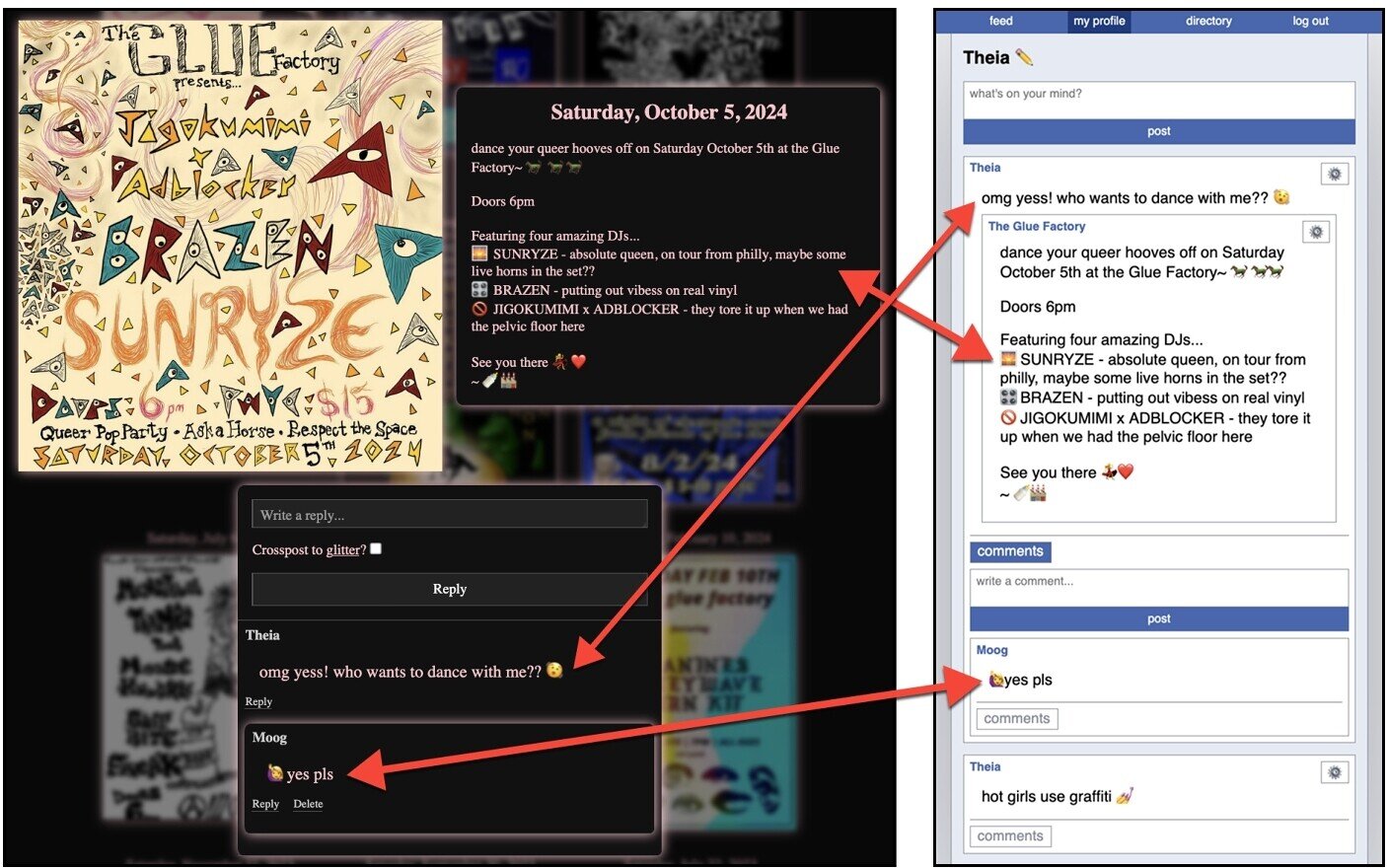
Say a local concert venue wants to engage its community by giving social media followers an easy way to share and comment on new music from emerging artists. Rather than working within the constraints of existing social platforms, the venue might want to create its own social app with the functionality that would be best for its community. But building a new social app from scratch involves many complicated programming steps, and even if the venue can create a customized app, the organization’s followers may be unwilling to join the new platform because it could mean leaving their connections and data behind.
Now, researchers from MIT have launched a framework called Graffiti that makes building personalized social applications easier, while allowing users to migrate between multiple applications without losing their friends or data.
“We want to empower people to have control over their own designs rather than having them dictated from the top down,” says electrical engineering and computer science graduate student Theia Henderson.
Henderson and her colleagues designed Graffiti with a flexible structure so individuals have the freedom to create a variety of customized applications, from messenger apps like WhatsApp to microblogging platforms like X to location-based social networking sites like Nextdoor, all using only front-end development tools like HTML.
The protocol ensures all applications can interoperate, so content posted on one application can appear on any other application, even those with disparate designs or functionality. Importantly, Graffiti users retain control of their data, which is stored on a decentralized infrastructure rather than being held by a specific application.
While the pros and cons of implementing Graffiti at scale remain to be fully explored, the researchers hope this new approach can someday lead to healthier online interactions.
“We’ve shown that you can have a rich social ecosystem where everyone owns their own data and can use whatever applications they want to interact with whoever they want in whatever way they want. And they can have their own experiences without losing connection with the people they want to stay connected with,” says David Karger, professor of EECS and a member of the Computer Science and Artificial Intelligence Laboratory (CSAIL).
Henderson, the lead author, and Karger are joined by MIT Research Scientist David D. Clark on a paper about Graffiti, which will be presented at the ACM Symposium on User Interface Software and Technology.
Personalized, integrated applications
With Graffiti, the researchers had two main goals: to lower the barrier to creating personalized social applications and to enable those personalized applications to interoperate without requiring permission from developers.
To make the design process easier, they built a collective back-end infrastructure that all applications access to store and share content. This means developers don’t need to write any complex server code. Instead, designing a Graffiti application is more like making a website using popular tools like Vue.
Developers can also easily introduce new features and new types of content, giving them more freedom and fostering creativity.
“Graffiti is so straightforward that we used it as the infrastructure for the intro to web design class I teach, and students were able to write the front-end very easily to come up with all sorts of applications,” Karger says.
The open, interoperable nature of Graffiti means no one entity has the power to set a moderation policy for the entire platform. Instead, multiple competing and contradictory moderation services can operate, and people can choose the ones they like.
Graffiti uses the idea of “total reification,” where every action taken in Graffiti, such as liking, sharing, or blocking a post, is represented and stored as its own piece of data. A user can configure their social application to interpret or ignore those data using its own rules.
For instance, if an application is designed so a certain user is a moderator, posts blocked by that user won’t appear in the application. But for an application with different rules where that person isn’t considered a moderator, other users might just see a warning or no flag at all.
“Theia’s system lets each person pick their own moderators, avoiding the one-sized-fits-all approach to moderation taken by the major social platforms,” Karger says.
But at the same time, having no central moderator means there is no one to remove content from the platform that might be offensive or illegal.
“We need to do more research to understand if that is going to provide real, damaging consequences or if the kind of personal moderation we created can provide the protections people need,” he adds.
Empowering social media users
The researchers also had to overcome a problem known as context collapse, which conflicts with their goal of interoperation.
For instance, context collapse would occur if a person’s Tinder profile appeared on LinkedIn, or if a post intended for one group, like close friends, would create conflict with another group, such as family members. Context collapse can lead to anxiety and have social repercussions for the user and their different communities.
“We realize that interoperability can sometimes be a bad thing. People have boundaries between different social contexts, and we didn’t want to violate those,” Henderson says.
To avoid context collapse, the researchers designed Graffiti so all content is organized into distinct channels. Channels are flexible and can represent a variety of contexts, such as people, applications, locations, etc.
If a user’s post appears in an application channel but not their personal channel, others using that application will see the post, but those who only follow this user will not.
“Individuals should have the power to choose the audience for whatever they want to say,” Karger adds.
The researchers created multiple Graffiti applications to showcase personalization and interoperability, including a community-specific application for a local concert venue, a text-centric microblogging platform patterned off X, a Wikipedia-like application that enables collective editing, and a real-time messaging app with multiple moderation schemes patterned off WhatsApp and Slack.
“It also leaves room to create so many social applications people haven’t thought of yet. I’m really excited to see what people come up with when they are given full creative freedom,” Henderson says.
In the future, she and her colleagues want to explore additional social applications they could build with Graffiti. They also intend to incorporate tools like graphical editors to simplify the design process. In addition, they want to strengthen Graffiti’s security and privacy.
And while there is still a long way to go before Graffiti could be implemented at scale, the researchers are currently running a user study as they explore the potential positive and negative impacts the system could have on the social media landscape.
More information:
Theia Henderson et al, Graffiti: Enabling an Ecosystem of Personalized and Interoperable Social Applications, Proceedings of the 38th Annual ACM Symposium on User Interface Software and Technology (2025). DOI: 10.1145/3746059.3747627
This story is republished courtesy of MIT News (web.mit.edu/newsoffice/), a popular site that covers news about MIT research, innovation and teaching.
Citation:
Graffiti framework lets people personalize online social spaces while staying connected with others (2025, October 1)
retrieved 1 October 2025
from https://techxplore.com/news/2025-10-graffiti-framework-people-personalize-online.html
This document is subject to copyright. Apart from any fair dealing for the purpose of private study or research, no
part may be reproduced without the written permission. The content is provided for information purposes only.









Tech
This Backpack From Topo Designs Will Happily Tag Along to Europe, Down a Dusty Trail, or to Starbucks
As we get out of the house, the gear-obsessed WIRED Reviews team is writing about our favorite bags and EDCs. Today, reviewer Martin Cizmar raves about his Topo Designs backpack. You can also check out other Bag Check stories where WIRED writers share their carryall of choice.
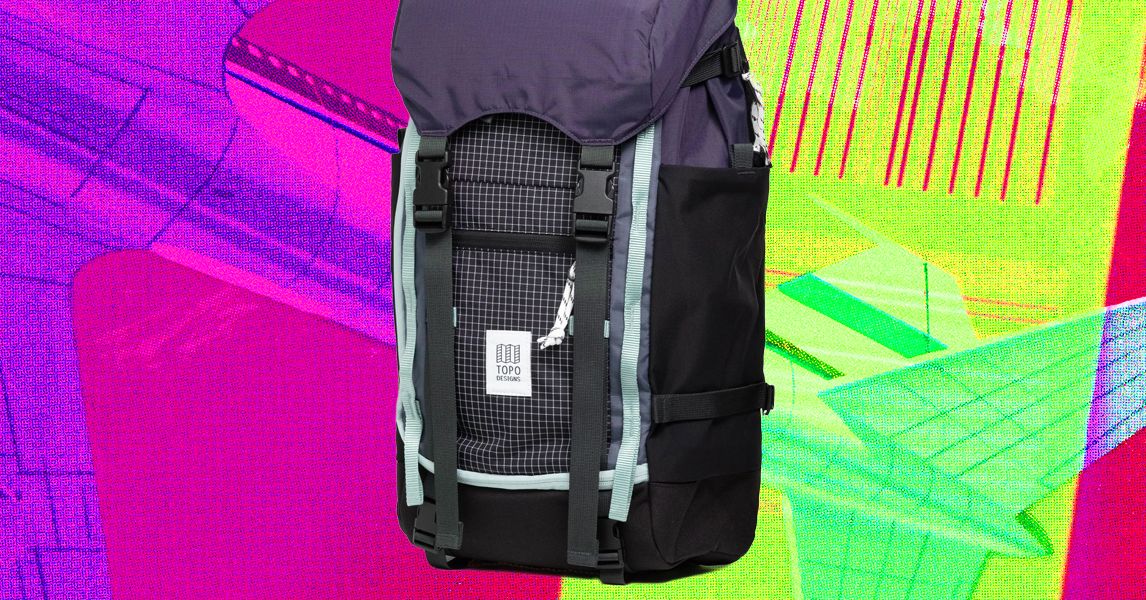
Topo Designs may just make the best bags in the world. The Denver-based gorpcore brand sells gear that looks cool, lasts forever, and has every feature a sensible person desires in a bag without making the product feel overbuilt. If I ever win the lottery, I won’t tell anyone, but there will be signs—like me hauling groceries from Trader Joe’s in two Mountain Gear bags. (I currently use blue polypropylene Ikea bags and shop at Aldi.)
In March, I took a spring break trip to Ireland and Scotland with a carry-on-sized roller bag and the Topo Designs Rover Trail pack as my personal item. I am frequently testing new bags, and I didn’t think much about the decision to commit to the Rover for a week. I quickly learned that you get to know a bag pretty well when you take it on seven flights and stay at eight different hotels in 10 days. By the time I landed back home, I was fully convinced the Rover is the best backpack I have ever used.
Like the six or seven other models of Topo Designs bags I’ve tested—and maybe more extensively than any of the others—the Rover manages to artfully incorporate all the thoughtful little features I appreciated in other backpacks without even a hint of showiness.
At the top of the bag, there’s a zipped compartment that flips open to reveal the rucksack-style opening, which closes with a drawstring. This is where I like to put my keys, any important paperwork I may have on me, and sometimes my wallet. Typically, I find myself double- and triple-checking the zipper to make sure nothing is falling out. No need with the Rover, because inside that zipped compartment, there’s also a clip for keys and an additional zipped mesh sleeve. This feature lets you double-bag anything you don’t want to risk falling out—in my case, passports for myself and my daughter. When I got through the TSA line at the airport, I clipped in my car keys for the week, zipped the passports into the mesh sleeve, and never worried about losing either.

Photograph: Martin Cizmar

Aerodynamic drag is a major “barrier” in high-speed airplanes, automobiles, and bullet trains. This is because a design with less aerodynamic drag allows the aircraft to move at higher speeds with less energy.
When an aircraft or car body moves at high speed, a thin layer of air called the “boundary layer” is formed on its surface. This boundary layer has two states: laminar flow, in which air flows in an orderly fashion, and turbulent flow, which involves turbulence.
The longer the air stays in the laminar flow state with low friction, the smaller the air resistance becomes, but as the air speed increases, it transitions to turbulent flow. The key to reducing aerodynamic drag is how to delay this transition to turbulence.
For more than 80 years, the principle of “the surface of an object must be smooth” has been the basic premise of aeronautical engineering throughout the world in order to suppress the transition to turbulence and reduce aerodynamic drag. This premise was based on the results of a 1940 study by Ichiro Tani, a Japanese aerodynamicist who quantitatively demonstrated the relationship between “surface roughness” (an indicator of the state of the machined surface) and turbulent transition, arguing that surface roughness, which was unavoidable with the manufacturing technology of the time, prevented laminar flow from being realized.
However, in 1989 Tani reinterpreted the experimental data on rough-surface pipes obtained by fluid engineer Johann Nikulase in the 1930s, bringing a new perspective that “roughness may not necessarily only promote turbulent transition and increase fluid resistance.” Inheriting this idea, a research group led by Yasuaki Kohama of Tohoku University experimentally demonstrated in the 1990s that fibrous rough surfaces, which have fine fibrous irregularities on their surface, have the effect of delaying transition under certain conditions.
The same Tohoku University research team recently announced a discovery that significantly advances this trend. Aiko Yakino, associate professor at Tohoku University’s Institute of Fluid Science, and her research group were the first in the world to demonstrate that aerodynamic drag can be reduced by up to 43.6 percent simply by applying distributed micro-roughness (DMR), a surface roughness so fine and irregular that it cannot be distinguished by the naked eye.
This technology is fundamentally different from the “rivulet (shark skin) process,” which is known as a typical aerodynamic drag reduction technology. The rivulet process mimics the fine longitudinal grooves in shark skin, and by carving grooves approximately 0.1 mm wide along the direction of airflow, it aligns the vortices that occur near the wall surface of turbulent airflow areas. DMR, on the other hand, delays the switch from laminar to turbulent flow by means of random and minute irregularities. The flow zones it affects and the mechanisms it employs are based on completely different concepts.
Precise Measurement in a Wind Tunnel Without Support Bars
A key factor in this achievement was the use of a different wind tunnel experiment method than before. Conventional wind tunnel experiments had structural limitations: the support rods and wires essential for supporting the model disrupted the airflow, negating the minute changes in air resistance caused by micro-scale roughness.
The world’s largest 1-meter magnetic support balance system (1m-MSBS), owned by the Institute of Fluid Science, Tohoku University, has fundamentally solved this problem. This device can levitate a streamlined model approximately 1.07 m in length inside a wind tunnel without contact using electromagnetic force. Because it does not use any support rods or other means, it completely eliminates interference with the airflow around the model.
Yakino and his team precisely measured the total drag coefficient on smooth and DMR-coated surfaces over a wide range of Reynolds numbers (ratio of inertial to viscous forces acting on the fluid) (Re = 0.35 x 10⁶ to 3.6 x 10⁶).
Shopping for a Dyson vacuum is an experience. There are many models to navigate and serious price tags on most of them. As someone who tests vacuums for a living, I have to admit that a Dyson blows most other vacuums away. There are a few cheaper models I’ll still grab (check out my full guide to cordless and robot vacuums for more recommendations), but if you’re dreaming of a Dyson, this weekend is a great time to buy.
Several Dyson models I love are on sale for the long weekend. This weekend’s sale includes Dyson’s newest robot vacuum and the PencilVac that I can’t stop using, and my overall favorites like the V15 Detect and Gen5Detect, and more models our team has loved using. Read on to find out every on-sale Dyson I’d buy this weekend.
Best Dyson Vacuums on Sale for Memorial Day
The Best Dyson for the Price
If you’re looking for the best features for the best price, I already recommend the Dyson V15 Detect when it’s not on sale, making this an even better time to buy. You’ll get both a Fluffy Optic cleaner head and a Digital Motorbar cleaner head to use for hard floors, carpet, or rugs, trigger control, and details about the particles you suck up while you vacuum. It’s lightweight and easy to use anywhere in the house, and the hour-long battery life should be plenty for a whole-home clean.
A More Powerful Dyson
Dyson’s more powerful stick vacuum is the Gen5Detect, which is a great option if you have pets since it has a faster motor with more suction power than the V15 Detect to suck up more pet hair (it’s our top vacuum for pet hair for a reason) and has a HEPA filter to keep allergens contained inside of the vacuum instead of being released back into the air. It also comes with a true power button, so you don’t have to hold onto the trigger button the entire time to use it. Similar to the V15 Detect, it comes with both a Digital Motorbar cleaner head and a Fluffy Optic cleaner head to use on carpet and hard floors, respectively. You’ll also get two more attachments, plus a built-in dusting and crevice tool (it’s nice not to have to wonder where this attachment is!) It’s an expensive vacuum, but well worth the investment when it’s on sale.
If You Only Have Hard Floors
I shouldn’t like the PencilVac so much, but I find myself reaching for it often, and I think it’s plenty worth its abilities when it’s on sale. Part of what makes it so easy to grab compared to my other stick vacuums is how easy it is to store and keep charged with the freestanding charging base, letting it stand wherever I like in my home as long as there’s an outlet nearby. The PencilVac has two versions, the Fluffy and Fluffycones, with the latter having a design that has fluffy cone-shaped rollers to best collect debris. It is limited to only hard floors and has a short battery life, but I love how maneuverable and lightweight this vacuum is. It’s usually a high price tag for its abilities, and even on sale, it’s not what I would call cheap, but it’s a great, quick daily vacuum.
Dyson’s Latest Robot Vac
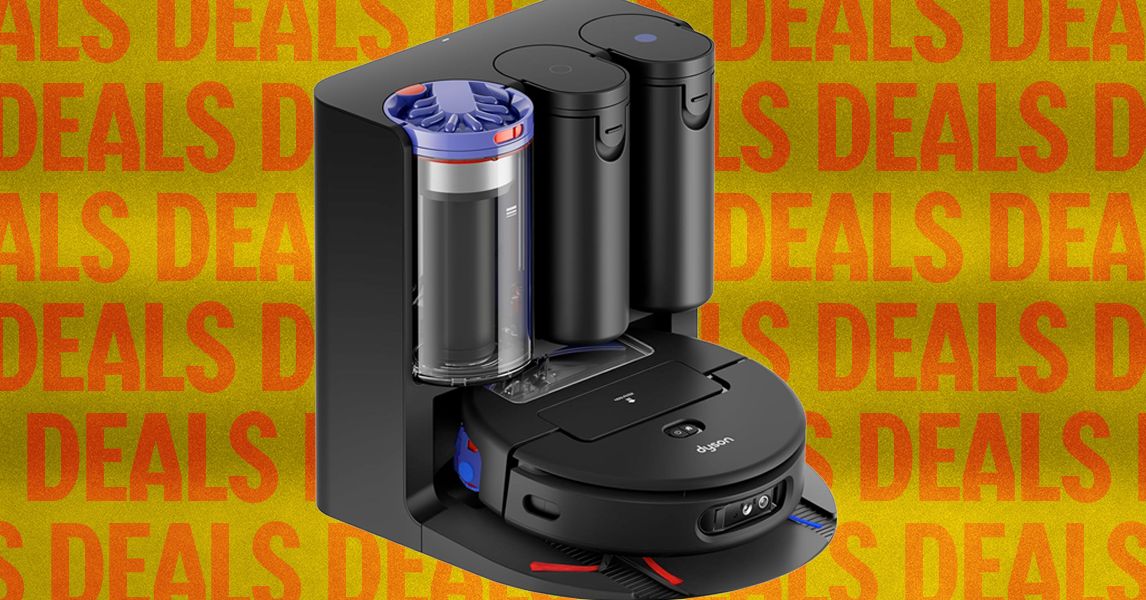
Dyson’s newest robot vacuum, the Spot+Scrub Ai, is its first that doubles as both a vacuum and a mop. It has a large base station that reminds me of Dyson’s vacuums, since the dry debris canister is clear and rounded like the ones you’d see attached to a Dyson stick vacuum or one of its upright models. It does a good job mopping and vacuuming, and can learn multiple floors, and the navigation has improved since the older Dyson 306 Vis Nav. Still, it’s not perfect navigation, since the camera sits below the top of the vacuum and doesn’t always see low-profile furniture that it’ll bump into. If you don’t have a ton of low furniture (or tons of IKEA pieces, as I do), this vacuum could be just perfect for you.
A Stick Vac and Mop

Dyson
V15s Detect Submarine
If you want a vacuum that doubles as a mop, look no further than this variation of the V15 Detect that’s also on sale for the holiday weekend. The V15s Detect Submarine comes with the Submarine wet roller head that transforms it from a regular Dyson vacuum (that still comes with both the Fluffy optic cleaner head and Digital motorbar cleaner head for you to use on hard floors and carpet) into a wet roller mop. You can’t buy a regular V15 Detect and add this attachment on; this V15s is made to work with this Submarine head. You’ll fill the small reservoir on the roller head with water and can start mopping away, but you will have to rinse the mop head afterwards by hand, which is a little gross.
A Handheld-Only Dyson
-
Photograph: Brenda Stolyar
-
-Reviewer-Photo-SOURCE-Brenda-Stolyar.jpg)

If you’re not looking to spend a ton but want a Dyson that’s super portable and great for stairs, cars, and even boats, the Dyson Car+Boat is made for that. It’s in the name, after all. This handheld-only vacuum packs solid power and has a great battery life for a handheld vacuum. It uses a trigger-style control like the V15 Detect, which I actually find ideal for cleaning compact spaces like stairs and cars so that you’re not fumbling to switch it off as you move around the car or to the next set of stairs. It’s an affordable way to get into the Dyson ecosystem, especially since it’s on sale.
Power up with unlimited access to WIRED. Get best-in-class reporting and exclusive subscriber content that’s too important to ignore. Subscribe Today.


Christopher Nolan’s ‘The Odyssey’ trailer sparks major backlash online

2026 NASCAR Odds: Denny Hamlin Favored At Coca-Cola 600, Tyler Reddick Second

5/24: Sunday Morning

-

 Entertainment1 week ago
Where Pete Davidson, Elsie Hewitt stand after breakup: Details revealed
-

 Politics1 week ago
Rising diesel costs from Iran war strain US school budgets
-

 Tech1 week ago
Why Is Your Grill So Dumb? The Best Grills Set Temp Like an Oven
-

 Tech1 week ago
This Solar-Powered Smart Sprinkler Keeps My Lawn Watered Without Any Power Cables
-

 Fashion1 week ago
RMG trade bodies seek policy support from Bangladesh PM
-

 Tech1 week ago
Tesla Reveals New Details About Robotaxi Crashes—and the Humans Involved
-
 Fashion6 days ago
Nigeria Kwara Garment Factory, KWS Garment Production Village ink pact
-

 Sports1 week ago
Pakistan steady after Das ton | The Express Tribune