

Business
Investment in subsea cable network to create thousands of green jobs


A power firm has announced a multimillion-pound investment in the subsea cable network serving Scotland’s islands, in a move expected to create “thousands of high-quality green jobs”.
SSEN Distribution is set to upgrade its network of 113 subsea electricity cables, which provide power to 60 islands, saying it will improve resilience and increasing capacity to meet growing demand.
The work is set to support more than 450 specialised jobs each year for up to eight years – which the company said equates to or more than 3,500 fixed-term roles in and around installation sites and at company bases.
SSEN said the investment – worth up to £950 million – will enable islanders to connect new technologies like electric vehicle (EV) chargers, solar panels and heat pumps to the network.
It is also expected to benefit local energy generators looking to produce and export green power, and to support the decarbonisation of island-based industries such as distilleries.
The announcement was welcomed by Energy Secretary Gillian Martin, who said it would help the country achieve its net zero target.
“This welcome investment by SSEN Distribution will help upgrade the subsea network serving Scotland’s islands, improving its resilience and supporting Scotland’s net zero ambitions,” she said.
“It will also support thousands of high-quality green jobs and drive new growth across the local, regional and national economies as part of our net zero transformation.”
Kevin Galbraith, SSEN Distribution’s subsea project director (large capital delivery), said: “Subsea connections are becoming ever more important as Scotland’s island communities seek to invest in EV charging, heat pumps, and the decarbonisation of their industries.
“In addition to providing the networks fit for supporting this growth in the use of clean power, these framework agreements will also underpin the ambitions of islanders to generate, store, and export more renewable energy.”
The work of upgrading the network will be delivered by five “contract partner” companies, with a “strong focus” on using locally-based supply chains.
The firms are Burntisland-based Briggs Marine; DOF Subsea UK and N-Sea, both of which have bases in Aberdeen; and Enshore Subsea and Jan De Nul.
Specific projects will be allocated according to each contract partner’s specialisms and resources.
SSEN said working with multiple companies will enable multiple subsea cables to be upgraded at the same time during the relatively narrow summer window, when weather conditions are more favourable.
Mr Galbraith went on: “The agreements themselves will ensure delivery of this investment will be rolled out in a seamless, co-ordinated way, and this will provide both customers and supply chains with the certainty they’re looking for.
“This multi-year investment will also provide greater job security and new opportunities for employment in this growing sector.”
Business
India’s fuel demand growth may slow sharply in H2 2026 amid price hikes, austerity push: Report
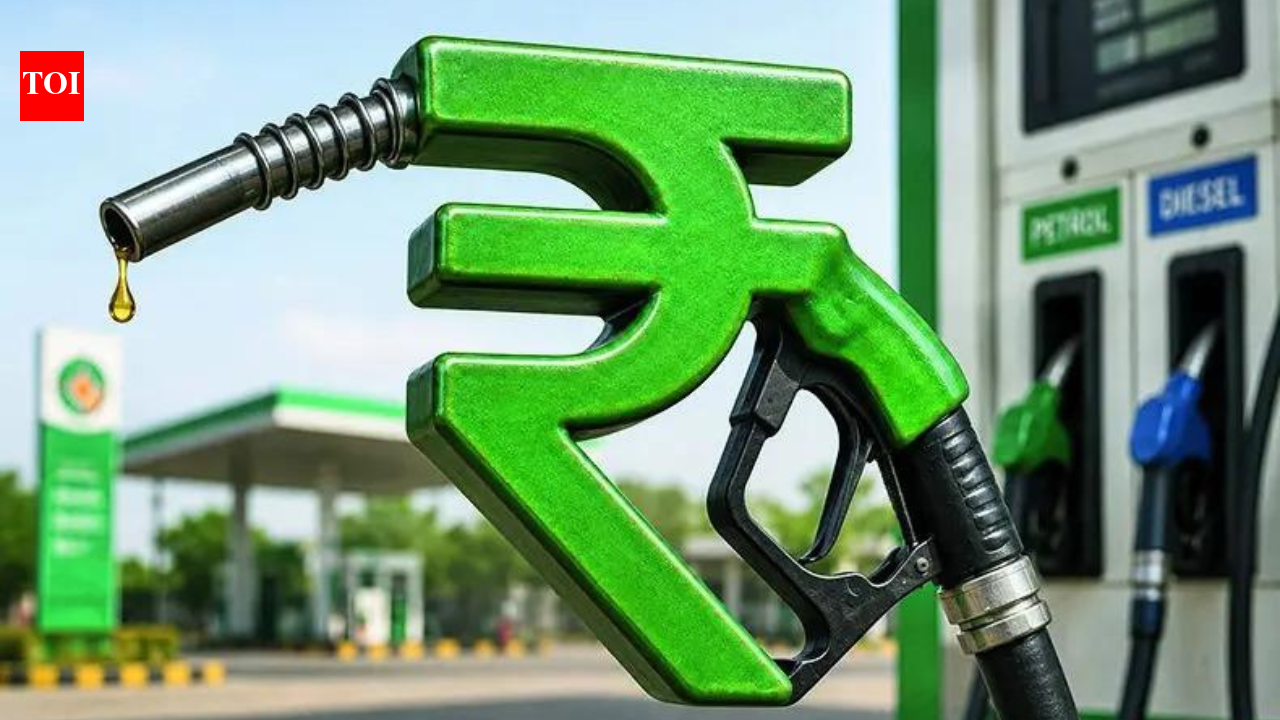
India’s transportation fuel demand growth is expected to slow sharply in the second half of 2026 as higher fuel prices, government-led conservation measures and a weakening rupee weigh on mobility and consumption trends, according to a report.The report by Kpler’s lead analyst (modelling), Elif Binici, revised down India’s 2026 refined products demand growth forecast by around 77,000 barrels per day (kbd), or 39 per cent, to nearly 78 kbd from an earlier estimate of 128 kbd.As per news agency PTI, the downgrade reflects weaker expected growth in petrol and diesel demand due to elevated fuel costs, softer mobility trends and official efforts to conserve fuel amid the ongoing West Asia crisis.Petrol and diesel prices have been increased by around Rs 5 per litre in three instalments since May 15, after oil marketing companies passed on part of the burden of soaring global crude oil prices to consumers.
Petrol demand faces steepest downside risk
The report said petrol demand is likely to see the sharpest slowdown, with projected growth revised down by 25 kbd, from 63 kbd to 38 kbd.Petrol consumption is now estimated at 1,010 kbd, compared to the earlier estimate of 1,035 kbd.According to the report, weaker commuting activity, slower discretionary travel and government fuel-saving campaigns are expected to curb fuel consumption.Annual diesel demand growth was also cut by around 20 kbd, while jet fuel demand growth was nearly halved to about 6 kbd from 11 kbd earlier due to expectations of reduced air travel and tighter spending patterns.“The revisions primarily reflect weaker expected growth in gasoline and diesel demand as higher costs, weaker mobility trends, and recent government-led fuel conservation efforts increasingly feed into domestic transportation activity,” the report said, as quoted by PTI.
Rupee weakness, crude surge add pressure
The report noted that India’s macroeconomic environment has deteriorated since the escalation of the US-Iran conflict, with rising crude import costs, refinery expenses and rupee depreciation increasing inflationary pressure.The rupee has weakened by around 6 per cent since the conflict began and nearly 10 per cent over the past year. Foreign exchange reserves have also reportedly declined by about 4.3 per cent since late February as authorities attempted to stabilise the currency and contain imported inflation.The report said the current average petrol price of around Rs 103 per litre remains well below the estimated breakeven level of nearly Rs 125 per litre.Diesel prices near Rs 94 per litre are also below the estimated breakeven range of Rs 115-120 per litre.Before the recent price revisions, state-run fuel retailers were reportedly losing nearly Rs 1,000 crore daily because rising crude procurement costs and currency weakness outpaced retail fuel prices.“The key issue is the inability of state-run retailers to pass through rising import costs quickly enough to restore profitability,” the report said.
Russian crude continues to support supply security
The report added that India’s dependence on discounted Russian crude imports, estimated at around 1.9-2 million barrels per day, continues to provide stability to the domestic fuel market amid geopolitical uncertainty in West Asia.Policymakers now appear to be prioritising macroeconomic stability, inflation management, foreign exchange preservation and fuel supply security over near-term fuel demand growth.The report warned that unless crude prices ease significantly, the rupee stabilises or additional fiscal support measures are introduced, further fuel price hikes and stricter fuel-conservation measures may become difficult to avoid.
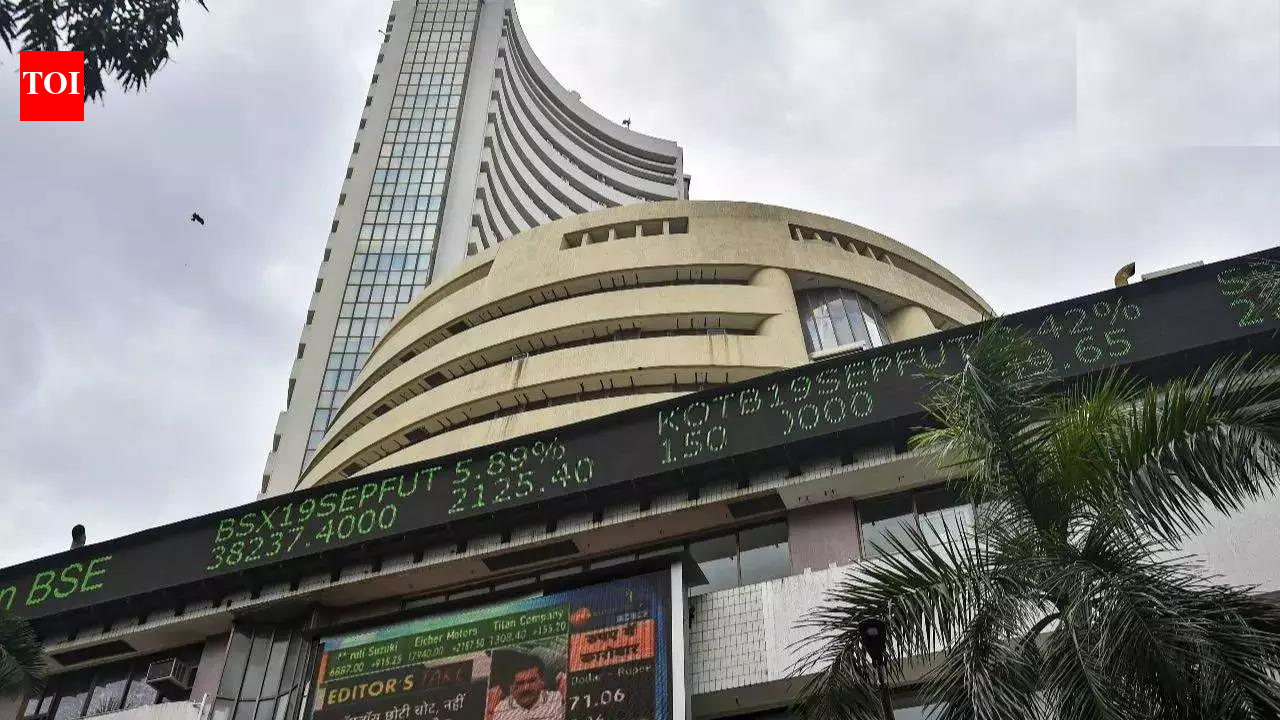
The combined market valuation of six of India’s top-10 most valued companies rose by Rs 74,111.57 crore last week, with Reliance Industries emerging as the biggest gainer. The rally came during a volatile trading week in which the BSE Sensex advanced 177.36 points, or 0.23%.According to news agency ANI, Reliance Industries added Rs 24,696.89 crore to its valuation, taking its total market capitalisation to Rs 18,33,117.70 crore.Tata Consultancy Services saw its valuation jump by Rs 19,338.68 crore to Rs 8,38,401.33 crore, while ICICI Bank added Rs 14,515.93 crore to reach a market capitalisation of Rs 9,06,901.32 crore.The valuation of Life Insurance Corporation of India climbed Rs 9,076.37 crore to Rs 5,14,443.69 crore.Meanwhile, Bajaj Finance gained Rs 3,797.83 crore, taking its valuation to Rs 5,70,515.57 crore, while Larsen & Toubro added Rs 2,685.87 crore to Rs 5,40,228.21 crore.
Airtel, HUL among laggards
On the losing side, Bharti Airtel witnessed the sharpest erosion in market value, losing Rs 20,229.67 crore to settle at Rs 11,40,295.49 crore.The market valuation of Hindustan Unilever declined by Rs 16,212.18 crore to Rs 5,17,380 crore, while State Bank of India lost Rs 12,784.4 crore in valuation to Rs 8,76,077.92 crore.HDFC Bank also saw its market capitalisation dip by Rs 2,094.35 crore to Rs 11,79,974.90 crore.Reliance Industries retained its position as India’s most valued company, followed by HDFC Bank, Bharti Airtel, ICICI Bank, State Bank of India, TCS, Bajaj Finance, Larsen & Toubro, Hindustan Unilever and LIC.
Markets end volatile week with modest gains
Ajit Mishra, SVP, research at Religare Broking Ltd, said markets ended the week with marginal gains amid a “highly volatile and range-bound trading environment”.“Benchmark indices witnessed sharp intraday swings throughout the week, driven by persistent rupee weakness, mixed global cues, sectoral rotation, and continued uncertainty around inflation and interest rates,” he said, as quoted by ANI.Benchmark indices recovered on Friday, with the Sensex closing 231.99 points higher at 75,415.35 and the NSE Nifty rising 64.60 points to settle at 23,719.30.Analysts cited optimism surrounding possible progress in US-Iran peace negotiations and easing Middle East tensions as factors supporting market sentiment.Vinod Nair, head of research at Geojit Investments, was quoted by news agency PTI as saying that domestic markets traded with a “mild positive bias” due to buying at lower levels and constructive global cues.“Globally, the AI investment theme remained the primary driver, while domestically, financial stocks led the gains,” he said.Brent crude prices climbed 2.3% to $104.7 per barrel, while foreign institutional investors (FIIs) sold equities worth Rs 1,891.21 crore in the previous session.

Six supermarket brand eggs cost £1 in 2022. How much are they now, why have they gone up, and is anyone profiteering?
Source link


Prince George set to reconnect with cousin in unexpected twist

Queen Elizabeth II heartbreaking final message for Prince Philip emerges

Proposed US-Iran deal involves opening strait during ceasefire extension: report

-

 Entertainment1 week ago
Where Pete Davidson, Elsie Hewitt stand after breakup: Details revealed
-

 Politics1 week ago
Rising diesel costs from Iran war strain US school budgets
-

 Entertainment1 week ago
Drake drops highly anticipated "Iceman" album, plus two surprise albums
-

 Tech1 week ago
Greg Brockman Officially Takes Control of OpenAI’s Products in Latest Shakeup
-

 Tech1 week ago
Why Is Your Grill So Dumb? The Best Grills Set Temp Like an Oven
-

 Tech1 week ago
This Solar-Powered Smart Sprinkler Keeps My Lawn Watered Without Any Power Cables
-

 Fashion1 week ago
RMG trade bodies seek policy support from Bangladesh PM
-
 Business1 week ago
Oil price gains and Westminster worry sink stocks