

Politics
Iran, US moving closer to ‘finalizing memorandum of understanding’ to end imposed war: Baghaei

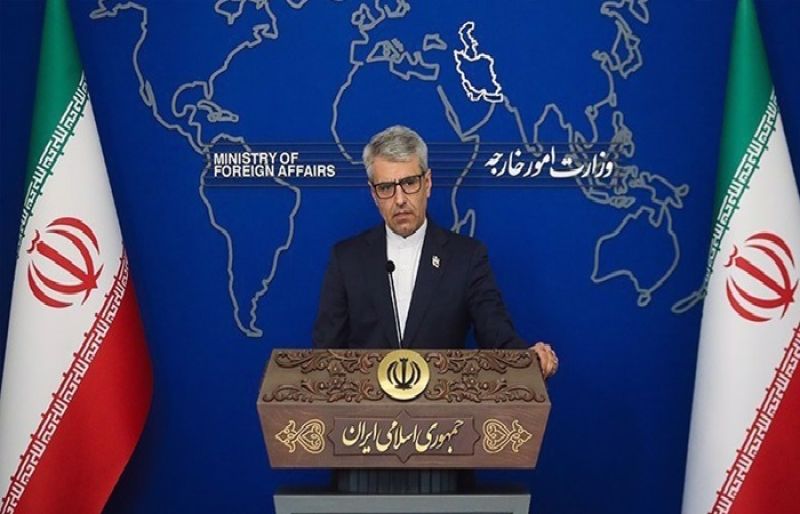
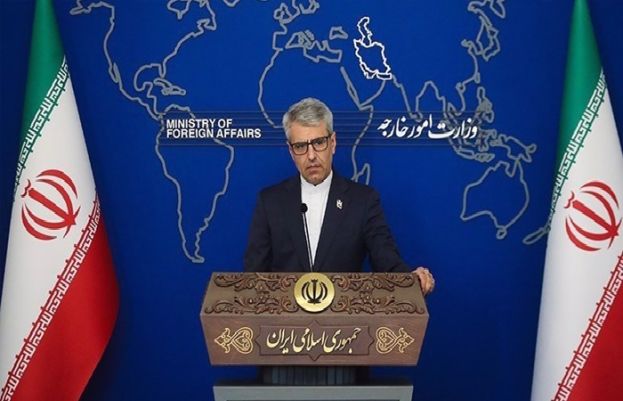
Speaking in a televised interview on Saturday, Baghaei elaborated on a day-long visit by a Pakistani delegation, led by Army Chief Field Marshal Asim Munir, to Tehran, hailing Islamabad’s “important” mediating role in talks between Iran and the US in recent weeks.
“We are now in the finalization stage of this memorandum of understanding. The topics being discussed at this stage focus broadly on ending the war, halting the US naval aggression – what they themselves have labeled a ‘naval blockade’-, and issues related to the release of Iran’s blocked assets,” he said.
He added that the purpose of the Pakistani delegation’s visit was to continue the exchange of messages between Tehran and Washington.
He emphasized that Iran’s focus at this stage remains exclusively on ending the US-Israel imposed war based on the Islamic Republic’s 14-point proposal, which has been shuttled back and forth several times.
Asked whether Tehran and Washington have drawn closer to an agreement or moved further apart following recent meetings between the Pakistani and Iranian authorities, Baghaei said Iran cannot be fully confident that the US approaches will not shift again as before.
However, he acknowledged that after several weeks of dialogue between the two sides, the “process appears to be moving toward a convergence of views.”
Baghaei, who is also the spokesman of the Iranian negotiating team, emphasized that “moving closer” does not mean that Iran and the US are about to reach an understanding. Rather, he explained, it means that “based on a set of parameters, the two sides may be able to achieve a win-win solution.”
He outlined the framework of the negotiations, saying, “Our approach has been to first draft a memorandum of understanding consisting of 14 articles. That memorandum would include the most important issues necessary to end the imposed war and matters of fundamental importance to us.”
“Subsequently, within a reasonable timeframe of 30 to 60 days, the two sides would discuss the details of these issues and ultimately reach a final agreement.”
The criminal US-Israeli aggression against Iran began on February 28 with airstrikes that assassinated senior Iranian officials and commanders, including Leader of the Islamic Revolution Ayatollah Seyyed Ali Khamenei.
Iranian Armed Forces responded by launching daily missile and drone operations targeting locations in the Israeli-occupied territories as well as US military bases and assets across the region.
Furthermore, Iran retaliated against the strikes by closing the Strait of Hormuz, which resulted in a significant increase in oil prices and its by-products.
On April 8, forty days into the war, a Pakistan-brokered temporary ceasefire between Iran and the US took effect.
Negotiations ensued in the Pakistani capital, Islamabad but stopped short of an agreement amid Washington’s maximalist demands and insistence on unreasonable positions.
Strait of Hormuz has nothing to do with US
Elsewhere in his remarks, Baghaei pointed to the issue of the Strait of Hormuz, saying the strategic waterway “has nothing to do with America.”
He added that Iran and Oman, as the coastal states of the Strait of Hormuz, should define a mechanism for it.
Asked whether the Strait of Hormuz is included in the 14-point memorandum, the spokesman said the issue would logically be discussed.
However, he added, putting an end to “US piracy and maritime banditry” against international shipping is even more important than the Strait of Hormuz.
Iran shut down the strait to its enemies and their allies after the unprovoked US-Israeli aggression. Iranian authorities began enforcing much stricter controls last month following US President Donald Trump’s announcement of a blockade targeting Iranian vessels and ports.
Tehran says the measures violate the terms of the Pakistan-brokered ceasefire.
Despite the blockade, shipping activity linked to Iranian crude is continuing.
Nuclear Issue not on the table for now
Asked whether the nuclear issue might be part of any potential agreement, Baghaei responded, “At this stage, we are not discussing the details of the nuclear issue.”
He said Iran knows that its nuclear program has been a “pretext” for two aggressive wars against the Iranian people, adding that the country came under illegal attacks even during nuclear negotiations.
“In later stages – within 30 days, 60 days, or whatever timeframe is ultimately agreed upon – we can discuss the nuclear issue or other mutually agreed matters separately. But at this stage, as stated, all our focus is on ending the war,” the spokesperson emphasized.
Removal of all sanctions, Iran’s constant demand
On the subject of sanctions, Baghaei said Iran has made clear to American parties that sanctions are both “illegal and inhumane.”
Given that Tehran is not discussing details about the nuclear issue at this stage, it is also not discussing the specifics of sanctions removal in this short window.
However, he stressed that Iran’s demand for the removal of all sanctions has been explicitly included in the text.
“This is our constant demand in any interaction with intermediaries,” he noted.
Baghaei stressed that “both the nuclear issue and the issue of releasing Iran’s blocked funds are included in the 14-point memorandum of understanding.”
Pakistan official mediator, Qatar facilitating
Clarifying the role of different countries in the negotiation process, Baghaei said that Pakistan is officially the mediator in the precise sense of the word, while Iran thanks other parties that have at the same time tried to help, including Qatar.
He reiterated that the presence of a Qatari delegation over the past two to three days was aimed at facilitating certain articles of the memorandum of understanding between Iran and the US.
“It is natural that regional countries have concerns about regional peace and security. They have witnessed how actions by the US and the Israeli regime against Iran could trigger conflict across the entire region. Therefore, they have tried not to withhold any help they could offer in this regard,” Baghaei said.
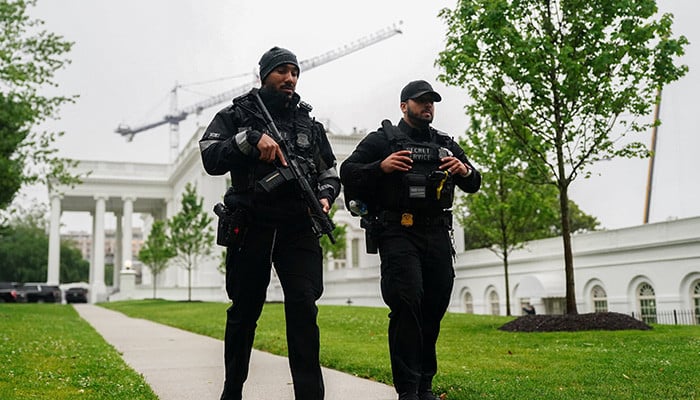
- Security forces flood White House area.
- Police block access near White House complex.
- FBI joins probe near White House perimeter.
Police and security forces swarmed the White House on Saturday evening after shots were fired in the area, authorities said.
US President Donald Trump was at the White House at the time as he worked to negotiate a deal with Iran.
A US law enforcement official said the suspect approached a checkpoint near the White House and opened fire on officers.
Police cordoned off access to the White House, and National Guard troops blocked an AFP reporter from entering the area in downtown Washington.
“FBI is on the scene and supporting Secret Service responding to shots fired near White House grounds,” FBI Director Kash Patel said on X.
Canadian tourist Reid Adrian told AFP he was in the area when “we heard probably 20 to 25 what sounded like fireworks, but they´re gunshots, and then everyone started running.”
Journalists who were on the White House North Lawn at the time said on X that they were ordered to run and shelter in the press briefing room.
ABC News correspondent Selina Wang had been recording a video for social media when the apparent gunfire broke out, capturing the sounds of the shots as she dove to the ground.
“It sounded like dozens of gunshots,” she said on X.
A Secret Service spokesman told AFP in a text message that the agency was still gathering information about the incident.
Trump, 79, has been the target of three alleged assassination attempts, the most recent of which took place on April 25 when an armed man stormed a security checkpoint near the ballroom where Trump was attending a media gala.
This is a developing story and is being updated with more details.
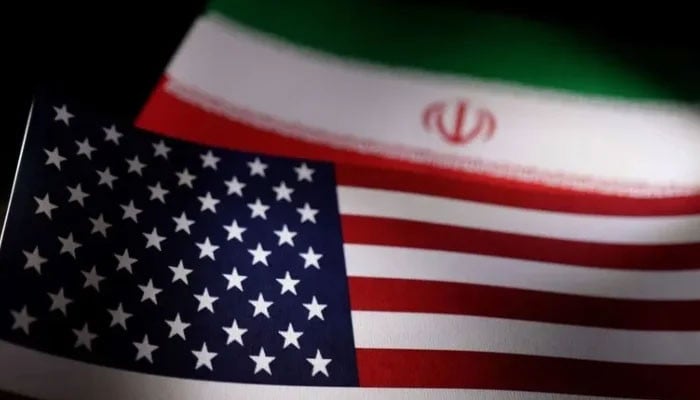
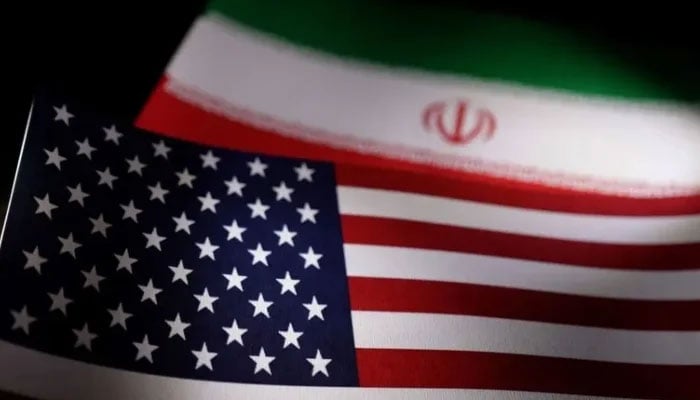
The US and Iran are expected to announce the finalisation of a draft proposal of a peace deal to end the war on all fronts within 24 hours, Washington Times reported citing sources.
Top negotiators from both sides, including Iranian Parliament Speaker Bagher Ghalibaf , US Vice President JD Vance, special envoy Steve Witkoff and President Trump’s son-in-law Jared Kushner, have approved the draft, the US publication reported.
The development came after the US president said he would discuss the latest Iran draft agreement with advisers and might make a decision by Sunday, Axios reported, citing an interview with Trump.
According to the US publication the draft version of the peace deal has been sent to leaders of both nations for final approval.
If successful, the deal would transform what has been a fragile six-week truce into a permanent peace, it added.
Details of the potential agreement between the US and Iran remain elusive and it is unclear how key differences, including the fate of Iran’s nuclear programme and its request for sanctions relief, will be resolved.
It is pertinent to mention here that Pakistan’s civil and military leadership, especially Chief of Defence Forces (CDF) and Chief of Army Staff (COAS) Field Marshal Asim Munir played pivotal role in bridging differences between the US and Iran.
CDF Munir, who served as the chief mediator in the talks, held multiple meetings to ensure the draft could be finalised and sent to leaderships of both sides, said the sources familiar with the matter.
Meanwhile, a Qatari delegation also arrived in Tehran as part of the last diplomatic engagements to push the finalised deal across the finish line.
In Washington, signs suggested a breakthrough, the US publication said, adding that JD Vance made an unplanned return from Ohio, and Trump is expected to hold a conference call with Middle East leaders after convening his national security team at the White House.
Iran’s Foreign Ministry spokesperson also confirmed that Tehran was focused on finalising memorandum of understating with the US at this stage.
Separately, the Financial Times reported, citing people briefed on the talks, that mediators believe they are nearing agreement to extend a US ceasefire with Iran by 60 days and set a framework for talks on Tehran’s nuclear programme.
The deal would include a gradual reopening of the Strait of Hormuz, discussions on diluting or transferring Iran’s stockpile of enriched uranium, and steps by Washington to ease its blockade of Iranian ports and sanctions relief, the report added.
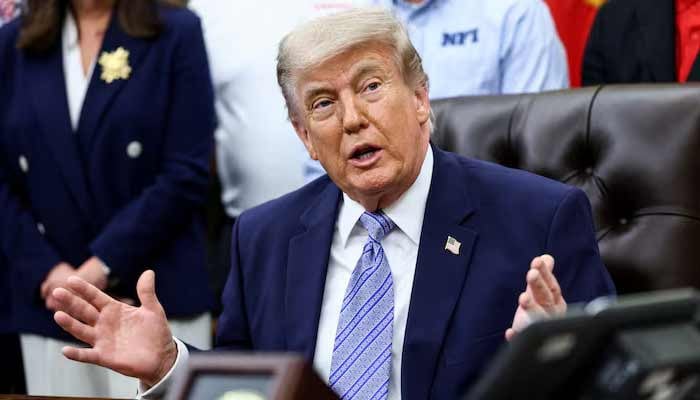
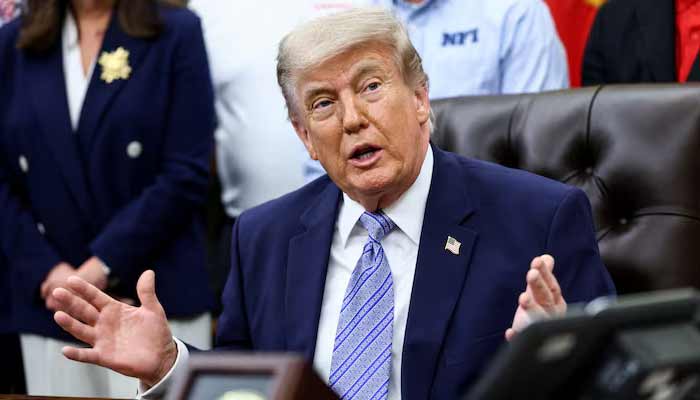
US President Donald Trump may have won just about every battle against Iran, but three months after attacking the Islamic Republic he now faces a bigger question: Is he losing the war?
With Iran’s grip on the Strait of Hormuz, its resistance to nuclear concessions and its theocratic government largely intact, doubts are growing that Trump can translate the US military’s tactical successes into an outcome he can frame convincingly as a geopolitical win.
His repeated claims of complete victory ring hollow, some analysts say, as the two sides teeter between uncertain diplomacy and his on-again-off-again threats to resume strikes, which would be sure to draw Iranian retaliation across the region.
Trump is now at risk of seeing the US and its Gulf Arab allies emerge from the conflict worse off while Iran, though battered militarily and economically, could end up with greater leverage, having shown it can throttle one-fifth of the world’s oil and gas supplies.
The crisis is not yet over, and some experts leave open the possibility Trump might still find a face-saving way out if negotiations break in his favor.
But others predict a grim post-war outlook for Trump.
“We’re three months in, and it’s looking like a war that was designed to be a short-term romp for Trump is turning into a long-term strategic failure,” said Aaron David Miller, a former Middle East negotiator for Republican and Democratic administrations.
For Trump, that matters, especially given his famous sensitivity to being perceived as a loser, an insult he has often lobbed at opponents. In the Iran crisis, he finds himself commander-in-chief of the world’s mightiest military pitted against a second-tier power seemingly convinced it has the upper hand.
And this predicament could make Trump, who has yet to define a clear endgame, more likely to resist any compromise that looks like a retreat from his maximalist positions or a repetition of the 2015 Obama-era nuclear deal with Iran that he scrapped in his first term, analysts say.
Another possibility, analysts say, is that Trump could attempt to shift focus to Cuba, as he has suggested, in hopes of changing the subject and trying to score a potentially easier win.
If so, he might end up misjudging the challenges posed by Havana, much as some Trump aides privately acknowledge that he mistakenly thought the Iran operation would resemble the January 3 raid that captured Venezuela’s president and led to his replacement.
Even so, Trump is not without his defenders.
Alexander Gray, a former senior adviser in Trump’s first term and now chief executive officer of the American Global Strategies consultancy, rejected the notion that the president’s Iran campaign was on the ropes.
He said that the heavy blow to Iranian military capabilities was in itself a “strategic success,” that the war had drawn Gulf states closer to the US and away from China, and that the fate of Iran’s nuclear programme was still to be determined.
There are signs, however, of Trump’s frustration with his inability to control the narrative. He has torn into his critics and accused the news media of “treason.”
The conflict has lasted twice the maximum six-week timeframe that Trump laid out when he joined with Israel in starting the war on February 28. Since then, though his Maga political base has stood by him on the war, cracks have appeared in his once almost unanimous backing from Republican lawmakers.
At the outset, waves of airstrikes quickly degraded Iran’s ballistic missile stockpile, sank much of its navy and killed many top leaders.
But Tehran responded by blocking the strait, which sent energy prices soaring, and attacking Israel and Gulf neighbors. Trump then ordered a blockade of Iran’s ports but that has also failed to bend Tehran to his will.
Iran’s leaders have matched Trump’s triumphalist claims with their own propaganda depicting his campaign as a “crushing defeat,” though it is clear that Iranian officials have overstated their own military prowess.
Shifting Goals still unachieved
Trump had said his objectives in going to war were to close off Iran’s path to a nuclear weapon, end its ability to threaten the region and US interests and make it easier for Iranians to overthrow their rulers.
There is no sign that his often-shifting goals have been achieved, and many analysts say it is unlikely that they will be.
Jonathan Panikoff, a former deputy national intelligence officer for the Middle East, said that while Iran has taken devastating hits, its rulers consider it a success simply to have survived the US assault and learned how much control they can exert over Gulf shipping.
“What they discovered is they can exercise that leverage and with few consequences for them,” said Panikoff, now at the Atlantic Council think tank, adding that Iran appeared confident it could tolerate more economic pain than Trump and outlast him.
Trump’s main stated war aim — Iran’s denuclearisation — also remains unfulfilled, and Tehran has shown little willingness to significantly rein in its programme.
A stockpile of highly enriched uranium is believed to remain buried following US and Israeli airstrikes last June and could be recovered and further processed to bomb grade. Iran says it wants the US to recognise its right to enrich uranium for what it says are peaceful purposes.
Further complicating matters, Iran’s supreme leader has issued a directive that the country’s near-weapons-grade uranium cannot be sent abroad, two senior Iranian officials told Reuters.
Some analysts have suggested that the war could make Iran more, not less, likely to ramp up efforts to develop a nuclear weapon to shield itself like nuclear-armed North Korea.
Another of Trump’s declared goals — forcing Iran to halt support for armed proxy groups — also remains unmet.
Adding to Trump’s challenges, he is now dealing with new Iranian leaders considered even more hardline than their slain predecessors. Post-war, they are widely expected still to have enough remaining missiles and drones to pose a continued danger to their neighbours.
He is also facing fallout with further erosion of relations with traditional European allies, which have mostly refused his calls for assistance in a war they were not consulted about.
China and Russia, meanwhile, have drawn lessons about the US military’s shortcomings against asymmetric Iranian tactics and how some of its weapons supplies have become depleted, analysts said.
Robert Kagan, a senior fellow at the Brookings Institution think tank, has argued that the outcome will be even more of a decisive setback to US standing than its humiliating withdrawals from much longer, bloodier conflicts in Vietnam and Afghanistan because those countries “were far from the main theaters of global competition.”
“There will be no return to the status quo ante, no ultimate American triumph that will undo or overcome the harm done,” he wrote in a recent commentary entitled “Checkmate in Iran” on the Atlantic magazine’s website.


Iran, US moving closer to ‘finalizing memorandum of understanding’ to end imposed war: Baghaei

China to send astronaut on year-long space mission as it eyes 2030 moon landing

Royals take protective step for Beatrice, Eugenie as key appearance looms

-

 Entertainment1 week ago
Where Pete Davidson, Elsie Hewitt stand after breakup: Details revealed
-

 Politics1 week ago
Rising diesel costs from Iran war strain US school budgets
-

 Entertainment1 week ago
Drake drops highly anticipated "Iceman" album, plus two surprise albums
-
 Business1 week ago
UK borrowing costs rise and pound falls as leadership drama continues
-

 Tech1 week ago
Greg Brockman Officially Takes Control of OpenAI’s Products in Latest Shakeup
-

 Tech7 days ago
Why Is Your Grill So Dumb? The Best Grills Set Temp Like an Oven
-

 Tech7 days ago
This Solar-Powered Smart Sprinkler Keeps My Lawn Watered Without Any Power Cables
-

 Fashion1 week ago
RMG trade bodies seek policy support from Bangladesh PM