

Business
SC verdict on Trump tariffs: Dissent highlights India in Russia oil context – The Times of India

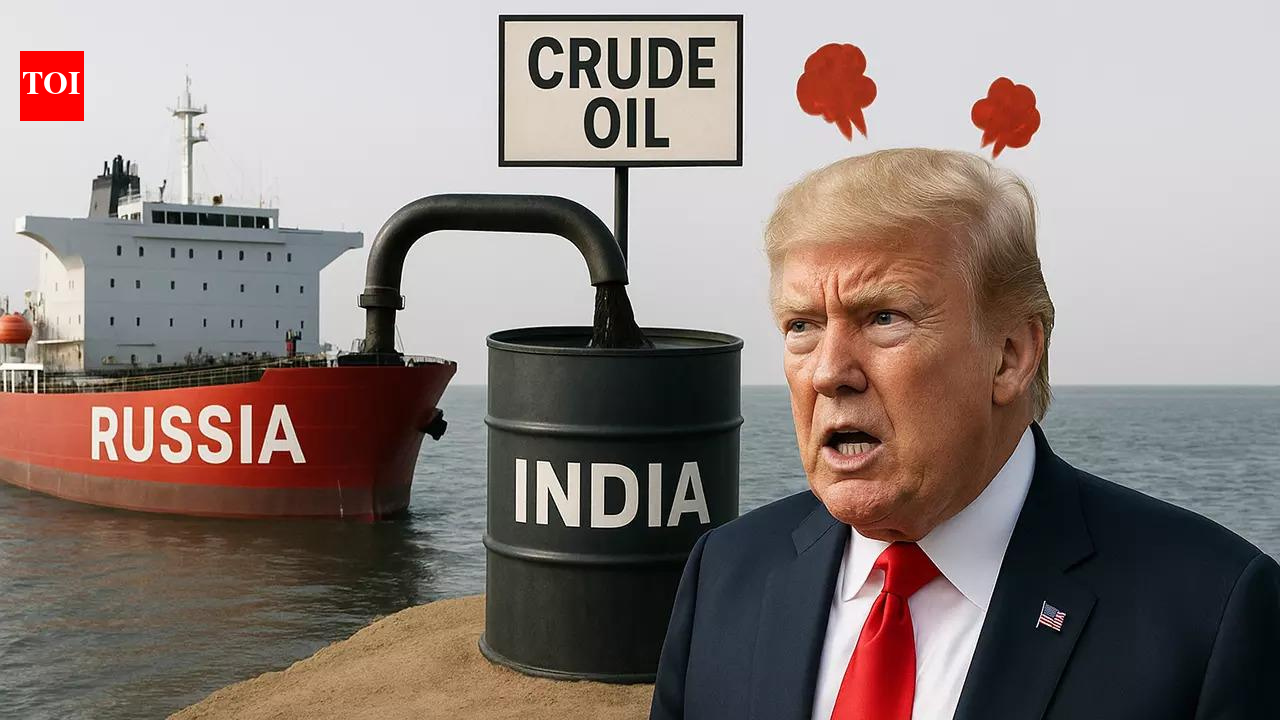
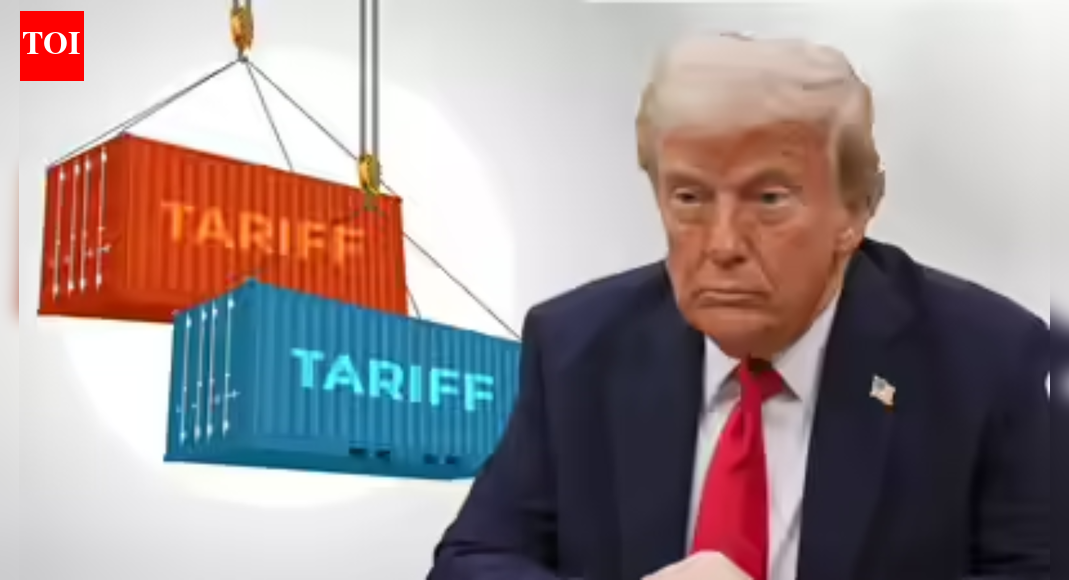
India found itself directly referenced in a landmark US Supreme Court judgment limiting presidential tariff authority, after justices examined how tariffs imposed under emergency powers were used as tools of foreign policy– including pressure linked to Russian oil imports.The ruling in Learning Resources, Inc. v. Trump held that the International Emergency Economic Powers Act (IEEPA) does not authorise a US president to impose tariffs, significantly narrowing executive power over trade policy even when tied to diplomatic negotiations.
While the majority struck down the tariffs, the Court’s dissent highlighted India as an example of how such measures had been deployed in foreign affairs.India cited in tariff diplomacy linked to Russia-Ukraine conflictIn his dissenting opinion, Justice Brett Kavanaugh described how the US administration used tariffs during sensitive geopolitical negotiations.“As with tariffs on foreign imports historically, the IEEPA tariffs on foreign imports at issue in this case implicate foreign affairs,” the dissent noted.According to the judgment, the US government argued that tariffs had been leveraged in negotiations with major trading partners.“The Government says that the tariffs have helped make certain foreign markets more accessible to American businesses and have contributed to trade deals with foreign nations worth trillions of dollars.”India was specifically mentioned in connection with US efforts tied to the Russia-Ukraine conflict.“To that end, on August 6, 2025, the President imposed tariffs on India for ‘directly or indirectly importing Russian Federation oil.’”The dissent further recorded that the tariffs were later eased, noting “And on February 6, 2026, the President reduced the tariffs on India because, according to the Government, India had ‘committed to stop directly or indirectly importing Russian Federation oil.’”
Foreign policy versus constitutional limits
The dissent argued that tariffs have historically functioned as instruments of diplomacy and national security, warning that courts should not restrict presidential authority in foreign affairs using doctrines typically applied to domestic regulation.“Presidential actions pursuant to broad congressional authorizations related to foreign affairs often have long historical pedigrees,” the dissent stated, arguing that statutes should be interpreted “as written, not with a thumb on the scale against the President.”Justice Kavanaugh contended that applying the “major questions doctrine” — which requires clear congressional approval for sweeping executive action — represented a novel judicial intervention in foreign policy decision-making.
Majority rejects foreign affairs justification
The Supreme Court’s majority, however, rejected the argument that foreign policy considerations expand tariff authority.Chief Justice John Roberts wrote that tariffs are fundamentally a form of taxation and therefore fall within Congress’s exclusive constitutional powers under Article I.The Court concluded that even emergency statutes dealing with international threats cannot transfer core taxing authority to the president without explicit language from Congress.The justices emphasised that no president had previously used IEEPA to impose tariffs in its nearly five-decade history, reinforcing their conclusion that Congress never intended to delegate such sweeping authority.



Six supermarket brand eggs cost £1 in 2022. How much are they now, why have they gone up, and is anyone profiteering?
Source link

LAHORE:
Imagine a country sitting at the crossroads of South Asia and Central Asia, with a population of 250 million, abundant natural resources, and a GDP exceeding $450 billion, yet struggling to convince even its own businesspeople to invest at home.
That is Pakistan’s continued uncomfortable reality in 2026, and the way things are going, the business community believes that even after elevating higher, in the past one year due to perfect diplomacy, the government needs to take strict action against those civil servants and state officials, who still try to slow the pace of overseas and local investment as well as development work, which has jeopardised the growth of the country.
“Foreign direct investment (FDI) in Pakistan fell 31% during the first 10 months of financial year 2025-26, with total inflows coming in at $1.409 billion against $2.035 billion during the same period a year earlier,” said Mian Shafqat Ali, Founder of the Pakistan Industrial and Traders Association Front. He raised alarm over what he calls a deepening investment crisis, warning that both local and foreign investment has dipped to one of its lowest levels in recent memory.
He added that the root cause of this decline is not a lack of opportunity, but a system that actively discourages investors at every step. “The real obstacle in the way of investment is the layers upon layers of bureaucratic hurdles. Without removing these barriers, the dream of increasing investment cannot be realised.”
He noted that investors, both domestic and foreign, are deeply sensitive to the environment they operate in, and Pakistan’s current legal and regulatory framework, unpredictable energy policies, fluctuating exchange rates, and ad hoc government decisions have created an atmosphere of uncertainty that keeps capital away.
The business community by and large thinks that once the US-Israel-Iran conflict is settled fully, Pakistan can have better opportunities; however they simultaneously say that to grab those opportunities, “we need to settle our systems, which are dominated by anti-investment and anti-business culture”.
There are systems, which welcome and protect overseas as well as local investment; those societies belong to the first world or second world; “unfortunately here in Pakistan we are still unable to manage the smooth flow of Chinese investments, whom we call ‘iron brothers’,” said Bilal Hanif, a Lahore-based businessman.
“We keep building new institutions and launching new investment windows, but nothing changes on the ground because the real problem is structural. A foreign investor does not just look at your pitch; he looks at your court system, your tax regime, and whether rules will be the same two years from now. On all these counts, we are falling short,” he said.
Pakistan has averaged barely $2 billion in annual FDI over the past 26 years; a figure that expert bodies like the Pakistan Business Council say should be at least $12 billion per year, or roughly 3% of GDP, to meet basic development benchmarks. Meanwhile, regional competitors such as India, Vietnam, Indonesia, and even smaller economies like Bangladesh have consistently attracted far greater inflows, benefiting from predictable regulations, stronger investor protection, and long-term policy continuity.
Mian Shafqat Ali was clear that the failure does not rest with any single institution. He said the problem is not the fault of the Special Investment Facilitation Council (SIFC) or any other body, but rather the deeply entrenched systems that make doing business in Pakistan unnecessarily complicated.
“Until policymakers are willing to make difficult structural and political decisions, investment will remain weak, no matter how many new institutions are created,” he warned.
What investors consistently ask for is not complicated; it is political stability, simple regulations, and confidence that policies of today will not be reversed tomorrow. Pakistan, unfortunately, has struggled to offer any of these in a reliable manner. Frequent political disruptions, leadership changes, and policy discontinuity have created uncertainty that discourages long-term capital, and the capital does not avoid Pakistan because of a lack of opportunity, it avoids uncertainty.
“Government should move beyond announcements and focus on real structural reforms, overhauling the regulatory framework, simplifying business registration processes, ensuring energy availability at competitive rates and most importantly, providing a stable and consistent policy environment as without fixing the foundation, everything else is meaningless,” Ali added.

Travelers walk through the terminal at Ronald Reagan Washington National Airport on May 1, 2026.
Leslie Josephs | CNBC
Higher fuel prices are testing how badly consumers want to travel this summer, whether flying or driving.
Airfare hasn’t been this high since May 2022, when airlines stumbled out of the pandemic with aircraft and employee shortages to face hordes of consumers ready for “revenge travel.” Gasoline is above $4 a gallon and could get closer to $5 a gallon this summer, AAA warned this week.
Jet fuel prices doubled in the span of less than three months this year after the U.S. and Israel attacked Iran, kicking off a conflict that has left a key shipping channel effectively closed.
Domestic round-trip airfares in April averaged $623, the highest in nearly four years, according to data from the Airlines Reporting Corporation, which tracks travel agency ticket sales. Jet fuel is the second-biggest expense for airlines after labor, and carriers say they are increasingly passing those costs along to customers.
Separately, airlines are also trimming their growth plans because of higher fuel costs. Even if a route isn’t cut, fewer flights on certain routes means that customers will have fewer seats to choose from and, with demand robust, that could drive up prices even more.
Spirit Airlines, the most famous budget carrier in the U.S., shut down earlier this month, and partially blamed jet fuel prices for its failure to emerge from near back-to-back bankruptcies. It was the biggest U.S. airline collapse in decades. Other airlines swooped in to snatch up those customers in the aftermath, but the carrier’s demise removes a main purveyor of low fares.
The fuel spikes have set the stage for higher fares and more expensive gas station visits this summer. The start of the peak travel season Memorial Day weekend will be a taste of how much travelers will shell out to fly while everything from groceries to clothing has become more expensive this year.
The Transportation Security Administration said it expects to screen 18.3 million people between Thursday and next Wednesday, compared with the 18.5 million it saw over a similar period last year.
Lackluster road trip growth
Road trips won’t be a bargain either. AAA this week forecast 39.1 million people will drive at least 50 miles between Thursday and Monday, up just 0.1% compared with last Memorial Day weekend. That was the least growth in a decade, AAA told CNBC.
Gasoline price site GasBuddy forecast this week that prices across the U.S. will average $4.48 on Memorial Day, up from $3.14 last year, and that prices could average $4.80 through Labor Day “if the Strait of Hormuz remains closed for a significant portion of the summer.”
A customer fills his vehicle with fuel at a gas station in Miami, April 13, 2026.
Joe Raedle | Getty Images
Still flying
Leisure travel intentions in the U.S. were slightly lower in March — at 82.8% compared with 83.1% the same month a year earlier — though they are still relatively high, UBS said in a note Monday.
“We believe the year-over-year moderation in travel intentions this year was likely due to higher jet fuel and other geopolitical concerns,” UBS airline analyst Atul Maheswari wrote. He added that the intent to travel is near the highest points in the past nine years.
So far, airline executives said, customers are still booking, and executives are optimistic about the summer travel season. They’ve also said they’re expecting a boost from the FIFA World Cup, which will be held in June and July in the U.S., Canada and Mexico, and from major concerts such as Harry Styles’ residencies in Amsterdam and London this summer.
United Airlines said it expects to carry 53 million travelers between June and August, up 3 million people from last year. American Airlines has forecast 75 million customers between May 21 and Sept. 8, after Labor Day, topping its previous record, in 2019.
Refueling trucks at LaGuardia Airport in New York, April 23, 2026.
Zhang Fengguo | Xinhua News Agency | Getty Images
‘What are you waiting for?’
Airlines have been pruning their schedules and axing unprofitable or less profitable routes but have been eager to fill in the gaps after Spirit’s collapse.
Travelers can still find deals if they’re flexible, said Kyle Potter, who runs the Thrifty Traveler website. He recommended using tools such as the “Explorer” tool in Google Flights that allows users to look up destinations by the length of trip and by month in a map view.
He also suggested flyers consider traveling on a Tuesday or Wednesday, when fares and traffic are often lower.
“That, in many cases, can save you hundreds of dollars per ticket, and multiply that by a family of four,” he said.
He had a simple message for travelers sitting on piles of frequent flyer miles.
“Now is the time to use your miles or your credit card points or both,” he said, warning that miles can end up devalued. “What are you waiting for? I think a lot of people hoard their miles because they want to go to to Europe in 2027.”
— CNBC’s Contessa Brewer contributed to this report.

Australia cricket split over BBL future after selloff plan stalls

PET prices decline after April peak amid weak polyester operating rate

At least four injured in blast near railway track in Quetta

-

 Entertainment1 week ago
Where Pete Davidson, Elsie Hewitt stand after breakup: Details revealed
-

 Politics1 week ago
Rising diesel costs from Iran war strain US school budgets
-

 Entertainment1 week ago
Drake drops highly anticipated "Iceman" album, plus two surprise albums
-

 Tech1 week ago
Greg Brockman Officially Takes Control of OpenAI’s Products in Latest Shakeup
-

 Tech7 days ago
Why Is Your Grill So Dumb? The Best Grills Set Temp Like an Oven
-
 Business1 week ago
UK borrowing costs rise and pound falls as leadership drama continues
-

 Tech7 days ago
This Solar-Powered Smart Sprinkler Keeps My Lawn Watered Without Any Power Cables
-

 Fashion1 week ago
RMG trade bodies seek policy support from Bangladesh PM