

Politics
What we know about the proposed US-Iran deal

More than three months after the United States and Israel launched a war against Iran, renewed hopes have emerged that the conflict may soon come to an end.
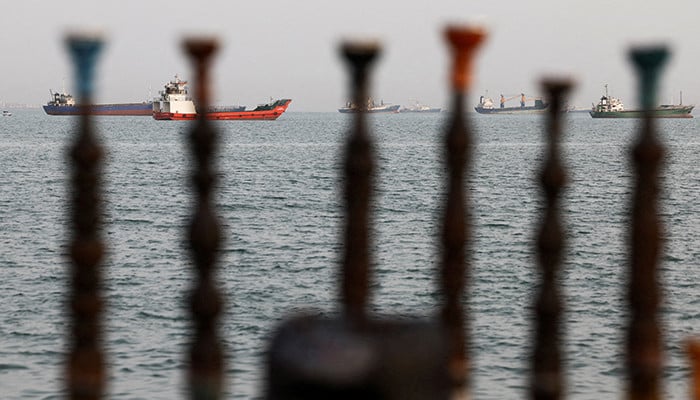
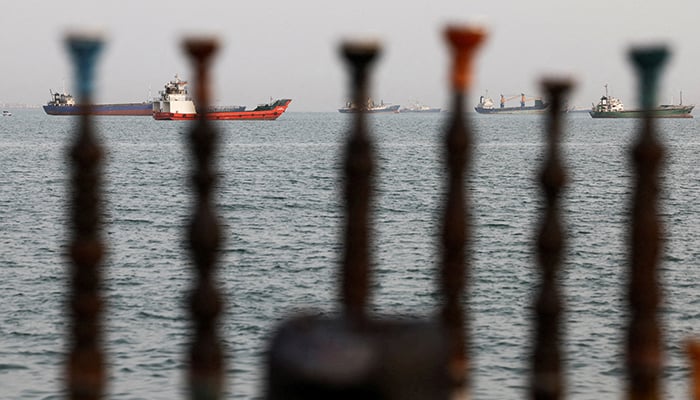
The war has affected not only the countries directly involved but also the global economy, as the closure of the Strait of Hormuz has pushed oil prices to historic highs, fuelled inflation, and hampered economic growth worldwide.
Pakistan, the key mediator, has intensified its diplomatic efforts in recent days, with Interior Minister Mohsin Naqvi and Chief of Army Staff (COAS) and Chief of Defence Forces (CDF) Field Marshal Asim Munir visiting Iran.
Following these developments, Donald Trump said Washington and Tehran had “largely negotiated” a memorandum of understanding on a peace deal that would lead to the reopening of the Strait of Hormuz.
While global leaders issued statements after these developments, details are emerging of the proposed deal that would see an end to the hostilities.
The following are the details that have been reported so far:
- Axios says US and Iran are close to signing a deal involving a 60-day ceasefire extension.
- Axios says during this period, Strait of Hormuz will be reopened.
- Axios says Iran would be able to freely sell oil and negotiations would be held on curbing Iran’s nuclear programme.
- Axios says during period, the Strait would be open with no tolls and Iran would agree to clear the mines it deployed in the strait to let ships pass freely.
- Axios says in exchange US would lift its blockade on Iranian ports and issue some sanctions waivers to allow Iran to sell oil freely.
- Iran’s Tasnim news agency says in potential MoU between Iran and US, Washington will waive sanctions on Iran oil.
- Tasnim says MoU emphasises end of war on all fronts including Lebanon.
- Tasnim says a 30-day period will be allocated for procedures related to Strait of Hormuz and end of blockade.
- Tasnim says a 60-day period will be set for nuclear talks.
- Tasnim says Iran has not yet accepted any actions on its nuclear file.
- Tasnim says according to potential MoU with US, part of Iran’s frozen funds must be released in first phase.
- Tasnim says Iran has emphasised that any initial MoU is conditional on the release of at least part of these assets in a way that our country can access them.
- Tasnim says the mechanism for releasing the other part of frozen assets must be specified during the negotiations process.
- Tasnim says if deal is reached with the US, the state of the Strait of Hormuz will not return to pre-war conditions.
- Tasnim says the number of ships able to transit the Strait of Hormuz will return to the pre-war level in a 30-day period.
- Tasnim says Iran emphasises the exercise of its sovereignty over the Strait of Hormuz in various ways, the details of which will be announced.
- Tasnim says the naval blockade must be completely lifted within 30 days, according to the understanding.
- Tasnim says if the naval blockade is not lifted, no change will occur in the Strait of Hormuz.
- Tasnim says any changes in the passage and navigation through the Strait are conditional upon the implementation of other commitments by the US in the MoU.
- Tasnim says the US commitment to withdraw its forces from Iran’s surroundings is another point emphasised by Tehran in the potential MoU.
- Tasnim says conflict over two or three clauses of the MoU between Iran and US still persists.
- Tasnim citing a source with knowledge: if US continues creating obstacles, there will be no possibility of reaching a final understanding.
— Additional input from Reuters
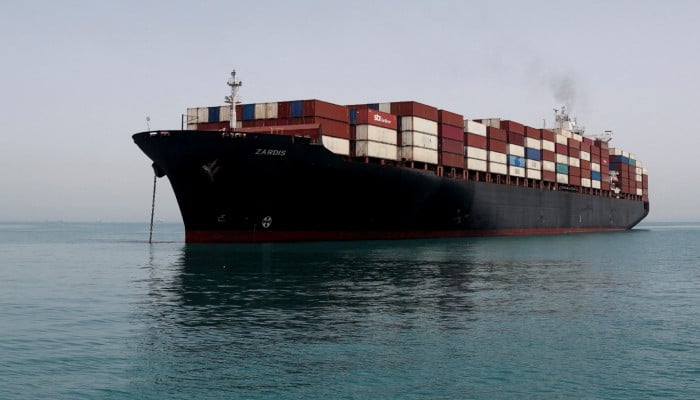
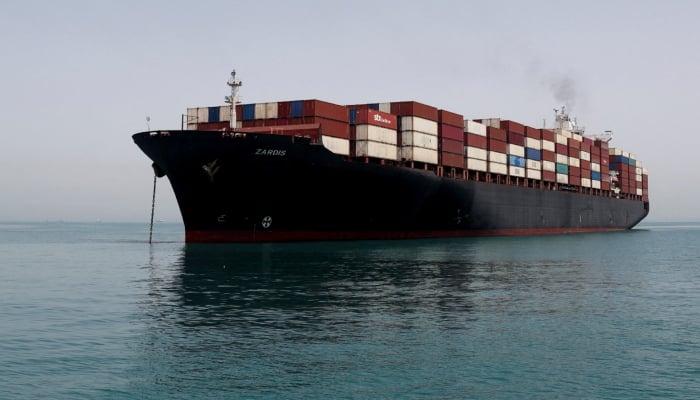
- US to ‘lift’ blockade on Iranian ports under agreement.
- Sanctions waivers to ‘allow’ Iranian oil exports again.
- Iran ‘commits’ to not pursue nuclear weapons capability.
The United States and Iran are close to signing a deal involving a 60-day ceasefire extension, during which the Strait of Hormuz would be reopened, Iran would be able to freely sell oil, Axios reported on Saturday, citing a US official.
According to the report, negotiations would be held on curbing Iran’s nuclear programme, and during the 60-day period, the Strait of Hormuz would be open with no tolls. Iran would agree to clear the mines it deployed in the strait to let ships pass freely, the source added.
In exchange, as part of the proposed deal, the US would lift its blockade on Iranian ports and issue some sanctions waivers to allow Iran to sell oil freely, the report added.
The draft agreement also includes commitments from Iran to never pursue nuclear weapons and to negotiate over a suspension of its uranium enrichment programme and the removal of its stockpile of highly enriched uranium, the Axios report said.
Iran gave the US, through the mediators, verbal commitments about the scope of the concessions it’s willing to make on suspending enrichment and giving up the nuclear material, two sources told Axios.
The US would also agree to negotiate over lifting sanctions and unfreezing Iranian funds during the 60-day period, the Axios report said.
The White House did not immediately respond to Reuters’ request for comment on the report.
Meanwhile, US President Donald Trump said that a “largely negotiated” memorandum of understanding on an Iran peace deal would reopen the Strait of Hormuz.
Trump posted on social media that the emerging agreement would reopen the strait, the vital shipping passage whose closure has sparked a global energy crisis since the US and Israel launched the war on Iran in February. He did not say what else would be included in an agreement.
“Final aspects and details of the Deal are currently being discussed, and will be announced shortly,” Trump wrote on Truth Social.
U Secretary of State Marco Rubio, on a visit to India, said more news on Iran could come on Sunday and there was a possibility of good news on the strait over the next few hours.
‘Issues still need to be discussed’
Separately, Iran has said that diplomatic discussions this week have shown progress toward easing tensions, although several important issues still require further negotiation through mediators.
“The trend this week has been towards a reduction in disputes, but there are still issues that need to be discussed through mediators. We will have to wait and see where the situation ends in the next three or four days,” said Iranian Foreign Ministry spokesperson Esmail Baghaei.
Baghaei said the issue of the US blockade on Iran’s shipping was important, but that its priority was ending the threat of new US attacks and the ongoing conflict in Lebanon, where Hezbollah are fighting Israeli troops who have moved into the south.
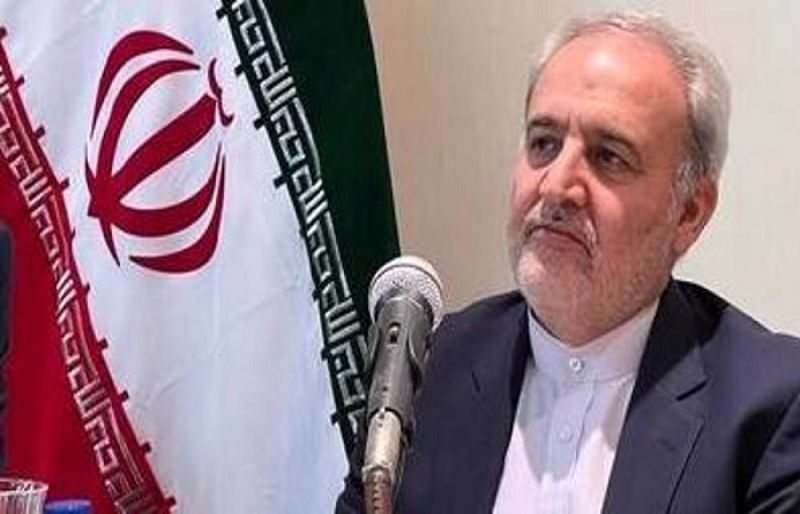
Iran’s ambassador to Pakistan says a positive step concerning Islamabad-mediated talks between the Islamic Republic and the United States is possible if the other side displays sufficient commitment.
“With cautious optimism, we can hope that, upon realization of such commitment on the part of the opposite party, a positive step is taking shape,” Reza Amiri Moghaddam said on Saturday.
He said the positions of the Islamic Republic, based on dignity, the steadfastness of its brave Armed Forces, and the resistance of the brave Iranian nation, as well as the initiative and selfless efforts of the Pakistani mediator, are to be credited with this potential step.
The envoy made the remarks after being informed by Pakistan’s Interior Minister Mohsin Naqvi of the developments that took place during the latter’s earlier trip to the Iranian capital Tehran as part of Islamabad’s mediation efforts.
“I hope that the sincere efforts” invested by the Pakistani government, Prime Minister Shehbaz Sharif, Commander of the Pakistani Armed Forces, Field Marshal Syed Asim Munir, Deputy Prime Minister and Foreign Minister, Muhammad Ishaq Dar, and Naqvi “in their mediation initiative and sincere diplomatic efforts will lead to lasting peace in the region,” Amiri Moghaddam added.
Recent diplomatic activity between Tehran and Washington has been facilitated through Islamabad, with officials describing an emerging framework for a potential 14-point memorandum aimed at de-escalating tensions.
Also on Saturday, Foreign Ministry spokesman Esmaeil Baghaei said the document was intended to address several core issues, including cessation of aggression, halting the US’s illegal naval blockade against the Islamic Republic, and securing the release of frozen Iranian assets.
He said after several weeks of dialogue between the two sides, the “process appears to be moving toward a convergence of views,” while stressing that Iran remains cautious about the durability of US positions.
According to the official, discussions at this stage are focused on drafting a structured memorandum of understanding, rather than finalizing a comprehensive agreement, with further negotiations expected over a 30 to 60 day period once the framework is completed.
Politics
Iran, US moving closer to ‘finalizing memorandum of understanding’ to end imposed war: Baghaei
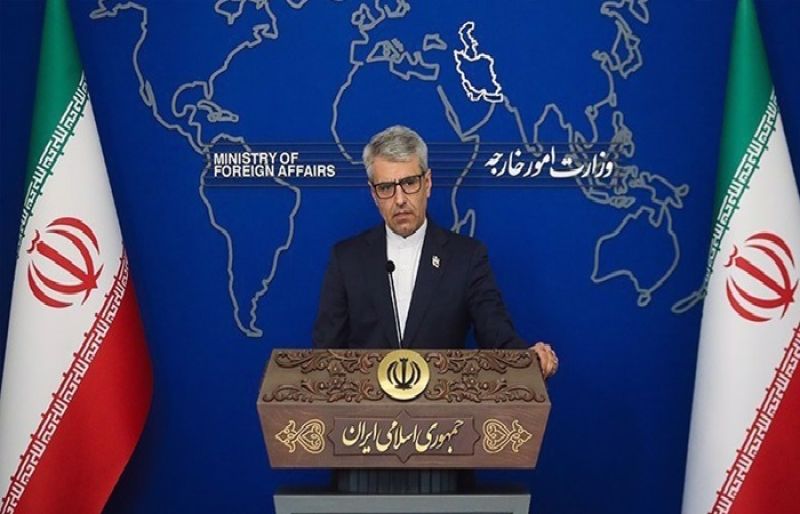
Speaking in a televised interview on Saturday, Baghaei elaborated on a day-long visit by a Pakistani delegation, led by Army Chief Field Marshal Asim Munir, to Tehran, hailing Islamabad’s “important” mediating role in talks between Iran and the US in recent weeks.
“We are now in the finalization stage of this memorandum of understanding. The topics being discussed at this stage focus broadly on ending the war, halting the US naval aggression – what they themselves have labeled a ‘naval blockade’-, and issues related to the release of Iran’s blocked assets,” he said.
He added that the purpose of the Pakistani delegation’s visit was to continue the exchange of messages between Tehran and Washington.
He emphasized that Iran’s focus at this stage remains exclusively on ending the US-Israel imposed war based on the Islamic Republic’s 14-point proposal, which has been shuttled back and forth several times.
Asked whether Tehran and Washington have drawn closer to an agreement or moved further apart following recent meetings between the Pakistani and Iranian authorities, Baghaei said Iran cannot be fully confident that the US approaches will not shift again as before.
However, he acknowledged that after several weeks of dialogue between the two sides, the “process appears to be moving toward a convergence of views.”
Baghaei, who is also the spokesman of the Iranian negotiating team, emphasized that “moving closer” does not mean that Iran and the US are about to reach an understanding. Rather, he explained, it means that “based on a set of parameters, the two sides may be able to achieve a win-win solution.”
He outlined the framework of the negotiations, saying, “Our approach has been to first draft a memorandum of understanding consisting of 14 articles. That memorandum would include the most important issues necessary to end the imposed war and matters of fundamental importance to us.”
“Subsequently, within a reasonable timeframe of 30 to 60 days, the two sides would discuss the details of these issues and ultimately reach a final agreement.”
The criminal US-Israeli aggression against Iran began on February 28 with airstrikes that assassinated senior Iranian officials and commanders, including Leader of the Islamic Revolution Ayatollah Seyyed Ali Khamenei.
Iranian Armed Forces responded by launching daily missile and drone operations targeting locations in the Israeli-occupied territories as well as US military bases and assets across the region.
Furthermore, Iran retaliated against the strikes by closing the Strait of Hormuz, which resulted in a significant increase in oil prices and its by-products.
On April 8, forty days into the war, a Pakistan-brokered temporary ceasefire between Iran and the US took effect.
Negotiations ensued in the Pakistani capital, Islamabad but stopped short of an agreement amid Washington’s maximalist demands and insistence on unreasonable positions.
Strait of Hormuz has nothing to do with US
Elsewhere in his remarks, Baghaei pointed to the issue of the Strait of Hormuz, saying the strategic waterway “has nothing to do with America.”
He added that Iran and Oman, as the coastal states of the Strait of Hormuz, should define a mechanism for it.
Asked whether the Strait of Hormuz is included in the 14-point memorandum, the spokesman said the issue would logically be discussed.
However, he added, putting an end to “US piracy and maritime banditry” against international shipping is even more important than the Strait of Hormuz.
Iran shut down the strait to its enemies and their allies after the unprovoked US-Israeli aggression. Iranian authorities began enforcing much stricter controls last month following US President Donald Trump’s announcement of a blockade targeting Iranian vessels and ports.
Tehran says the measures violate the terms of the Pakistan-brokered ceasefire.
Despite the blockade, shipping activity linked to Iranian crude is continuing.
Nuclear Issue not on the table for now
Asked whether the nuclear issue might be part of any potential agreement, Baghaei responded, “At this stage, we are not discussing the details of the nuclear issue.”
He said Iran knows that its nuclear program has been a “pretext” for two aggressive wars against the Iranian people, adding that the country came under illegal attacks even during nuclear negotiations.
“In later stages – within 30 days, 60 days, or whatever timeframe is ultimately agreed upon – we can discuss the nuclear issue or other mutually agreed matters separately. But at this stage, as stated, all our focus is on ending the war,” the spokesperson emphasized.
Removal of all sanctions, Iran’s constant demand
On the subject of sanctions, Baghaei said Iran has made clear to American parties that sanctions are both “illegal and inhumane.”
Given that Tehran is not discussing details about the nuclear issue at this stage, it is also not discussing the specifics of sanctions removal in this short window.
However, he stressed that Iran’s demand for the removal of all sanctions has been explicitly included in the text.
“This is our constant demand in any interaction with intermediaries,” he noted.
Baghaei stressed that “both the nuclear issue and the issue of releasing Iran’s blocked funds are included in the 14-point memorandum of understanding.”
Pakistan official mediator, Qatar facilitating
Clarifying the role of different countries in the negotiation process, Baghaei said that Pakistan is officially the mediator in the precise sense of the word, while Iran thanks other parties that have at the same time tried to help, including Qatar.
He reiterated that the presence of a Qatari delegation over the past two to three days was aimed at facilitating certain articles of the memorandum of understanding between Iran and the US.
“It is natural that regional countries have concerns about regional peace and security. They have witnessed how actions by the US and the Israeli regime against Iran could trigger conflict across the entire region. Therefore, they have tried not to withhold any help they could offer in this regard,” Baghaei said.


What ‘excites’ Sarah Ferguson? Palace insider spills awful details

What we know about the proposed US-Iran deal

Prince George set to reconnect with cousin in unexpected twist

-

 Entertainment1 week ago
Where Pete Davidson, Elsie Hewitt stand after breakup: Details revealed
-

 Politics1 week ago
Rising diesel costs from Iran war strain US school budgets
-

 Tech1 week ago
Greg Brockman Officially Takes Control of OpenAI’s Products in Latest Shakeup
-

 Tech1 week ago
Why Is Your Grill So Dumb? The Best Grills Set Temp Like an Oven
-

 Tech1 week ago
This Solar-Powered Smart Sprinkler Keeps My Lawn Watered Without Any Power Cables
-

 Fashion1 week ago
RMG trade bodies seek policy support from Bangladesh PM
-
 Business1 week ago
Oil price gains and Westminster worry sink stocks
-

 Tech1 week ago
Tesla Reveals New Details About Robotaxi Crashes—and the Humans Involved