

Fashion
1,300 exhibitors gather in Paris for Texworld Apparel Sourcing

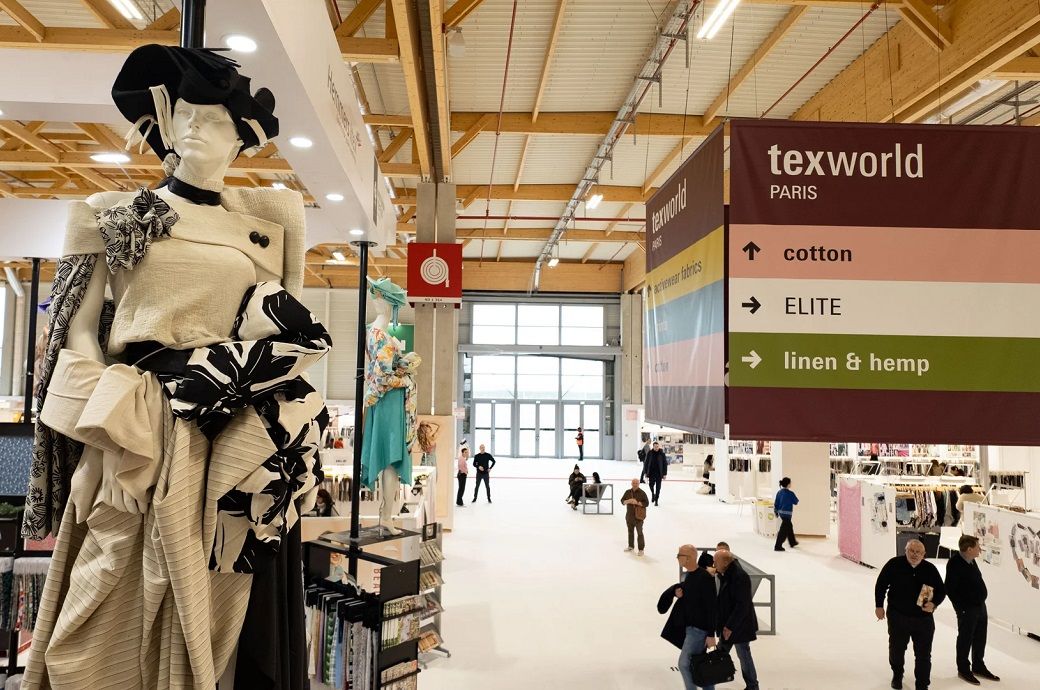
Texworld Apparel Sourcing Paris returns for its 57th edition at the Paris–Le Bourget Exhibition Centre from 15 to 17 September 2025, offering for the first time a perfect balance between textile manufacturers (Texworld) and clothing manufacturers (Apparel Sourcing).
Texworld Apparel Sourcing Paris returns for its 57th edition from September 15–17, 2025 at Paris–Le Bourget with 1,300 exhibitors from 35+ countries, offering Europe’s largest textile and apparel sourcing platform.
Highlights include Avantex’s sustainable innovations, national pavilions, Initiatives zone, trend forums, Bio Fashion Innovation Day, and guided Econogy Tour.
With nearly 1,300 exhibitors from over 35 countries, the Parisian trade shows will present an unmissable sourcing offer, the largest and most diverse in Europe.
For three days, buyers will be able to discover the offerings of the leading marketplace in Europe for textiles and clothing. This diverse and competitive selection of top-tier products focuses on the segments that constitute the core of finished garment consumption and on which brands are currently concentrating their efforts. The Avantex sector, dedicated to innovative solutions for more efficient and sustainable fashion, is expanding and asserting its position with a growing number of B2B services at the cutting edge of technological innovation and eco-responsibility to effectively address the main challenges facing fashion companies and brands.
Innovation and diversity
This autumn edition opens with a unique selection of manufacturers and clothing producers: Texworld Paris and Apparel Sourcing Paris will offer a comprehensive overview of the major textile sourcing areas. The key players — China, Turkey, India, Korea, Taiwan, Bangladesh and Pakistan — will be grouped together under the banner of their national pavilions, such as Turkish manufacturers, supported by the Istanbul Chamber of Commerce (ITO), and Korean manufacturers led by KOFOTI, the National Federation of Textile Industries. These Texworld regulars will be joined by suppliers from alternative sourcing areas such as Cambodia, Myanmar, Rwanda, Vietnam and Egypt.
Apparel Sourcing, which will welcome 683 exhibitors, is achieving its best results this year, on a par with Texworld. This unique gathering – With 1,300 exhibitors, Texworld Apparel Sourcing Paris is now the leading European trade fair in the sector – offering a response to the challenges faced by buyers. The prospects for near sourcing are confirmed, with the notable presence of manufacturers from Central and Eastern European countries such as Armenia and Kyrgyzstan, whose pavilions will be located at the entrance to Hall 3. The Near Sourcing Hub, established by the B2B digital platform Foursource, a partner of Messe Frankfurt France, will be located in the same area. Following the success of their previous digital participation, more than 10 European companies will be physically present for the first time.
Initiatives: a space dedicated to expertise
The Initiatives zone will be one of the highlights of this edition: located at the entrance of Hall 4, it will emphasize the expertise of particularly sharp players. The Indian company Pasari Textiles will take this opportunity to reveal the manufacturing techniques of its artisanal embroideries, while the Istanbul Chamber of Commerce will emphasize the expertise of the Turkish textile industry through contemporary creations playing with patterns and dyeing. LISAA Mode students will create live pieces in knit and crochet, illustrating the quality of both design and execution. Finally, the China Textile Innovation Center (CTIC) will offer a space dedicated to design and products from a carefully selected group of Chinese players.
Avantex Paris: focus on sustainable fashion
Laboratory of innovations around sustainable fashion, Avantex Paris will bring together about thirty participants in the passage connecting Hall 2 (trends forum, services, Agora) to Hall 3. This unique offering will shine some light on emerging technologies, solutions, or materials available to address key fashion challenges: circularity, transparency, traceability, sustainability, optimization, scalability, interactivity, and immersion in virtual universes.
It will be organised at the show around three complementary universes: the HUB, an open zone presenting innovative solutions and services for the fashion industries; the Designer HUB, dedicated to textile studios, agencies, and independent designers in direct contact with brands and manufacturers; the ReSources space, which this year will bring together four companies selected by the TCBL (Textile & Clothing Business Labs) association, a partner of Avantex for 3 editions. The choice of Phygital retained for this podium will allow visitors to access, via a QR Code linked to the Foursource platform, all the useful information about these companies and their offerings.
A traditional landmark of the fair, the 8th edition of the Avantex Fashion Pitch will reward the most innovative startups in sustainable development applied to fashion. The partners of this event are the IFA Paris fashion school and its Foundry incubator, the virtual world creation platform for fashion and luxury VLGE, Luxiders Magazine dedicated to eco-responsible fashion and design, the Circular Textile Days trade show, and Texpertise Network, the global network of textile trade shows by Messe Frankfurt. The projects will be presented to the public on Monday, September 15, starting at 3:30 PM.
Conference, debates: flagship events and highlights
True to its mission as a trailblazer, Texworld Apparel Sourcing Paris is committed to providing visitors with a clear vision of market developments. The conferences, round tables, and animations offered during these 3 days with inspiring international leaders from the fashion and textile industry at the Agora in Hall 2 will fulfilll this mission and will be punctuated by several highlights. On the fashion trends side, Louis Gérin, one of the two art directors of the shows, will comment on Nova Fabula, the trend book that will inspire the Autumn-Winter 2026-2027 collections (Monday, September 15 at 12:15 PM).
On the innovation and prospective side, numerous conferences and round tables proposed on the Avantex agenda will fuel reflection on the key themes of the moment. Another feature of this edition, on Wednesday, September 17, the Agora will host the Bio Fashion Innovation Day, the European event proposed by TCBL around projects and experiences related to local production, bio-sourced materials, and eco-design solutions: keynotes, round tables, workshops, and networking sessions will punctuate the day.
Econogy Tour: guided tour dedicated to sustainable economics
As part of its Texpertise Econogy initiative, which combines the concepts of ecology and economic development, Messe Frankfurt France is structuring its promotion of sustainable sourcing within the Texpertise Network along different lines. Firstly, the Econogy Finder allows visitors to identify, via an online directory accessible from the Texworld Apparel Sourcing Paris app or website, more than a hundred manufacturers whose CSR commitments have been verified by a third party. These companies can also be identified in the alleys thanks to the Econogy Finder symbols.
In September, an Econogy Tour will give visitors the opportunity to meet a selection of certified companies and discover what they have to offer. This unique guided tour, led by Noa Ben Moshe, will take visitors on a tour of some of the most sustainable exhibitors at Texworld and Apparel Sourcing. The meeting point is at the Econogy Hub in the Avantex area on Monday 15 September at 12.30 pm. The final part of the concept, Econogy Talks, identifies and highlights events dealing with topics related to the sustainable economy to help visitors manage their schedules.
Note: The headline, insights, and image of this press release may have been refined by the Fibre2Fashion staff; the rest of the content remains unchanged.
Fibre2Fashion News Desk (HU)












If the US administration imposes a 15-per cent levy, the US ETR would rise to 11.3 per cent.
President Donald Trump reinstated tariffs immediately following the US Supreme Court’s February 20 ruling that invalidated the reciprocal tariffs imposed under the International Emergency Economic Powers Act (IEEPA). The new blanket 10-per cent tariff rate is authorised under Section 122 of the Trade Act of 1974 and expires in 150 days unless extended by Congress.
The 10-per cent blanket reciprocal tariff imposed by the US on most trading partners has reduced the US effective tariff rate (ETR) to 9.4 per cent from 12.7 per cent, Fitch Ratings said.
If a 15-per cent levy is imposed, the ETR would rise to 11.3 per cent.
China has the highest ETR among trading partners, followed by Vietnam, Japan and Brazil.
China’s ETR is around 19 per cent from 29 per cent earlier.
Section 122 permits a maximum rate of 15 per cent but does not allow for tariff adjustments for individual countries.
Prior to the court decision, China was subject to two reciprocal tariffs: a fentanyl tariff of 10 per cent that applied to all imports and a 10-per cent reciprocal tariff on an import base subject to carveouts. The two tariffs have been consolidated into the 10-per cent blanket tariff, reducing China’s ETR to around 19 per cent from 29 per cent, Fitch said in a release.
China still has the highest ETR among major trading partners, followed by Vietnam, Japan and Brazil. Of the United States’ 31 largest trading partners, 26 will see their ETRs decline. Brazil benefits the most, with its ETR decreasing by 18 percentage points (pp) to 11 per cent from 29 per cent.
ETRs for most countries largely remain unchanged following the switch in tariff regimes, and no country will see an increase in its ETR if the Section 122 tariff rate remains at 10 per cent.
Fibre2Fashion News Desk (DS)
Unadjusted, it rose by 2.9 per cent for the 12 months ended January 2026.
Prices for final demand goods declined by 0.3 per cent, the largest decrease since falling 0.7 per cent in March 2025.
The seasonally-adjusted US producer price index (PPI) for final demand rose by 0.5 per cent in January.
Unadjusted, it rose by 2.9 per cent for the 12 months ended January 2026.
Prices for final demand goods declined by 0.3 per cent, the largest decrease since falling 0.7 per cent in March 2025.
Leading the January decline, the index for final demand energy dropped by 2.7 per cent.
Leading the January decline, the index for final demand energy dropped by 2.7 per cent.
The index for final demand less food, energy and trade services moved up by 0.3 per cent in January, the ninth consecutive increase. For the 12 months ended in January, such prices rose by 3.4 per cent, a BLS release said.
The index for final demand goods less food and energy advanced by 0.7 per cent in the month.
Fibre2Fashion News Desk (DS)
Ind-Ra expects sector revenues to grow around 9 per cent year on year (YoY) in FY26 and 10.5 per cent YoY in FY27 following uneven and subdued growth through FY24 and early FY25; the growth in FY25 was 8 per cent YoY.
Ind-Ra expects India’s apparel retail sector revenues to grow around 9 per cent YoY in FY26 and 10.5 per cent YoY in FY27 following uneven and subdued growth through FY24 and early FY25.
Premium, branded and ethnic players are expected to see steadier, high single-digit growth trends.
Ind-Ra feels value retailers will outperform other segments within apparel, with robust revenue growth.
Ind-Ra feels value retailers will outperform other segments within apparel, with robust revenue growth through healthy same store sales growth and rapid store additions, albeit at a lower profitability.
Healthy growth in operating profit coupled with strong inventory turns is expected to result in value retailers demonstrating stronger-than-industry return indicators and credit metrics.
Premium, branded and ethnic players are expected to see steadier, high single-digit growth trends as consumer confidence rebuilds with a better spread out wedding calendar than in FY26 and early signs of normalisation seen in the first nine months of FY26.
Listed apparel retail players from Ind-Ra’s sample set reported revenue growth of around 10 per cent YoY in these nine months as the government’s consumption push through lower taxation and mild inflation resulted in higher disposable income and improved affordability.
The operating profit margins also improved to 15.6 per cent in the nine months compared to 15.2 per cent in FY25 due to various cost optimisation measures adopted by companies.
Organised retailers are pivoting from aggressive expansion to productivity-led growth. After elevated store additions in FY24-FY25, Indian apparel retailers are moderating store roll-outs, sharpening site selection, right-sizing formats and targeting faster ramp-ups of recent openings, with omni-channel execution and scalable franchise models enhancing reach and capital efficiency, Ins-Ra said in a press note.
It expects store additions to ease to nearly 7 per cent YoY in FY26 and 6 per cent YoY in FY27, even as retail area continues to rise by 9 per cent YoY in FY26 and by 9.5 per cent YoY in FY27, reflecting larger average store sizes and assortments designed to lift footfalls, average transaction values and sales per square foot.
Value and luxury segments are set to lead sector performance. Value formats benefit from GST rationalisation at lower price points, improved affordability, and rising private-label penetration, while luxury gains from a widening affluent base and deeper global-brand access.
Fast fashion continues to capture Gen-Z-led, content-driven demand. Casual and athleisure remain ahead of ethnic-casual and formal wear, in line with comfort- and lifestyle-led dressing trends.
Ind-Ra expects profitability to improve gradually as cost optimisation, better sourcing/mix, disciplined advertising and marketing promotions, and operating leverage offset residual pressures from expansion and fixed costs.
The working capital cycle for value retailers is likely to improve YoY in FY27, due to higher inventory turns and improved store level operating metrics.
Overall, as the consumption upturn broadens and retailers prioritise productivity over pace, Ind-Ra expects a stable, sustainable improvement in revenues and operating metrics for organised apparel retailers over FY26–FY27.
The luxury segment is also expected to benefit from an increase in target customer segment through widening affluent base and deeper global-brand access.
Mid-premium and several incumbent retailers witnessed slower growth in FY25, due to entry price mix-shifts and loss of market share to value retailers. This, coupled with investments in store format revamps, has stressed their margin profiles. Profitability pressures and a dip in inventory turns have slightly weakened credit metrics for segment players.
Fibre2Fashion News Desk (DS)


Best Buy’s holiday sales disappoint, but retailer shows progress in growing profits

Princess Anne to mark 25 year celebration after ‘outstanding’ honour

The Premier League is boring now: A tactical way to save it

-

 Politics5 days ago
What are Iran’s ballistic missile capabilities?
-
 Business7 days ago
Households set for lower energy bills amid price cap shake-up
-

 Sports1 week ago
Top 50 USMNT players of 2026, ranked by club form: USMNT Player Performance Index returns
-

 Politics5 days ago
US arrests ex-Air Force pilot for ‘training’ Chinese military
-

 Sports5 days ago
Sri Lanka’s Shanaka says constant criticism has affected players’ mental health
-
 Business7 days ago
Lucid widely misses earnings expectations, forecasts continued EV growth in 2026
-
 Business5 days ago
Attock Cement’s acquisition approved | The Express Tribune
-

 Sports1 week ago
Pete Hegseth dubs Team USA goaltender the ‘Secretary of Defense’ after amazing Olympic save