

Business
2026: Pakistan must choose growth | The Express Tribune

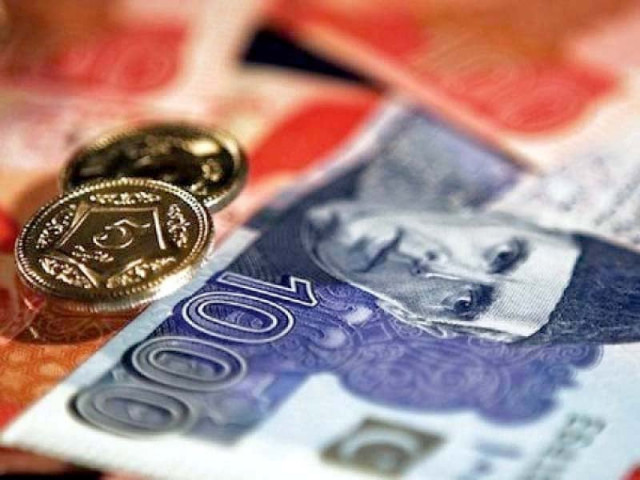
Pakistan’s real per capita income has risen 4.5 times since 1947 while the sub-continent, which once comprised Pakistan, India and Bangladesh, achieved an average growth of around 5%. photo: file
ISLAMABAD:
Year 2026 could be a defining period for Pakistan’s economy. After the hard-won stabilisation of 2025, the country faces a clear test: whether stability can be converted into lasting progress.
For more than a decade, GDP growth has barely kept pace with population growth, leaving incomes stagnant and widening the gap with regional peers. If stabilisation fails to deliver jobs and rising incomes, public support for reform will inevitably weaken. The central challenge of 2026, therefore, is to pivot from stabilisation to inclusive, accelerated growth and turn fragile stability into broad-based prosperity.
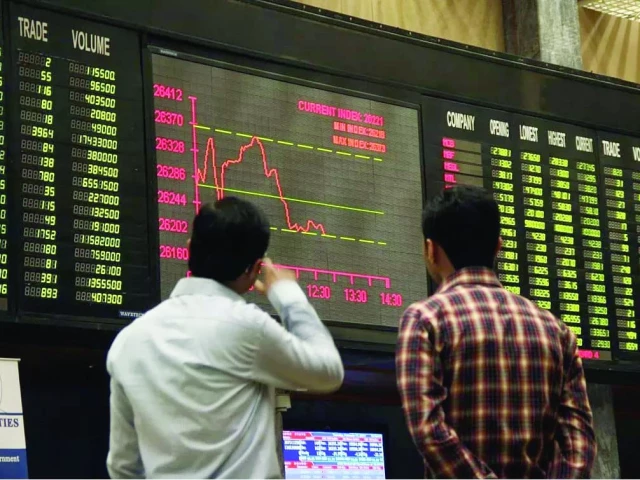
Encouragingly, a narrow but meaningful window of opportunity exists. Low international commodity prices, particularly petroleum, have helped contain inflation. Record remittances are supporting the current account and easing external vulnerabilities. At the same time, strong stock-market performance reflects improved investor sentiment and ample domestic liquidity. The task now is to channel these favourable conditions into sustained growth that reaches households across the income spectrum.
To move decisively into a growth phase, four priorities demand attention: revitalising industry and agriculture, lowering the government’s footprint in the services sector, deepening global integration, and fixing governance.
Boosting industrial growth requires a decisive shift in mindset, from reliance on textiles to the development of higher-value engineering goods such as mobile phones, defence equipment, and consumer durables. Defence manufacturing illustrates this opportunity clearly. Despite a mature production base, Pakistan accounted for just 0.019% of global defence exports in 2023, even as growing international interest in platforms such as the JF-17 Thunder points to significant untapped potential.
Similarly, mobile phone manufacturing and consumer durables must move beyond import substitution towards export orientation. CPEC Phase-II offers a timely opportunity to support this transition by prioritising industrial upgrading, technology transfer, and export-led growth, allowing Pakistan to break out of low-value production patterns and integrate into global engineering value chains.
Agriculture was among the weakest performers in 2025, reflecting deep structural constraints. Opening the sector to competition, rather than prolonged protection, is essential to raise productivity, farmer incomes, and exports. Yet access to modern seeds, inputs, and technologies remains constrained by policy.
Heavy subsidisation of traditional crops crowds out higher-value segments such as horticulture, pulses, and oilseeds, where Pakistan runs large trade deficits. Livestock, which accounts for nearly 60% of agricultural GDP, receives less than 1% of public investment. Redirecting support towards livestock and high-value crops would attract private investment, diversify incomes, reduce imports, and unlock billions of dollars in export potential, while strengthening food security.
A similar challenge exists in services, where a heavy government footprint has kept key sectors, particularly telecoms and energy, underperforming. The privatisation of PIA demonstrates that private capital is willing to invest when processes are transparent and the state does not insist on excessive upfront returns. By prioritising short-term spectrum revenues, Pakistan has delayed broadband expansion and a credible 5G roadmap, costing the economy an estimated $1 billion a year in lost GDP.
An investment-first approach, accepting lower upfront prices in exchange for binding rollout and efficiency commitments, should also be applied to power distribution companies, whose losses are estimated at around Rs400 billion annually. Reducing energy-sector losses and expanding affordable digital infrastructure would sharply improve industrial competitiveness, unlock tech-led jobs and exports, and place Pakistan on a more sustainable growth path. Year 2026 should also mark a year of deeper global integration and renewed regional trade. Pakistan’s trade-to-GDP ratio remains among the lowest in the world, reflecting a degree of economic isolation that is increasingly costly.
Recent tariff reforms are a necessary first step, but they must be followed by more ambitious engagement with global markets. Accession to major blocs such as the Regional Comprehensive Economic Partnership should be seen as essential, not optional, if Pakistani firms are to compete in an increasingly integrated global economy.
None of these objectives can be achieved without confronting Pakistan’s deep-rooted governance weaknesses. The IMF’s Governance and Corruption Diagnostic Assessment provides a clear, evidence-based diagnosis of what needs to be fixed. What remains missing is an effective mechanism for execution. If Pakistan addresses these governance gaps, IMF estimates suggest that GDP growth could rise by roughly 5% to 6.5% above current trends over a five-year period.
The path from stabilisation to sustained growth is now clearly defined. It requires continuity in sound macroeconomic management, combined with bold and targeted structural reform. The priorities are unmistakable: unlock the potential of farms and factories, scale services and digital exports, integrate more deeply with the global economy, and fix the governance failures the IMF has identified.
If this moment is seized with urgency and resolve, 2026 can be remembered not as a year of cautious optimism, but as the turning point when Pakistan reignited its engine of inclusive prosperity and began to close the gap with a rapidly advancing world.
The writer is a member of the steering committee for the implementation of National Tariff Policy 2025-30. Previously, he served as Pakistan’s ambassador to the World Trade Organisation




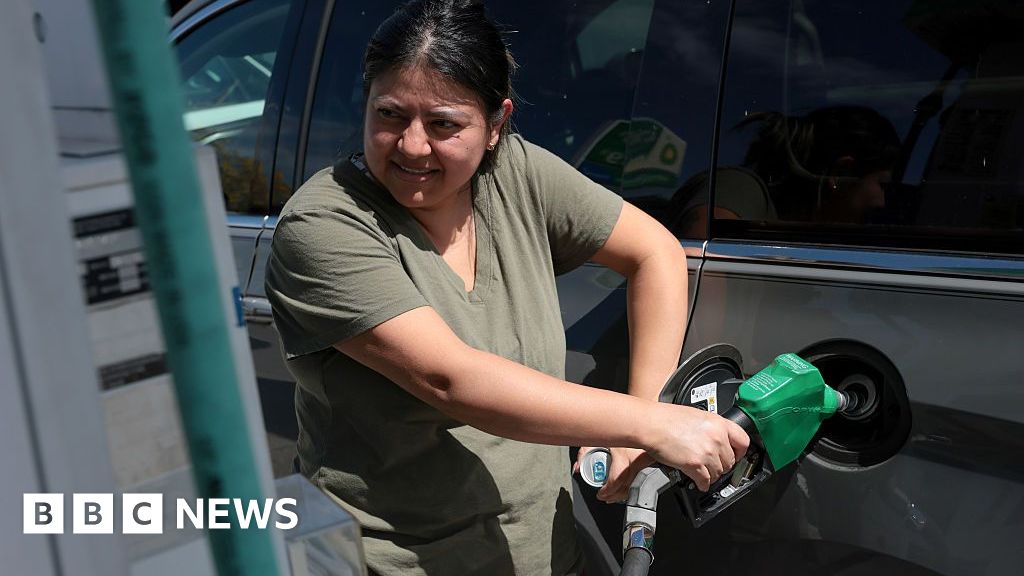
A surge in prices at the pump due to the Iran war has pushed the inflation rate to 3.3%.
Source link
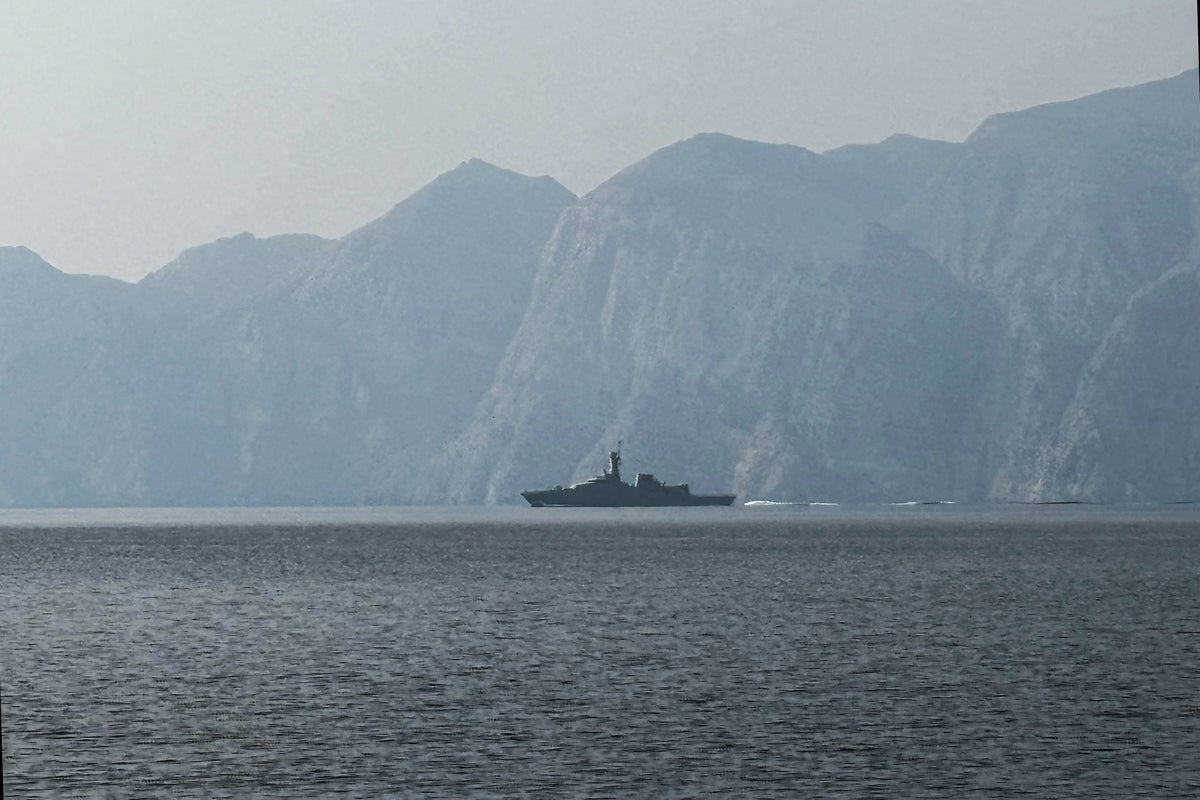
The Strait of Hormuz is still not fully open despite the US–Iran ceasefire, according to the head of Abu Dhabi’s state oil company.
Sultan Al Jaber, the chief executive officer of the Abu Dhabi National Oil Company, said in a post on LinkedIn that “access is being restricted, conditioned and controlled” through the world’s most critical waterway.
“The weaponisation of this vital waterway, in any form, cannot stand. This would set a dangerous precedent for the world – undermining the principle of freedom of navigation that underpins global trade and, ultimately, the stability of the global economy,” Mr Al Jaber wrote.
“An estimated 230 vessels sit loaded with oil and ready to sail. They, and every vessel that follows, must be free to navigate this corridor without condition. No country has a legitimate right to determine who may pass and under what terms. Iran has made clear – through both its statements and actions – that passage is subject to permission, conditions and political leverage. That is not freedom of navigation. That is coercion.”
Iran effectively shut down the Strait of Hormuz, a vital maritime route that normally carries about a fifth of the world’s oil and gas, after US and Israeli attacks in late February, leaving around 1,400 ships stranded on either side.
However, despite the US–Iran truce agreed on Wednesday, which supposedly included reopening the strait, very few ships have actually moved.
This uncertainty has pushed energy prices higher and caused stock markets across Asia and Europe to fall, as fears grow that the truce may already be breaking down and tensions could escalate again.
“Every day the strait remains restricted, the consequences compound. Supply is delayed, markets tighten, prices rise. The impact is felt beyond energy markets, in economies, industries and households worldwide. Every day matters. Every delay deepens the disruption,” Mr Al Jaber wrote.
Asian stocks mostly rose on Friday, following gains on Wall Street, while oil prices also edged higher amid a fragile Iran ceasefire and upcoming US-Iran talks. Major indices, including South Korea’s Kospi and Japan’s Nikkei 225 posted strong gains, with Japanese retailer Fast Retailing surging after raising profit forecasts.
London’s FTSE 100, Hong Kong’s Hang Seng and China’s Shanghai Composite Index also climbed, even as China reported softer-than-expected inflation.
Elsewhere, Australia’s S&P/ASX 200 slipped, while Taiwan and India saw moderate gains.
Oil and gas prices have swung sharply amid the ongoing uncertainty. Brent crude jumped more than 4 per cent to above $99 (£74) a barrel on Thursday, while US crude surged 8 per cent to over $102, reversing a steep drop the previous day when Brent had fallen more than 13 per cent to a four-week low.
“The initial wave of relief following president Trump’s two-week ceasefire announcement has quickly given way to underlying doubts,” IG Australia market analyst Tony Sycamore said.
“All eyes remain firmly on tanker tracker flows through the Strait of Hormuz for any signs of increased activity ahead of peace talks scheduled in Pakistan.”
Gas markets showed a similar pattern: UK gas prices edged up after a 15 per cent plunge, and European natural gas futures rebounded from recent lows.
Tensions remained high as Iran’s Revolutionary Guard Corps warned of a “regret-inducing response” if Israel continued its strikes on Lebanon, which have already caused heavy casualties.

ChatGPT developer OpenAI has halted plans for a significant UK data centre project, citing high energy costs and regulatory challenges as barriers to investment.
The US technology giant had intended to establish its “Stargate” data centre initiative within a new artificial intelligence growth zone in the north-east of England.
The venture was slated for multiple sites, including Cobalt Park near Newcastle and Blyth.
However, OpenAI said the plans are now on hold, awaiting “the right conditions” to facilitate long-term infrastructure investment across the UK.
A spokesman for OpenAI said: “We see huge potential for the UK’s AI future. London is home to our largest international research hub, and we support the Government’s ambition to be an AI leader.
“AI compute is foundational to that goal – we continue to explore Stargate UK and will move forward when the right conditions such as regulation and the cost of energy enable long-term infrastructure investment.”
The reference to energy costs come at a time when prices are being pushed higher by the US and Israel’s war with Iran.
The International Monetary Fund (IMF) said in March that the UK was one of the nations particularly exposed to soaring wholesale costs because of its reliance on gas-fired power, as opposed to sources such as nuclear and renewable energy.
Data centres are powered by very large amounts of energy so are more likely to be exposed to volatile prices.
OpenAI added: “In the meantime, we are investing in talent and expanding our local presence, while also delivering on the commitments under our MOU (memorandum of understanding) with the Government to adopt frontier AI in UK public services.”
Its Stargate project aims to invest billions of dollars into AI infrastructure in the US, with funding from OpenAI, SoftBank, Oracle and MGX and partnering with tech giants including Nvidia and Microsoft.
Building it into the UK came as part of a landmark tech deal between Britain and the US, announced last September amid President Donald Trump’s second state visit.
The deal also included a 30 billion US dollar (£22.3 billion) pledge from Microsoft, the largest ever made by the company in the UK, to fund the expansion of Britain’s AI infrastructure.
Conservative MP and shadow science minister Ben Spencer said: “When global firms cite high energy costs and regulatory uncertainty as reasons to walk away, it tells you everything about the direction of travel.
“For too long, Labour have prioritised courting big tech headlines while neglecting our domestic start-ups, but also the fundamentals that actually attract investment at home.”


Drewry WCI rises for sixth consecutive week, Hormuz a concern

Afrika Bambaataa, hip-hop pioneer and founder of Universal Zulu Nation, dies at 68

Sights and sounds from the second round of the Masters

-
 Business1 week ago
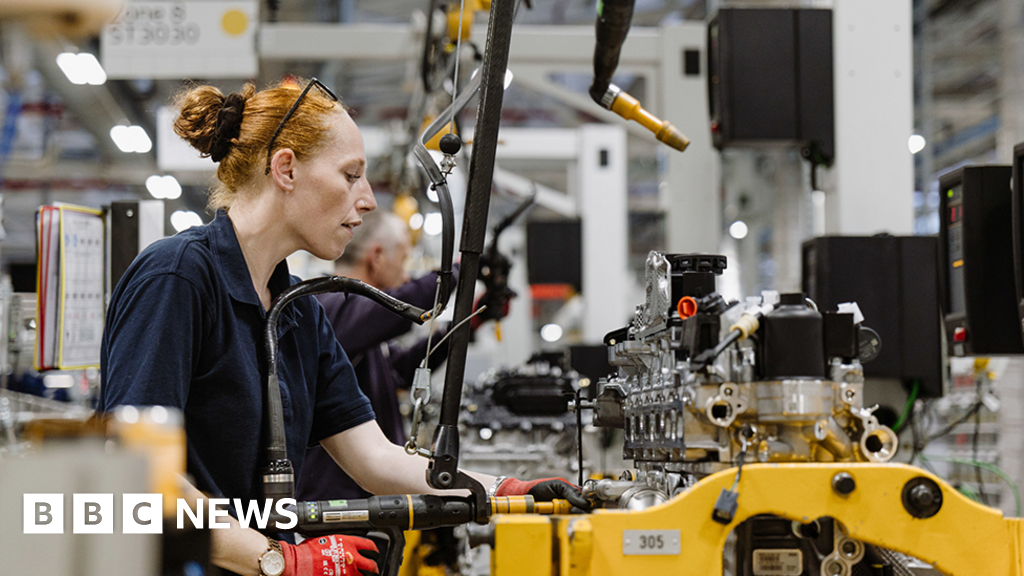
Jaguar Land Rover sees sales recover after cyber attack
-
Uncategorized1 week ago
[CinePlex360] Please moderate: “Trump signals p
-

 Entertainment7 days ago
Joe Jonas shares candid glimpse into parenthood with Sophie Turner
-

 Tech7 days ago
Our Favorite iPad Is $50 Off
-

 Sports7 days ago
UConn Final Four run could trigger a $50M furniture giveaway for Massachusetts-based Jordan’s Furniture
-
 Business7 days ago
Video: Why Is the Labor Market Stuck?
-

 Entertainment7 days ago
Blake Lively reacts to harassment claims dismissal against Justin Baldoni
-
 Politics7 days ago
Iran can sustain Strait of Hormuz closure for years, will cut US military logistics: Official