

Business
India’s Richest Woman Revealed: Meet The Billionaire Redefining Success

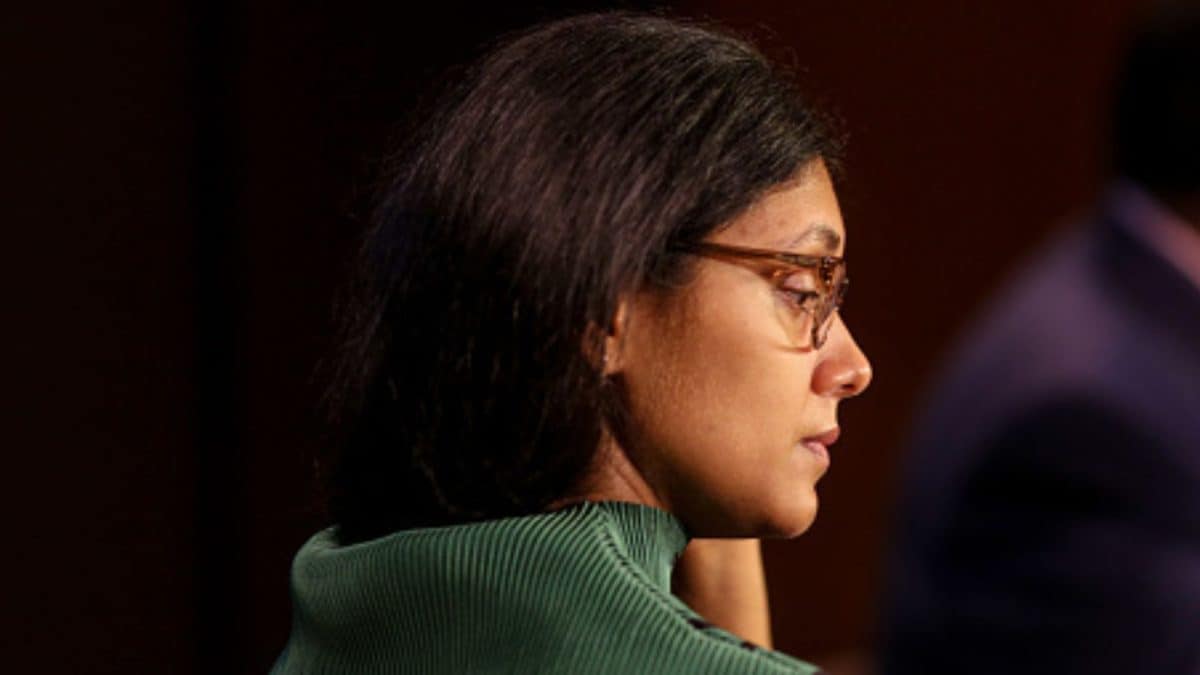
At just 43, Roshni Nadar Malhotra leads HCL Technologies, with Rs 2.84 lakh crore wealth — making her India’s richest woman and among the world’s top 5
Source link



As grocery chains face mounting pressure from inflation-weary shoppers and growing competition, some in the industry are starting to rely on artificial intelligence to protect margins without losing customers.
Traditional levers to protect profits or drive sales, like raising prices or running blanket promotions, are becoming less effective as shoppers split trips across multiple retailers in search of value. That dynamic has helped drive market share gains for discounters like Dollar General and warehouse clubs like Costco, forcing traditional grocers to rethink how they compete.
Many are turning to more targeted, tech-enabled strategies to balance affordability with profitability. One emerging approach is using data and AI to adjust pricing on perishable inventory, especially items nearing their “best-by” dates. Historically, about 30% of food in American grocery stores is thrown away each year, and some experts estimate that translates to nearly $18.2 billion in lost value.
Now with years of high inflation and a recent spike in gas prices making it harder for households to afford food, companies are trying to assume less of that loss, otherwise referred to as “shrink.”
“We see AI as a meaningful opportunity to both improve the customer experience and drive productivity across our business,” said Kroger Chairman Ronald Sargent on the company’s most recent quarterly earnings call. “We’re already seeing results from more competitive pricing.”
According to a Deloitte study, 89% of people are shopping for discounts and deals. Numerator data shows that shoppers are visiting 23% more retailers to purchase their groceries.
That makes setting the right prices at the right time more crucial than ever.
Still, making the right real-time pricing decision requires a break from traditional playbooks. Platforms like Flashfood are helping grocers dynamically price those items, which could aid them in limiting losses from food waste.
“Not only is everyone now a value shopper, but shoppers have the information and resources available to find the best deal,” said Flashfood CEO Jordan Schenck. “This raises the stakes in terms of competition between grocers, because they’re now competing with value-specific retailers.”
This has created a unique paradigm shift for grocers who have seen increased competition from other retailers, Schenck said, and pressure to figure out how to create value without eroding their brands through yellow sticker markdowns and discounting.
Flashfood connects shoppers with local grocery stores to purchase food nearing its best-by date at a discount. Users browse, purchase and pay for items directly through the app, then pick up orders from a designated “Flashfood zone” fridge in store.
Kroger’s Flashfood app.
Courtesy: Kroger
Flashfood says it helps grocers to sell fresh food by converting what would have been shrink into incremental revenue. The company is expanding to more than 100 additional Kroger stores this month, building on a footprint that already spans over 2,000 locations across North America.
The pitch is that retailers don’t have to choose between offering affordability to shoppers and boosting their margins. By using AI to target discounts precisely, rather than marking down an entire category, Flashfood says stores can improve sell-through while reducing waste. The end goal is more sales of perishable food and less product ending up in landfills.
Flashfood says its partners, which include Kroger but also regional chains like Piggly Wiggly, Loblaws and Gelson’s, and have reduced shrink by an average of 27% while also driving incremental traffic. Shoppers using the app make nearly four additional trips per month on average and spend about $28 more per visit on full-priced items beyond their discounted purchases, according to the company.
Advertisement for Kroger’s Flashfood app.
Courtesy: Kroger
At the same time, the data generated from these systems is giving retailers deeper insight into consumer behavior by identifying what products will sell, at what price and at what point in their shelf lives. That’s especially important in categories like fresh foods and bakery, where margins are tighter and spoilage risk is higher.
“Grocery stores have some of the best personalized data, but not all grocery stores know what to do with the data,” said Roth Capital Partners analyst Bill Kirk. “Kroger has been at the forefront of recognizing the importance of their data and the insights that can be derived.”
Kirk has a buy rating on the stock and $78 price target, higher than its Thursday closing price of $67.77.
Bridging that gap between surplus inventory and value-seeking shoppers is emerging as one of the clearest opportunities grocers are trying to cash in on to improve profitability.

The boss of Tesco has said the supermarket giant will do “whatever we can” to keep down the price of food for shoppers as it warned that uncertainty linked to the Iran war is clouding its outlook for profits.
The UK’s largest supermarket chain said it has not yet seen any impact on product availability or prices, excluding fuel, since the conflict began at the end of February.
However, it said has been in contact with the Government to help plan for a worst-case scenario which could see the ongoing war lead to shortages of carbon dioxide used by the food industry.
Ken Murphy, chief executive of Tesco, told reporters: “We haven’t seen any issues and are in very strong shape.
“We constantly talk to our suppliers and none of our suppliers have raised any issues.”
He also said the retailer does not recognise predictions from the Food and Drink Federation that food inflation could jump above 9% this year if the conflict continues, stressing that it has not yet seen an impact on prices.
Fuel prices have already jumped higher in recent months due to the war between US-Israeli and Iranian forces, which have impacted energy production facilities and shipments through the Strait of Hormuz.
Mr Murphy said: “We are in good shape in our fuel stocks.
“We have seen elevated demand recently but we are still very competitively stocked.”
The boss also added that the retailer has not yet seen any impact from the conflict on customer sentiment in the UK.
It came as Tesco said that profits could dip over the current year as it flagged increased uncertainty linked to the conflict in the Middle East.
The UK’s largest supermarket group reported stronger-than-expected adjusted operating profits of £3.15 billion for the year to February 28, up slightly from £3.13 billion a year earlier.
The retailer said it expects this to be between £3 billion and £3.3 billion over the current financial year, telling shareholders it was “providing a wider range of guidance than we were previously planning” due to uncertainty caused by the Iran war.
Tesco also revealed that sales, excluding VAT and fuel, grew by 4.6% to £66.6 billion for the past year.
The group said on Thursday that it plans to make a further £500 million in cost savings in 2026/27, after surpassing its £535 million savings target last year.
Mr Murphy added: “We are committed to doing whatever we can to help keep down the cost of the weekly shop, and with the conflict in the Middle East creating further uncertainty for consumers and the economy more broadly, that commitment matters more than ever.
“Over the last year, despite cost pressures from new regulation, we have increased our investments in keeping prices low, further improving quality and offering even better service.
“Customers are choosing to shop more with us as a result, leading to our highest market share for over a decade.”
Tesco also announced that it will hand a £65 million award to its staff across its stores, warehouses and customers engagement centres following the latest performance.
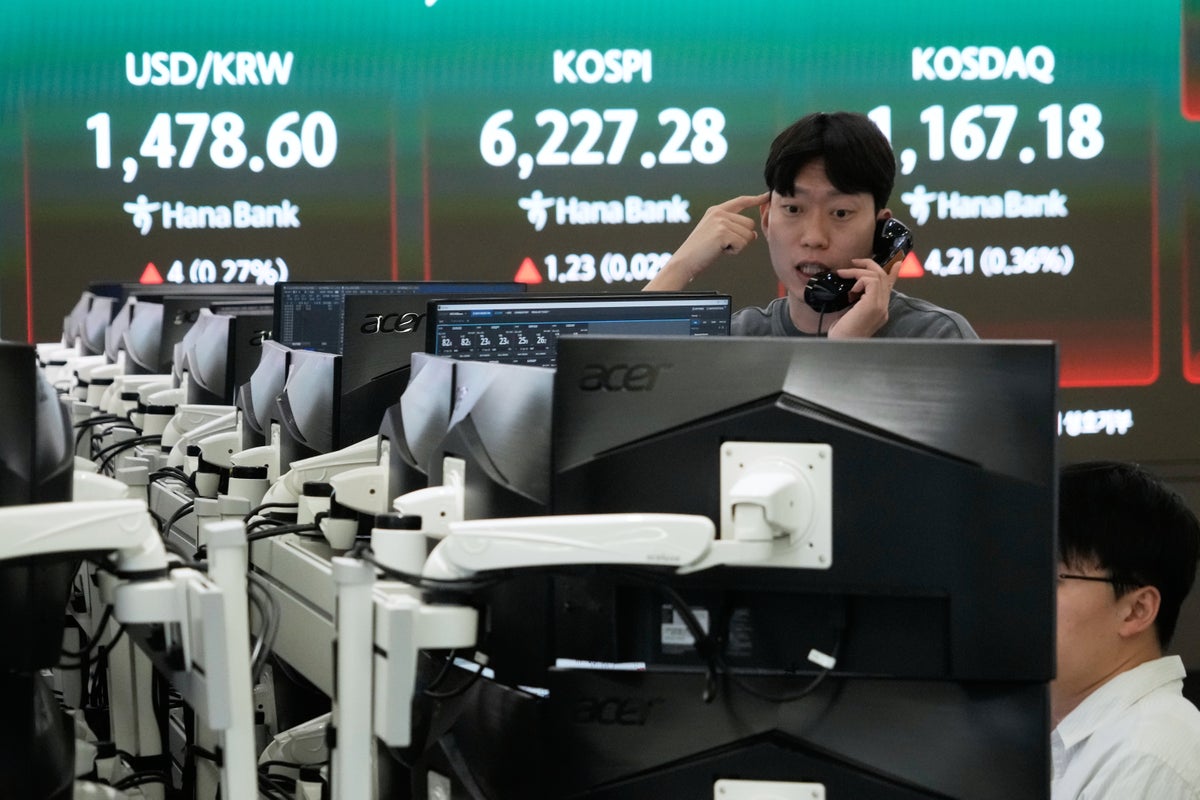
Oil prices remained below $100 a barrel on Friday as Wall Street set another record and Asian stocks headed for a second consecutive week of strong gains, with markets watching for signs that the Iran war ceasefire expiring next week would be extended.
Brent crude fell 1.1 per cent to $98.31 a barrel and US benchmark crude dropped 1.4 per cent to $89.90, after Donald Trump said the next meeting between the US and Iran could take place over the weekend and suggested he was open to extending the two-week ceasefire beyond its expiry next week.
Iran’s UN envoy said Tehran remained “cautiously optimistic” over negotiations with the US. A 10-day ceasefire between Lebanon and Israel also went into effect on Thursday.
Asian markets pulled back on Friday despite Wall Street setting another record the previous session. Tokyo’s Nikkei fell 1 per cent to 58,930 after hitting an all-time high on Thursday. South Korea’s Kospi was 0.6 per cent lower, Hong Kong‘s Hang Seng dropped 1 per cent and the Shanghai Composite edged down 0.1 per cent. Australia’s S&P/ASX 200 lost 0.3 per cent and Taiwan’s Taiex traded 0.5 per cent lower.
MSCI‘s broadest index of Asia-Pacific shares outside Japan remained close to its highest level since 2 March, the first trading day after the Iran war broke out. The index is up 14.5 per cent in April after dropping 13.5 per cent in March, with almost all stock markets now back to pre-war levels.
On Wall Street, the S&P 500 closed 0.3 per cent higher at 7,041 on Thursday, a day after eclipsing its previous all-time high set in January. The Dow Jones Industrial Average rose 0.2 per cent to 48,578 and the Nasdaq added 0.4 per cent to 24,102.
However, the speed of the recovery has surprised some analysts, who warned markets may be underpricing the risks.
“There’s quite a strong contrast between what policymakers and central bankers are saying about the risks that this conflict is creating versus what the market is implying,” Andrew Chorlton, chief investment officer for public fixed income at M&G, told Reuters.
“That seems somewhat complacent. It seems unlikely that there shouldn’t be some additional risk premium priced in, either to growth or to inflation.”
Others pointed to the strait as the critical test for whether the rally could hold.
“I think equity markets are remaining positive and some solid US earnings have helped, but — and it’s a big but — we need to see some concrete evidence that peace is going to last,” Nick Twidale, chief market strategist at ATFX Global, told Reuters.
“A full reopening of the Strait, or we could see some substantial corrections in global stocks in the coming days and weeks.”
The stakes on the energy side are rising. The head of the International Energy Agency warned on Thursday that Europe had “maybe six weeks or so” of jet fuel supplies remaining and that flight cancellations were coming “soon”.
The closure of the Strait of Hormuz has caused the worst oil price shock in history — Brent crude has surged roughly 40 per cent since the start of the Iran war in late February — and prompted the IMF to downgrade its global growth outlook, warning that a prolonged conflict could push the world to the brink of recession.
The US dollar, which had benefited from safe-haven demand in March, has since given up those gains, with the dollar index near its lowest level since 2 March after eight straight sessions of decline. The euro held at $1.1778 while the Australian dollar, considered a risk-sensitive currency, drifted near a four-year high. Gold edged up 0.1 per cent to $4,814.60 an ounce and silver gained 0.4 per cent to $79.04.


Drewry WCI snaps 6-week rally due to ease in freight charge
Some grocers are using AI to cut food waste and boost profit margins

Bangladesh ensuring import of refined fuel from alternative sources

-
 Tech1 week ago
As the Strait of Hormuz Reopens, Global Shipping Will Take Months to Recover
-

 Tech1 week ago
This AI Button Wearable From Ex-Apple Engineers Looks Like an iPod Shuffle
-

 Politics1 week ago
Indian airlines hit hardest after Dubai limits foreign flights until May 31
-

 Entertainment4 days ago
Palace left in shock as Prince William cancels grand ceremony
-

 Sports4 days ago
The case for Man United’s Fernandes as Premier League’s best
-

 Politics1 week ago
Chinese, Taiwanese will unite, Xi tells Taiwan opposition leader
-

 Entertainment6 days ago
Dua Lipa hits major career high ahead of wedding with Callum Turner
-
 Business4 days ago
UK could adopt EU single market rules under new legislation