

Business
Trump’s threats against late-night TV could spell more trouble for advertisers


A sign is displayed outside the El Capitan Entertainment Centre in Hollywood where the “Jimmy Kimmel Live!” show will be recorded on the first night the show will return to the ABC lineup on September 23, 2025 in Los Angeles, California.
Mario Tama | Getty Images
Late-night television has come under fire in recent months. That could leave advertisers and media companies, already clinging to what’s left on live TV, with an even smaller pool of options.
The recent upheaval in late-night programming — namely the cancellation of “The Late Show with Stephen Colbert” and the temporary suspension of “Jimmy Kimmel Live!” — has shown a spotlight on ratings and revenue for late-night standouts and spurred questions of political influence.
President Donald Trump, aggressively vocal about both Colbert’s and Kimmel’s bad fortune, has called for late-night shows on NBC hosted by Jimmy Fallon and Seth Meyers to be next on the chopping block.
The result is not just uncertainty for viewers, TV executives and show staffs, but a pall over an advertising category that’s long been a staple of live TV.
“Reaching a lot of people who are engaged because it’s live TV — or live-to-tape — is really important, and when you think about it from the media company’s perspective … the live moments are live sports on most given nights, the nightly news and late-night talk shows. That’s all you have,” said Kevin Krim, CEO of ad data firm EDO.
“To the people who think late night doesn’t matter, they’re not thinking about the economics and the goals and the incentives of both the advertisers and the media companies. They’re ignoring some of the strategic value of the ecosystem,” he added.
When Disney’s ABC pulled “Jimmy Kimmel Live!” off the air in September, it was unclear for days if or when the program would return. While Disney reinstated Kimmel less than a week later, more than 20% of the country still couldn’t watch the show for three additional days as two major broadcast station owners preempted the content.
Colbert’s show will end next year after CBS parent Paramount announced in July it wouldn’t renew the program, citing financial considerations. The company has yet to reveal plans to fill the timeslot or give it back to the affiliate network owner.
The fervor around Colbert’s upcoming cancellation caused a temporary ratings surge, and Kimmel’s suspension led the show to rake in millions of viewers upon its return — way above the average and a missed opportunity for advertisers in the markets where Kimmel was preempted.
Late-night draw
Traditional TV viewership has decreased as the audience opts for streaming. But live content still garners the biggest ratings, which includes late-night talk shows.
As a result, late-night shows remain a valuable time slot for advertisers, especially for a younger demographic.
“Late-night may not draw the same mass audiences it once did, but the viewers who tune in are highly intentional. For advertisers, that makes the space less about sheer scale and more about reaching a consistent, engaged community,” said Julie Clark, longtime ad industry executive and current senior vice president of media and entertainment at TransUnion.
“Jimmy Kimmel Live!” was considered among the top 10 of ABC’s best vehicles for advertising reach, with the show delivering 2.5% of the network’s total ad exposures, or 11.8 billion national TV impressions, according to ad measurement firm iSpot.
According to EDO, in order to generate as much ad impact as one ad in the late-night comedy broadcast programs — that’s Kimmel, Fallon, Meyers and Colbert — advertisers would need to air, on average, about four spots across competitive late-night programming this year. In this case, competitive late-night programming means everything aired on broadcast and cable TV, excluding the late-night hosts, during these time slots.
Brands launching new products still get their best success from live TV commercials, according to ad industry executives.
But advertisers have begun to cut back on ad spending in the face of macroeconomic headwinds and trade uncertainty. Recently, eMarketer and the Interactive Advertising Bureau each released reports projecting a pullback in ad spending, not just for TV but also digital and streaming, due to higher costs for companies brought on by tariffs.
As advertisers trim spend and Trump puts late night in his crosshairs, the costs of these TV programs are coming under the microscope.
Weighing the costs
Media companies’ priorities have shifted to building out their streaming platforms in a push for profits. Pay TV networks still make the majority of the profits, but that number is shrinking.
“Generally speaking, viewership of late night talk shows has been low compared to what they once were, but it’s less about a specific host or show and more about the shift in how people consume television,” said Vicky Chang, vice president of media at Tatari, a TV ad platform.
Paramount said in July its move to end Colbert was “purely a financial decision against a challenging backdrop in late night.” Kimmel’s show will face another test when his contract comes up in 2026.
“Late-night TV and daytime morning shows used to be two of the most profitable areas of TV, more so than sports because of the big sports rights fees. Networks typically made a huge amount of money,” said Jonathan Miller, longtime senior media industry executive who serves as CEO of Integrated Media. “Initially late-night shows weren’t very expensive, but the costs have gone up. But ratings have declined so it’s less profitable – and hosts still want a lot of money.”
The focus for media companies is increasingly on content that guarantees big live audiences — by and large, live sports. This has led to hefty spending on sports rights over other kinds of content.
Weeks after Colbert said this season would be his final, the newly merged Paramount Skydance announced a $7.7 billion media rights deal with UFC. ABC parent Disney and NBCUniversal last year signed a new media rights deal with the NBA worth $77 billion over 11 years.
Media companies are also facing the daunting cost of rising political pressure.
Trump and Federal Communications Commission Chair Brendan Carr have ramped up scrutiny of media companies during the president’s second term in office.
Last year ABC News agreed to pay $15 million toward Trump’s presidential library to settle a lawsuit over comments by TV anchor George Stephanopoulos that Trump called defamatory. And this summer Paramount agreed to pay $16 million to settle a lawsuit over the editing of a CBS “60 Minutes” interview with then-Vice President Kamala Harris.
Weeks after that settlement, Paramount and Skydance won federal approval for their long-awaited merger.
Colbert later referred to Paramount’s settlement as a “big fat bribe” during one of his show’s opening monologues. Soon after, the company announced the future end date of the late-night show.
Disney’s suspension of Kimmel came on the heels of comments by the FCC’s Carr that suggested affiliate ABC stations could lose their broadcast licenses if they aired content that was against the “public interest.” Trump made a similar threat regarding the broadcast networks that he said are “against” him.
Disclosure: Comcast is the parent company of NBCUniversal, which owns CNBC. Versant would become the new parent company of CNBC upon Comcast’s planned spinoff of Versant.



Illuminated logo for Pepsi on a soda fountain in Walnut Creek, California, March 4, 2026.
Smith Collection | Gado | Archive Photos | Getty Images
PepsiCo on Thursday reported quarterly earnings and revenue that topped analysts’ expectations as its struggling North American food business reported a return to volume growth.
Here’s what the company reported compared with what Wall Street was expecting, based on a survey of analysts by LSEG:
- Earnings per share: $1.61 adjusted vs. $1.55 expected
- Revenue: $19.44 billion vs. $18.94 billion expected
Pepsi reported first-quarter net income attributable to the company of $2.32 billion, or $1.70 per share, up from $1.83 billion, or $1.33 per share, a year earlier.
Excluding items, the company earned $1.61 per share.
Net sales rose 8.5% to $19.44 billion.
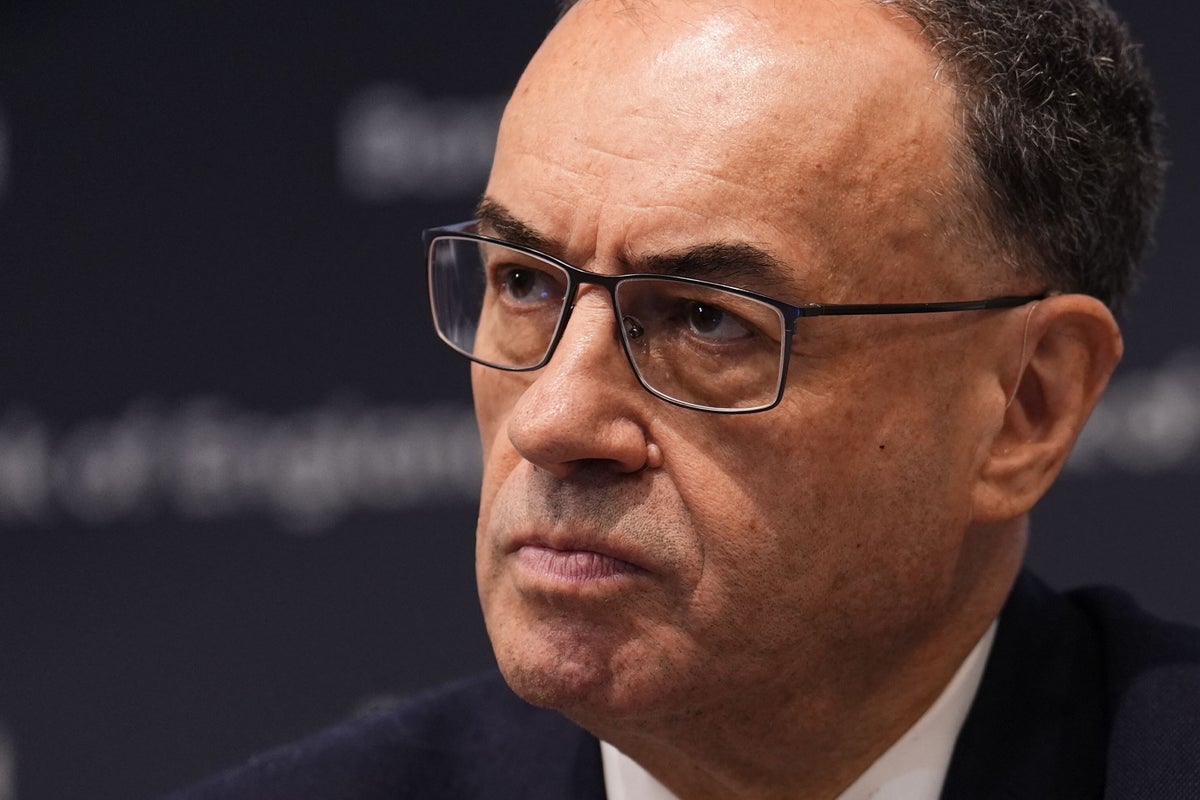
Bank of England governor Andrew Bailey has warned the global economy is set for a “very big energy shock” that will lead to surging inflation, but said policymakers would not rush to hike interest rates.
Speaking at the International Monetary Fund (IMF) spring meeting in Washington DC, Mr Bailey told the BBC the Bank is facing a “very, very difficult” decision on rates at its meeting on April 30.
The Middle East conflict has sent oil prices surging by around 60% since the start of the year, at one stage hitting nearly 120 US dollars a barrel, which is pushing up fuel and energy costs.
This is expected to feed through to wider prices, with forecasts for UK inflation to jump higher in the coming months and Britain’s growth outlook sharply downgraded.
But official figures on Thursday, which were released after Mr Bailey’s comments, showed the UK economy was far stronger than expected at the start of the year, with growth of 0.5% in February following upwardly revised expansion of 0.1% in January.
Experts said while welcome, UK activity is still set to slow sharply as higher energy prices weigh on spending and hamper growth.
Mr Bailey told the BBC: “There’s really difficult judgments to be made.
“We’re not going to rush to judgments on those things, because there are a lot of uncertainties around this, not just how it’s going to play out, but also how it’s going to pass through into the UK economy.”
The IMF’s economic outlook report earlier this week showed the UK facing the biggest downgrade to growth among the G7 group of countries, with 0.8% forecast for 2026, down sharply from the 1.3% predicted in January.
The influential financial body said the spike in energy prices caused by the war will help push UK inflation towards 4% – double the Bank of England’s target.
But the IMF cautioned central banks about making hasty decisions on interest rates.
The Bank of England had previously been expected to cut rates further this year, down from 3.75% currently, but the predicted inflation surge caused by the Iran war has led to forecasts that hikes could be on the way.
Mr Bailey said the Bank is taking the IMF’s “serious advice” into account.
On fears over supply shortages caused by the Iran war disruption and blockage of the crucial Strait of Hormuz shipping route, Mr Bailey said there is “a certain amount of resilience in the system” but that will only last so long.
He added: “The faster there is a resolution to this situation – I particularly mean in terms of the supply of energy coming out of the Gulf – the easier and better the outcome will be.
“That’s really critical at this moment.”

The economy saw its biggest monthly rise in more than two years just before the outbreak of the US-Israeli war with Iran.
Source link


Australian consumer confidence drops in April on rising living costs

LG’s High-End Soundbar System Makes My Living Room Feel Like a Home Theater

‘Miss Congeniality’ Benjamin Bratt opens up on working with Sandra Bullock

-

 Entertainment1 week ago
Queen Elizabeth II emotional message for Archie, Lilibet sparks speculation
-

 Tech1 week ago
Azure customers up in arms over ‘full’ UK South region | Computer Weekly
-

 Tech1 week ago
As the Strait of Hormuz Reopens, Global Shipping Will Take Months to Recover
-

 Fashion1 week ago
CII submits 20-pt agenda to Indian govt to back firms hit by Iran war
-

 Tech1 week ago
This AI Button Wearable From Ex-Apple Engineers Looks Like an iPod Shuffle
-

 Politics6 days ago
Indian airlines hit hardest after Dubai limits foreign flights until May 31
-

 Fashion1 week ago
ICE cotton hits 11-month high on drought concerns, demand boost
-

 Politics6 days ago
Chinese, Taiwanese will unite, Xi tells Taiwan opposition leader