

Business
Pakistan pitches port on Arabian Sea to US; eye on minerals hub development: Report – The Times of India

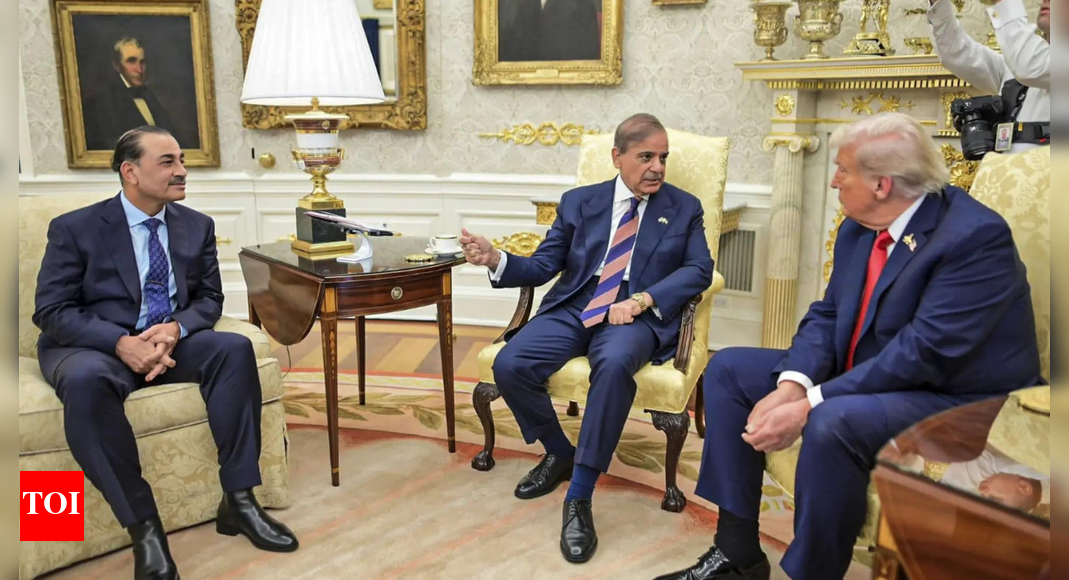
Advisers to Pakistan’s military chief, Asim Munir, have reportedly approached US officials with a proposal to construct and operate a port at Pasni on the Arabian Sea, offering Washington a strategic presence in a geopolitically sensitive region. According to the Financial Times, the plan envisages transforming Pasni—a small fishing town—into a hub for transporting Pakistan’s critical minerals, including copper and antimony, essential for batteries, fire-retardant materials, and missile production. The town lies about 100 miles from Iran and 70 miles from Gwadar, where China operates a major port facility. The initiative, which is not official government policy, was reportedly shared with Munir ahead of his White House meeting with President Donald Trump last month. However, a senior Trump administration official clarified that the proposal had not reached the president or his advisers for discussion. The port plan forms part of a broader push by Pakistani officials to strengthen ties with the Trump administration. Other initiatives include collaboration on a Trump-backed cryptocurrency project, deeper cooperation against the Afghanistan-based militant group Isis-K, support for his Gaza peace plan, and access to critical minerals. US and Pakistani diplomats have described the relationship between Munir and Trump as “a bromance” since the president claimed credit in May for brokering a ceasefire between Pakistan and India. Over the summer, US-India relations have cooled, while Munir and Prime Minister Shehbaz Sharif publicly thanked Trump and even nominated him for the Nobel Peace Prize. Following their recent meeting, the White House released photographs showing Munir and Sharif presenting Trump with mineral samples. The Pasni port blueprint includes a railway to transport minerals from Pakistan’s interior, connecting to mines such as Reko Diq, developed by Canada’s Barrick Mining. The project’s estimated cost is $1.2 billion, with proposed funding from a mix of Pakistani federal and US-backed development finance. Supporters say the plan would diversify Pakistan’s strategic options while balancing relations with China, the US, Iran, and Saudi Arabia, following a recent security pact with Riyadh. The blueprint stated, “Pasni’s proximity to Iran and Central Asia enhances US options for trade and security. Engagement at Pasni would counterbalance Gwadar and expand US influence in the Arabian Sea and Central Asia.” It also flagged potential dual-use concerns at China’s Gwadar port under the Belt and Road Initiative, alluding to fears it could serve as a naval base, a claim denied by Islamabad and Beijing. The plan specifies no “direct basing,” meaning the port would not host US military installations. Pakistan has historically been a close US ally, first during the Cold War and then after the 9/11 attacks, but relations frayed due to Islamabad’s support for the Taliban in Afghanistan. One adviser, quoted by FT, said, “I’ve been telling our leaders we need to diversify from China. We don’t need to consult the Chinese as it’s outside the Gwadar concession.” Missouri-based US Strategic Metals (USSM) has shown early interest, signing a memorandum of understanding in September with Pakistan’s military engineering corps. USSM commercial director Mike Hollomon said, “In our conversations with the field marshal, he stressed that Pakistan has been an ally of the US for a long time and minerals is a way to rekindle a dormant friendship.” Late last month, Pakistan shipped a small first consignment of fewer than two tonnes of critical minerals, including copper, antimony, and neodymium, to USSM. The minerals sector currently accounts for about 3 per cent of Pakistan’s GDP, with large untapped reserves in insurgency-hit western provinces. Hussain Abidi, chair of the Pakistan Council of Scientific and Industrial Research, described the initiative as, “This is a reset with America through economic ties rather than just the traditional security ties.”












Energy markets have seen wild swings since the US and Israel attacked Iran on 28 February.
Source link
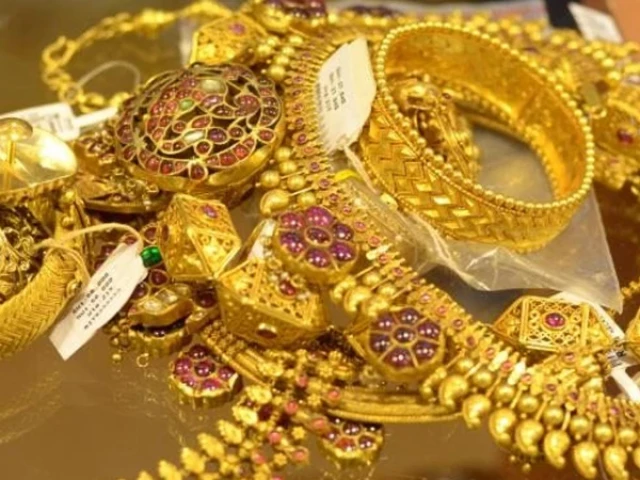
Gold and silver prices declined in both international and domestic markets, reflecting a broader downward trend in precious metals.
In the international bullion market, the price of gold fell by $49 per ounce, settling at $4,788.
According to the All-Pakistan Gems and Jewellers Sarafa Association (APGJSA), in the local market, gold prices also recorded a significant drop. The price per tola decreased by Rs4,900 to reach Rs501,162. Similarly, the price of 10 grams of gold declined by Rs4,201, settling at Rs429,665.
Silver prices also followed a downward trajectory. The price per tola of silver fell by Rs145 to Rs8,417 while the price of 10 grams of silver dropped by Rs124, reaching Rs7,216.
Read More: Gold, silver prices rise again in local and international markets
Gold and silver prices recorded an increase on Saturday in both international and local markets after declining on Friday, following a three-day upward trend in global and domestic markets.
According to the All Pakistan Sarafa Gems and Jewellers Association (APSGJA), in the international bullion market, the price of gold rose by $45 per ounce to reach $4,837. In the local market, the price of gold per tola increased by Rs4,500 to Rs506,062, while the rate for 10 grams rose by Rs3,858 to Rs433,866.
Silver prices also moved higher, with the per tola rate increasing by Rs118 to Rs8,562. Similarly, the price of silver per 10 grams rose by Rs101 to Rs7,340.
Business
Stocks to buy: What’s the outlook for Nifty for April 20-April 24 week? Check list of top stock recommendations – The Times of India

Stock market recommendations: APL Apollo Tubes, and HDFC Asset Management Company are Sudeep Shah, Head – Technical Research and Derivatives, SBI Securities’ top stock picks for this week. Below are his stock picks and also views on Nifty.Nifty ViewThe benchmark index Nifty continues to inch higher; however, this phase of the rally is notably different, as the spotlight has shifted away from the headline index. While Nifty has extended its pullback rally for the second consecutive week and closed in the green, the real strength is emerging beneath the surface. The broader markets have taken the lead, with Nifty Midcap 100 and Nifty Smallcap 100 delivering a robust rally and clearly outperforming the frontline index. Both indices have decisively moved above their key moving averages, signalling trend strength, whereas Nifty is still trading below its 100day and 200day EMA. Most importantly, Nifty Midcap 100 is now just a short distance away from its alltime high, suggesting that the next leg of opportunity may be unfolding beyond the conventional largecap space.Focusing back on Nifty, the index has been sustaining above its 50day EMA for the last three trading sessions, while the 20day and 50day EMA have started to edge higher, reflecting improvement in the shortterm trend. Meanwhile, the downward momentum in the 100day and 200day EMA has slowed considerably, indicating a stabilisation in the mediumterm structure. Momentum indicators further support the constructive bias, with the daily RSI trading above the 57 mark and moving higher, and the daily MACD histogram signalling strong bullish momentum.Collectively, these technical factors suggest that the pullback rally is likely to continue in the short term. On the upside, the 24650–24700 zone is expected to act as a crucial hurdle for the index. A sustainable breakout above 24700 could lead to an extension of the pullback rally towards 25000, followed by 25200 in the near term. On the downside, the 24050–24000 zone will serve as immediate support, and as long as the index remains above the 24000 mark, the ongoing pullback rally is likely to stay intact.Bank Nifty ViewThe banking benchmark Bank Nifty also ended the week on a positive note, indicating the continuation of its ongoing pullback rally. However, over the last three trading sessions, the index has struggled to decisively cross its 200day EMA, suggesting a phase of consolidation near a key long-term resistance zone. This price behaviour reflects hesitation at higher levels and points towards a pause in momentum after the recent recovery.This consolidation largely indicates a degree of caution among market participants, as investors appear to be awaiting clarity on the Q4 earnings outcome of major banking heavyweights, namely ICICI Bank and HDFC Bank. With both results scheduled over the weekend, the index is likely to witness a directional move post the earnings announcements, depending on earnings performance and management commentary.From a technical perspective, the index continues to maintain a constructive short-term setup, as it is trading above its 20day and 50day EMA, reflecting underlying strength. Momentum indicators remain supportive, with the daily RSI placed above the 55 level and trending higher, suggesting improving buying momentum and positive shortterm bias.Looking ahead, the 57000–57100 zone is expected to act as a crucial resistance area, as it coincides with both the prior swing high and the 100day EMA, making it an important supply zone. A sustainable move above 57100 could lead to a further extension of the pullback rally towards 57800, followed by 58500 in the short term. On the downside, the 55800–55700 zone is placed as an important support band, and any dip towards this region is likely to attract buying interest as long as the structure remains intact.Stock recommendations:APL Apollo TubesAPL Apollo Tubes has shown strong bullish intent after a 14.5% pullback from its early April lows near the 200-day EMA, indicating solid support at lower levels. The recent consolidation between 2072–1961 acted as a base, with the stock now delivering a decisive breakout on strong footing. A positive DI crossover on ADX signals clear buyer dominance, while the MACD nearing a move above the zero line with rising histogram bars points to strengthening momentum.The overall setup suggests the stock is well-positioned to extend its uptrend in the near term. Hence, we recommend to accumulate the stock in the zone of 2110-2090 with a stoploss of 2020. On the upside, it is likely to test the level of 2255 in the short term.HDFC Asset Management CompanyHDFC Asset Management Company has exhibited strong bullish momentum, closing Friday’s session with an impressive 4.89% gain. The stock has surged nearly 26% from its March lows, indicating robust buying interest. Momentum indicators remain firmly supportive, with RSI sustaining above 60, reflecting strength. Additionally, a positive DI crossover on ADX highlights clear buyer dominance, while rising MACD histogram bars with the MACD line above the zero mark further reinforce the ongoing uptrend. The overall structure suggests the stock is well-positioned to extend its upward trajectory. Hence, we recommend to accumulate the stock in the zone of 2800-2770 with a stoploss of 2690. On the upside, it is likely to test the level of 2990 in the short term.(Disclaimer: Recommendations and views on the stock market, other asset classes or personal finance management tips given by experts are their own. These opinions do not represent the views of The Times of India)


Germany’s BOSS secures landmark Australian Open partnership

Prego Has a Dinner-Conversation-Recording Device, Capisce?

Long energy disruptions to raise pressures on SEA nations: S&P Global

-

 Fashion4 days ago
France’s LVMH Q1 revenue falls 6%, shows resilience amid Iran war
-

 Sports1 week ago
The case for Man United’s Fernandes as Premier League’s best
-

 Entertainment1 week ago
Palace left in shock as Prince William cancels grand ceremony
-
 Business1 week ago
UK could adopt EU single market rules under new legislation
-

 Entertainment5 days ago
Is Claude down? Here’s why users are seeing errors
-

 Fashion1 week ago
Energy emerges as biggest cost driver in textile margins
-

 Sports1 week ago
Lamar Jackson hits back at critics with faithful message on social media
-

 Tech1 week ago
A Lot of Shops Won’t Fix Electric Bikes. Here’s Why