

Business
Brexit impact on UK economy ‘negative for foreseeable future,’ Bailey warns

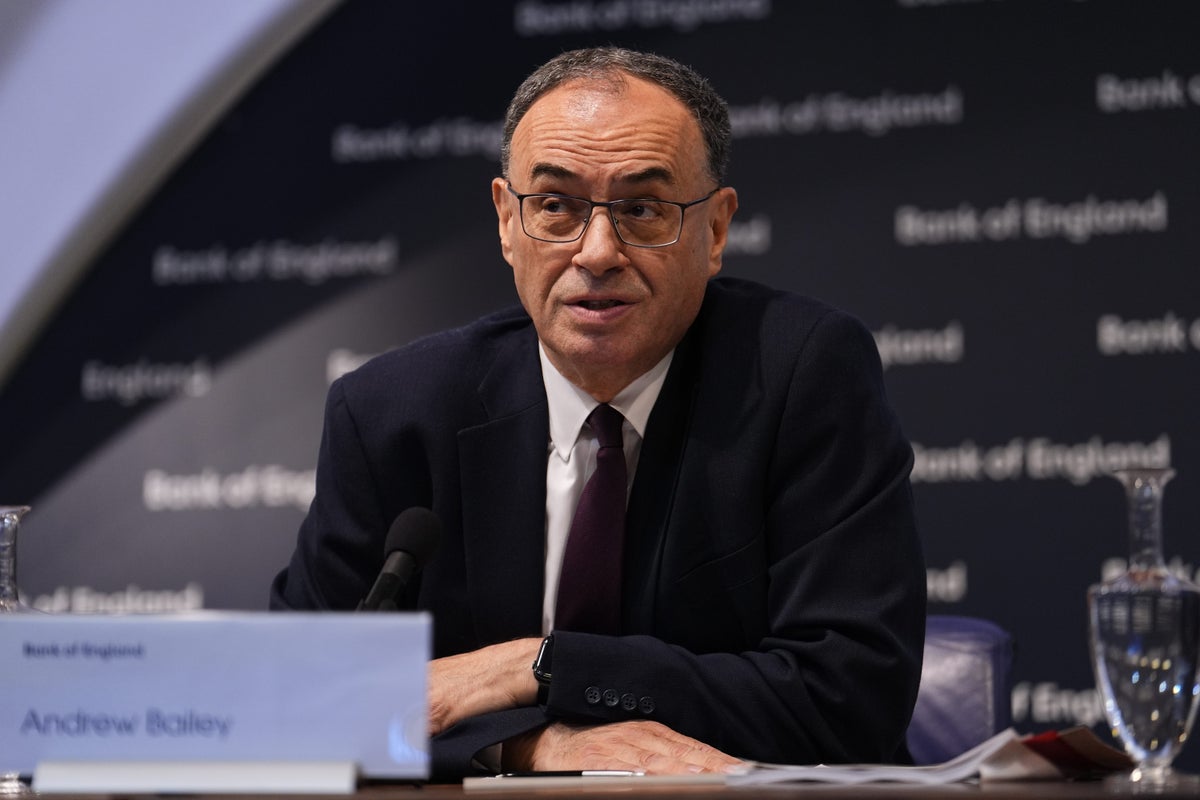
Brexit will have a negative impact on the UK’s economic growth “for the foreseeable future,” Bank of England governor Andrew Bailey has warned.
The economy is, however, likely to adjust and find balance again in the longer term, Mr Bailey, who was speaking at the G30 40th annual International Banking Seminar on Saturday, added.
The event in Washington, DC saw Mr Bailey highlight a decline in the UK’s potential growth rate from 2.5% to 1.5% over the past 15 years.
He linked this to lower productivity growth, an ageing population and trade restrictions – including post-Brexit economic policies.
“For nearly a decade, I have been very careful to say that I take no position per se on Brexit, which was a decision by the people of the UK, and it is our job as public officials to implement it,” Mr Bailey said.
“But, I quite often get asked a second question: what’s the impact on economic growth?
“And as a public official, I have to answer that question.
“And the answer is that for the foreseeable future it is negative.”
“But over the longer term, there will be – because trade adjusts – some at least partial rebalancing,” Mr Bailey added.
Referencing the works of 18th-century economist and philosopher Adam Smith, he continued: “Why do I give that answer? Because that’s the Smithian growth model: making an economy less open restricts growth over the long term.
“Longer term, you will get some adjustment. Trade does adjust, it does rebuild.
“And all the evidence we have from the UK is that is exactly what is happening.”
Investment in innovation and new technologies, including AI, may help address the decline in productivity growth in the long run, Mr Bailey said.
“If we take account of the impact of ageing and trade restrictions, we’re really putting our chips on investment,” he said.
“We’re putting our chips on general-purpose technology, and AI looks like the next general-purpose technology, so we need to work with it.
“We need to ensure that it develops appropriately and well.”
Mr Bailey warned that, although AI is likely to usher in a breakthrough in productivity long-term, it may “in the current circumstances, be a risk to financial stability through stretched valuations in the markets”.
“It doesn’t undermine the fact that AI, in my view, is likely, in addressing this slower growth issue, that we have and the consequences of it – that it is actually the best hope we have, and we really do need to do all we can to foster it,” he said.
The Bank of England governor’s prediction comes as Chancellor Rachel Reeves is under pressure ahead of next month’s Budget, with official figures showing muted growth in August following a surprise contraction in July.
The Office for National Statistics (ONS) said gross domestic product (GDP) rose by 0.1% month-on-month in August and fell by 0.1% in July, in a revision to the previous estimate for no growth.
In the three months to August, GDP grew by 0.3% compared with 0.2% growth in the three months to July, the ONS said.
The latest figures come after the International Monetary Fund (IMF) earlier this week forecast UK inflation was set to surge to the highest in the G7 in 2025 and 2026.
Business
US stock markets today (May 6, 2026): Wall Street rallies to record highs, crude oil tumbles on Strait of Hormuz reopening hopes – The Times of India
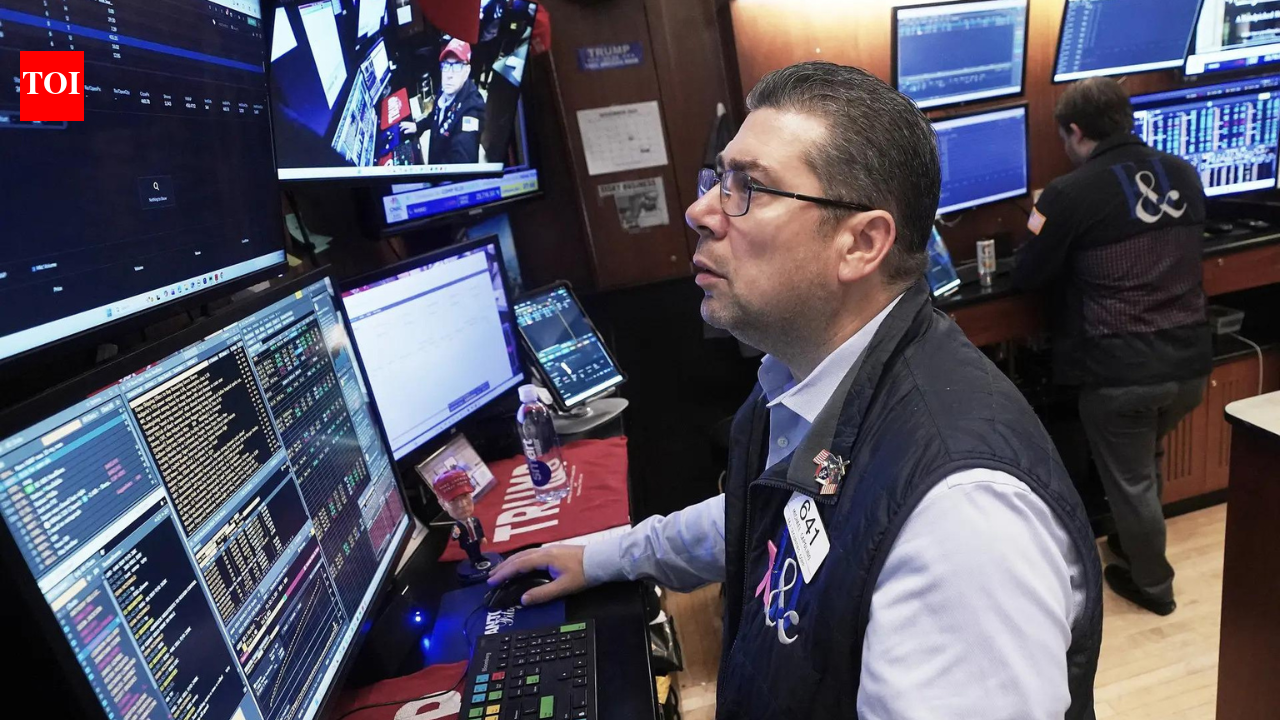
US stock markets surged on Wednesday while oil prices plunged sharply as investors bet on a possible breakthrough in US-Iran negotiations that could reopen the Strait of Hormuz and restore global crude supplies, AP reported.The S&P 500 climbed 0.8 per cent and headed towards another record close. The Dow Jones Industrial Average rose 487 points, or 1 per cent, while the Nasdaq Composite gained 0.8 per cent.Brent crude, the international oil benchmark, slumped 5.7 per cent to $103.61 per barrel after falling from levels above $115 earlier this week. At one point during the session, Brent briefly dropped below $97 before recovering some losses.The rally came after US President Donald Trump said the Strait of Hormuz could be “OPEN TO ALL” if Iran accepts a reported agreement, though he did not disclose details of the proposed deal.The Strait of Hormuz has remained at the centre of the global energy crisis since the Iran conflict disrupted oil tanker movement through the Persian Gulf, pushing crude prices sharply higher and stoking inflation fears worldwide.Markets also drew optimism from Trump’s indication that the US may scale back efforts to reopen the strait through military means, while China called for a comprehensive ceasefire after talks between Chinese and Iranian foreign ministers.Asian and European markets also rallied strongly. South Korea’s Kospi surged 6.5 per cent to cross the 7,000 mark for the first time, while Hong Kong’s Hang Seng rose 1.2 per cent. London’s FTSE 100 gained 2.2 per cent and France’s CAC 40 climbed 2.9 per cent.On Wall Street, technology and AI-linked stocks led gains after strong earnings reports.AMD jumped 19.3 per cent after reporting better-than-expected quarterly profit and revenue. CEO Lisa Su said continued growth in artificial intelligence demand had boosted the company’s performance.The chipmaker also projected revenue growth of around 46 per cent in the current quarter.Super Micro Computer rallied 14.2 per cent after posting earnings above analyst estimates.CVS Health gained 8.2 per cent after beating first-quarter expectations and raising its full-year forecasts.Stocks of companies with high fuel costs also rose sharply amid hopes of lower oil prices. United Airlines climbed 5.2 per cent, while Carnival and Royal Caribbean gained 5.5 per cent and 5.2 per cent, respectively.In the bond market, Treasury yields fell as easing oil prices reduced inflation concerns. The yield on the 10-year Treasury dropped to 4.35 per cent from 4.43 per cent a day earlier.Lower bond yields generally reduce borrowing costs for households and businesses and tend to support equity valuations.

Oil prices have fallen sharply to below 100 US dollars a barrel on fresh hopes of an end to the Iran war and unblocking of the crucial Strait of Hormuz.
The cost of benchmark Brent crude dropped 11% to under 98 dollars a barrel in afternoon trading on Wednesday as US President Donald Trump said he was pausing efforts to guide stranded ships out of the strait to finalise a deal with Iran on ending the conflict.
But he confirmed a US blockade of Iranian ports would remain in place while talks were held to end the war.
Stock markets across the UK and Europe surged in response, with London’s FTSE 100 Index soaring 2.6% to 10485.9.
In France, the Cac 40 was 3.3% higher and Germany’s Dax was 2.8% higher.
Investor sentiment was boosted on reports that Iranian officials were travelling to China ahead of a summit between Mr Trump and Chinese leader Xi Jinping.
A ceasefire with Iran is already in place, but it has been increasingly fragile.
The US military is trying to reopen a path in the Strait of Hormuz, which would allow oil tankers to resume shipments from the Persian Gulf.
The blockage of the strait, through which a fifth of the world’s oil is carried, has sent oil and energy prices soaring worldwide.
Chris Beauchamp, chief market analyst at investing and trading platform IG, said: “There does seem to have been some real progress on key issues, and perhaps a pathway has been found that strikes a deal amenable to both sides.
“Such a result would allow markets to go back to focusing on earnings growth and a recovery in economic momentum, putting the worries of the last two months behind them.”
Long-term UK government borrowing costs also eased back, as gilts recovered from Tuesday’s sell-off thanks to optimism over inflation concerns should the Iran war come to an end.
The yield on 30-year UK government bonds, also known as gilts, fell back to 5.63%, having reached their highest level since 1998 on Tuesday, at 5.798%.
Ten-year gilt yields fell to 4.94%, having hit a six-week high of 5.102% on Tuesday.
Gilt yields move counter to the value of the bonds, meaning their prices fall when yields rise.
Business
Sebi sets Rs 20,000 crore threshold for ‘significant indices’; Sensex, Nifty among benchmarks covered – The Times of India
Markets regulator Sebi has introduced a new framework to classify stock market benchmarks as “significant indices” if mutual fund schemes tracking them have a daily average cumulative assets under management (AUM) of more than Rs 20,000 crore for each of the preceding six months, PTI reported.The move is aimed at strengthening transparency, governance and accountability in the index ecosystem.“It is specified that a Benchmark or Index (including index of indices) based on listed securities shall be considered as ‘significant Indices’, if the daily average cumulative AUM tracking the Benchmark or Index across schemes of Mutual Fund(s) exceeds Rs 20,000 crore for each of the past six months, ending on June 30 and December 31 each year,” Sebi said in a circular.The regulator said the threshold will be reviewed on a half-yearly basis, and once classified as significant, an index will continue in that category unless its tracked AUM falls below the threshold for three consecutive years.The framework follows the introduction of the Sebi (Index Providers) Regulations, 2024, which govern entities administering such indices.Sebi also released an initial list of indices that qualify under the new norms. These include major benchmarks such as the BSE Sensex, Nifty 50, Nifty 500 and BSE 500, along with several sectoral, debt and hybrid indices managed by NSE Indices Ltd, BSE Index Services Pvt Ltd and CRISIL.Under the new rules, index providers offering significant indices must apply for Sebi registration within six months.However, indices already notified or authorised as benchmarks by the Reserve Bank of India under relevant RBI provisions have been exempted from this requirement.Existing index providers can continue operations during the transition phase if they file registration applications within the stipulated timeline.Sebi also said entities already registered in another category with the regulator but engaged in index-related activities will have to create a separate legal entity within two years to undertake index provider operations.The regulator clarified that grievance redressal mechanisms under the new regulations will apply only to significant indices administered by Sebi-registered index providers.


‘Project Freedom’: Trump pauses Hormuz escort mission at Pakistan, others’ request

India approves $595 mn cotton mission as supply tightens
US stock markets today (May 6, 2026): Wall Street rallies to record highs, crude oil tumbles on Strait of Hormuz reopening hopes – The Times of India

A Brain Implant for Depression Is About to Be Tested in Humans

Pro wrestling star Steph De Lander reveals how colleague’s advice helped lead her to title triumph at ACW

‘I had £20,000 stolen and had to fight a 13-month fraud reporting rule to get it back’

-
 Tech1 week ago
A Brain Implant for Depression Is About to Be Tested in Humans
-
 Sports1 week ago
Pro wrestling star Steph De Lander reveals how colleague’s advice helped lead her to title triumph at ACW
-
Business1 week ago
‘I had £20,000 stolen and had to fight a 13-month fraud reporting rule to get it back’
-

 Entertainment1 week ago
Norway joins Type 26 Frigate Programme to boost NATO naval power
-

 Entertainment1 week ago
Melania Trump says ABC should ‘take a stand’ on late-night host Kimmel
-
 Business7 days ago
PSX plunges over 4,800 points | The Express Tribune
-

 Tech1 week ago
This Ambitious Laptop Doesn’t Leave Much Room for Your Hands
-

 Tech6 days ago
Almost half of UK businesses hit by cyber attacks | Computer Weekly