

Business
Businessmen call new ‘Bijli Package’ ineffective | The Express Tribune


Argue it will not provide substantial tariff relief, leaving industries uncompetitive
Power lines connecting pylons of high-tension electricity are seen during sunset at an electricity substation on the outskirts of Ronda, during a blackout in the city, Spain April 28, 2025. Source: REUTERS
LAHORE:
The Pakistan Business Forum (PBF) has expressed disappointment over the recently announced Roshan Maeeshat Bijli Package, saying it will not effectively reduce the cost of doing business or make local industries competitive.
It termed the offer ineffective that will not address the core issue of high power tariff. In a statement, PBF President Khawaja Mehboobur Rehman said the new package – though well-intentioned – fails to address the fundamental problem of high electricity tariffs.
He recalled that the previous Bijli Sahulat Package, launched last winter, also could not deliver meaningful results, with industries receiving an average relief of just Rs2 per unit despite claims of a Rs26.07-per-unit concession.
Rehman stressed that “until the per-unit cost of electricity comes down to Rs26, we will not sit idle,” adding that affordable power is essential for every citizen, shop and factory.
Under the new Roshan Maeeshat Bijli Package, industries and farmers will receive additional electricity at Rs22.98 per unit for the next three years – until October 2028 – but the base tariff remains unchanged. PBF argued that with the current base tariff of around Rs34 per unit (excluding taxes and fuel adjustments), the new package will not bring substantial relief.
PBF Chief Organiser Ahmad Jawad said the current electricity tariff has become a serious burden on businesses, calling it “a tax on production and employment.” He added that Pakistan’s economy is stuck in a cycle where “for a hammer, everything is a nail,” meaning structural problems are being met with short-term fixes.
Jawad noted that while the system has 7,000 megawatts of surplus power, this capacity will not yield results unless the base tariff is rationalised.
He posed three critical questions to policymakers: How long can Pakistan’s industries remain competitive with tariffs exceeding 12 cents per unit, while regional rivals pay nearly half? What is the concrete roadmap to achieve the long-promised 9-cents-per-unit benchmark for base industrial tariffs? How will the government ensure that reforms move beyond short-term relief to deliver lasting tariff rationalisation and structural competitiveness?
PBF officials also stated that without significant tariff reduction and sustainable energy reforms, Pakistan’s industrial and agricultural sectors will continue to struggle against regional competitors.


Business
Airlines must offer 60% seats free from April 20, DGCA says amid row over seat selection charges – The Times of India
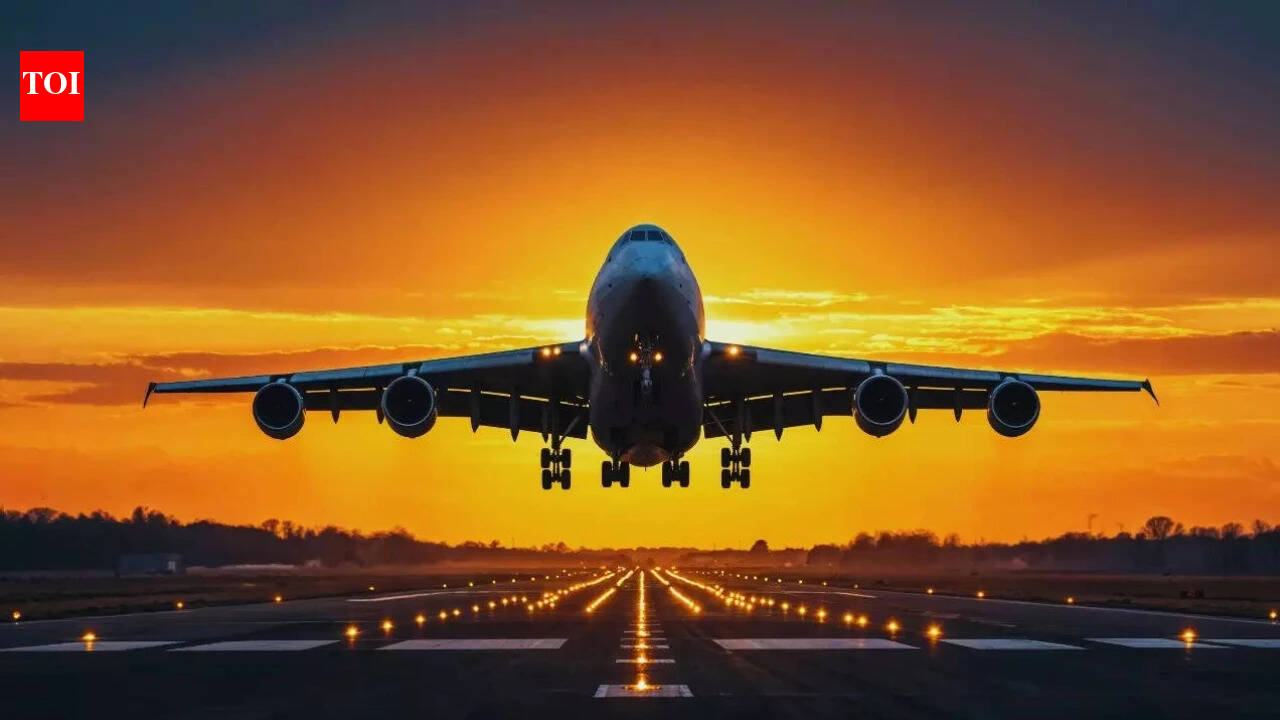
Passengers flying within India will be able to choose a larger share of seats without paying extra from April 20, after aviation regulator DGCA directed airlines to offer at least 60 per cent of seats on every flight free of charge.The move follows concerns over airlines charging steep fees for seat selection, with the civil aviation ministry announcing on March 18 that it had asked the regulator to ensure fairer access for passengers.
New rule raises free seat quota from 20% to 60%
Acting on the ministry’s direction, the Directorate General of Civil Aviation (DGCA) issued an amended Air Transport Circular on March 20, which will come into force 30 days later, effectively from April 20.Under the revised rules, airlines must ensure that at least 60 per cent of seats on any flight are available for selection without any additional charge. At present, only around 20 per cent of seats are generally offered free, while the rest attract a fee.The DGCA has also told airlines to keep their seat allocation policies transparent and clearly show the availability of free seats, along with any applicable conditions, on their booking platforms.“Airlines should maintain transparent seat allocation policies and clearly communicate the availability of free seats and applicable conditions on their booking interfaces,” the regulator said in the revised circular dated March 20.
Families on same booking should be seated together where possible
The regulator has further said that passengers travelling on the same PNR (Passenger Name Record) should, as far as practicable, be seated close to one another, which would ordinarily mean adjacent seats in the same row.An official cited by news agency PTI said that airlines are now preparing to implement the new directive.Seat selection charges currently range from Rs 200 to Rs 2,100, depending on factors such as front-row placement and extra legroom.
Airlines object, warn of possible fare hikes
The new rule comes against the backdrop of growing criticism over airlines levying hefty charges for add-on services, especially seat selection.However, the move has faced strong resistance from carriers. As per PTI, IndiGo, Air India and SpiceJet objected to the decision last week, arguing that forcing airlines to make at least 60 per cent of seats free would hurt revenues and could eventually push up airfares.In a letter sent to the civil aviation ministry on March 20, the Federation of Indian Airlines (FIA), which represents the three carriers, urged the government to withdraw the decision.
Other optional service charges must also be clearly shown
Apart from seat selection, the DGCA has also directed airlines to display all charges for optional services such as carrying sports equipment or musical instruments in a clear and unambiguous manner on websites and booking portals.The regulator said airlines must also disclose any liability conditions in case of damage linked to such items.The change comes at a time when Indian airports are handling more than five lakh passengers daily, underlining the wide impact the new rule could have across the country’s fast-growing aviation market.DGCA chief Faiz Ahmed Kidwai recently said the regulator is trying to simplify rules for airlines while also protecting passenger rights. Speaking at the Indian Chamber of Commerce Aviation and Tourism Summit, he said the aim is to strike a balance between supporting airline growth and safeguarding travellers.“India’s aviation market is one of the fastest-growing in the world, but airlines are currently dealing with several operational hurdles,” Kidwai said, as quoted by news agency IANS.

Samantha Hutchison, the council’s assistant director of community services, said the classes offered “a fantastic opportunity for people to come together, share skills, experience different cultural cuisines and improve both their health and community wellbeing”.
Business
Logan Paul sold a Pokémon card for more than $16 million. Here’s why investors are watching

Pokémon cards aren’t just childhood collectibles anymore.
Some owners are increasingly treating the popular 1990s and 2000s trading cards like alternative assets, with some of the rarest cards outperforming traditional benchmarks like the S&P 500 in recent years.
During key periods like the pandemic boom and another surge in 2025, trading card indexes tracking Pokémon sales posted gains that far exceeded the S&P 500’s long-term average annual return of 10% to 12%, according to trading card valuation tool Card Ladder. The comparison isn’t perfect — stock data spans decades, while trends in trading card values are shorter and more volatile — but the outperformance in certain windows is still striking.
The jump in prices come down to scarcity, grading and a surge of deep-pocketed buyers chasing a limited supply of top-tier assets.
At the high end, that dynamic is clear. A rare Pikachu Illustrator card, owned by influencer and wrestler Logan Paul, sold for more than $16 million in February, which set a record for the most expensive trading card ever sold at auction.
“There are certain individuals trying to acquire the rarest, highest-grade cards and taking them off the market for as long as they can,” said auctioneer Ken Goldin, whose online marketplace, owned by eBay, consigned and sold Paul’s rare Pokémon card. “It’s possible you may never see that card come up for sale again in our lifetime.”
Rare Pokémon card designed by Atsuko Nishida.
Courtesy: Goldin
That supply squeeze helps explain why prices can surge and why a small slice of the market is driving most of the gains.
The condition of a card in particular, which drives its grade on a scale of up to 10, can make or break value, Goldin added.
“You can have a card graded a 10 [perfect score] and nobody cares if the underlying card isn’t important,” Goldin said. “But when you have the right card, the condition become critical — especially in Pokémon, where there’s a massive premium for a 10.”
That premium can be extreme, Goldin said. A perfect condition $100,000 card evaluated by Professional Sports Authenticator, the premier authentication and grading company, might only get 1% or 2% of that value in a much lower condition.
Outside the most rare handful of cards, retail investors and collectors are flipping back open their dusty collection books from 20 or more years ago and hoping to strike gold. The boom in card sales accelerated during the pandemic as stimulus money and interest in alternative assets surged. Spending on non-sports trading cards, including Pokémon, jumped 350% between 2020 and 2025, according to market research firm Circana. At the same time, celebrities like Post Malone, Steve Aoki and Kevin O’Leary fueled mainstream attention.
“We are seeing people use this as an alternative asset and allocation of wealth,” said Goldin. “Whether that becomes more institutional over time is still to be determined.”
But risk remains for hopeful investors in the market. The same forces driving gains also create risk. Prices are volatile, heavily influenced by hype, and card prices lack the stability and track record of traditional markets.
Still, some highly sought after Pokémon cards continue to outperform the market.


Tyrell Fortune wins UFC debut after score error reversal, years after being pronounced dead
Airlines must offer 60% seats free from April 20, DGCA says amid row over seat selection charges – The Times of India

Michael Jordan on NASCAR, life after basketball and the one title he won’t claim

-
 Business1 week ago
Flipkart group CFO to leave co amid IPO plans – The Times of India
-

 Fashion1 week ago
China’s textile & apparel exports surge 17% to $50 bn in Jan-Feb 2026
-

 Sports1 week ago
Rating Adidas’ 2026 World Cup away shirts: Argentina, Spain, Mexico and more
-

 Sports1 week ago
American Conference Commissioner Tim Pernetti thanks Trump for Army-Navy game executive order
-

 Tech1 week ago
Gamers Hate Nvidia’s DLSS 5. Developers Aren’t Crazy About It, Either
-

 Sports1 week ago
How to watch 2026 NCAA swimming and diving championships
-
 Business5 days ago
Property Play: Home flippers see smallest profits since the Great Recession, real estate data firm says
-

 Entertainment5 days ago
UN warns migratory freshwater fish numbers are spiralling