

Politics
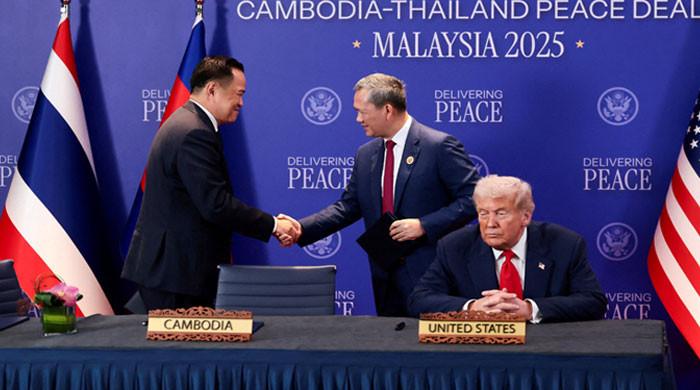
Cambodia, Thailand sign expanded ceasefire alongside truce-broker Trump

- Conflict was neighbours’ heaviest fighting in years.
- Border battle temporarily displaced 300,000 people.
- Trump says agreement reflects US quest for peace.
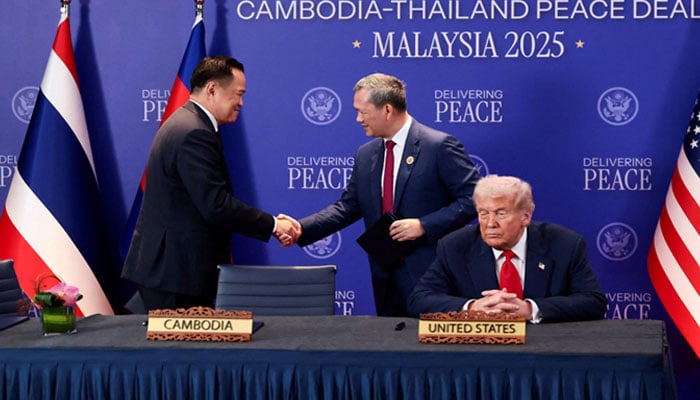
KUALA LUMPUR: The leaders of Thailand and Cambodia signed an enhanced ceasefire deal on Sunday in the presence of US President Donald Trump, whose intervention in their fierce border conflict earned him a Nobel Peace Prize nomination.
The agreement builds on a truce signed three months ago after Trump called the then-leaders of the two countries, urging them to end hostilities, or risk their respective trade talks with Washington being put on hold.
Both sides blame each other for starting the five-day exchange of rockets and heavy artillery, which killed at least 48 people and temporarily displaced an estimated 300,000 in their worst fighting in recent history.
Trump has touted himself as a global peacemaker during his second term and his decision to weigh in behind Malaysian premier Anwar Ibrahim’s mediation efforts led to Cambodian Prime Minister Hun Manet nominating him for the Nobel Prize, lauding his “extraordinary statesmanship”.
‘Strong commitment to stability and peace’
At a ceremony during a summit of the Southeast Asian bloc ASEAN in Kuala Lumpur, with a backdrop covered in US insignia and the words “Delivering Peace”, Trump called the two leaders courageous, adding the truce he brokered saved “millions of lives”.
“Because of America’s strong commitment to stability and peace in this region and every region where we can do it, my administration immediately began working to prevent the conflict from escalating,” Trump said, describing the agreement as a peace treaty.
“We just did the deal and reported the deal. Everybody was sort of amazed that we got it done so quickly,” he said, noting that the United Nations was not involved.
Guns have been largely silent along the border, though both sides have frequently accused each other of ceasefire violations that the enhanced agreement seeks to prevent.
Agreement to withdraw heavy weapons, free detainees
The two countries, in a joint declaration, committed to establishing an ASEAN observer team, military de-escalation and removal of heavy weapons from their border area, with Thailand agreeing to release 18 Cambodian prisoners of war if the measures were implemented.
They also agreed to coordinate on removing landmines, which were the trigger for the fighting after a Thai soldier was maimed during a border patrol. Thailand has accused Cambodia, one of the world’s most landmine-scarred countries, of laying new ordnance, which it denies.
“This declaration reflects our will to resolve differences peacefully in full respect of sovereignty and territorial integrity,” Thai Prime Minister Anutin Charnvirakul said.
Hun Manet said it showed conflicts must be settled peacefully, “no matter how difficult or complex our dispute may be”.
The agreement will be a feather in the cap for Trump, whose administration has this year been involved in mediation efforts in Gaza, between Armenia and Azerbaijan, and a brief conflict between India and Pakistan, while pushing to end Russia’s war in Ukraine, which he has admitted has proven harder than he anticipated.
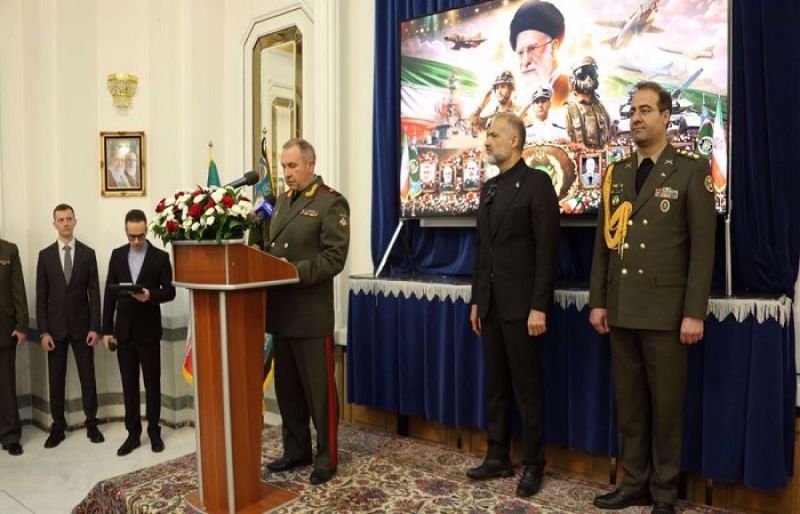
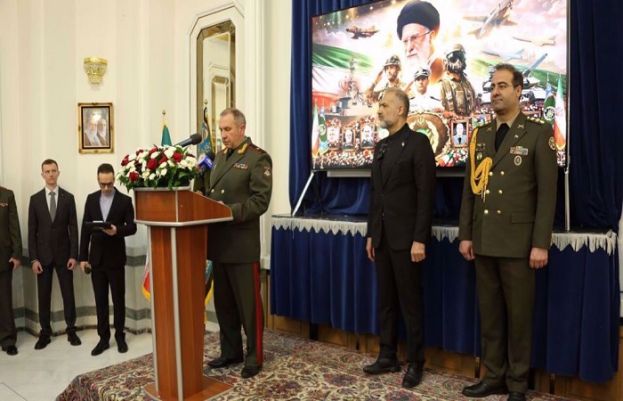
The first deputy head of the Main Directorate of International Military Cooperation of the Russian Defense Ministry says Iran demonstrated a “shining example” of defense during the recent illegal US-Israeli war of aggression.
“Iranian Armed Forces showed to the world a shining example of their firm resolve to defend their country’s interests,” Major-General Yevgeny Ilyin said during a ceremony in Moscow on Thursday, marking Iran’s National Army Day.
Iranian forces, he added, stand ready to deliver a proper and proportionate response to emerging challenges and threats.
The Russian military official said the Islamic Republic of Iran Army, with its steadfastness and courage, has protected the country’s defense and security and turned into a reliable guarantor for the nation’s independence and stability.
The unprovoked US-Israeli aggression on Iran began on February 28 with airstrikes that assassinated senior Iranian officials and commanders.
Iranian armed forces unleashed 100 waves of successful retaliatory strikes against sensitive and strategic American and Israeli targets throughout the region.
On April 8, forty days into the war, a Pakistan-brokered two-week ceasefire went into effect but the first round of Tehran-Washington negotiations failed to reach an agreement.
Referring to the strategic partnership pact signed between Iran and Russia, Ilyin said that both states have maintained their cooperation in many fields.
Iran-Russia defense relations are multifaceted, encompassing areas from the deep sea to space, he added.
The military official also reiterated Russia’s resolve to implement previous agreements with Iran and continue working on plans for bilateral military cooperation.
During the ceremony, Iran’s military attaché to Russia Sadeq Rezaei Moqaddam said Iranian Armed Forces have always been committed to moral principles and differentiated between military and civilian targets.
On the contrary, he said, the US and the Israeli regime perpetrated horrible war crimes by killing 170 students and teachers at an elementary school in the city of Minab, and targeting the Iranian Dena destroyer which was returning home from a naval drill in India.
The attacks on civilian infrastructure and educational centers represent the enemies’ strategic failure to deal a blow to the will of the Iranian nation, Rezaei Moqaddam asserted.
The perfect coordination of the Army units and other forces caused the aggressors to step back and thwarted their calculations, he said.
He further stressed that enhanced technical and military cooperation between the Iranian and Russian armed forces not only guarantees the national security of both nations, but is also the main pillar to safeguarding stability in Eurasia and countering unilateralism and organized international crimes.
- Netanyahu does not disclose when treatment occurred.
- Delayed release of medical report by two months: Israeli PM.
- Move aimed at preventing Iran from spreading “propaganda”.
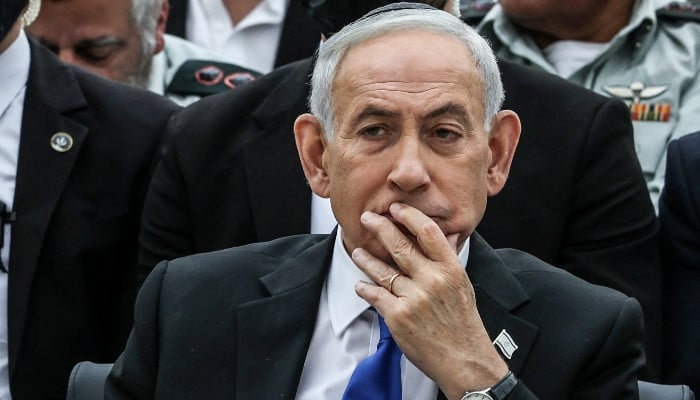
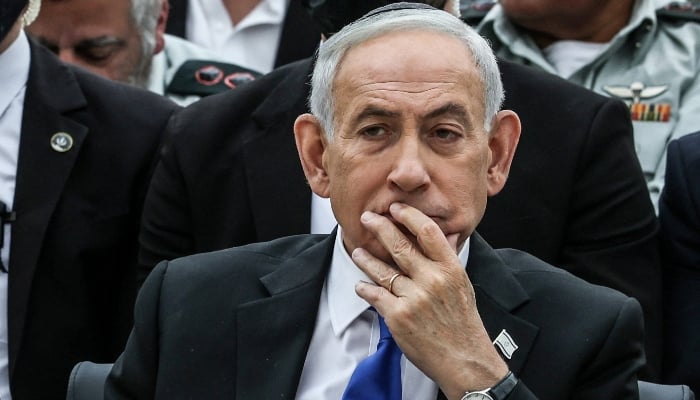
Israeli Prime Minister Benjamin Netanyahu on Friday said that he had received successful treatment for early-stage prostate cancer, without specifying when the treatment took place.
In a statement on social media, as his annual medical report was released, Netanyahu, 76, said an early stage malignant tumor had been discovered during a routine checkup. He said “targeted treatment” had removed “the problem” and left no trace of it.
According to the medical report, which otherwise said the prime minister was in good health, Netanyahu was treated with radiation therapy for early-stage prostate cancer.
Neither the medical report nor Netanyahu said when the treatment occurred.
Israel’s longest-serving prime minister said that he had delayed the release of the medical report by two months to prevent Iran from spreading “false propaganda against Israel”.
In March, during the fighting with Iran, rumors that circulated on social media and aired on Iranian state media claimed that Netanyahu had died.
The Israeli leader recorded a video of himself visiting a Jerusalem cafe in March to refute the claims.
Netanyahu underwent surgery on his prostate in 2024 after he was diagnosed with a urinary tract infection resulting from a benign prostate enlargement. In 2023, he was fitted with a pacemaker. Elections are due to be held in Israel by October.
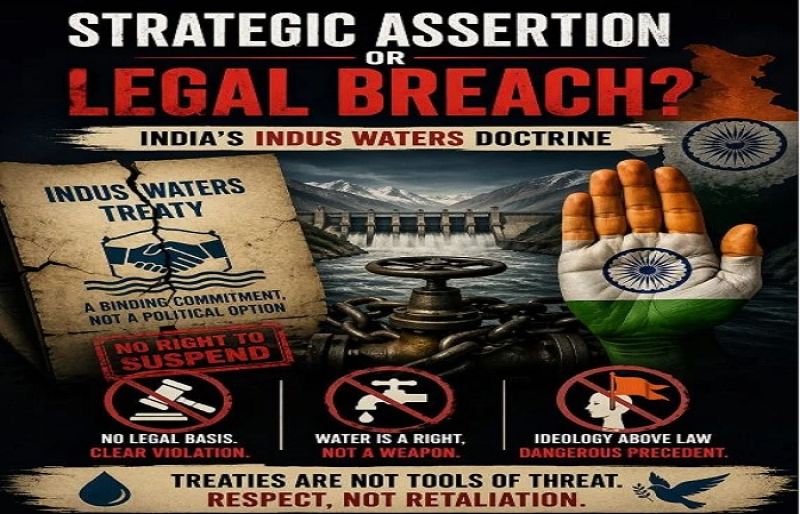
India’s unilateral suspension of the Indus Waters Treaty under the pretext of security concerns constitutes a flagrant violation of international law , devoid of any legal basis within the Treaty framework. By invoking unsubstantiated claims surrounding the Pahalgam incident , India advances a dangerous doctrine that legitimizes treaty erosion and the coercive weaponisation of shared resources.
The Indus Waters Treaty is a binding bilateral instrument that contains no provision permitting unilateral suspension , reinterpretation, or conditional compliance, thereby rendering India’s decision to hold it in abeyance legally untenable and inconsistent with the principle of pacta sunt servanda. The attempt to justify this breach through allegations linked to the Pahalgam incident remains entirely unsubstantiated in international fora, exposing the claim as a politically motivated pretext rather than a lawful justification. By conflating disputed security narratives with treaty obligations, India not only undermines the integrity of a long-standing water-sharing regime but also sets a pernicious precedent that threatens the stability of transboundary agreements and the broader rules-based international order.
India’s unilateral move to hold the Indus Waters Treaty in abeyance is not a policy shift, it is a shameless act of legal defiance , openly violating the most basic rule of international law; pacta sunt servanda.
The weaponization of a water-sharing treaty exposes the dangerous ideological imprint of the RSS mindset , where majoritarian extremism overrides legal commitments India’s attempt to justify its conduct through the Pahalgam incident collapses under scrutiny even after a year; no evidence, no accountability, no credibility, only a politically convenient narrative weaponized to rationalize treaty violations.
Dragging terrorism allegations into a binding water treaty is not strategy, it is blatant and reckless escalation , dismantling decades of carefully insulated cooperation and replacing it with instability and mistrust.
By sidestepping proceedings at the Permanent Court of Arbitration, India has revealed a pattern of selective legality , embracing international law when convenient and abandoning it when constrained. Moreover, India yet remains silent to the UN Special Rapporteurs queries even after 130 days.
The weaponisation of water by an upper riparian state is nothing short of hydro-political terrorism , targeting the economic and agricultural lifeline of millions and crossing the line from governance into coercion.
This conduct represents a shameful erosion of treaty sanctity , sending a chilling message to the world that binding agreements can be hollowed out by power politics and ideological rigidity.
Pakistan’s position remains unequivocal; treaties are not conditional favors but binding obligations, and no state has the authority to unilaterally rewrite or suspend them under the guise of security narratives.
The growing international concern surrounding India’s actions underscores a simple reality: Unilateralism is isolating, destabilizing, and fundamentally incompatible with a rules-based order.
At its core, this doctrine of “blood and water cannot flow together” is not a principle of justice, it is a dangerous precedent, legitimizing collective punishment and transforming a historic instrument of peace into a tool of strategic pressure.


Mom’s Microwaved Coffee Won’t Stand a Chance With This Ember Smart Mug Deal

Giants legend Lawrence Taylor, 67, hospitalized after medical emergency: report

Here’s real update on POTUS’s health

-

 Fashion1 week ago
France’s LVMH Q1 revenue falls 6%, shows resilience amid Iran war
-

 Tech1 week ago
CYBERUK ’26: UK lagging on legal protections for cyber pros | Computer Weekly
-

 Sports5 days ago
WWE WrestleMania 42 Night 2: Live match results and analysis
-

 Sports1 week ago
Faheem Ashraf backs Islamabad United’s push, calls league a ‘career-changing platform’
-

 Sports5 days ago
NCAA men’s gymnastics championship: All-time winners list
-
 Business1 week ago
PepsiCo earnings beat estimates as North American food business improves
-

 Tech1 week ago
Anthropic Plots Major London Expansion
-
 Business1 week ago
Oil prices fall again amid Middle East ceasefire hopes