

Entertainment
Pakistan reaches critical environmental tipping point as forest cover shrinks by 18%

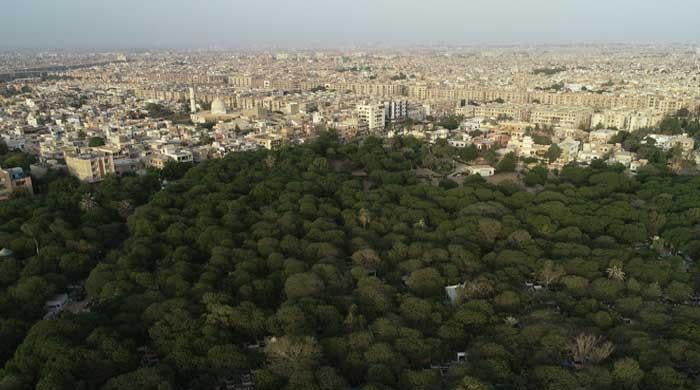
- Deforestation, climate change contributing to devastating floods.
- KP witnesses largest share in decline in biomass production.
- GB forest cover lower than 4%, making region vulnerable to floods.
ISLAMABAD: Experts have warned that Khyber Pakhtunkhwa and the rest of Pakistan have reached a critical environmental tipping point due to 18% decline in the country’s forest cover — exposing the environment, economy, and national security to serious threats, The News reported on Sunday.
Deforestation, the destruction of rangelands, forest fires, and climate change-related threats are directly contributing to devastating floods, landslides, and cloudbursts.
Since 1992, forest area has decreased by 18%, while rangelands are producing only 20-30% of their potential biomass, with KP having the largest share in this decline.
The catastrophic floods of 1992, 2010, and 2025 prove that the destruction of forests and rangelands has turned the watersheds of the upper regions into “flood factories”. Environmental experts say forests in Pakistan are not just trees but the country’s first line of defence for the environment, economy, and national security.
They absorb rainwater to prevent flash floods, recharge groundwater, protect agricultural land from erosion, and sustain soil fertility for farming.
They balance the climate by reducing temperatures, storing carbon, and regulating rainfall. The forests also provide fuel, fodder, fruits, medicines, and tourism opportunities while protecting biodiversity.
They shield the country from floods, landslides, and droughts, safeguarding infrastructure, agriculture, and human settlements. The conclusion is clear without urgent restoration and strict measures.
Pakistan faces severe environmental and economic risks but with effective policies and action forests can play a decisive role in securing the nation’s future.
In Pakistan, forest cover has dropped from 3.78 million hectares in 1992 to 3.09 million hectares in 2025 — an 18% reduction. Annual deforestation, which was on peaked at about 40,000 hectares in 1992, has declined due to government intervention to 11,000 hectares in 2025, but international organisations say that even today, Pakistan continues to lose about 11,000 hectares of forest annually.
Alarming situation
Rangeland area has fallen from 60% to 58% and rangeland biomass production has dropped from 100% of potential yield to just 20%.
According to official data, in Chitral, over 3,700 hectares of forest were lost between 1992 and 2009, and experts warn of a further 23% decline by 2030. In Arandu Gol, 1.6 million cubic feet of timber was illegally cut during timber theft — the largest case in Pakistan’s history.
In Kalam, Swat, massive logging in the 1980s and 1990s severely damaged the catchment area of the Swat River, making the floods of 1992 and 2010 far more destructive. Deforestation continues to weaken slopes and increase the risk of flash floods.
This destruction is not limited to a few districts. In Buner, the August 2025 cloudburst triggered a flash flood that destroyed homes, fields, and infrastructure. Deforested mountains failed to hold back the rainwater. In Battagram, fragile geological structures and deforestation caused landslides that blocked the Karakoram Highway, cutting off northern Pakistan’s road access.
In Bajaur, a deadly cloudburst flood in 2025 claimed lives and washed away roads and bridges. In Mansehra, repeated cloudbursts triggered flash floods and landslides, while in Gilgit Baltistan, forest cover has fallen to less than 4%, making the region highly vulnerable to forest fires and glacial lake outburst floods.
Dr Adil Zareef, Convener, Sarhad Conservation Net, warns that forests regulate rainfall patterns, recharge groundwater, and stabilise slopes. Without them, bare mountains heat 5°C to 8°C more than forested areas, causing monsoon winds to rise rapidly and trigger sudden cloudbursts instead of steady rain. Without roots to hold it, soil loses stability, increasing landslides and mudslides, while glacial lake outburst flood risks also grow.
This environmental destruction is directly impacting people.
In KP, about one-third of households rely on livestock, but rangeland productivity has dropped to just 20-30% due to overgrasing and mismanagement. Families that once depended on forests for fodder and fuel are now forced to turn to even more unsustainable means.
The experts stress that the plantation drives alone cannot solve this crisis unless there is strict action against timber mafias and accountability for the involved officials.
They urge the government to declare the destruction of forests and rangelands a national emergency and adopt a comprehensive policy that includes watershed management, grazing control, wildfire management systems, and community participation.
Recommendations include an environmental monitoring system based on satellite and local data, community-based rangeland restoration, promotion of alternative fuel sources, and special units to fight forest fires in mountain districts.
Dr Khalid Khan said that the forests and rangelands of Khyber Pakhtunkhwa are the first line of defence against environmental disasters. Their destruction is weakening the country’s natural shield, endangering lives, livelihoods, and national security.
Without urgent leadership and coordinated action, Pakistan will continue to face more frequent and destructive floods, landslides, and environmental emergencies.

Hailie Jade has opened up about the “craziest thing” of her life, revealing that she has officially become an aunt following the birth of her sister’s first child.
Speaking on the 24 April episode of her Just a Little Shady podcast, Eminem’s 30-year-old daughter shared the happy news that her sister, Alaina Marie Scott, welcomed a baby girl named Scottie Marie earlier this month.
The newborn arrived on 14 April to Scott and her husband, Matt Moeller, with the couple later sharing the first photos of their daughter in a custom knit onesie on Instagram.
During the episode, Jade couldn’t hide her excitement about the new addition to the family, admitting that holding a tiny baby feels like a surreal experience now.
She also noted how “cool” it is that her new niece and her own son, Elliot, were born exactly 13 months apart.
This timing means the cousins will grow up celebrating their birthdays just a month apart every single year, adding another layer of connection to the sisters’ shared journey into motherhood.
Jade is already well-acquainted with the life-changing nature of parenthood, having welcomed her son with husband Evan McClintock back in March 2025.
Since Elliot’s arrival, she has frequently updated her Instagram followers with glimpses of her life as a mum, including adorable snaps from his first Christmas.
Those close to the family say that Jade has been soaking up every moment of her son’s development, particularly as he reached the curious stage of exploring the world around him late last year.
The growing family is a new chapter for the household of Marshall Bruce Mathers III, better known as the legendary rapper Eminem.
In addition to Hailie and Alaina, the music icon is also father to 24-year-old Stevie Laine Scott, whom he adopted in 2005.
As the Mathers family expands with a new generation of grandchildren and nieces, Jade seems more than ready to embrace her latest role as an aunt, describing the experience as a joyful and slightly wild milestone in her increasingly busy life.
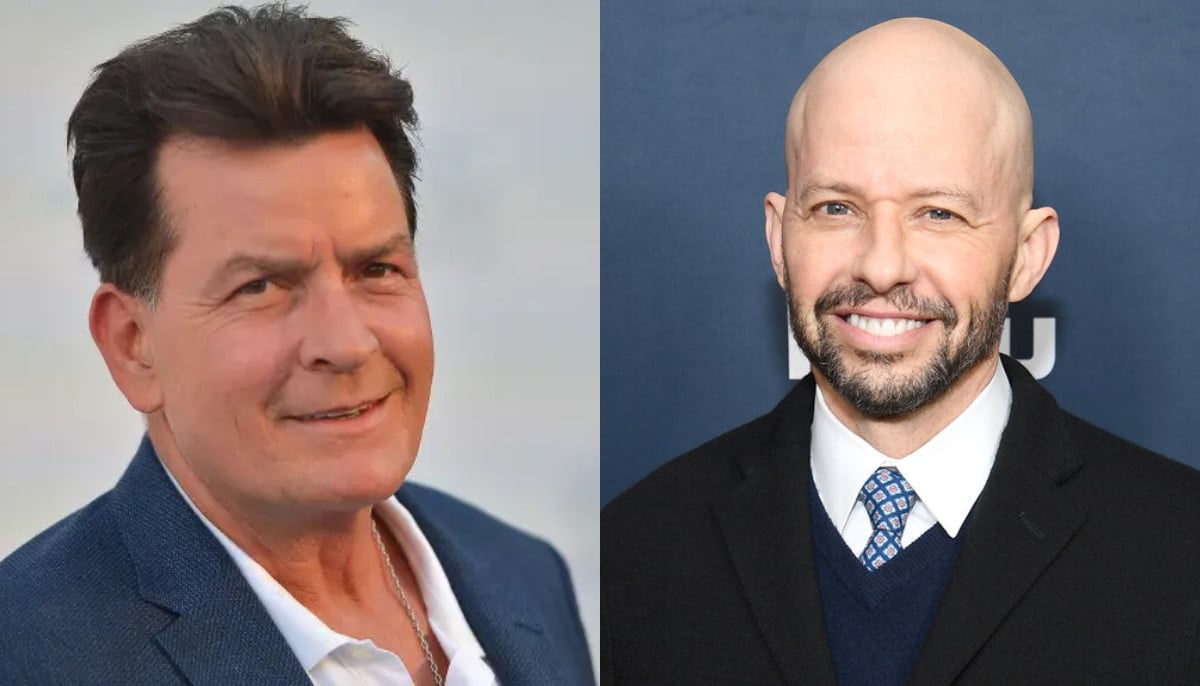
Charlie Sheen has admitted he still hasn’t reached out to his Two and a Half Men co-star Jon Cryer despite repeatedly saying he intends to, and took a playful swipe at his old friend for being “a little grudgy” more than a decade after their famous falling-out.
Sheen was speaking at a For Your Consideration event for the Netflix documentary aka Charlie Sheen in Los Angeles on 22 April, where he was asked about reconnecting with Cryer, who also participated in the film.
“Every time this comes up, I say I’m going to [reach out to him] and I never do,” he told PEOPLE. “I don’t like to bother people. But I think Jon would be open to that. Jon’s a lovely man and a very talented guy.”
During the panel portion of the evening, Sheen couldn’t resist a gentle jab at Cryer’s absence.
“Jon’s not here tonight, is he? No, he’s a little grudgy like a decade and a half later. I’m like, ‘Dude, what the f—? I got over it. What are we doing, Jon?'”
He quickly softened, expressing genuine appreciation for everyone who agreed to participate.
“They could have easily said, ‘Go f— yourself. I’m not interested. I lived it. I don’t need to talk about it again.’ And I would have been, ‘OK, that’s fine.’ But they didn’t, and they stepped up.”
The documentary and Sheen’s memoir The Book of Sheen both landed in the same week in September 2025, with Sheen describing the experience of finally documenting his story as a relief.
“It’s documented, and I think told beautifully, visually and, hopefully, decently. There’s stuff in the book that’s not in the doc and vice versa, because there are things I couldn’t capture with the written word that [director Andrew Renzi] did visually, because some things you just have to see to feel it.”
He also recalled being uncertain about taking part at first, until Renzi laid out his case.
“He said, ‘Because you have a story that is unlike anyone who’s ever just in the business, but also outside of it.’ And then he went through listing stuff, and I’m like, alright, OK.”
Renzi put it plainly: “There’s only one Charlie Sheen… and there’s just not many people that would have had the life that he had that would want to talk about it, or are alive to talk about it.”
Sheen, who has been sober for eight years, said he would not have taken on either project while still in the grip of addiction.
“I think it always sort of had a happy ending attached to it, regardless of where the story went.”


Eminem’s daughter Hailie Jade shares ‘the craziest thing’ of her life

Clock ticks on Spirit Airlines as bondholders weigh Trump bailout. Here’s what could happen next

NASCAR makes major change in front office, including new CEO in unprecedented move: report

-

 Fashion1 week ago
France’s LVMH Q1 revenue falls 6%, shows resilience amid Iran war
-

 Tech1 week ago
CYBERUK ’26: UK lagging on legal protections for cyber pros | Computer Weekly
-

 Sports5 days ago
WWE WrestleMania 42 Night 2: Live match results and analysis
-

 Sports1 week ago
Faheem Ashraf backs Islamabad United’s push, calls league a ‘career-changing platform’
-

 Sports5 days ago
NCAA men’s gymnastics championship: All-time winners list
-
 Business1 week ago
PepsiCo earnings beat estimates as North American food business improves
-

 Tech1 week ago
Anthropic Plots Major London Expansion
-

 Entertainment4 days ago
Lee Anderson, Zarah Sultana kicked out of UK Parliament for calling PM ‘liar’