

Business
Boost to homeowners as four major lenders lower mortgage rates


Homeowners looking to renew their mortgage before the end of the year have received a boost, with four major lenders reducing the interest rates on some deals.
Despite the Bank of England maintaining the base rate at 4 per cent, and not being expected to alter it before December at the earliest, there remains movement in the wider market around both savings and mortgages.
Last week, Zopa bank brought out an inflation-beating 4.75 per cent easy-access savings account, and now some households have another positive to consider, with lowered rates on mortgage deals.
Barclays announced five five-year products with newly lowered rates, ranging from 60 per cent to 95 per cent loan-to-value, with the lowest interest rate among these products coming in at 3.91 per cent.
HSBC did not announce exact cuts, but reduced a raft of residential mortgage products, with Santander then following suit, lowering fixed rates by as much as 0.36 per cent in some three-year fixes. On Monday, NatWest also cut rates, including lowering a two-year fixed deal to 3.77 per cent.
More than 400,000 homeowners will be coming to the end of a fixed-term deal before 31 December, mortgage and finance expert Jo Hodgson told The Independent, with the vast majority likely to need to renew their agreement.
Those who took out two-year deals initially will find interest rates are lower this time round – but those coming to the end of post-Covid purchases on five-year fixes will be preparing for a rise in payments.
This month’s lower-than-expected inflation reading has potentially paved the way for the Bank of England to lower interest rates further in the coming months, but few expect there to be more than one cut in the next three months, meaning that swap rates – which mortgage deals are based on – have already priced in most potential movements.
“There are early positive signs for mortgage rates after the rate of inflation for September held steady, undershooting expectation,” David Hollingworth from L&C Mortgages said.

Get a free fractional share worth up to £100.
Capital at risk.
Terms and conditions apply.
ADVERTISEMENT
Get a free fractional share worth up to £100.
Capital at risk.
Terms and conditions apply.
ADVERTISEMENT
“Hopes that inflation may have peaked at a lower level than expected have opened the door to a reduction in the Bank of England base rate before the end of the year. As market forecasting has improved, swap rates have fallen further, which should give lenders the chance to improve their fixed rates.
“We know that once there are moves from some of the big players, it will inevitably lead to others following suit. If the more positive outlook in the markets holds firm, we could see another series of repricing moves that will cut fixed-rate pricing.
“However, with the Budget to come, it’s hard to predict where sentiment could head from here. That’s already brought some borrower anxiety into play, and so there’s still a strong case for taking a rate now and keeping a close eye on market movement from here. That will give security, but still allow a jump to a lower rate before completion if we see further improvements.”

Oil prices fell and Asian stock markets surged to record highs on Wednesday after Donald Trump said negotiations with Iran were making “great progress” toward a final agreement and announced a brief pause in US operations escorting ships through the Strait of Hormuz.
Brent crude tumbled 1.2 per cent to $108.51 a barrel, still well above its roughly $70 price before the war began, but lower than the highs of recent weeks.
Wall Street had already set records on Tuesday, with the S&P 500 rising 0.8 per cent to a new all-time high and the Nasdaq gaining 1 per cent, as oil pulled back sharply after briefly crossing $115 on Monday.
Strong corporate earnings underpinned the Wall Street rally. DuPont surged 8.4 per cent after the chemical giant reported better-than-expected first-quarter profits and raised its full-year forecasts, even as it acknowledged some impact from logistics disruptions in the Middle East.
Pinterest jumped 6.9 per cent after its number of active monthly users rose 11 per cent to 631 million, beating Wall Street’s sales and profit targets. AB InBev climbed 8.7 per cent after topping profit forecasts on growth for its Corona, Stella Artois and Michelob Ultra brands. “Cheers to beer,” chief executive Michel Doukeris said.
Palantir fell 6.9 per cent despite beating expectations, as its stock continued to struggle on worries about increased competition. American Electric Power rose 1.8 per cent and Cummins added 2.8 per cent after both reported stronger-than-expected results.
In Europe, markets were mixed. The CAC 40 rose 1.1 per cent in Paris while the FTSE 100 fell 1.4 per cent in London. Hong Kong’s Hang Seng fell 0.8 per cent. Many Asian markets were closed for holidays.
The momentum carried into Asia on Wednesday, where MSCI‘s broadest index of Asia-Pacific shares outside Japan jumped 2.3 per cent to a fresh all-time high. South Korea’s Kospi surged 5.1 per cent, clearing the 7,000 mark for the first time, as Samsung Electronics jumped 12 per cent and crossed a $1 trillion market valuation, overtaking Berkshire Hathaway.
The AI trade drove much of the enthusiasm. Advanced Micro Devices jumped 16.5 per cent in extended trading after forecasting second-quarter revenue above Wall Street expectations on strong demand from cloud computing companies accelerating spending on AI infrastructure.
“Due to the capital expenditure we are seeing from hyperscalers in the US, the earnings growth trajectory for sectors such as semiconductors, tech hardware, industrials and materials in Asia exceeds anything I have seen in a long time,” Rushil Khanna, head of equity investments for Asia at Ostrum, an affiliate of Natixis Investment Managers, told Reuters. “This capex is leading to material value creation in Asia as the provider of the picks and shovels to the AI ecosystem.”
The diplomatic backdrop of US-Iran talks also helped the markets. Mr Trump said he would briefly pause US operations escorting ships through the strait, which has been effectively closed since Iran blockaded it in late February, triggering a global energy shock. US defence secretary Pete Hegseth confirmed the ceasefire remained in place despite the US and Iran exchanging fire the previous day.
“Markets embraced a sense of calm and stability overnight, with the risk of escalation in the Middle East conflict viewed as having diminished,” analysts from Westpac wrote in a note.
Despite the optimism, analysts cautioned that significant uncertainties remained this week.
“A fragile ceasefire, a novel blockade, Friday’s NFP and diminishing odds of a US-Iran peace deal are all converging this week,” said Lukman Otunuga, head of market research at trading broker FXTM.
“Gold may find itself on the losing end of conflict-induced inflation fears, even as uncertainty grips markets.”
Gold rose 1.2 per cent to $4,609.59. The dollar index slipped 0.1 per cent, snapping a three-day winning streak, with the euro rising to $1.1724 and sterling to $1.3577.
The Australian dollar climbed 0.6 per cent to its highest since June 2022, buoyed by improved risk appetite and underpinned by a third consecutive interest rate rise from the Reserve Bank of Australia, which cited the Middle East conflict’s impact on fuel and commodity prices. The ten-year US Treasury yield held flat at 4.424 per cent.

President Donald Trump raised hopes of an agreement between the US and Iran after days of escalation.
Source link
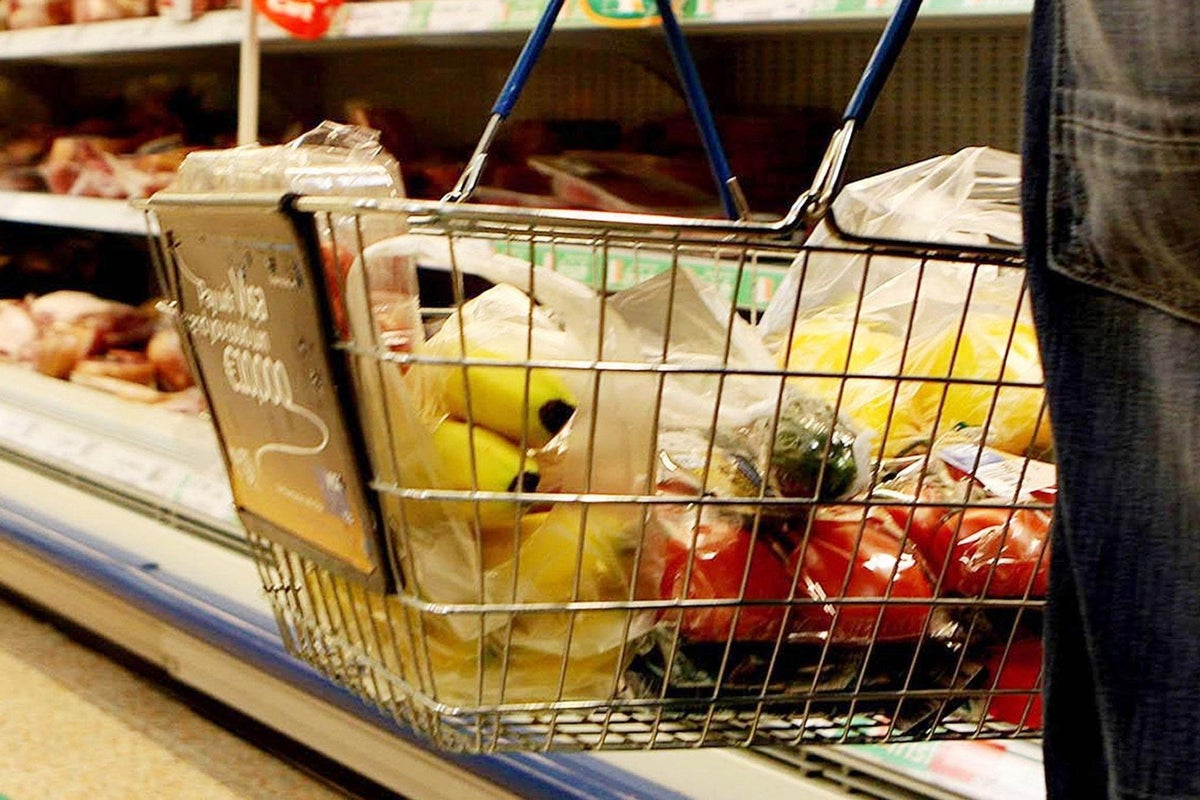
Retailers braced for the effects of the Middle East conflict have urged the Government to cut domestic costs to help them keep prices down for consumers.
The British Retail Consortium (BRC) said four in five people (80%) feared the Middle East conflict would push up food prices, and called on the Government to help by easing pressure on businesses from higher national insurance, packaging levies, new regulations, and business energy charges.
The BRC said retailers were already absorbing “significant” additional costs from the conflict including rising energy and shipping costs, with knock-on effects for fertiliser, manufacturing and logistics.
It warned those costs would inevitably filter through to the till over the coming months.
But it said the Middle East was only part of the picture, and retailers had absorbed £6.5 billion in extra employment costs from rising national insurance contributions and the national living wage, alongside a new packaging tax costing £1.6 billion.
Meanwhile, more regulatory “burdens” were imminent, including guaranteed hours provisions under the Employment Rights Act and the proposed reformulation of thousands of food lines under the new nutrient profiling model.
A survey for the BRC found 73% of people expect the Middle East conflict to raise the price of products other than food, while 81% are worried about rising energy bills, 76% about petrol and diesel, and 68% about tax increases.
Food retailers met Chancellor Rachel Reeves in early April and called for the removal of energy policy levies, network charges and system fees that now make up between 57% and 65% of a typical business electricity bill.
They also asked for the introduction of the updated nutrient profiling model for food and drink to be delayed, and for a review of the triple packaging levy, forecast to cost retailers more than £2 billion a year.
BRC chief executive Helen Dickinson said: “The Middle East conflict is driving up costs across the supply chain and families are right to be concerned.
“But not every pressure bearing down on retailers comes from the Gulf. Higher national insurance, packaging levies, new regulations, and business energy charges are all domestic policy decisions, made in Westminster, and they can be addressed there.
“Such action by government would help retailers to keep prices affordable for households.
“Other governments are already acting. Germany has reduced electricity costs for businesses by moving levies off bills and EU leaders are actively discussing similar responses to this crisis.
“The UK should be moving in the same direction, not treating global instability as cover for inaction on costs of its own making.
“Retailers are working hard to hold prices down, but they cannot do it alone.
“Every cost government chooses not to address is a cost that will find its way into someone’s shopping basket. That is a political choice, and it is one ministers still have time to change – but the window to act is closing.”

Oil prices fall as Trump pauses Project Freedom to seek final peace deal with Iran

US’ Crocs’ Q1 strong on DTC growth; margins, EPS decline

Italy’s inflation rises to 2.8% in April on energy spike

-

 Tech1 week ago
A Brain Implant for Depression Is About to Be Tested in Humans
-

 Tech1 week ago
Almost 90% of women leave tech industry within 10 years | Computer Weekly
-

 Sports1 week ago
Pro wrestling star Steph De Lander reveals how colleague’s advice helped lead her to title triumph at ACW
-
 Business1 week ago
‘I had £20,000 stolen and had to fight a 13-month fraud reporting rule to get it back’
-

 Entertainment1 week ago
Norway joins Type 26 Frigate Programme to boost NATO naval power
-

 Entertainment1 week ago
Melania Trump says ABC should ‘take a stand’ on late-night host Kimmel
-

 Tech1 week ago
Are tech leaders risking a cyber resourcing crisis? | Computer Weekly
-
 Business6 days ago
PSX plunges over 4,800 points | The Express Tribune