

Fashion
US, China edge closer to trade deal before Xi–Trump summit

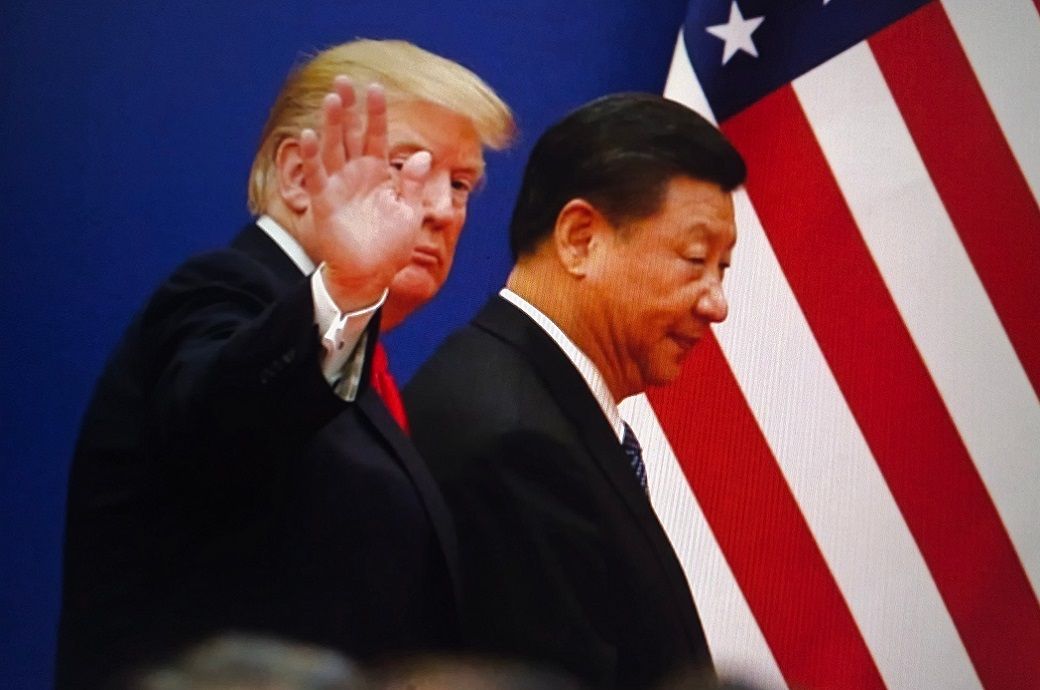
Both the leaders are scheduled to meet on October 30 on the sidelines of the Asia-Pacific Economic Cooperation (APEC) summit in Gyeongju, South Korea, to sign off on the deal terms.
China and the US have agreed on a gamut of contentious issues as part of a trade deal ahead of a meeting between Presidents Donald Trump and Xi Jinping later this week.
Talks on the sidelines of the ASEAN Summit in Kuala Lumpur had eliminated the threat of Trump’s 100-per cent tariffs on Chinese imports beginning November 1, US Treasury Secretary Scott Bessent said.
Trump too was optimistic about a deal.
Trump arrived in Kuala Lumpur yesterday for a summit of the Association of Southeast Asian Nations (ASEAN), his first stop in a five-day Asia tour that is scheduled to end on Thursday with a meeting with Xi.
Talks on the sidelines of the ASEAN Summit had eliminated the threat of Trump’s 100-per cent tariffs on Chinese imports beginning November 1, US Treasury Secretary Scott Bessent said.
“I would expect that the threat of the 100-per cent has gone away, as has the threat of the immediate imposition of the Chinese initiating a worldwide export control regime,” Bessent told a US TV channel.
“I think we’re going to have a deal with China,” Trump said after the weekend talks.
Bessent also said he expects China to delay implementation of its rare earth minerals and magnets licensing regime by a year while the policy is reconsidered.
“I think we have a very successful framework for the leaders to discuss on Thursday,” Bessent was quoted as saying by global newswires after he and US Trade Representative (USTR) Jamieson Greer met Chinese Vice Premier He Lifeng and top trade negotiator Li Chenggang for their fifth round of in-person discussions since May.
Both sides reached a ‘preliminary consensus’ and will next go through their respective internal approval processes, Li said.
“The US position has been tough, whereas China has been firm in defending its own interests and rights,” Li said. “We have experienced very intense consultations and engaged in constructive exchanges in exploring solutions and arrangements to address these concerns,” he added.
Both sides agreed to pause some punitive actions and found “a path forward where we can have more access to rare earths from China, we can try to balance out our trade deficit with sales from the United States,” Greer told a US TV network.
Bessent said he anticipates a tariff truce with China will be extended beyond its November 10 expiry, and China will revive substantial purchases of US soybeans after buying none in September.
Fibre2Fashion News Desk (DS)










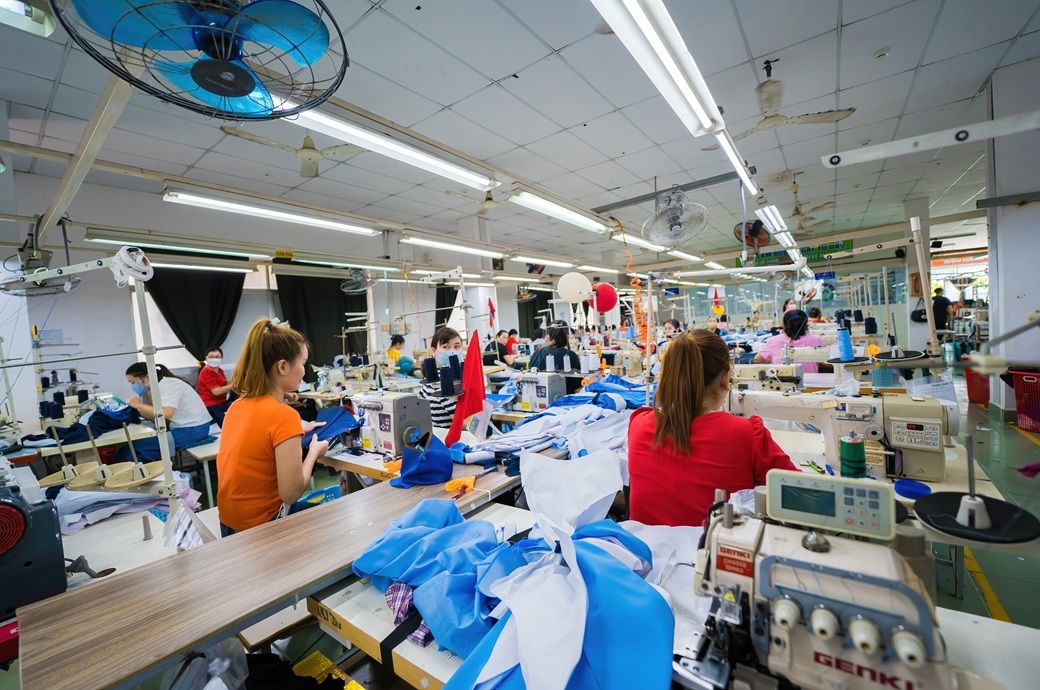
Growth in output and new orders softened, with production nearing stagnation. New orders rose at the slowest pace in eight months, while export orders declined for a second straight month, reflecting a weaker trade environment, S&P Global said in a press release.
ASEAN manufacturing growth slowed in April, with the S&P Global Manufacturing PMI falling to a nine-month low of 50.7.
Output and new orders weakened, export sales declined further, and employment fell for the first time in eight months.
Supply chain pressures and rising operating costs intensified inflation.
Despite weaker momentum, firms remained optimistic.
Supply-side constraints intensified during the month. Delivery times lengthened to a 17-month high as firms increased purchasing activity, putting pressure on supply chains. As a result, inventories of both inputs and finished goods declined, indicating firms relied on existing stocks to meet demand.
Employment conditions also weakened, with staffing levels falling for the first time in eight months, albeit marginally. Meanwhile, backlogs of work continued to rise, suggesting capacity pressures persist.
Inflationary pressures strengthened further. Input costs rose at the fastest pace since March 2022, prompting firms to increase output prices at the sharpest rate in 49 months.
Maryam Baluch of S&P Global Market Intelligence said ASEAN manufacturing remained in expansion territory in April, though growth momentum weakened as output neared stagnation, demand softened, exports fell faster, and employment declined. She noted that price pressures intensified further amid rising operating costs.
“While manufacturing firms in the ASEAN region remain optimistic about continued production growth in the coming year, the overall trajectory will remain dependent on external factors, notably the ongoing conflict in the Middle East, which is also shaping the inflation picture,” added Baluch.
Fibre2Fashion News Desk (SG)
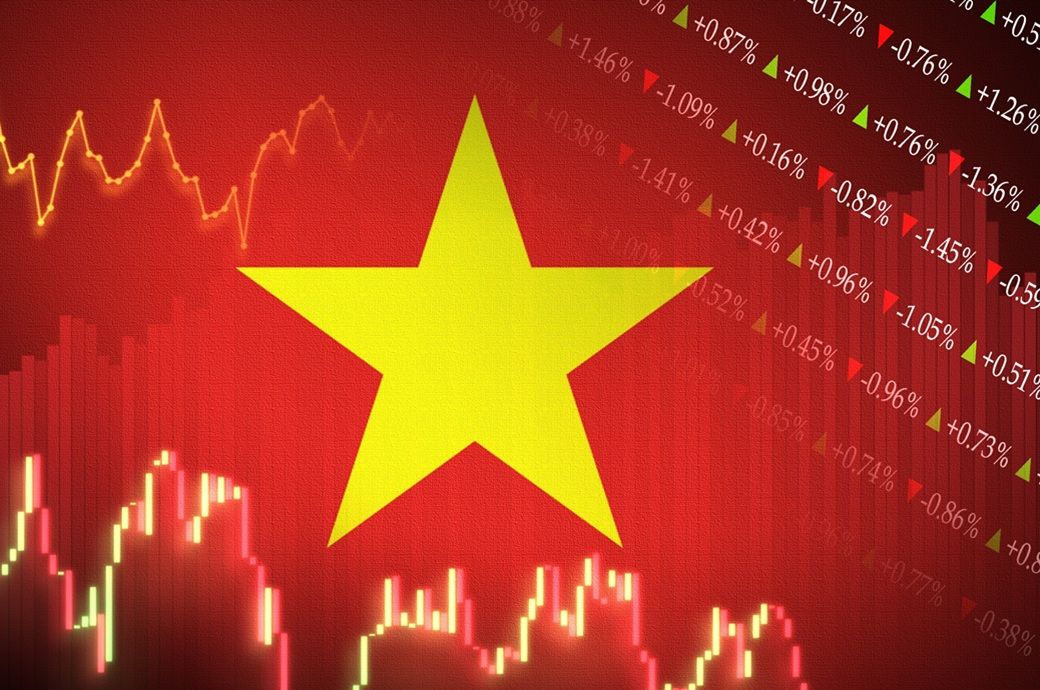
Affirming its ’Ba2’ rating, the agency said Vietnam’s institutional quality and governance were improving due to administrative, legal, and public sector reforms implemented since late-2024, and downside risks from US trade measures had eased compared with what was expected earlier.
Moody’s Ratings recently raised its outlook on Vietnam to ‘positive’ from ‘stable’, citing rising confidence in the country’s ability to strengthen its credit profile over the medium term.
Affirming its ’Ba2′ rating, it said Vietnam’s institutional quality and governance were improving due to reforms implemented since late-2024, and downside risks from US trade measures had relatively eased.
Moody’s emphasised that the country’s growth potential continues to be a primary anchor for its credit profile. This is supported by a diversified export base, recovering domestic demand and robust foreign direct investment (FDI) inflows, all of which provide a solid foundation for macroeconomic stability.
Vietnam has demonstrated a high degree of adaptability to global volatility like fluctuating energy prices, rising shipping costs and inflationary pressures stemming from geopolitical tensions. This resilience is underpinned by a stable economic foundation, a positive external balance and a highly diversified trade structure, it noted.
However, risks within the banking system, vulnerabilities in the real estate market and lingering institutional bottlenecks continue to serve as hurdles for a potential rating upgrade in the future, the rating agency cautioned.
Fibre2Fashion News Desk (DS)

He said the sharp increase in oil and gas prices has fuelled inflationary pressures, weighing on the country’s growth outlook. Despite the downgrade, the government expects economic recovery, projecting growth to rebound to 5 per cent in 2027 and average around 5.5 per cent annually through 2029.
Cambodia has lowered its 2026 growth forecast to 4.2 per cent from 5 per cent due to rising oil and gas prices amid Middle East instability and Thailand border tensions.
Inflationary pressures are weighing on the economy, though growth is expected to recover to 5 per cent in 2027.
Export-driven sectors and tourism remain vulnerable to global volatility.
Cambodia’s economy continues to rely heavily on exports of garments, footwear and travel goods, alongside tourism, agriculture and construction. Authorities cautioned that prolonged global uncertainty could further impact these key sectors and slow overall economic momentum.
Fibre2Fashion News Desk (CG)


I’ve Tried Every Digital Notebook. These Are the Best Ones

ASEAN manufacturing momentum eases in April amid rising cost pressures

Oil prices drop below 100 dollars a barrel on renewed hopes over peace deal

A Brain Implant for Depression Is About to Be Tested in Humans

Pro wrestling star Steph De Lander reveals how colleague’s advice helped lead her to title triumph at ACW

‘I had £20,000 stolen and had to fight a 13-month fraud reporting rule to get it back’

-
 Tech1 week ago
A Brain Implant for Depression Is About to Be Tested in Humans
-
 Sports1 week ago
Pro wrestling star Steph De Lander reveals how colleague’s advice helped lead her to title triumph at ACW
-
Business1 week ago
‘I had £20,000 stolen and had to fight a 13-month fraud reporting rule to get it back’
-

 Entertainment1 week ago
Norway joins Type 26 Frigate Programme to boost NATO naval power
-

 Entertainment1 week ago
Melania Trump says ABC should ‘take a stand’ on late-night host Kimmel
-

 Tech1 week ago
Are tech leaders risking a cyber resourcing crisis? | Computer Weekly
-
 Business6 days ago
PSX plunges over 4,800 points | The Express Tribune
-

 Tech1 week ago
This Ambitious Laptop Doesn’t Leave Much Room for Your Hands