

Entertainment
Paramount to lay off 2,000 workers shortly after merging with Skydance

In widely expected job cuts after completing its $8 billion merger with Skydance, Paramount has begun layoffs set to impact about 2,000 employees.
Paramount initiated roughly 1,000 of those layoffs companywide on Wednesday (Paramount Skydance owns CBS News.) The rest of the cuts are expected to be made at a later date. In all, 2,000 job reductions amount to about 10% of Paramount’s total workforce.
“These decisions are never made lightly, especially given their effect on our colleagues who have made meaningful contributions to the company,” CEO David Ellison wrote Wednesday in a memo to employees.
The prospect of job cuts has hovered over Paramount employees for some time. Ellison on Wednesday reiterated that the company has been working to restructure since the completion of its merger in August, and noted that workforce cuts are “part of that process.”
It’s not uncommon for businesses to initiate layoffs following a merger. When Skydance completed its purchase of Paramount, the combined company said it would look for “opportunities to streamline its business.” Paramount is also rumored to have interest in buying Warner Bros. Discovery, the home of HBO, CNN and DC Studios, among other brands.
Neither Paramount nor Warner has publicly confirmed talks. But Warner earlier this month signaled that it may be open to selling all or parts of its business in light of “unsolicited interest” it said it had received from multiple parties. The company has reportedly been resistant to Paramount’s initial approach. According to CNBC, which cited anonymous sources, Warner had rejected three offers from Paramount as of last week.










Andy Serkis, the iconic voice of Gollum in “Lord of the Rings,” speaks with “CBS Saturday Morning” about his latest project, an animated version of George Orwell’s “Animal Farm.”
Source link

Harry Styles and Zoe Kravitz have reportedly entered their wedding planning era after the singer popped the question recently.
The 31-year-old British musician and the Caught Stealing star, 37, are deep in consideration about the nuptials, which might span over two different ceremonies.
Following Kravtiz’s recent appearances with a rock on her ring finger, an insider revealed that the couple is currently in the process of having meetings to plan their big day.
“I know for a fact Zoë would want to do something in New York because of her dad, so if anything it’s going to be two weddings,” an insider told Page Six about Kravitz’s father Lenny Kravtiz.
They continued, “Dad still lives in downtown [Manhattan]. It could be at the Fouquet’s Hotel. If she does two [weddings] it would be one in London and one in New York. She would do downtown over Brooklyn, because he likes downtown and she would do that for him.”
They noted that the Watermelon Sugar High hitmaker has already impressed the rockstar, “I know Zoë put together the meeting with Harry and her father a while ago. They did a whole meet-and-greet. Obviously, Lenny loves Harry.”
Kravitz, they explained, highly values her father’s opinion and regardless of who she is dating, they need to get along with him.
While it hasn’t been long to the couple being together, insiders have previously shared how they were already “serious” back in December last year. Their recent engagement, and future wedding seems a natural course to follow.
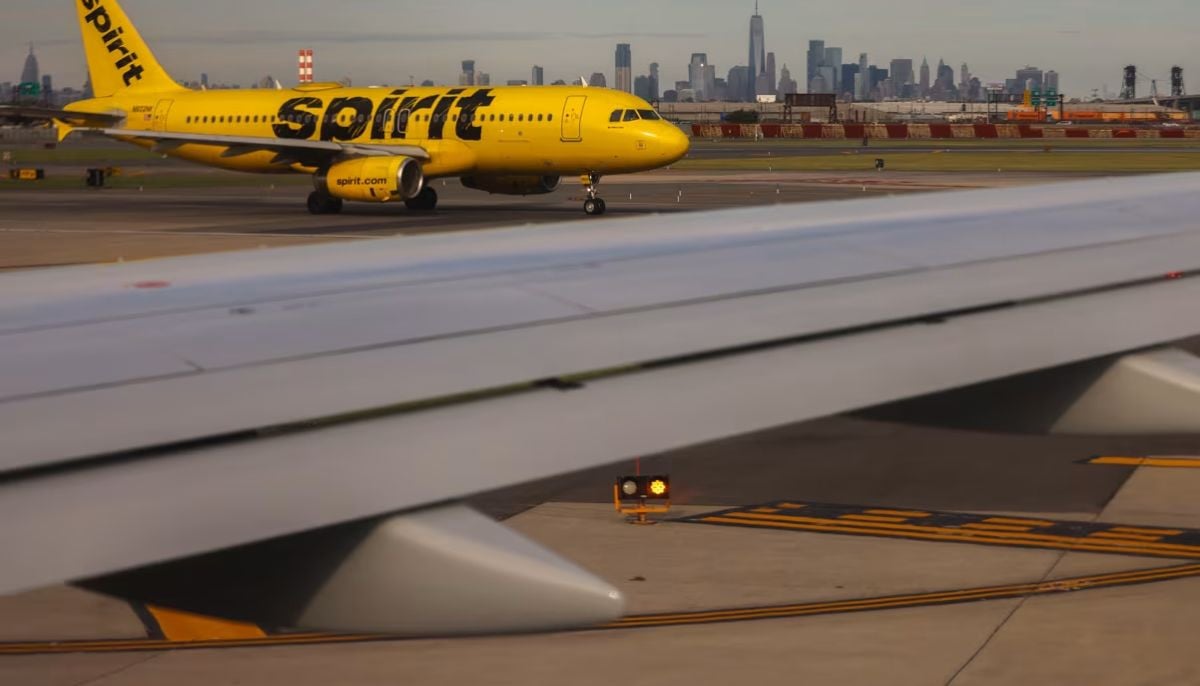
The most economical airline operating across America has announced a major decision.
Spirit Airlines shares the news that it is shutting down its business, canceling all flights on May 2, 2026.
The airline has been facing serious economic crush since the covid-19 pandemic.
Spirit, multiple times in recent years, has warned of its poor economic health, stating there was “substantial doubt” over its ability to continue flying the operations.
The airline has filed for bankruptcy twice, with the most recent in August 2025.
In 2025, Spirit was ranked as the eighth-largest US airline by its seating capacity.
The airline was widely recognized as offering the ultra-economical base fares in the US, charging extra for things like carry-on bags.
What happens to stranded passengers now?
Spirit had booking of about 9,000 flights from May 2 to the end of the month, totaling 1.8 million seats, as per the aviation analytics firm Cirium.
So over the coming month, an estimated 300 flights and 60,000 passengers will be affected every single day.
The sudden cancellation will further push the domestic US flight fares across the aviation industry.
Now, with Spirit canceling the 2% of domestic US flights it was scheduled to operate this summer, fares are likely to surge across the industry.
Over the last 25 years, eight key US airlines have filed for bankruptcy, but a complete airline shutdown is far more unusual.
Spirit’s closure is seen as the first shutdown of a major US airline since Midway Airlines collapsed in the aftermath of the September 11, 2001 attacks.
According to CNN, other US airlines have stepped up to support the affected passengers.
However, the outlet didn’t mention what the policy would be for these airlines to follow but did mention American Airlines officials, who said it had “immediately implemented fare caps on Main Cabin tickets for Spirit routes where we also offer nonstop service.”


Andy Serkis on making the animated version of "Animal Farm"

The Tovala Oven and Meal Kit Is Like a Robot Chef of Future Past

Harry Styles, Zoe Kravitz in major wedding planning mode after big step

-

 Tech5 days ago
A Brain Implant for Depression Is About to Be Tested in Humans
-

 Tech1 week ago
They Wanted to Join Raya. They’ve Been on the Waiting List for Years
-

 Tech1 week ago
Why Do I Like Dyson’s PencilVac So Much?
-

 Tech5 days ago
Almost 90% of women leave tech industry within 10 years | Computer Weekly
-

 Fashion1 week ago
North India cotton yarn steady despite continued push by spinners
-

 Entertainment1 week ago
Anne Hathaway makes shocking confession about Taylor Swift’s music
-

 Entertainment5 days ago
Norway joins Type 26 Frigate Programme to boost NATO naval power
-

 Sports1 week ago
US says Iran can play in Fifa World Cup but IRGC-linked individuals won’t be allowed