

Business
Eli Lilly blows past estimates, hikes guidance as Zepbound and Mounjaro sales soar


Eli Lilly on Thursday reported third-quarter earnings and revenue that topped estimates and hiked its full-year outlook, as the company continued to see strong demand for its blockbuster weight loss drug Zepbound and diabetes treatment Mounjaro.
Shares of the company closed more than 3% higher Thursday.
The pharmaceutical giant now expects its fiscal 2025 revenue to come in between $63 billion and $63.5 billion, up from previous guidance of $60 to $62 billion. Eli Lilly also expects full-year adjusted profit to come in between $23 and $23.70 per share, rising from its previous outlook of $21.75 to $23 a share.
Eli Lilly said the guidance reflects President Donald Trump‘s existing tariffs as of Thursday, but does not include his threatened levies on pharmaceuticals imported into the U.S.
Mounjaro raked in $6.52 billion in revenue for the quarter, up 109% from the same period a year ago. That blew past the $5.51 billion that analysts were expecting, according to StreetAccount.
Zepbound, which entered the market roughly two years ago, posted $3.59 billion in revenue for the third quarter. That’s up 184% from the year-earlier period and slightly ahead of the $3.5 billion that Wall Street was expecting, according to StreetAccount estimates.
David Ricks, chief executive officer of Eli Lilly & Co., during a news conference at Generation Park in Houston, Texas, US, on Tuesday, Sept. 23, 2025.
Mark Felix | Bloomberg | Getty Images
In an interview with CNBC on Thursday, Eli Lilly CEO Dave Ricks said the “real star here” of the quarter is tirzepatide, the active ingredient in Zepbound and Mounjaro. Both drugs are leading the U.S. market for obesity and diabetes, he said.
Ricks said the quarterly beat was driven by “really strong international performance,” pointing to Mounjaro’s launch in China, Brazil and India earlier this year.
“What we’re seeing is a global demand for this product,” he told CNBC’s “Squawk on the Street.”
On an earnings call Thursday, Ricks said Eli Lilly gained share in the injectable obesity and diabetes market for the fifth consecutive quarter. The company’s drugs account for nearly 6 out of 10 prescriptions within that class of medicines.
Here’s what Eli Lilly reported for the third quarter compared with what Wall Street was expecting, based on a survey of analysts by LSEG:
- Earnings per share: $7.02 adjusted vs. $5.69 expected
- Revenue: $17.60 billion vs. $16.01 billion expected
The results come as Eli Lilly works to maintain its edge over chief rival Novo Nordisk in the booming market for a class of obesity and diabetes drugs called GLP-1s.
The company posted third-quarter revenue of $17.60 billion, up 54% from the same period a year ago.
Sales in the U.S. jumped 45% to $11.30 billion. Eli Lilly said that was driven by a 60% increase in volume — or the number of prescriptions or units sold — for its products, primarily for Mounjaro and Zepbound. That was partially offset by lower realized prices of the drugs, the company said.
The pharmaceutical giant booked net income of $5.58 billion, or $6.21 per share, for the third quarter. That compares with net income of $970.3 million, or $1.07 per share, a year earlier.
Excluding one-time items associated with the value of intangible assets and other adjustments, Eli Lilly posted earnings of $7.02 per share for the second quarter.
The results underscore Eli Lilly’s strong advantage in the booming GLP-1 drug market.
The company has gained the majority market share over the last year, thanks to the strong profile of its weight loss and diabetes injections and a boost from its direct-to-consumer sales, among other efforts. Eli Lilly took another stride to boost access to Zepbound on Wednesday, partnering with Walmart to offer in-store pickup of discounted vials of the drug for cash-paying patients.
In the interview, Ricks said Eli Lilly plans to expand its direct-to-consumer and cash-pay offerings for its drugs.
The company is now betting on its closely watched experimental obesity pill, orforglipron, to solidify its dominance in the space, especially as Novo Nordisk and other drugmakers race to bring their own pills or next-generation injections to the market.
“We’ve been ramping both production and planning for really a broad global rollout upon regulatory approval,” Ricks told CNBC, referring to orforglipron’s launch.
On Thursday, Novo Nordisk launched a rival bid for U.S. obesity biotech company Metsera, hijacking an offer from Pfizer as it races to catch up to Eli Lilly.
When asked about competition, Ricks said on the earnings call that “of course, everybody would like to be in our position, but we’re focused on defending it and mostly just executing the play we have.”




Heineken has announced a substantial investment exceeding £44 million into hundreds of its pubs across the UK, a move expected to create approximately 850 jobs.
The Dutch brewing giant’s Star Pubs operation, which manages 2,350 sites nationwide, is undertaking this significant financial commitment despite a challenging period for the pub sector.
The industry has faced considerable pressure over the past year, grappling with escalating labour costs and increases in national insurance contributions.
Concurrently, consumer spending has been constrained by concerns over inflation and rising unemployment, further impacting pub revenues. However, pubs did receive additional business rates support from the government last month, aimed at alleviating some of these financial burdens.
Lawson Mountstevens, managing director of Star Pubs, indicated that the investment strategy is partly designed to bolster revenues and help the group navigate the recent “sustained increases in running costs”.
This year, £44.5 million will be allocated to upgrades for 647 pubs. A notable 108 of these venues are earmarked for particularly significant cash injections, with each transformation costing at least £145,000.
Heineken clarified that while the majority of its pubs are group-owned, they are independently operated by local licensees. A key focus for this investment, particularly in the lead-up to the 2026 football World Cup, will be on sports-focused venues.
The pub firm and brewer has a history of significant investment in British pubs, having pumped £328 million into the sector since 2018. Work has already commenced at 52 locations, including eight projects dedicated to reopening boarded-up pubs that have endured lengthy closures.
Mr Mountstevens also urged the government to reduce the tax burden on pubs, arguing it would ease cost pressures and foster further job creation within the industry.
He stated: “We can only do so much; the root-and-branch reform of business rates that the industry has been calling for over many years is urgently required, as well as a lowering of the burden of taxation on pubs, including VAT and beer duty.”
He concluded with a direct appeal: “We are calling on the Government to support us in bringing out the best in the Great British pub.”
GameStop’s boss Ryan Cohen says he sees potential to make eBay a much bigger rival to Amazon.
Source link
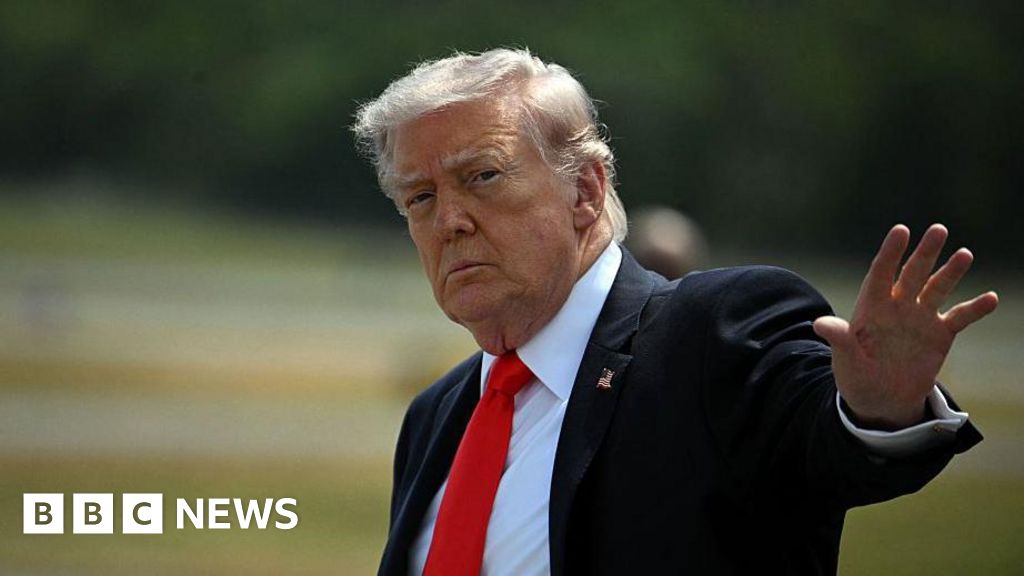
It comes as the US said on Monday it will begin to help “guide” vessels out of the Strait of Hormuz.
Source link


Iran says it forced US warship back from Strait of Hormuz

Any US interference in new Hormuz regime is ceasefire violation: Iran lawmaker

It took 40 years for technology to catch up to this zipper design

-

 Tech1 week ago
A Brain Implant for Depression Is About to Be Tested in Humans
-

 Tech1 week ago
Almost 90% of women leave tech industry within 10 years | Computer Weekly
-
 Business7 days ago
‘I had £20,000 stolen and had to fight a 13-month fraud reporting rule to get it back’
-
 Business1 week ago
Pakistan’s oil market is fuelling the crisis | The Express Tribune
-

 Sports6 days ago
Pro wrestling star Steph De Lander reveals how colleague’s advice helped lead her to title triumph at ACW
-

 Tech6 days ago
This Ambitious Laptop Doesn’t Leave Much Room for Your Hands
-

 Entertainment1 week ago
Norway joins Type 26 Frigate Programme to boost NATO naval power
-

 Entertainment1 week ago
Melania Trump says ABC should ‘take a stand’ on late-night host Kimmel