

Fashion
Michael Kors parent Capri Holdings’ revenue exceeds estimates at $856 million in Q2 FY26


Published
November 4, 2025
Michael Kors parent Capri Holdings’ revenue exceeded estimates and totalled $856 million in the second quarter of the 2026 financial year. The business’ net loss rose to $34 million, compared to net income of $42 million a year prior.
“We are encouraged by our second quarter results,” said the company’s chairman and CEO John D Idol in a release posted on the business’ website on November 4. “Trends continued to improve sequentially, which resulted in revenue, gross margin, and operating income exceeding our expectations. This performance demonstrates the progress we are making as we execute against our strategic initiatives to energise our fashion luxury houses.”
The business’ revenue dropped by 4.2% year on year in constant currency terms (-2.5% on a reported basis) and its loss from operations totalled $12 million in the quarter ending September 27. Capri Holdings’ gross profit totalled $522 million in the second quarter of the 2026 financial year and the reported gross margin was 61%, compared to $547 million and 62.3% a year prior. Tariffs negatively impacted the gross margin rate by approximately 130 basis points, according to the business, and a higher than anticipated effective tax rate versus its original guidance negatively impacted adjusted net income by $24 million.
Capri Holdings’ brand Michael Kors’ revenue decreased by 1.8% on a reported basis and 3.3% on a constant currency basis in the second quarter of the 2026 financial year, totalling $725 million. The label’s gross profit was $430 million in the second quarter, compared to $451 million a year earlier.
The business’ label Jimmy Choo’s revenue totalled $131 million in the past quarter, representing a year on year drop of 6.4% on a reported basis and 9.3% on a constant currency basis. The luxury brand’s gross profit was $92 million in the second quarter this fiscal, compared to $96 million in the second quarter of the 2025 financial year.
“With the Versace sale expected to close in our fiscal third quarter, we are now fully focused on the growth of our two iconic brands Michael Kors and Jimmy Choo,” said Idol. “We plan to use the proceeds of the sale to repay the majority of our debt, substantially strengthening our balance sheet and providing greater financial flexibility to both invest in our growth as well as return capital to shareholders in the future. Given the encouraging signs of stabilisation across our business and our planned reduction in debt levels, our Board of Directors has authorised a new $1 billion share repurchase program which the Company expects to begin implementing in fiscal 2027.”
In its outlook for the full 2026 financial year, Capri Holdings expects to see its total revenue sit in the range of $3.375 billion and $3.45 billion with an operating income of around $100 million. The business forecasts total revenue of $2.8 billion to $2.875 billion for the Michael Kors brand and $565 million to $575 million for Jimmy Choo for the full financial year.
Copyright © 2025 FashionNetwork.com All rights reserved.







PTA prices recorded notable declines across key Asian benchmarks, tracking crude oil weakness rooted in evolving geopolitical signals. The correction was broad-based, spanning China, Southeast Asia, and South Korea, while India**;s CIF price held steady reflecting the lag in import contract structures and limited spot availability in the domestic market on the day.
The *** per cent Polyester Yarn market witnessed a slightly negative trend during the assessed period, with mild price corrections observed across both yarn grades in the Asia Free on Board (FOB) China market. Prices for **s (*** per cent polyester yarn) declined from around $*.***/kg to nearly $*.***/kg, registering a decrease of approximately *.** per cent.
The pivot is urgent because the old model is under pressure. April **** looked strong: Ready-Made Garment (RMG) exports rose **.** per cent year on year to $*.** billion. But the ten-month picture is weaker. From July-April FY****–**, apparel exports stood at $**.** billion, down *.** per cent. Knitwear fell *.** per cent to $**.** billion; woven fell *.** per cent to $**.** billion. The rebound is real, but so is the drag underneath.
AWARE is the sharpest EU-facing signal: blockchain-backed product data for Digital Product Passport (DPP) readiness. Open Supply Hub adds the factory-identity layer, pushing production information into an open platform. GIZ brings the longer reform spine, from May **** to February ****, covering energy efficiency, circularity, chemical management, renewable-energy skills and textile-waste transparency.
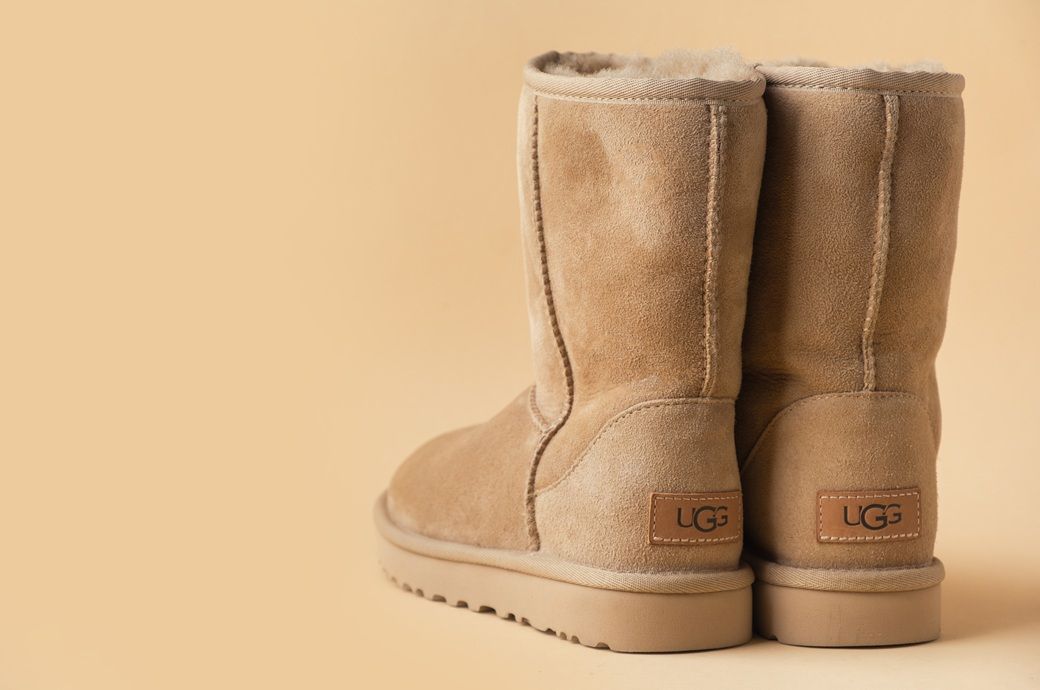
Kenneth Straka, Senior Product Development Manager at Deckers Outdoor Corporation, said that Deckers places strong emphasis on sustainability, noting that founder John Luke often reminded the team that the French word for sustainability is durability. This idea aligned with discussions at the Global Fashion Summit, where the theme centred on “Building Resilient Futures” in the sustainable and circular economy.
Durability has helped UGG become one of the most sought-after boot brands and a key sales driver for Deckers, alongside its sportswear brand Hoka. “One of the things we think about in terms of circularity is making products that last a long time and remain with consumers throughout their lives. We want products that consumers can wear for ** or ** years,” Straka said in an interview with Fibre*Fashion on the sidelines of the Global Fashion Summit in Copenhagen.


Polyester yarn prices ease as PTA weakens on limited demand

The border as lifeline

Bangladesh apparel reset: Compliance edge or energy trap?

-

 Entertainment5 days ago
Conan O’Brien hat tricks as Oscar host
-

 Tech1 week ago
Could Contact-Tracing Apps Help With the Hantavirus? Not Really
-

 Tech1 week ago
I Tried the Best Captioning Smart Glasses, and Only One Leads the Pack
-

 Fashion5 days ago
Italy’s Zegna Group’s Q1 growth boosted by strong organic performance
-

 Sports1 week ago
Bobby Cox, legendary Atlanta Braves manager who led 1995 World Series champions, dead at 84
-

 Entertainment1 week ago
Martin Short: Facing tragedy with joy
-
 Entertainment1 week ago
Tom Brady gets back at Kevin Hart during Netflix roast
-

 Entertainment1 week ago
Martha Stewart: How to make an omelet