

Business
High Court delivers ruling on BAE Systems strike action

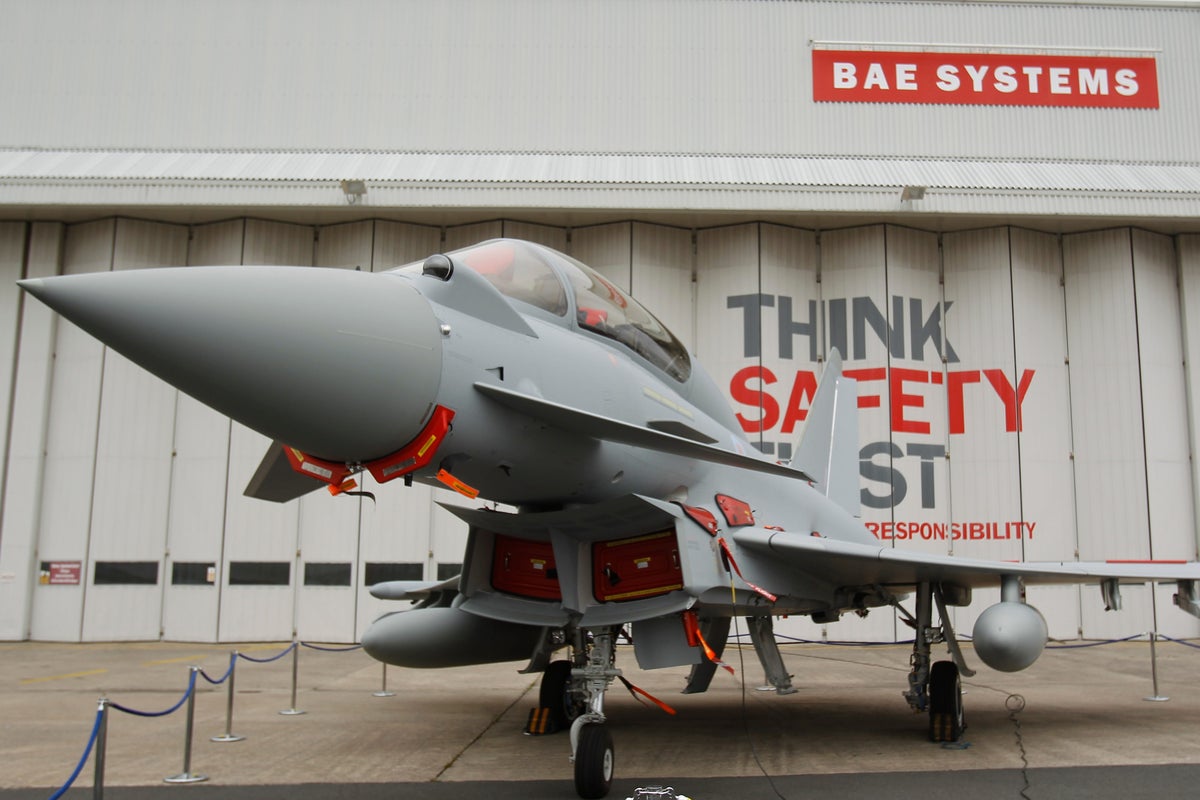
Workers at BAE Systems in Lancashire have been cleared to proceed with planned industrial action after the High Court dismissed the company’s last-minute bid to block strikes.
The aerospace giant had sought an injunction against Unite the Union members at its Warton and Samlesbury sites, arguing their planned walkout was unlawful.
However, Mr Justice Soole refused to grant the injunction on Thursday, stating: “Having considered the evidence, the application is dismissed. I will give my reasons later.”
The ruling paves the way for strikes, which the union said were due to begin on Wednesday and continue until 25 November, following the rejection of a 2025 pay offer.
In written submissions, Bruce Carr KC, representing BAE, contended that Unite had invalidated the strike’s lawfulness by instructing members not to train managers in aircraft testing after giving notice to ballot on 24 September.
The barrister added: “It is the claimant’s case that the evidence clearly demonstrates that at that meeting and thereafter, Unite called on its members employed as quality professionals, to take industrial action in the form of refusing to undertake the training of managers employed by the claimant.”
Mr Carr said that in mid-September BAE wanted the training after “a number of absences” and while it was “considering business continuity plans in the event of possible industrial action”.
This training occurred between 22 September and 10 October, after which the quality professionals refused to continue following instructions from the union, Mr Carr said.
These workers breached their duty to BAE because they are “required to act in the best interests of the company to carry out such duties in respect of their appointment as they may reasonably be called upon to undertake”, the barrister added.
Oliver Segal KC, for Unite, said the training was a “request”, not an “instruction” and therefore workers who refused were not in breach of their contract.
He described managers being trained for the testing role as “unprecedented” and that union representatives had asked workers to get the “request” in writing while they seek legal advice.
In written submissions, he said: “The evidence in this case is that the defendant never even suggested, let alone ‘called’ on, its members who are quality professionals to refuse to comply with a management instruction to provide training to management executives.”
Mr Segal said BAE was “ludicrously interpreting” emails between union representatives discussing the training as instructions for union members not to comply.
The barrister also said there was no refusal to train the managers after 10 October and that one of the quality professionals gave a statement saying his team never stopped providing training.
He continued: “The reality is that this application is a last-minute, desperate attempt by the claimant to neuter the industrial action, which is both factually mis-premised and legally misconceived.”
Mr Carr said on Thursday that BAE is considering an appeal.
A BAE spokesperson said: “We note the ruling by the High Court. We believe we had good grounds for the legal challenge and will consider the court’s judgment.
“We respect the right of employees to engage in industrial action and remain committed to a partnership approach with all our trade union groups.”
The PA news agency understands that less than 70 employees out of 12,000 are involved in the strike action while production lines are continuing to operate.
Speaking after the decision, Unite general secretary Sharon Graham said: “This unsuccessful attempt by BAE to prevent a lawful strike will have severely damaged the goodwill it has with its workforce.
“BAE is a multibillion-pound company making record profits.
“It now needs to come back to the negotiating table with an acceptable offer for striking workers in its Air division, rather than wasting money on pointless legal threats.
“Otherwise, our members will be taking strike action throughout November in their fight for fair pay.”
Rachel Halliday of Thompsons Solicitors, which represented Unite, added: “This is a clear win for Unite and for workers everywhere.
“The High Court has confirmed that the union acted lawfully at every stage, and that BAE’s attempt to block strike action had no basis.
“Today’s decision will send a strong message to employers that the courts cannot be used to silence workers standing up for fair pay and respect.
“Unite acted responsibly throughout, adhering to all statutory requirements, and this important decision reinforces the union’s members’ right to strike.
“Thompsons is proud to have stood with Unite in defending this principle. Working people have the right to be heard – and to take lawful industrial action when negotiations fail.”
Business
Iran oil returns: India set to receive first cargo in 5 years, tanker heads to Gujarat – The Times of India

India is set to receive its first shipment of Iranian crude oil since 2019, with a tanker carrying 600,000 barrels of oil en route to Gujarat following a temporary sanctions waiver by the US, according to PTI.Ship-tracking data indicates that the vessel Ping Shun is headed towards Vadinar port, marking a potential revival of Indo-Iran oil trade after nearly five years.“The Indo-Iranian oil trade has flickered back to life. Following the US administration’s decision to grant a 30-day window for Iranian oil “on the water” due to regional conflict, the vessel Ping Shun is now en route to Vadinar (in Gujarat) with 600,000 barrels of crude. This is the first such delivery since May 2019 and comes at a critical time for Indian refiners facing tightening inventories,” said Sumit Ritolia, Lead Research Analyst, Refining and Modelling at Kpler.The development follows Washington’s decision earlier this month to allow a 30-day window for the purchase of Iranian oil already at sea, aimed at easing global oil prices amid the ongoing US-Israel conflict with Iran. The window is set to expire on April 19.While the buyer of the cargo remains unidentified, Vadinar houses a 20 million tonnes per annum refinery operated by Rosneft-backed Nayara Energy and also serves as a landing point for crude supplies to inland refineries such as BPCL’s Bina unit.India’s oil ministry has so far maintained that any decision to resume imports from Iran will depend on techno-commercial viability.Before sanctions were tightened in 2018, India was among the largest buyers of Iranian crude, importing both Iran Light and Iran Heavy grades due to refinery compatibility and favourable pricing terms.Imports ceased in May 2019 after US sanctions were reimposed, with India shifting to alternative suppliers including the Middle East and the US. At its peak, Iranian crude accounted for 11.5 per cent of India’s total imports.India had imported about 518,000 barrels per day (bpd) of Iranian oil in 2018, which declined to 268,000 bpd between January and May 2019 during a sanctions waiver period before dropping to zero thereafter.“The Aframax Ping Shun (IMO 9231901) loaded with Iranian crude oil from Kharg Island in early March has emerged as the first vessel observed signalling a destination of Vadinar, India since May 2019, following sanction reimposition on Iranian oil by the first Trump administration,” Ritolia said.The tanker is estimated to have loaded around 600,000 barrels from Kharg Island around March 4 and is expected to reach Vadinar on April 4.An estimated 95 million barrels of Iranian oil are currently stored on vessels at sea, of which around 51 million barrels could be supplied to India, while the rest may be directed to China and Southeast Asian markets.However, payment mechanisms remain uncertain as Iran continues to be excluded from the SWIFT global banking system, complicating international transactions.Earlier, payments were routed in euros through Turkish banks, but that channel is no longer available following renewed sanctions restrictions.Iran was first disconnected from SWIFT in 2012 due to EU sanctions over its nuclear programme, with further disruptions in 2018 after the US reimposed sanctions, limiting its ability to receive payments and access foreign currency reserves.

The 217-year-old firm says it appointed FRP Advisory as administrators on Tuesday.
Source link
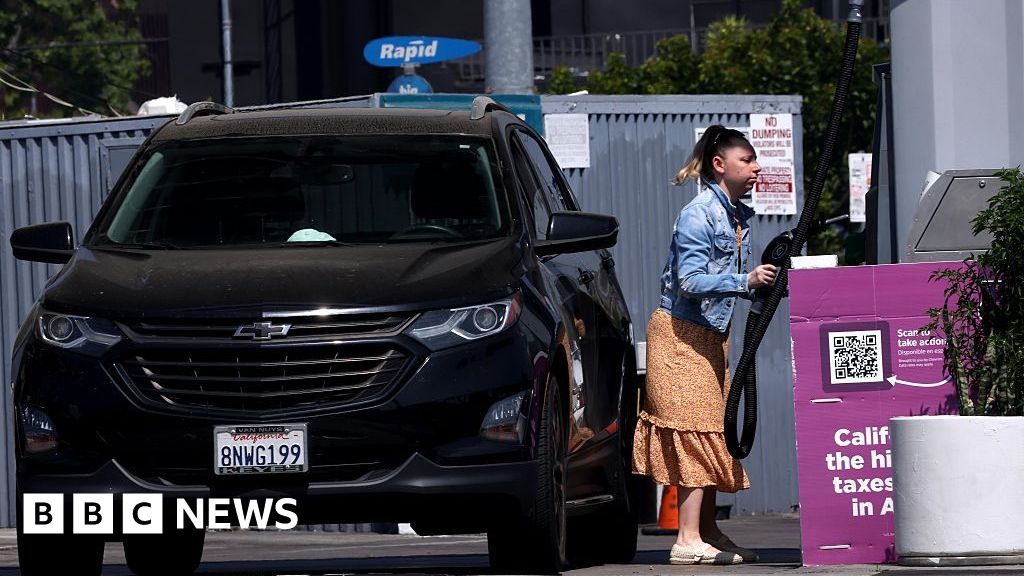
The Iran war continues to push up prices at the pump for US motorists.
Source link


Iran air defenses shoot down MQ-9 drone in Isfahan, LUCAS drone over Qeshm Island
Iran oil returns: India set to receive first cargo in 5 years, tanker heads to Gujarat – The Times of India

Taylor Swift sued by Vegas performer for trademark infringement over “The Life of a Showgirl”

-

 Politics1 week ago
Afghanistan announces release of detained US citizen
-

 Sports1 week ago
Broadcast industry CEO says consolidation is ‘essential’ to compete for NFL soaring media rights prices
-

 Entertainment1 week ago
UN warns migratory freshwater fish numbers are spiralling
-

 Tech1 week ago
Can a Home Appliance Fix the Problem of Soft-Plastic Waste?
-
 Business1 week ago
Property Play: Home flippers see smallest profits since the Great Recession, real estate data firm says
-
 Business1 week ago
Gold prices soar in Pakistan – SUCH TV
-

 Fashion1 week ago
ICE cotton slips on weaker crude, profit booking
-
 Business1 week ago
More women are entering wealth management, but few are in advisory roles, study finds