

Business
SBI, Adani Ports & more: Top stocks to buy on November 7 — Check list – The Times of India


Morgan Stanley has an equal-weight rating on SBI with the target price raised to Rs 1,025. Analysts said the key positive from SBI’s July-Sept (Q2FY26) results was a 5% higher net interest income (NII) over analysts’ estimates and strong fees. Its profit after tax (PAT, pre-exceptional gain) was 15% above estimates, while asset quality remained strong. Analysts raised earnings per share (EPS) estimates by high single-digit percentage points for FY26 to FY28.Jefferies has a buy on M&M with the target price Raised to Rs 4,300. Analysts said the auto major delivered 14th consecutive quarter of double-digit earnings before interest, taxes, depreciation and amortisation (EBITDA) growth, with Q2FY26 up 23% on the year (YoY), ahead of analysts’ estimates. M&M raised FY26 outlook for tractors and LCVs, and now expects double-digit growth across segments. Analysts also said it has gained market share across SUV, tractors and LCVs in recent years. It also plans to launch three new SUVs in CY26, and a new SUV platform in CY27.HSBC has a buy on Adani Ports with the target price raised to Rs 1,700. Analysts said for the company Q2FY26 marked another quarter of continued improvement in return on capital employed (ROCE) across major businesses, notably in international ports. Robust underlying demand, market share gains, and overseas expansion underpin its 1,000 million metric ton throughput ambition for 2030. The company’s strategic pivot to focus on ROCE improvement should drive rerating.Citigroup has a buy rating on Paytm with the target price at Rs 1,500. Analysts said the company reported strong growth and market share momentum in credit on UPI (Rupay & Postpaid) is a tailwind that is likely to continue to aid net payment margins ex-devices. Additionally, device costs (across new device capex, refurbishment) have meaningfully declined, improving device economics. They said overall, Paytm reported a solid beat on EBITDA/EBIT on lower cloud costs and lower depreciation & amortisation. They said PayTM’s outlook on growth and EBIT margins are robust.CLSA has a hold rating on Kaynes Technology with the target price slightly reduced to Rs 6,375 from Rs 6,410 earlier. Analysts said the company’s Q2FY26 top line was largely in line while margins were slightly better. It maintained its FY26/FY28/FY30 revenue guidance, indicating consistently strong growth. However, cashflow conversion remained low, with around Rs 510 crore working capital increase largely due to receivables, which the company expects to improve going forward. While analysts are positive on the company on its strong growth outlook, low free cash flow generation could raise risks of consistent fund raise.
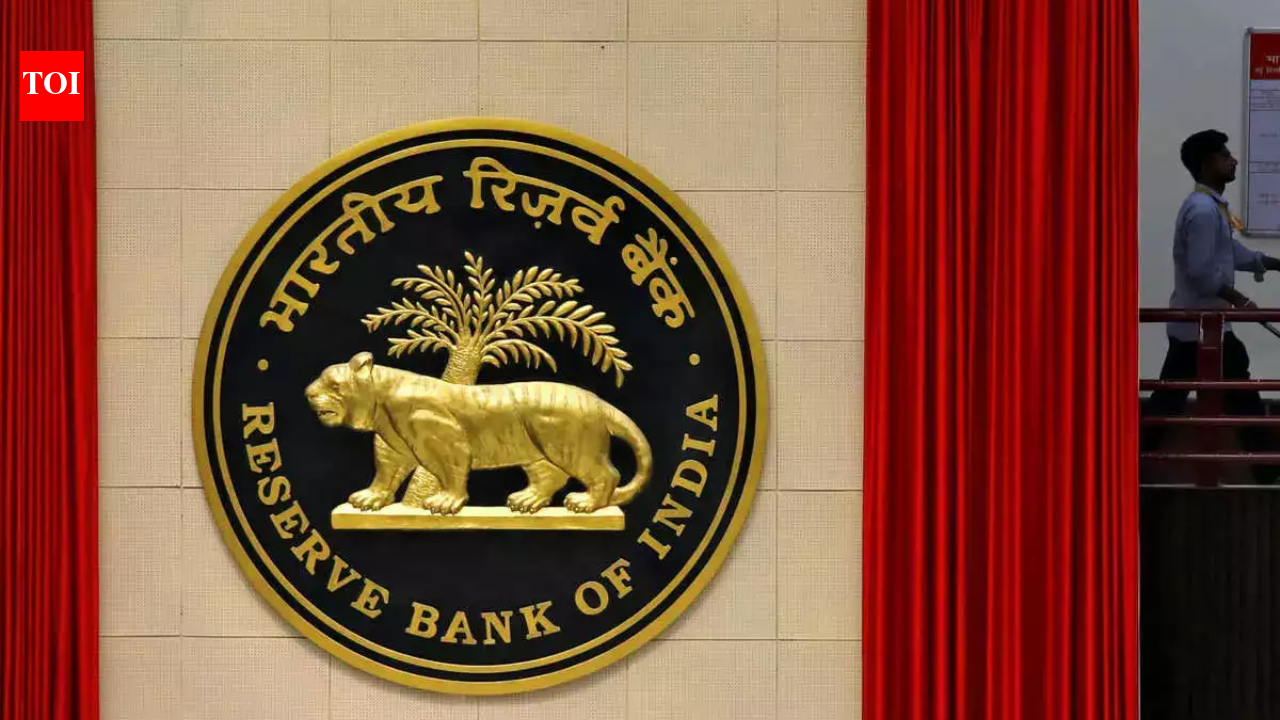
The Reserve Bank of India (RBI) on Monday decided against activating the countercyclical capital buffer (CCyB), indicating that current financial and credit conditions do not warrant an additional capital requirement for banks, PTI reported.The central bank said the decision followed a review and empirical assessment of indicators used under the CCyB framework.“Based on review and empirical analysis of CCyB indicators, it has been decided that it is not necessary to activate CCyB at this point in time,” RBI said in a statement.Under the RBI (Commercial Banks – Prudential Norms on Capital Adequacy) Directions, 2025, the CCyB framework is activated when financial conditions indicate rising systemic risks linked to excessive credit growth.The framework primarily relies on the credit-to-GDP gap as a key indicator, along with supplementary metrics.According to the RBI, the CCyB mechanism is intended to serve two broad objectives.Firstly, it requires a bank to build up a buffer of capital in good times, which may be used to maintain the flow of credit to the real sector in difficult times.Secondly, it achieves the broader macro-prudential goal of restricting the banking sector from indiscriminate lending in the periods of excess credit growth that have often been associated with the building up of system-wide risk.The framework was introduced globally after the 2008 financial crisis as part of measures proposed by the Group of Central Bank Governors and Heads of Supervision (GHOS) under the Basel framework to strengthen financial system resilience.
The company has announced plans to build seven new models in Europe including a small electric hatchback.
Source link

“Today’s policymaking is constrained by a more volatile external environment with more frequent and overlapping shocks, a rising public interest bill, in part reflecting market concerns with countries’ elevated debt, and the long-standing challenge of weak productivity growth,” he said.


Two Americans arrested at Japanese zoo

Turkiye’s current account deficit expected to widen in 2026: Minister

UK’s clothing imports fall 3% in Q1, sharply lower than Q4 2025

-

 Entertainment6 days ago
Conan O’Brien hat tricks as Oscar host
-

 Tech1 week ago
Could Contact-Tracing Apps Help With the Hantavirus? Not Really
-

 Fashion5 days ago
Italy’s Zegna Group’s Q1 growth boosted by strong organic performance
-

 Sports1 week ago
Bobby Cox, legendary Atlanta Braves manager who led 1995 World Series champions, dead at 84
-

 Entertainment1 week ago
Martin Short: Facing tragedy with joy
-

 Entertainment1 week ago
Tom Brady gets back at Kevin Hart during Netflix roast
-

 Sports1 week ago
Jacob Fatu unleashes vicious assault on Roman Reigns after World Heavyweight Championship loss at WWE Backlash
-

 Entertainment1 week ago
Martha Stewart: How to make an omelet