

Business
Millions more Americans could access obesity drugs after Trump’s deals with Eli Lilly, Novo Nordisk


US President Donald Trump makes an announcement in the Oval Office of the White House in Washington, DC on Nov. 6, 2025.
Andrew Caballero-Reynolds | AFP | Getty Images
President Donald Trump on Thursday struck landmark deals with Eli Lilly and Novo Nordisk that could mark a turning point in how many people can access their costly blockbuster obesity drugs.
Under the agreements, Medicare will start covering GLP-1s for obesity for certain patients for the first time beginning in mid-2026 – a shift that will open access to millions of older adults and could spur more employers and other private insurers to follow suit, some experts said. Novo Nordisk and Eli Lilly are also lowering the prices that all state Medicaid programs will pay for GLP-1s, but it’s up to states to opt into coverage.
Obesity drug coverage among state Medicaid plans, employers and other private insurers remains spotty due to the $1,000 or more monthly list prices of existing GLP-1s, including Eli Lilly’s obesity injection Zepbound and Novo Nordisk’s competitor Wegovy.
The limited insurance coverage has blocked out patients who can’t afford their hefty price tags. That lack of access has led to mounting pressure on health plans and the government to expand coverage — and the government agreements with drugmakers could mark a major shift.
“I think it’ll start with the government, start with Medicare, and the insurers will quickly follow,” Nick Fabrizio, an associate teaching professor in Cornell’s health policy program, told CNBC. “I do think that’s coming.”
“This is a great step towards trying to address a chronic and serious issue, and for those patients who may feel like they have no hope,” he said.
Roughly 8 to 9 million people in the U.S. are using GLP-1s, Eli Lilly CEO David Ricks said at a briefing with reporters on Thursday. The added Medicare coverage under the deal could bring in as many as 40 million new eligible patients, and prompt more commercial plans to cover the medicines, he said.
The deals could also address the inability of many patients with limited or no insurance coverage for obesity drugs to access them, by offering the treatments at a discount on the Trump administration’s direct-to-consumer website, TrumpRx.gov.
The monthly out-of-pocket cost of existing injections and upcoming pills could range from $50 to $350 starting next year, depending on the dosage and insurance coverage a patient has.
Still, there is a law prohibiting Medicare from covering weight loss drugs, so any changes would have to come from Congress. Eli Lilly’s Ricks told reporters Thursday that for now, the government will launch an initial pilot program in the spring of 2026 under a temporary legal mechanism. It would be voluntary for Medicare prescription drug plans, so “it may be possible that a few plans do not participate, but I would expect almost all do,” he said.
But Ricks said that it will transition into a formal so-called Center for Medicare and Medicaid Innovation pilot program in 2027, which means it will be mandatory for all Medicare Part D plans.
“So we expect broad coverage in all plans both in 2026 and beyond,” he said.
Medicare coverage could be a sea change
Likely the most notable feature of the deals is Medicare coverage of obesity drugs, as it will allow the treatments to reach new patients in the program and could lead to broader private insurance coverage.
Under the deals, Eli Lilly and Novo Nordisk agreed to cut the price Medicare and Medicaid pay for GLP-1s to $245 per month. In Medicare specifically, certain patients will pay a copay of $50 per month for all approved uses of injectable and oral GLP-1 drugs, including diabetes and obesity treatment.
But the Trump administration is putting some constraints on which Medicare beneficiaries will be eligible to receive GLP-1s for obesity and cardiovascular and metabolic benefits. People who qualify include patients with a body mass index of 27 or above with prediabetes or established cardiovascular disease; people with a BMI of 30 or more with related health conditions; or those with severe obesity, or a BMI of 35 and above.
GLP-1s for weight loss are approved for a broader population: people who have obesity or are overweight with one related condition. In a note Thursday, Leerink Partners analyst David Risinger also said it’s unclear whether the government will allow patients to stay on a GLP-1 for obesity after their BMI levels drop.
Even with those restrictions, “I think in practice, it’s still going to cover a fair number of people,” said Darius Lakdawalla, chief scientific officer at the University of Southern California’s Schaeffer Center.
JPMorgan analyst Chris Schott said the eligibility criteria mean 80% of the obese population in Medicare could receive coverage for GLP-1s, despite the limits.
“Today’s deal will open up meaningful access to obesity drugs,” Schott said in a note about Eli Lilly on Thursday.
Lakdawalla added that while there isn’t clear evidence that private insurers will expand coverage on the heels of government plans, “it’s just optically harder for them to continue to constrain coverage when Medicare and Medicaid are covering them.”
“That’s going to exert some pressure for commercial coverage of these drugs to expand as well,” Lakdawalla said.
Coverage for GLP-1s for obesity has ticked up slightly, but remains sparse: A May survey of more than 300 companies by the International Foundation of Employee Benefit Plans found that 36% provided coverage for GLP-1s for both weight loss and diabetes, up from 34% in 2024.
Medicaid, direct-to-consumer offerings could fill gaps
Lakdawalla said the direct-to-consumer offerings under the deal could be useful for people who are underinsured, uninsured or may not have coverage for obesity medicines. Still, it’s unclear how many more patients the drugs will reach due to the offerings.
Both Eli Lilly and Novo Nordisk have introduced lower cost options for their drugs for people paying in cash and purchasing the drugs directly through their websites. But the deals with Trump will give those patients even bigger discounts.
On TrumpRx, the average monthly cost for Wegovy, Zepbound and other injectable GLP-1s will start at $350 and drop to $250 within the next two years, according to senior Trump administration officials. Eli Lilly and Novo Nordisk both offered some GLP-1s on their direct-to-consumer platforms for up to $450 to $500 per month.
Starting doses of obesity pills from Eli Lilly and Novo Nordisk — expected to hit the market next year — will be $149 per month on TrumpRx, Medicare and Medicaid.
Eli Lilly on Thursday said it would lower prices by $50 on its own direct-to-consumer platform, LillyDirect, which already offers Zepbound and other drugs at a discount to cash-paying patients. The multidose pen of Zepbound will be available for $299 per month at the lowest dose, with additional doses being priced up to $449 per month.
In terms of Medicaid, Cornell’s Fabrizio said states will likely want to start covering obesity drugs at the lower price point, “but the question is how will they pay for it?”
Around a dozen state Medicaid programs cover obesity drugs, according to 2024 estimates from KFF, a health policy research organization. While GLP-1s offer substantial health benefits to Medicaid beneficiaries, state programs are already facing constrained budgets and administrative demands.
Fabrizio added that raising taxes to cover the drugs “could be a sticky issue.”
Still, JPMorgan’s Schott said offering lower prices to Medicaid programs could lead to a “significant increase in coverage” in that channel, where Zepbound has very limited uptake.





Business
Iran oil returns: India set to receive first cargo in 5 years, tanker heads to Gujarat – The Times of India

India is set to receive its first shipment of Iranian crude oil since 2019, with a tanker carrying 600,000 barrels of oil en route to Gujarat following a temporary sanctions waiver by the US, according to PTI.Ship-tracking data indicates that the vessel Ping Shun is headed towards Vadinar port, marking a potential revival of Indo-Iran oil trade after nearly five years.“The Indo-Iranian oil trade has flickered back to life. Following the US administration’s decision to grant a 30-day window for Iranian oil “on the water” due to regional conflict, the vessel Ping Shun is now en route to Vadinar (in Gujarat) with 600,000 barrels of crude. This is the first such delivery since May 2019 and comes at a critical time for Indian refiners facing tightening inventories,” said Sumit Ritolia, Lead Research Analyst, Refining and Modelling at Kpler.The development follows Washington’s decision earlier this month to allow a 30-day window for the purchase of Iranian oil already at sea, aimed at easing global oil prices amid the ongoing US-Israel conflict with Iran. The window is set to expire on April 19.While the buyer of the cargo remains unidentified, Vadinar houses a 20 million tonnes per annum refinery operated by Rosneft-backed Nayara Energy and also serves as a landing point for crude supplies to inland refineries such as BPCL’s Bina unit.India’s oil ministry has so far maintained that any decision to resume imports from Iran will depend on techno-commercial viability.Before sanctions were tightened in 2018, India was among the largest buyers of Iranian crude, importing both Iran Light and Iran Heavy grades due to refinery compatibility and favourable pricing terms.Imports ceased in May 2019 after US sanctions were reimposed, with India shifting to alternative suppliers including the Middle East and the US. At its peak, Iranian crude accounted for 11.5 per cent of India’s total imports.India had imported about 518,000 barrels per day (bpd) of Iranian oil in 2018, which declined to 268,000 bpd between January and May 2019 during a sanctions waiver period before dropping to zero thereafter.“The Aframax Ping Shun (IMO 9231901) loaded with Iranian crude oil from Kharg Island in early March has emerged as the first vessel observed signalling a destination of Vadinar, India since May 2019, following sanction reimposition on Iranian oil by the first Trump administration,” Ritolia said.The tanker is estimated to have loaded around 600,000 barrels from Kharg Island around March 4 and is expected to reach Vadinar on April 4.An estimated 95 million barrels of Iranian oil are currently stored on vessels at sea, of which around 51 million barrels could be supplied to India, while the rest may be directed to China and Southeast Asian markets.However, payment mechanisms remain uncertain as Iran continues to be excluded from the SWIFT global banking system, complicating international transactions.Earlier, payments were routed in euros through Turkish banks, but that channel is no longer available following renewed sanctions restrictions.Iran was first disconnected from SWIFT in 2012 due to EU sanctions over its nuclear programme, with further disruptions in 2018 after the US reimposed sanctions, limiting its ability to receive payments and access foreign currency reserves.

The 217-year-old firm says it appointed FRP Advisory as administrators on Tuesday.
Source link
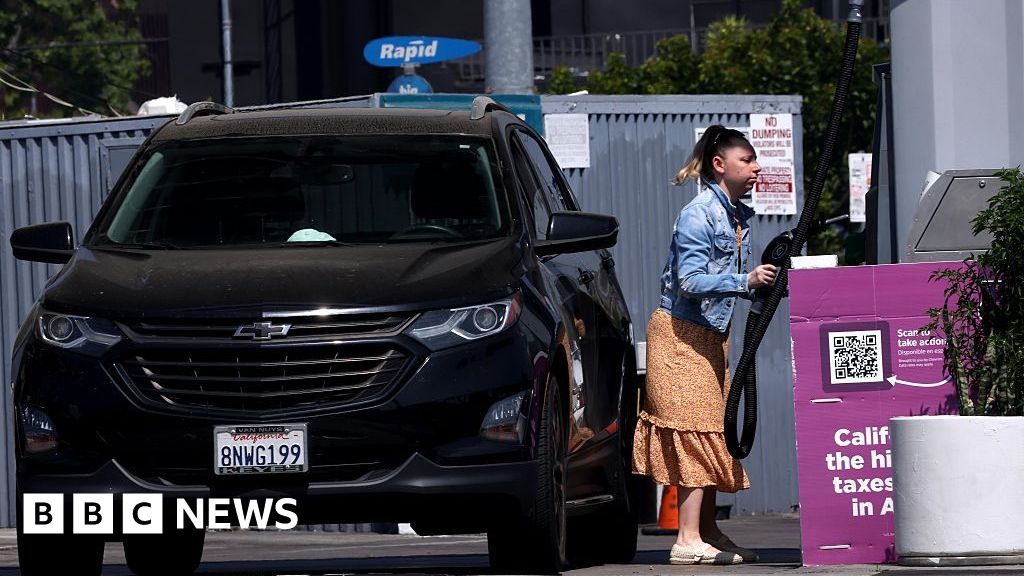
The Iran war continues to push up prices at the pump for US motorists.
Source link


Italy veterans aware 2026 World Cup is their ‘last chance’

Iran air defenses shoot down MQ-9 drone in Isfahan, LUCAS drone over Qeshm Island

IRGC warns it will target US tech companies for abetting terror in Iran

-

 Politics1 week ago
Afghanistan announces release of detained US citizen
-

 Sports1 week ago
Broadcast industry CEO says consolidation is ‘essential’ to compete for NFL soaring media rights prices
-

 Entertainment1 week ago
UN warns migratory freshwater fish numbers are spiralling
-

 Tech1 week ago
Can a Home Appliance Fix the Problem of Soft-Plastic Waste?
-
 Business1 week ago
Property Play: Home flippers see smallest profits since the Great Recession, real estate data firm says
-
 Business1 week ago
Gold prices soar in Pakistan – SUCH TV
-

 Fashion1 week ago
ICE cotton slips on weaker crude, profit booking
-
 Business1 week ago
More women are entering wealth management, but few are in advisory roles, study finds