

Tech
$25 Off Exclusive Blue Apron Coupon for November 2025


We’ve been testing (aka eating) Blue Apron for our guide to the best meal kit subscriptions for nearly half a decade.The Gear team likes this service so much, it has its own story. If you’ve been struggling with figuring out what to make for dinner, you can save some money on our top service right now using a Blue Apron coupon or deal featured right here on WIRED.
Unlock $25 Off With Our Exclusive Blue Apron Promo Code
Blue Apron makes it easy—new customers can enjoy $100 off for the first five weeks of a new subscription—plus the first week ships free). Blue Apron is offering discounts of up to $4 per serving, depending on whether you opt for 4, 6, 8, or 10 meals per week. WIRED readers get rewarded—in discounts on delicious food—with $25 off your first 2 orders with promo code CONDE25, until August 11 2026. There’s also other deals for 20% off your first 2 orders with code WELCOME20, 25% off with code WELCOME25 at checkout, and up to 50% off your first 2 orders with promo code ORDER50, no subscription needed. Check out Blue Apron and see if it’s the right meal kit service for you, and from there you’ll be able to claim the deal with either promo code, and both codes are valid site wide.
Get a 5% Off Blue Apron Coupon With Autoship and Save
Apron now offers an Autoship & Save program, which includes a 5% off discount on every order for autoship. Be sure to download the Blue Apron app, which allows you to easily manage subscriptions, get notifications, and live delivery updates through your phone. With Autoship & Save, you’ll set up recurring deliveries on a schedule that works for you, and you can save 5% on every order. This includes setting your own schedule, including how often you want deliveries and what day of the week you want them. Plus, you can always skip a delivery if you don’t need it that week. To get started, you just need to choose your menu items from a wide range of options, and every order is pre-filled with meals Blue Apron recommends, but you can always add, swap, or remove anything before it ships out.
Explore Blue Apron’s New Meal Kit Options From $7
If you’re a commitment-phobe like me and don’t want to sign up for pricey recurring orders in the subscription model before trying, we have good news. Unlike almost all other meal kits and delivery services, Blue Apron just updated their model to include a la carte meal kits and ready-to-eat meals that don’t require a recurring plan. You can get delivery in as little as three days, and it requires no commitment or mandatory subscription.
Meal Kits include step-by-step recipes and pre-portioned food, from $7 to $13 per serving. Easy ‘Assemble & Bake’ meals require minimal prep and are $11 to $13 per serving, and ‘Dish by Blue Apron’ are ready to eat, heat-and-serve meals from $9 to $12 per serving. They’ve also expanded their menu with new recipes, now with over 100 meals to choose from.
Score 20% Off Blue Apron+ or Start a 30-Day Free Trial
Blue Apron now also has a membership program, where for $10 per month, you’ll get free shipping on all orders, unlimited Tastemade+ streaming (this includes food, home and travel shows, a $50 value), and exclusive deals promotions throughout the year. If the bonus promos seem like something you’d use, the membership program is a good deal, because delivery is already $10 per month, so you’re getting free shipping plus all of these extra goodies. If you’re unsure, you can try it out with a 30 day free trial, just follow the link here. The good news is that you can get 20% off an annual Blue Apron+ membership, now at $80 per year instead of $100.
Save up to 50% With Blue Apron Heroes Discounts
Blue Apron wants to reward our everyday heroes, and has discounts for Military members, Students, Graduates, Teachers, Seniors, Medical Staff, and First responders. Members of these groups can get $150 off the first five weeks of a new subscription, plus free shipping for the first week of subscriptions. To get this discount, you’ll need to verify through ID.me or GovXID.
How to Make the Most of Your Blue Apron Subscription
Blue Apron makes it easy to customize your meal plan to fit your lifestyle, with new rotating menus released every week. Choose from vegetarian, carb-conscious or protein-packed options, and adjust portions or skip weeks as needed. You can even add extras like appetizers or desserts for a complete dining experience. Simply pick out your plan—you can choose how many meals you want per week and select your choice from the Mediterranean-style weekly menus. Pick your veggie- and protein-forward meals, enter your shipping information, and get ready to get cookin’. And if you don’t really want to cook at all, check out the Prepared & Ready meals for heat-and-eat options. Going on vacation? It’s easy to skip, pause, change, or cancel your plan right from your account online. Head over to their site to explore all of their options and save with a Blue Apron coupon.











The other goal of the Button is rapid response time. Unlike the Humane Ai pin, which got lots of criticism for taking a painfully long time to reply to queries, the Button is designed to be nearly instantaneous. In a demo via Zoom call, I watched Nolet ask the Button for a recommendation for the best sandwich shops in my neighborhood. While the Button didn’t choose my idea of the best sandwich place around, it did at least answer all the questions within a second. It can also be immediately interrupted by pressing the button, which is a great feature for people like me who cannot tell a chatbot to shut up fast enough.
Nolet is unapologetic about the very clear Apple ethos you might be able to suss out in the design.
“The Humane pin felt a little geeky to wear, right?” Nolet says. “But the iPod shuffle? Really cool. That’s where the idea started, and then we just put all of our Apple-esque expertise into it and tried to refine it into something that we thought would actually be useful.”
Nearly all their product images and videos show the Button being used as a wearable, but Nolet insists the device can also be kept in a pocket, bag, or car glove box as well.
“My cofounder says we can’t tell people it looks cool; they have to decide,” Nolet says. “Our intention is to build something that is kind of fashionable, but it’s up to you guys to tell us if it’s cool.”
Though Apple has long been a leader in technological coolness, it has struggled in the virtual reality space, specifically with its too expensive, too heavy Vision Pro and that devices complicated rollout. Apple is not alone on that front. Meta is actively rejiggering support for its VR efforts. Nolet posits that part of the reason for that instability is that VR has required building hardware and the software ecosystems to support it at the same time.
“There was no software innovation that we were anchored to as an industry, so I think it’s quite a hard pitch,” Nolet says. “It’s much, much easier to stand on the shoulders of giants.”
Courtesy of Button

Anthropic “has not satisfied the stringent requirements” to temporarily lose the supply-chain-risk designation imposed by the Pentagon, a US appeals court in Washington, DC, ruled on Wednesday. The decision is at odds with one issued last month by a lower court judge in San Francisco, and it wasn’t immediately clear how the conflicting preliminary judgments would be resolved.
The government sanctioned Anthropic under two different supply-chain laws with similar effects, and the San Francisco and Washington, DC, courts are each ruling on only one of them. Anthropic has said it is the first US company to be designated under the two laws, which are typically used to punish foreign businesses that pose a risk to national security.
“Granting a stay would force the United States military to prolong its dealings with an unwanted vendor of critical AI services in the middle of a significant ongoing military conflict,” the three-judge appellate panel wrote on Wednesday in what they described as an unprecedented case. The panel said that while Anthropic may suffer financial harm from the ongoing designation, they did not want to risk “a substantial judicial imposition on military operations” or “lightly override” the military’s judgments on national security.
The San Francisco judge had found that the Department of Defense likely acted in bad faith against Anthropic, driven by frustration over the AI company’s proposed limits on how its technology could be used and its public criticism of those restrictions. The judge ordered the supply-chain risk label removed last week, and the Trump administration complied by restoring access to Anthropic AI tools inside the Pentagon and throughout the rest of the federal government.
Anthropic spokesperson Danielle Cohen says the company is grateful the Washington, DC, court “recognized these issues need to be resolved quickly” and remains confident “the courts will ultimately agree that these supply chain designations were unlawful.”
The Department of Defense did not immediately respond to a request for comment, but acting attorney general Todd Blanche posted a statement on X. “Today’s DC Circuit stay allowing the government to designate Anthropic as a supply-chain risk is a resounding victory for military readiness,” he wrote.
“Our position has been clear from the start—our military needs full access to Anthropic’s models if its technology is integrated into our sensitive systems.
Military authority and operational control belong to the Commander-in-Chief and Department of War, not a tech company.”
The cases are testing how much power the executive branch has over the conduct of tech companies. The battle between Anthropic and the Trump administration is also playing out as the Pentagon deploys AI in its war against Iran. The company has argued it is being illegally punished for insisting that its AI tool Claude lacks the accuracy needed for certain sensitive operations such as carrying out deadly drone strikes without human supervision.
Several experts in government contracting and corporate rights have told WIRED that Anthropic has a strong case against the government, but the courts sometimes refuse to overrule the White House on matters related to national security. Some AI researchers have said the Pentagon’s actions against Anthropic “chills professional debate” about the performance of AI systems.
Anthropic has claimed in court that it lost business because of the designation, which government lawyers contend bars the Pentagon and its contractors from using the company’s Claude AI as part of military projects. And as long as Trump remains in power, Anthropic may not be able to regain the significant foothold it held in the federal government.
Final decisions in the company’s two lawsuits could be months away. The Washington court is scheduled to hear oral arguments on May 19.
The parties have revealed minimal details so far about how exactly the Department of Defense has used Claude or how much progress it has made in transitioning staff to other AI tools from Google DeepMind, OpenAI, or others. The military, which under President Trump calls itself the Department of War, has said it has taken steps to ensure Anthropic can’t purposely try to sabotage its AI tools during the transition.
Update 4/8/26 7:27 EDT: This story has been updated to include a statement form acting attorney general Todd Blanche.
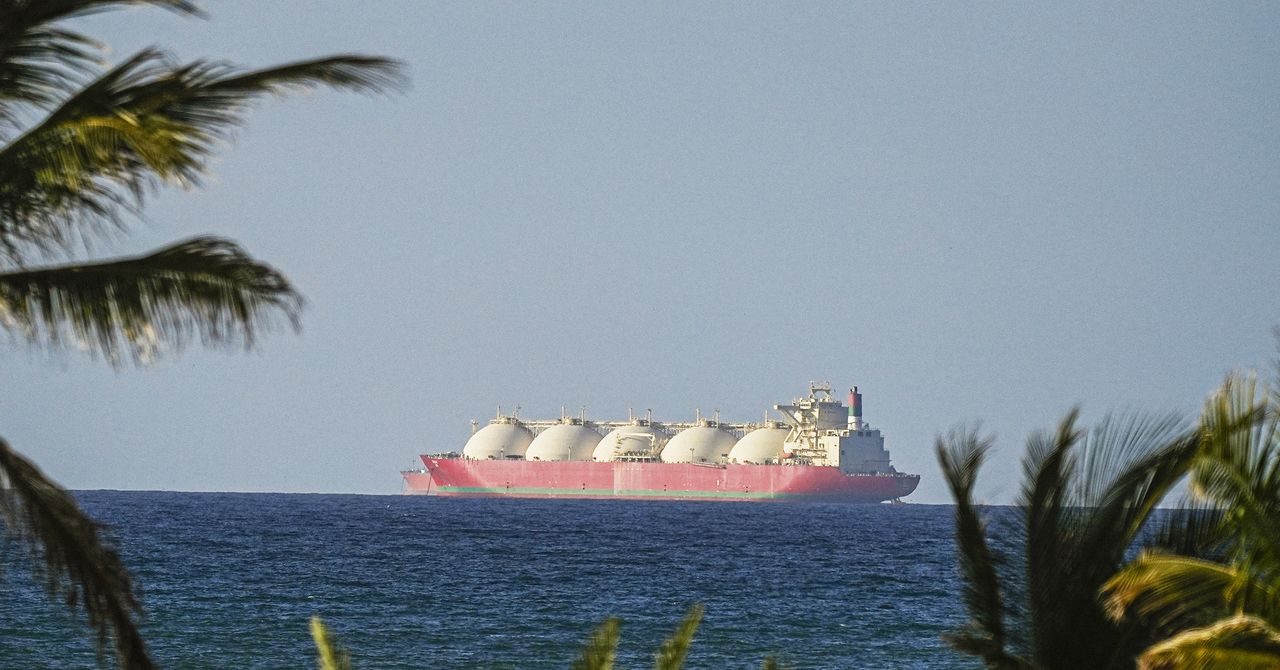
As the world held its breath on Tuesday night, news of a ceasefire and the potential reopening of the Strait of Hormuz brought a collective sigh of relief. But with shipments stalled in the strait for over a month, the disruption to global shipping will not resolve immediately.
“Traffic through Hormuz dropped by about 95 percent [during this conflict]. As a result, prices surged, and not just for crude oil but also for refined products like jet fuel, diesel, and gas oil,” says Carsten Ladekjær, CEO at Glander International Bunkering, which specializes in supplying fuel and lubricants to the global shipping industry.
The impact has been uneven across regions. Countries heavily dependent on Middle Eastern energy—particularly in Asia—have been most affected. India sources around 55 percent of its energy imports from the region, China about 50 percent, Japan 93 percent, South Korea 67 percent, and Singapore 70 percent, according to Ladekjær.
While the ceasefire signals a possible reopening, key details remain unclear. “Even with a ceasefire, reopening won’t be immediate,” Ladekjær says. “There’s a backlog, with ships waiting to leave, and likely a controlled process for who gets out first. Iran still appears to be managing that.”
Energy markets reacted quickly. Brent crude fell to around $94 from $110 earlier in the week—a drop of roughly 15 percent.
“Refined products like diesel and jet fuel have dropped even more, because markets are forward-looking—they price in expectations,” says Arne Lohmann Rasmussen, chief analyst and head of research at Global Risk Management. “But we’re still well above prewar levels, which were around $60 to $70.”
A System Under Backlog
Around 1,000 ships remain in the Gulf, including hundreds of tankers awaiting passage.
As of this writing, more than 800 cargo ships and tankers are stuck inside the Persian Gulf, with over 1,000 additional vessels waiting on both sides of the Strait of Hormuz.
Under normal conditions, roughly 150 vessels pass through the strait daily. Experts say clearing the backlog will take time, as ships must be sequenced through, refueled, and repositioned.
“That’s a logistical nightmare. We don’t yet know what the current capacity will be, especially from a security standpoint,” says Lohmann Rasmussen. “It’s not something that can be solved overnight. There are logistical issues, security issues, and even communication challenges.”
Though the market has already seen a correction, that doesn’t mean prices at the pump or in storage will drop immediately.


India’s POY output cut to 60% as rising costs hit producers hard

This AI Button Wearable From Ex-Apple Engineers Looks Like an iPod Shuffle

Tom Holland calls Christopher Nolan ‘The Odyssey’ ‘an absolute masterpiece’

-
Uncategorized7 days ago
[CinePlex360] Please moderate: “Trump signals p
-
 Business7 days ago
Jaguar Land Rover sees sales recover after cyber attack
-

 Entertainment6 days ago
Joe Jonas shares candid glimpse into parenthood with Sophie Turner
-

 Tech6 days ago
Our Favorite iPad Is $50 Off
-

 Fashion1 week ago
China’s Anta Sports posts record $11.62 bn revenue in 2025
-

 Politics6 days ago
Iran can sustain Strait of Hormuz closure for years, will cut US military logistics: Official
-

 Sports5 days ago
UConn Final Four run could trigger a $50M furniture giveaway for Massachusetts-based Jordan’s Furniture
-
 Business6 days ago
Video: Why Is the Labor Market Stuck?