

Fashion
India’s Pearl Global Industries Ltd’s revenue rises 12.7% in H1 FY26


PGIL revenue was driven by high value-added product sales in Vietnam and Indonesia. Adjusted EBITDA stood at ₹236 crore (~$26.6 million), marking 18.4 per cent YoY growth, with margins improving to 9.3 per cent. Excluding tariff costs of around ₹21 crore and initial losses at new facilities in Guatemala and Bihar, the margin stood higher at 10.6 per cent. The profit after tax (PAT) rose to ₹138 crore (~$15.6 million), a 17 per cent YoY increase.
Pearl Global Industries Limited has reported strong performance in H1 FY26, with revenue rising 12.7 per cent YoY to ₹2,541 crore (~$286.9 million), driven by high-value product sales from Vietnam and Indonesia.
Adjusted EBITDA grew 18.4 per cent to ₹236 crore (~$26.6 million), while PAT rose 17 per cent.
The company achieved record shipments, declared dividends, and advanced sustainability initiatives.
Standalone revenue stood at ₹531 crore (~$59.9 million) for H1 FY26, while adjusted EBITDA surged 72.7 per cent YoY to ₹30 crore (~$3.4 million), translating to a 5.7 per cent margin. PAT rose to ₹41 crore (~$4.6 million), up from ₹27 crore in H1 FY25.
For Q2 FY26, PGIL reported revenue of ₹1,313 crore (~$148.3 million), up 9.2 per cent YoY. Adjusted EBITDA (excluding ESOP expenses) reached ₹122 crore (~$13.8 million), a 23.6 per cent increase, with margins improving 108 basis points (bps) to 9.3 per cent. PAT climbed 29.4 per cent YoY to ₹72 crore (~$8.1 million).
Standalone revenue for Q2 FY26 stood at ₹264 crore (~$29.8 million), while adjusted EBITDA reached ₹11 crore (~$1.2 million), reflecting a margin of 4 per cent. Profit after tax (PAT) rose to ₹15 crore (~$1.7 million), compared to ₹12 crore in the same quarter of the previous fiscal.
As of September 30, 2025, PGIL’s net worth increased to ₹1,271 crore (~$143.5 million) from ₹1,146 crore in March 2025. The company’s cash and bank balance (excluding LC payments) stood at ₹416 crore (~$47 million), with an additional ₹128 crore (~$14.4 million) in mutual funds. Working capital days were maintained at 33, and return on capital employed (ROCE) improved by 375 basis points to 29 per cent.
PGIL shipped 19.9 million pieces in Q2 FY26, its highest ever for a second quarter. The board declared an interim dividend of ₹6 per equity share, representing a 20 per cent payout ratio and 120 per cent of face value. Additionally, PGIL received ₹32 crore (~$3.6 million) in dividends from subsidiaries in Bangladesh and Hong Kong.
The company also upgraded to eFlow Nanobubble technology in Bangladesh, enabling up to 32 per cent water savings, a 9 per cent reduction in power use, and 20 per cent higher time efficiency.
“We are delighted to report another quarter of encouraging performance in Q2 FY26 despite uncertain and volatile geo-political and macro environment. Consolidated revenue for H1 FY26 crossed ₹2,500 crore milestone, reaching ₹2,541 crore, a growth of 12.7 per cent YoY. This marks a significant achievement underscoring the strength of our diversified, multi-country manufacturing model. Reflecting our continued commitment to shareholder value, the board has declared an interim dividend of ₹6 per equity share, representing a 20 per cent payout ratio (wrt Group PAT) and 120 per cent of face value of share,” said Pulkit Seth, vice-chairman and non-executive director at Pearl Global Industries.
“Our growth this quarter was led by sustained momentum in Vietnam and Indonesia, which delivered double-digit volume expansion and maintained strong operational performance. These hubs continue to validate our strategic foresight in building multi-hub production capabilities that balance scale with agility,” added Seth. “As we close the first half of FY26 on a strong footing, our focus remains on sustainable, profitable growth, anchored in agility, technology, and long-term stakeholder value creation.”
“We are pleased to share another quarter of strong financial performance, reflecting the resilience of our operations amid an evolving trade environment. In Q2FY26, Pearl Global achieved revenue of ₹1,313 crore and improved profitability, demonstrating our ability to navigate trade complexities, including 50 per cent US tariff on India. Adjusted EBITDA (excluding ESOP costs) of ₹122 crore, with margins at 9.3 per cent, improve by 108 BPS YoY. Excluding tariff cost/loss at new facilities (Guatemala & Bihar) stands at 10.1 per cent, driven by improved product mix and higher realisation from Vietnam and Indonesia,” said Pallab Banerjee, managing director, Pearl Global Industries.
“We continue to invest in India and Bangladesh and execute our capex plan of ₹250 crore (~$28.2 million) for capacity expansion, sustainability, and efficiency improvement. Expansion of 5-6 million pieces in Bangladesh, 2.5-3.5 million pieces in India, and digitisation of our supply chain are enhancing transparency, agility, and scalability across operations,” added Banerjee.
Fibre2Fashion News Desk (SG)










Current account excluding gold and energy indicated net deficit of $3.9 billion, while goods saw a deficit of $9.5 billion.
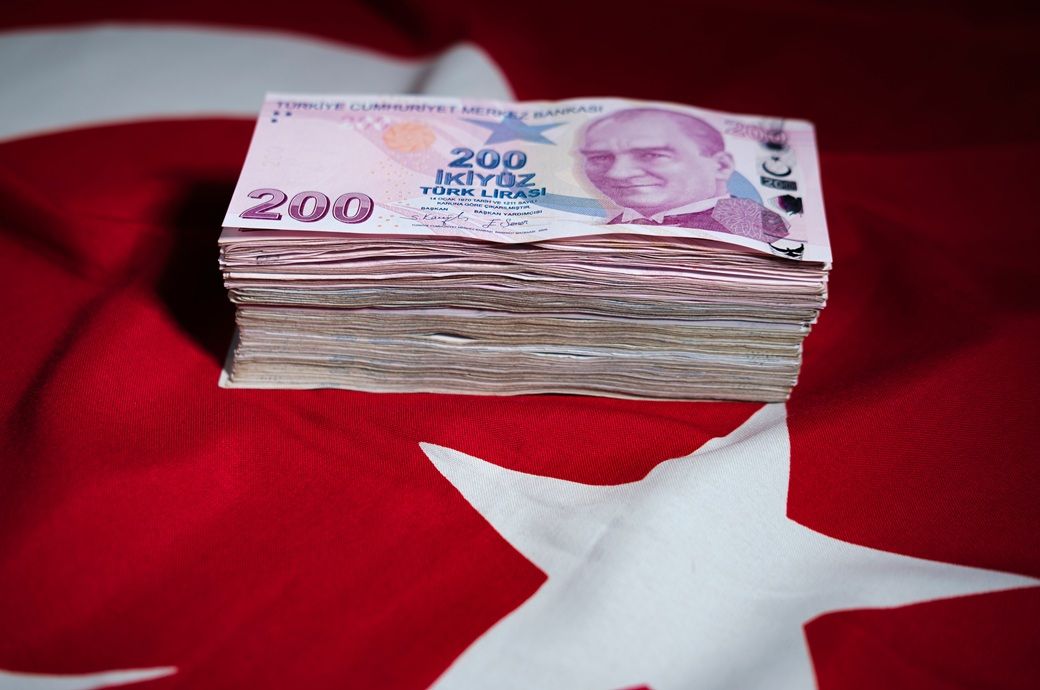
Turkiye recorded a current account deficit (CAD) of $9.6 billion in March, the country’s central bank said.
Treasury and Finance Minister Mehmet Simsek said the CAD is expected to widen this year, due to high energy and non-energy commodity prices.
Simsek said the deterioration is likely to remain temporary and manageable, thanks to stronger macroeconomic fundamentals and policy gains.
According to annualised data, current account deficit recorded as $39.7 billion (2.6 per cent of gross domestic product) in March, while the goods deficit recorded as $77.8 billion.
Simsek said the deterioration is likely to remain temporary and manageable thanks to stronger macroeconomic fundamentals and policy gains, domestic media outlets reported.
Turkiye is heavily reliant on imported energy, whose prices spiralled due to the Middle East conflict.
Simsek said elevated global commodity prices would put pressure on the external balance, but emphasised that the government’s economic programme had improved resilience against such shocks.
He said foreign direct investment (FDI) inflows totalled $1 billion in March, bringing annualised foreign direct investment to $12.6 billion.
The new investment incentive package under discussion in parliament now is expected to strengthen the country’s financing structure and support long-term capital inflows, he added.
Fibre2Fashion News Desk (DS)
During the first quarter of ****, the UK’s imports of textile fabrics eased down *.** to £*,*** million (~$*,*** million), against £*,*** million in January-March **** but slightly higher from £*,*** million in the fourth quarter of ****. Its imports of fibre were noted at £** million (~$***.** million) steady as £** million in Q*, **** but slightly lower than £** million in Q*, ****.
During the third month of this year, the country’s clothing imports declined *.** per cent to £*.*** billion (~$*.*** billion), compared with £*.*** billion in March ****. But the inbound shipment was slightly higher month on month compared with £*.*** billion in February ****.
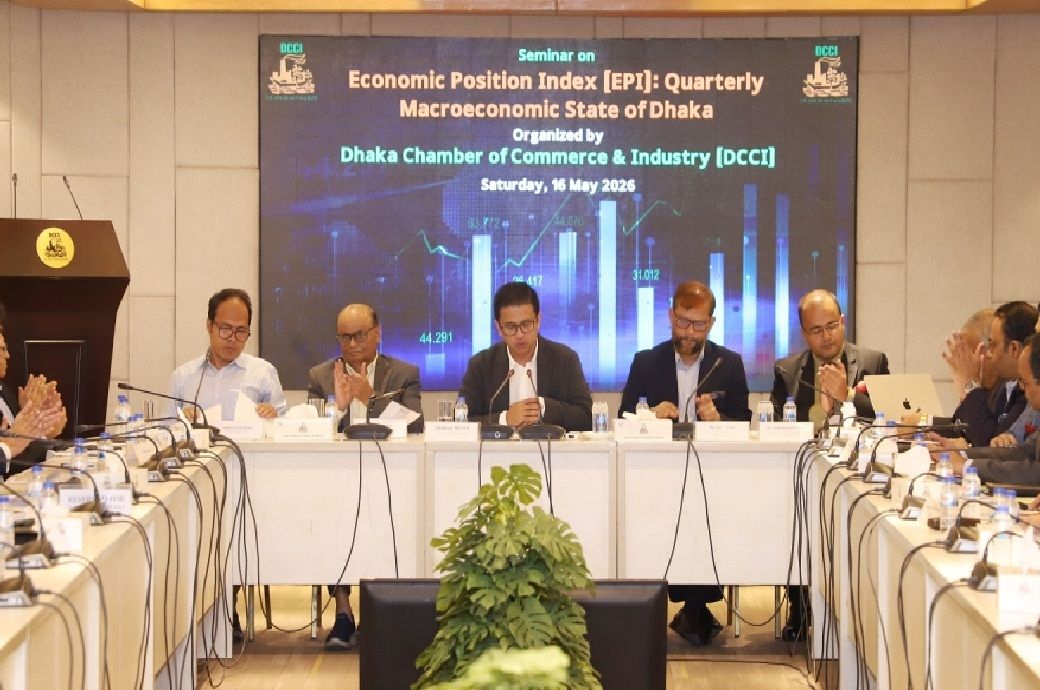
Higher rents, utility bills and fuel prices are eating away at already thin profit margins, it found.
High inflation is cutting deep into Bangladesh consumer spending, with weak demand turning one of the biggest concerns for businesses, DCCI said.
Higher rents, utility bills and fuel prices are eating away at already thin profit margins.
DCCI’s economic position index revealed that consumers have sharply reduced spending as the cost of living continues to rise.
SMEs are feeling the pressure the most.
The chamber’s economic position index (EPI) revealed that consumers have sharply reduced spending as the cost of living continues to rise, putting pressure on retailers, transport operators and other service providers.
Small and medium enterprises (SMEs) are feeling the pressure the most as they struggle to manage higher operating costs without losing customers.
Businesses also cited difficulties in obtaining bank loans, while delays in licensing and other regulatory procedures are adding to costs.
The DCCI report identified a shortage of skilled workers, particularly in technical and customer service roles, as another challenge for the sector.
The country’s inflation rose to 9.04 per cent in April from 8.71 per cent in March, according to official statistics.
Fibre2Fashion News Desk (DS)


CDC says American tests positive for Ebola in Africa, risk in the U.S. remains low

Elon Musk just lost another lawsuit. Will he keep fighting?

India will become history if it attempts any future misadventure, warns defence czar

-

 Entertainment6 days ago
Conan O’Brien hat tricks as Oscar host
-

 Tech1 week ago
Could Contact-Tracing Apps Help With the Hantavirus? Not Really
-

 Fashion5 days ago
Italy’s Zegna Group’s Q1 growth boosted by strong organic performance
-

 Entertainment1 week ago
Martin Short: Facing tragedy with joy
-

 Entertainment1 week ago
Tom Brady gets back at Kevin Hart during Netflix roast
-

 Sports1 week ago
Jacob Fatu unleashes vicious assault on Roman Reigns after World Heavyweight Championship loss at WWE Backlash
-

 Entertainment1 week ago
Martha Stewart: How to make an omelet
-

 Tech1 week ago
Papa Johns Is Getting Into Drone Delivery—but Not for Pizza