

Business
The government shutdown is over. The air traffic controller shortage is not


Planes line up on the tarmac at LaGuardia Airport on November 10, 2025 in New York City.
Spencer Platt | Getty Images News | Getty Images
The U.S. has been scrambling to hire more air traffic controllers for years. The longest-ever federal government shutdown might have made that even harder.
“We need more of them to come into the profession, and this shutdown is going to make that more difficult for us to accomplish that goal,” Transportation Secretary Sean Duffy said at a press conference at Chicago O’Hare International Airport on Tuesday, a day before Congress signed a bill to fund the federal government through January, ending the shutdown.
Air traffic controllers were required to work without receiving regular paychecks during the shutdown. They were paid in part on Friday, according to people familiar with the matter, but during the shutdown some had taken second jobs to make ends meet, while the lack of regular pay added to their stress, union and government officials and lawmakers have said.
The Federal Aviation Administration reported low-staffing thresholds were hit that that slowed aircraft around the country during the final days of the shutdown. President Donald Trump earlier this week threatened to dock air traffic controllers’ pay if they didn’t go to work. On Friday, staffing levels were relatively strong around the U.S. and disruptions eased.
“It can’t make it look like this is a great job because you’re going to have to deal with this all the time,” said Tim Kiefer, who teaches air traffic management at Embry-Riddle Aeronautical University in Prescott, Ariz.
Kiefer was an air traffic controller for more than two decades before he retired. He said shutdowns or the threat of them were common during his career. “You may see people decide to do other things and say, ‘They didn’t get paid; they were stuck in the middle of a partisan dispute,'” he said.
5 million passengers
The shortage of air traffic controllers delayed or canceled thousands flights during the shutdown, affecting the travel plans of more than 5 million people, according to Airlines for America, an industry group that includes American Airlines, United Airlines, Delta Air Lines, Southwest Airlines and others.
But even with partial pay hitting bank accounts, the staffing crisis that regularly upends travel is set to continue.
A government tally last year showed the U.S. was short 3,903 fully certified air traffic controllers of a goal of 14,633. Shortages have been particularly severe at busy facilities like those where controllers guide planes in and out of airports in the congested New York area, adding to flight disruptions and frustrating airline executives and customers.
Meanwhile, retirements picked up in the shutdown, with 15 to 20 people retiring per day, down from a usual rate of four a day, Duffy said Tuesday. Controllers are required to retire at age 56 but can do so earlier with benefits depending on years on the job.
Staffing was already thin before the shutdown began on Oct. 1, and many controllers were working six-day workweeks. By mid-November, as air traffic controllers missed two full paychecks and the shutdown passed the one-month mark, it approached crisis levels.
More than 10% of U.S. departures were canceled last Sunday as bad weather combined with air traffic controller shortfalls at facilities across the country. That was the highest rate since July 19, 2024, during the CrowdStrike outage, which had an outsize impact on Delta Air Lines, leading to thousands of canceled flights and causing travel headaches, according to aviation-data firm Cirium.
Hours after those cancellations spiked on Sunday, the Senate advanced a preliminary deal that led to the vote ending the shutdown this week.
The Federal Aviation Administration in early November ordered airlines to cut 4% of flights from their domestic schedules at 40 major airports, blaming safety risks they found because of an increased strain on air traffic controllers. Cuts were set to ramp up to 10% on Friday, if the shutdown didn’t end. Cancellations, however, improved dramatically during the week and on Friday morning, just 2% of U.S. departures were canceled, according to Cirium.
The FAA brought its mandated cuts down from 6% to 3% starting on Saturday, saying it will monitor system performance throughout the weekend.
The disruptions were similar to those on days with severe storms, but were more widespread across the U.S.
Millions in lost revenue
The last-minute cuts were a headache for the industry, where airlines from top-moneymaker Delta to struggling carrier Spirt had already lowered their outlooks for the year after an oversupply of flights and weaker-than-expected demand earlier this year. Airlines haven’t yet quantified the damage from the shutdown, but Bank of America estimated a $150 million to $200 million operating income hit for big network airlines and less than $100 million for other carriers.
Travelers walk through the terminal at Ronald Reagan Washington National Airport, more than a month into the ongoing U.S. government shutdown, in Arlington, Virginia, U.S., Nov. 11, 2025.
Annabelle Gordon | Reuters
Airline executives, exasperated by the recent disruptions, are now pushing Congress to make sure controllers are paid in the next shutdown.
“In the past week, we saw a crescendo effect as air traffic control staffing shortages led to massive and unpredictable amounts of delays and cancellations across the industry — and that was on top of a series of FAA-mandated schedule reductions,” American Airlines CEO Robert Isom and the carrier’s chief operating officer, David Seymour, said in a note to employees on Thursday, a day after the House approved a short-term funding bill. “While we both have been in this industry for a long time, only a few other events come to mind when we think about this level of disruption.”
It could have been worse. This part of the fall travel demand is relatively light, but Thanksgiving was fast approaching when Congress ended the shutdown, concerning airline executives.
“This shutdown put tremendous strain on our aviation system and caused severe inconvenience for the millions of Americans who depend on it,” United said in a statement. “It should be obvious to everyone that policy debates, however urgent, should never put air travel at risk, and we urge Congress to ensure that the FAA and [Transportation Security Administration’s] funding is protected in the event of any future lapse in federal appropriations.”
‘Political football’
It wasn’t the first time a government closure has put the aviation industry under strain. The 2018-2019 shutdown, then the longest in U.S. history, ended just hours after controller shortages snarled travel in the New York City area.
Some airline executives told CNBC that they were frustrated by this most recent shutdown and last-minute schedule changes, which ended up being greater than anticipated. One, who spoke on the condition of anonymity because he wasn’t authorized to speak to the press, said “we were the pawns” in the shutdown.

Delta CEO Ed Bastian told CNBC’s “Squawk on the Street” on Wednesday that “the thing we don’t like is being a political football” and said it was unacceptable that air traffic controllers and TSA officers were forced to work without regular paychecks.
The best way to prevent such disruptions is “to ensure those workers, the next time this happens because it will happen, get paid,” Bastian said. “Who could disagree with that?”
The airline industry is urging Congress for legislation that could make use of funds generated by airplane ticket taxes to ensure air traffic controllers and other essential industry workers like airport screeners and Customs agents are paid.
“You don’t hold the American public hostage over a political fight like that,” Airlines for America CEO Chris Sununu, the former governor of New Hampshire, said in a virtual press conference Wednesday, shortly before the House passed the funding bill.
Travelers check their flight status at Dulles International airport as the nation’s air travel system begins to return to normal, as the U.S. government opens back up following the longest shutdown in U.S. history, in Dulles, Virginia, U.S. Nov. 13, 2025.
Evelyn Hockstein | Reuters
Next Wednesday, Sen. Jerry Moran, R-Kan., who chairs the Commerce Subcommittee on Aviation, Space and Innovation, will hold a hearing on the shutdown’s impact on aviation. Moran this year pushed for legislation that would let the FAA use the Airport and Airway Trust Fund, which is funded by taxes on airplane tickets and fuel, to cover expenses if the government shuts down.
“The government shutdown has severely impacted our already fragile aviation industry, and recovering from its effects will take time,” he said in a release this week. “It’s critical that we address the damage done and look at the long-term effects of the shutdown.”
Lawmakers earlier this year approved $12.5 billion to improve air traffic control, though the industry said it needs billions more to modernize the system in the U.S.
The fatal collision of an American Airlines regional jet and an Army Black Hawk helicopter in Washington, D.C., in January also made hiring controllers more urgent, especially at congested facilities.
About a month after the crash, Duffy announced the country’s air traffic controller academy would raise pay for students, and he authorized more universities to teach a similar curriculum to help ease the shortage. The academy in Oklahoma City also stayed open, a different tactic than in the 2018-2019 shutdown.
But those aren’t immediate fixes. It takes years for controllers to be fully trained to work at some of the more complex facilities, and applicants to the academy can be no older than 30.







Business
India’s fuel demand growth may slow sharply in H2 2026 amid price hikes, austerity push: Report
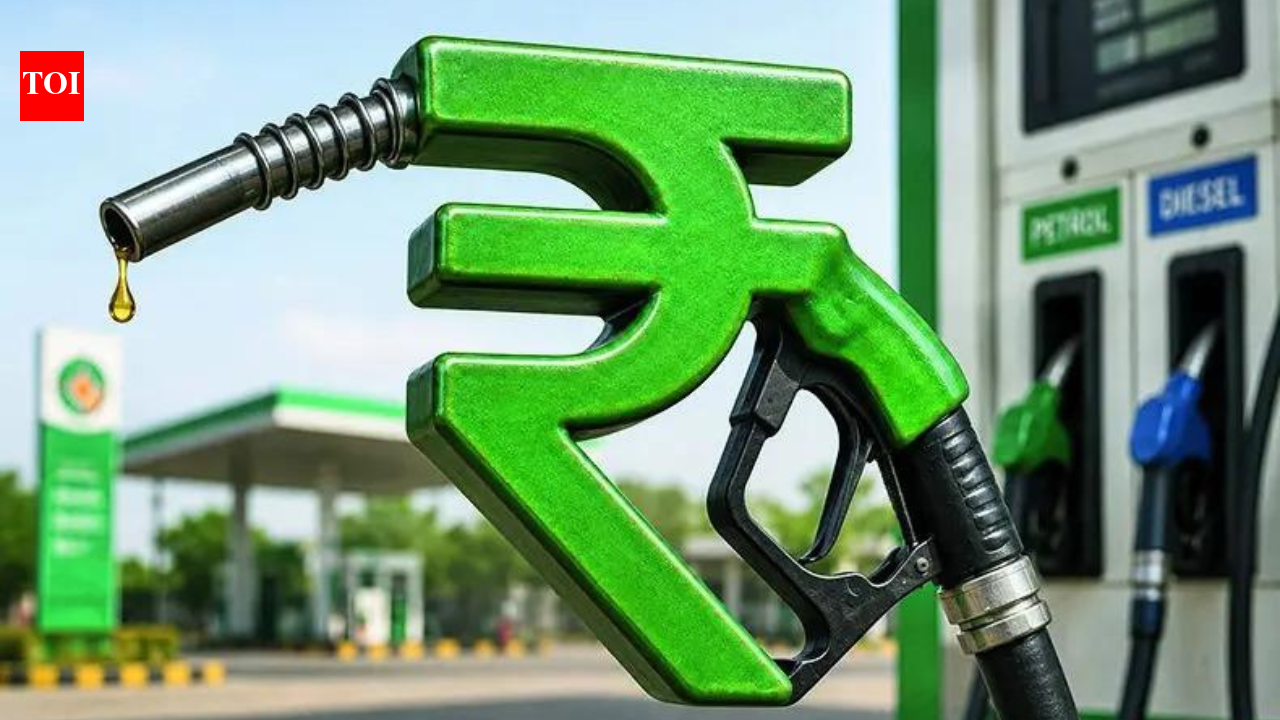
India’s transportation fuel demand growth is expected to slow sharply in the second half of 2026 as higher fuel prices, government-led conservation measures and a weakening rupee weigh on mobility and consumption trends, according to a report.The report by Kpler’s lead analyst (modelling), Elif Binici, revised down India’s 2026 refined products demand growth forecast by around 77,000 barrels per day (kbd), or 39 per cent, to nearly 78 kbd from an earlier estimate of 128 kbd.As per news agency PTI, the downgrade reflects weaker expected growth in petrol and diesel demand due to elevated fuel costs, softer mobility trends and official efforts to conserve fuel amid the ongoing West Asia crisis.Petrol and diesel prices have been increased by around Rs 5 per litre in three instalments since May 15, after oil marketing companies passed on part of the burden of soaring global crude oil prices to consumers.
Petrol demand faces steepest downside risk
The report said petrol demand is likely to see the sharpest slowdown, with projected growth revised down by 25 kbd, from 63 kbd to 38 kbd.Petrol consumption is now estimated at 1,010 kbd, compared to the earlier estimate of 1,035 kbd.According to the report, weaker commuting activity, slower discretionary travel and government fuel-saving campaigns are expected to curb fuel consumption.Annual diesel demand growth was also cut by around 20 kbd, while jet fuel demand growth was nearly halved to about 6 kbd from 11 kbd earlier due to expectations of reduced air travel and tighter spending patterns.“The revisions primarily reflect weaker expected growth in gasoline and diesel demand as higher costs, weaker mobility trends, and recent government-led fuel conservation efforts increasingly feed into domestic transportation activity,” the report said, as quoted by PTI.
Rupee weakness, crude surge add pressure
The report noted that India’s macroeconomic environment has deteriorated since the escalation of the US-Iran conflict, with rising crude import costs, refinery expenses and rupee depreciation increasing inflationary pressure.The rupee has weakened by around 6 per cent since the conflict began and nearly 10 per cent over the past year. Foreign exchange reserves have also reportedly declined by about 4.3 per cent since late February as authorities attempted to stabilise the currency and contain imported inflation.The report said the current average petrol price of around Rs 103 per litre remains well below the estimated breakeven level of nearly Rs 125 per litre.Diesel prices near Rs 94 per litre are also below the estimated breakeven range of Rs 115-120 per litre.Before the recent price revisions, state-run fuel retailers were reportedly losing nearly Rs 1,000 crore daily because rising crude procurement costs and currency weakness outpaced retail fuel prices.“The key issue is the inability of state-run retailers to pass through rising import costs quickly enough to restore profitability,” the report said.
Russian crude continues to support supply security
The report added that India’s dependence on discounted Russian crude imports, estimated at around 1.9-2 million barrels per day, continues to provide stability to the domestic fuel market amid geopolitical uncertainty in West Asia.Policymakers now appear to be prioritising macroeconomic stability, inflation management, foreign exchange preservation and fuel supply security over near-term fuel demand growth.The report warned that unless crude prices ease significantly, the rupee stabilises or additional fiscal support measures are introduced, further fuel price hikes and stricter fuel-conservation measures may become difficult to avoid.
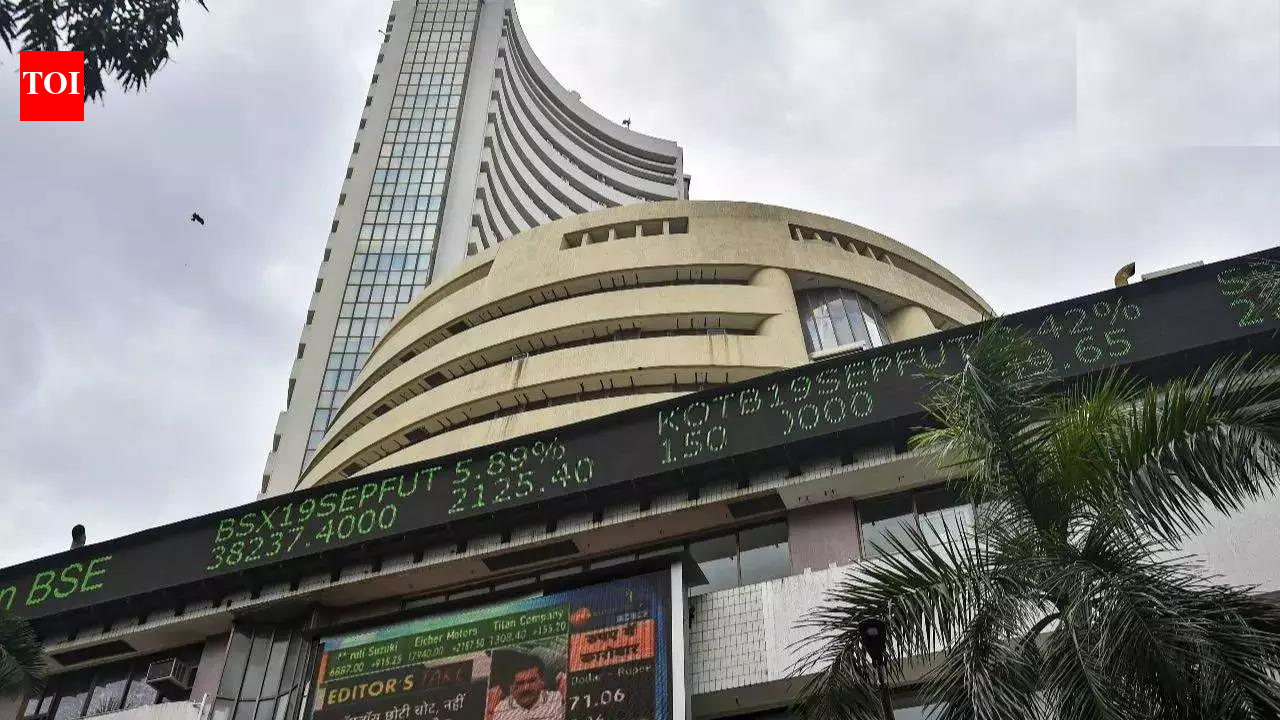
The combined market valuation of six of India’s top-10 most valued companies rose by Rs 74,111.57 crore last week, with Reliance Industries emerging as the biggest gainer. The rally came during a volatile trading week in which the BSE Sensex advanced 177.36 points, or 0.23%.According to news agency ANI, Reliance Industries added Rs 24,696.89 crore to its valuation, taking its total market capitalisation to Rs 18,33,117.70 crore.Tata Consultancy Services saw its valuation jump by Rs 19,338.68 crore to Rs 8,38,401.33 crore, while ICICI Bank added Rs 14,515.93 crore to reach a market capitalisation of Rs 9,06,901.32 crore.The valuation of Life Insurance Corporation of India climbed Rs 9,076.37 crore to Rs 5,14,443.69 crore.Meanwhile, Bajaj Finance gained Rs 3,797.83 crore, taking its valuation to Rs 5,70,515.57 crore, while Larsen & Toubro added Rs 2,685.87 crore to Rs 5,40,228.21 crore.
Airtel, HUL among laggards
On the losing side, Bharti Airtel witnessed the sharpest erosion in market value, losing Rs 20,229.67 crore to settle at Rs 11,40,295.49 crore.The market valuation of Hindustan Unilever declined by Rs 16,212.18 crore to Rs 5,17,380 crore, while State Bank of India lost Rs 12,784.4 crore in valuation to Rs 8,76,077.92 crore.HDFC Bank also saw its market capitalisation dip by Rs 2,094.35 crore to Rs 11,79,974.90 crore.Reliance Industries retained its position as India’s most valued company, followed by HDFC Bank, Bharti Airtel, ICICI Bank, State Bank of India, TCS, Bajaj Finance, Larsen & Toubro, Hindustan Unilever and LIC.
Markets end volatile week with modest gains
Ajit Mishra, SVP, research at Religare Broking Ltd, said markets ended the week with marginal gains amid a “highly volatile and range-bound trading environment”.“Benchmark indices witnessed sharp intraday swings throughout the week, driven by persistent rupee weakness, mixed global cues, sectoral rotation, and continued uncertainty around inflation and interest rates,” he said, as quoted by ANI.Benchmark indices recovered on Friday, with the Sensex closing 231.99 points higher at 75,415.35 and the NSE Nifty rising 64.60 points to settle at 23,719.30.Analysts cited optimism surrounding possible progress in US-Iran peace negotiations and easing Middle East tensions as factors supporting market sentiment.Vinod Nair, head of research at Geojit Investments, was quoted by news agency PTI as saying that domestic markets traded with a “mild positive bias” due to buying at lower levels and constructive global cues.“Globally, the AI investment theme remained the primary driver, while domestically, financial stocks led the gains,” he said.Brent crude prices climbed 2.3% to $104.7 per barrel, while foreign institutional investors (FIIs) sold equities worth Rs 1,891.21 crore in the previous session.

Six supermarket brand eggs cost £1 in 2022. How much are they now, why have they gone up, and is anyone profiteering?
Source link


Prince George set to reconnect with cousin in unexpected twist

Queen Elizabeth II heartbreaking final message for Prince Philip emerges

Proposed US-Iran deal involves opening strait during ceasefire extension: report

-

 Entertainment1 week ago
Where Pete Davidson, Elsie Hewitt stand after breakup: Details revealed
-

 Politics1 week ago
Rising diesel costs from Iran war strain US school budgets
-

 Entertainment1 week ago
Drake drops highly anticipated "Iceman" album, plus two surprise albums
-

 Tech1 week ago
Greg Brockman Officially Takes Control of OpenAI’s Products in Latest Shakeup
-

 Tech1 week ago
Why Is Your Grill So Dumb? The Best Grills Set Temp Like an Oven
-

 Tech1 week ago
This Solar-Powered Smart Sprinkler Keeps My Lawn Watered Without Any Power Cables
-

 Fashion1 week ago
RMG trade bodies seek policy support from Bangladesh PM
-
 Business1 week ago
Oil price gains and Westminster worry sink stocks