

Entertainment
Wrong court, real crisis

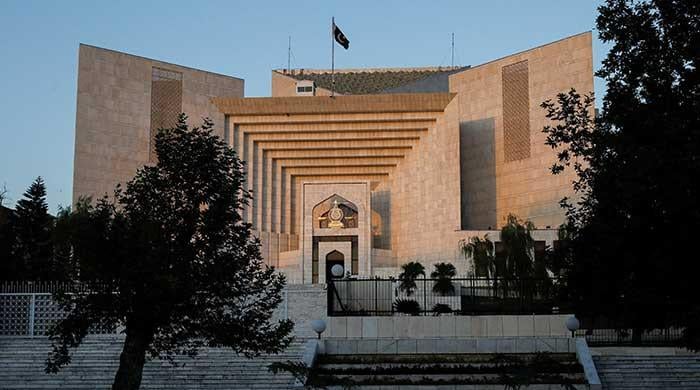
As of the end of last year, Pakistan’s courts were sitting on roughly 2.3 million unresolved cases. Nearly 83% were pending in the district judiciary; the remainder was spread across the high courts, the Federal Shariat Court and the Supreme Court.
The SC’s share hovered in the mid-50,000s, a few percentage points of national pendency at most.
Within the superior courts, constitutional work is concentrated rather than dominant: at the Lahore High Court, for example, writ and constitutional matters are about 84,000 out of roughly 179,000 pending cases, close to half of that court’s own docket, yet that entire stock is still a sliver next to the millions of cases stuck below.
Pakistan’s backlog remains, by any measure, overwhelmingly a trial-court problem.
Against that data, parliament has moved with unusual speed. In a short span, a constitutional amendment that creates a Federal Constitutional Court (FCC), shifts constitutional jurisdiction away from the existing Supreme Court and touches sensitive questions of state design has been pushed through, with little committee scrutiny or public engagement.
The government’s explanation is simple. The SC, we are told, is drowning in constitutional and ‘political’ litigation, which has crowded out ordinary appeals. The FCC is offered as the solution: it will take on the constitutional load; the Supreme Court will focus on its appellate role; and the pendency will fall.
The statement of objects and reasons to the Constitution (Twenty-seventh Amendment) Act, 2025 says as much, blaming an “increasing number of constitutional petitions” for delays in regular cases and promising that a specialised court will “significantly reduce pendency”.
That narrative has already been challenged from within the system. Former chief justice Jawwad S Khawaja has taken the amendment back to the court he once led, warning that it will weaken the state, unsettle the separation of powers and erode the consensus around the 1973 constitution.
Since then, the debate has moved from draft to fact. President Asif Ali Zardari has now signed the 27th Amendment into law, creating the new office of the chief of defence forces and establishing the FCC as an operative reality rather than a proposal.
In response, three senior judges, SC justices Syed Mansoor Ali Shah and Athar Minallah, and Lahore High Court Justice Shams Mehmood Mirza have resigned in protest, describing the amendment as an assault on the constitution and on judicial independence.
The question for this piece, however, is narrower: if the claim is that the FCC is about backlog relief for the ordinary litigant, do the numbers support that claim?
The SC’s pending caseload has risen from roughly the mid-20,000s in the mid-2010s to around 40,000 by 2018 and past 50,000 by 2021 into the mid-50,000s in 2024–25.
Set against the nationwide stock already noted above, this makes the apex court a small but visible pocket of congestion rather than the epicentre of delay.
Constitutional work, even where it clusters, is numerically marginal once you zoom out from the superior courts to the system as a whole. Even in high courts where writ and constitutional matters occupy a large share of the local docket, that entire layer sits on top of a system in which more than 2.3 million cases are pending, the vast majority in the trial courts.
On any realistic view, the SC’s constitutional workload therefore sits well below even one or two per cent of the national total; even if every case on its list were re-badged as ‘constitutional’, it would still barely dent the overall numbers.
The court itself has acknowledged that a large portion of its docket consists of review petitions rather than fresh constitutional challenges. And in its own case law on special courts, it has warned that creating new forums or simply adding judges does not cure delay; the real work lies in case and court management, especially in the lower tiers.
Taken together, the data and the doctrine point in the same direction: Pakistan’s backlog is overwhelmingly a trial-court phenomenon. The problem the FCC is meant to solve is numerically marginal.
Under the 27th Amendment, the FCC is designed to exercise original constitutional jurisdiction —including federal–provincial disputes and many fundamental-rights questions while hearing constitutional appeals from the high courts.
The existing SC is recast as largely an appellate tribunal for other work. Ironically, even if one assumes, very generously, that a full one-third of current Supreme Court pendency is “constitutional”, we are dealing with perhaps twenty thousand such cases in a system of more than 2.3 million. On that assumption, the FCC’s core field of operation covers well under one per cent of the pending caseload in Pakistan.
Nor will the FCC simply inherit existing matters and work through them quietly. New courts generate their own litigation – jurisdictional contests between the Supreme Court, FCC and high courts, challenges to composition and appointments, fresh layers of appeal and review. A body created and justified as a relief mechanism for the “ordinary litigant” is, by design, aimed at the smallest and most elite slice of the docket.
All this might still be defensible if the FCC were cheap. It is not. The SC’s budget for 2023–24 is in the region of Rs3.5 billion, largely consumed by salaries and allowances.
A parallel constitutional court, with its own judges, registries, security, infrastructure and staff, will, even if initially lean, operate in the same order of magnitude.
Those billions are being contemplated in the middle of an IMF programme demanding tight fiscal consolidation, cuts in non-priority spending and difficult adjustments in social and development sectors. Meanwhile, the district judiciary, which carries more than four-fifths of the backlog, struggles with basic infrastructure, staff shortages and overburdened judges.
The same capital injected in trial-level capacity in the form of more judges and clerks, reliable process-serving, functional courtrooms, ADR mechanisms, case-flow management and IT would strike at the heart of delay.
Justice Khawaja’s petition therefore, reads less like a personal lament and more like a diagnosis. The amendment, he argues, is “so patently unconstitutional on the face of it” that it ought to have been rejected by parliamentarians sworn to preserve and protect the constitution.
An amendment that strips the SC of its constitutional powers “effectively abolishes [it] as a constitutional court” and is “clearly incompatible with the constitution”.
If the legislature and executive may abolish the highest court and substitute it with another forum manned by their nominees, they are empowered to “change the rules of the game as and when they deem fit” — a result fundamentally at odds with separation of powers and judicial independence.
The federal government asks us to see the FCC as a kindness to the ordinary litigant. The numbers suggest something else: that the new court is aimed not at the backlog of cases that burden citizens, but at the backlog of constitutional questions that burden power.
If it is to be born in the ordinary litigant’s name, the least we owe that litigant is honesty about what problem it is really being built to solve.
Originally published in The News
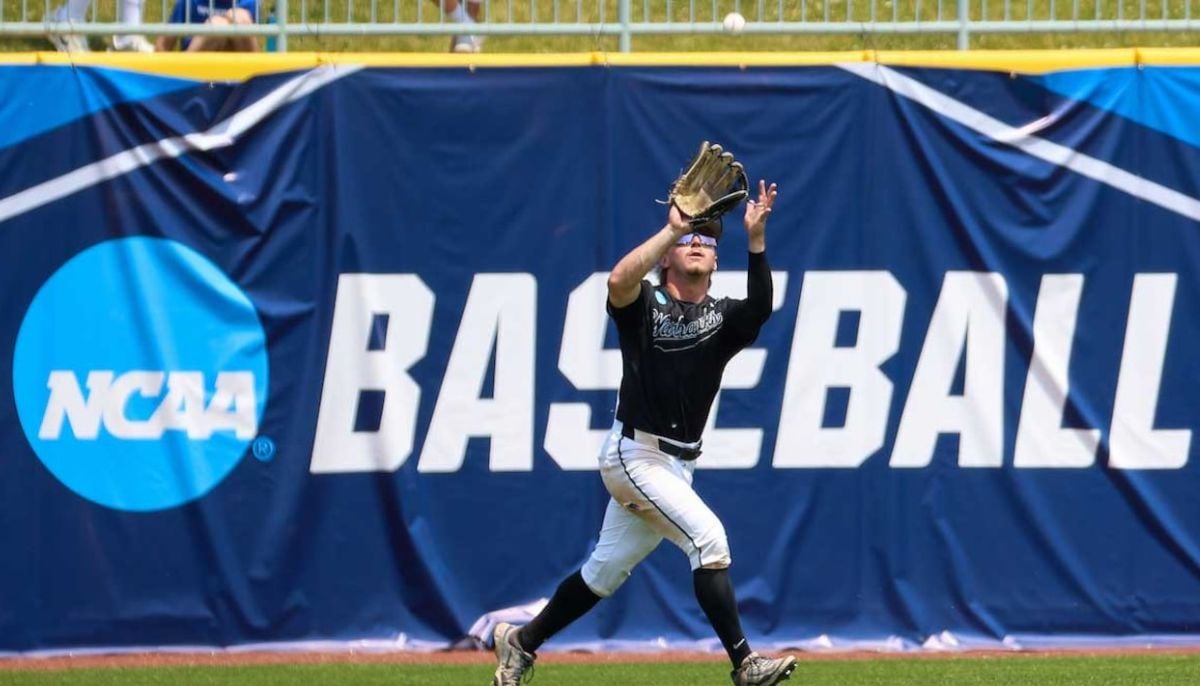
The 64-team field for the 2026 NCAA Division I baseball championship was officially released on Monday, May 25.
This sets the stage for a three-week journey to the Men’s College World Series in Omaha.
UCLA has been awarded the No. 1 overall seed since it occupied the top spot throughout the season. Georgia Tech, Georgia, Auburn, North Carolina, Texas, Alabama, and Florida complete the list of the top eight national seeds.
Regional tournaments kick off on Friday, May 29, at sixteen locations across the country. The double elimination rounds of regional tournaments continue till Monday, June 1, and then move forward to the best-of-three super regional games from June 5 to 8.
The event is hosted by the SEC with seven schools welcoming regionals, including Georgia, Auburn, Texas, Texas A&M, Florida, Mississippi State, and Alabama.
Three regionals, i.e., UCLA, Oregon, and Nebraska, are hosted by the Big Ten, while the ACC also hosts three (Georgia Tech, North Carolina, and Florida State).
Notably, Kansas is hosting a regional for the first time in program history, and Southern Miss stands as the only non-power four host.
The LSU Tigers will take the field as the defending champions after sweeping the Coastal Carolina Chanticleers in the finals for 2025.
With this victory, LSU earned its eighth national championship, while Jay Johnson became the quickest coach to win two championships at one university in college baseball history.
The championship series starts on Saturday, June 20, on ESPN, with Game 2 scheduled for ABC on Sunday, 21.
It’s been two decades now since an American has brought a major singles title back home.
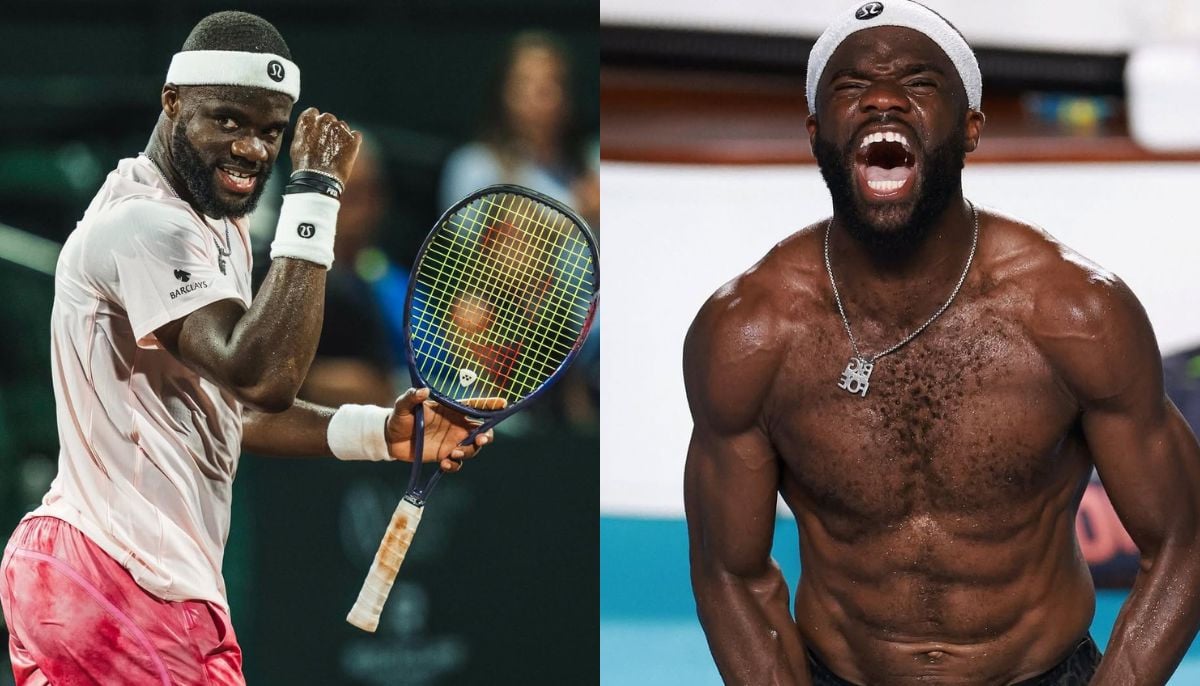
The current list of players is still looking for the big win, with Frances Tiafoe being the one fans have been pinning hopes on.
He is ranked 21st in the world, yet he enjoyed his closing run at Roland Garros last year by finishing in the quarter-finals.
He is not the one who came close to the finishing line, several others have also been unable to end the twenty-year drought.
In a recent media appearance, just before the tournament kicked off, Tiafoe speaks his mind.
He said, “It’s been nice for a long time. I think we’ve been killing. It’s a matter of we just have some guys. It’s just top heavy, man.”
Tiafoe sounds off on American tennis, adding, “We’ you know, they’re gatekeeping hard. I mean, I think, you know, Fritz has been top ten for a bunch of years.
“Ben’s cracked in there. He’s kind of solidified himself being a top ten guy. I mean, I’ve been top 20 majority of years the last four years. Tommy as well. He’s been flirting in and out, so.”
Tiafoe explains, “We got Korda, I mean, you know, if he’s healthy, you know, he’s always, again, top 20.
“But it’s his manner of just putting these weeks together, and trying to do the ultimate goal, and one of us try to win, and this type of event.”
“You know, Ben won 1000, you know, Fritz won 1000, you know, I’ve been final of a 1000, so we’re all flirting with the top of the game. We just got to kind of get over the line,” Tiafoe concluded.
Andy Roddick remains the last man standing who won the US Open title back in 2003, almost two decades ago.
This time at French Open, only Shelton will be the top-seeded American who kicks off his campaign on the clay court.
Entertainment
American Music Awards airing tonight with performances from Billy Idol, Keith Urban, Teyana Taylor and more

The American Music Awards kick off the unofficial start of summer tonight, celebrating the best in music and featuring performances from such artists as Billy Idol, Keith Urban, Teyana Taylor and others.
The show airs on CBS television stations and streams on Paramount+ starting at 8 p.m. ET/5 p.m. PT.
The AMAs boast of being the world’s largest fan-voted awards show. Voting for most of the categories closed earlier this month, but people can still vote online or on Instagram for social song of the year and tour of the year through the first half hour of the show.
Queen Latifah serves as host this year, returning to the AMAs stage after co-hosting in 1995 and performing over the years.
Taylor Swift leads the nominations with eight following last year’s release of “The Life of a Showgirl,” which is up for album of the year and best pop album. Two songs from the album also received nods: “The Fate of Ophelia” for song of the year, best music video and best pop song, and “Elizabeth Taylor” for song of the summer.
Swift has already won 40 times at the AMAs, which is more than any other artist. She’s also up for artist of the year and best female pop artist this year.
Morgan Wallen, Olivia Dean, Sabrina Carpenter and Sombr were right behind Swift with seven nominations each.
But the awards are only part of the show. Billy Idol, who’s known for such hits as “Dancing With Myself,” “Rebel Yell” and “White Wedding,” will receive a lifetime achievement award and perform a medley of some of his hits on the AMAs stage.
Scott Dudelson/Getty Images for Coachella
Keith Urban will perform a track from his upcoming yacht rock album “Flow State.” Teyana Taylor, who won a Golden Globe in January for her performance in “One Battle After Another” and is up for best female R&B artist at the AMAs, will perform a medley from her album, “Escape Room.”
There will also be performances by some groups that have amassed huge followings over the years, with Hootie and the Blowfish, New Kids on the Block and The Pussycat Dolls taking the stage.
K-pop superstars BTS will also make a special appearance. Following a nearly four-year hiatus for the members to fulfill their mandatory military service, the group began a world tour in March and will appear at their first awards show in four years at the AMAs. They are nominated for three awards as well.
Who’s performing at the 2026 American Music Awards?
Here’s a list of all the announced performers at the American Music Awards:
- Billy Idol
- Hootie and the Blowfish
- Karol G
- Katseye
- Keith Urban
- Maluma
- New Kids on the Block
- The Pussycat Dolls, with a guest appearance by Busta Rhymes
- Riley Green
- Sombr
- Teddy Swims
- Teyana Taylor
- Twenty One Pilots
How to watch the 2026 American Music Awards
- What: The 2026 American Music Awards show
- Date: Monday, May 25, 2026
- Time: 8 p.m. ET/5 p.m. PT
- Location: MGM Grand Garden Arena in Las Vegas
- On TV: Live on CBS television stations. Find your local station here.
- Online stream: Live on Paramount+


Adam Copeland, Christian Cage snap 25-year drought, win AEW Tag Team Championship at Double or Nothing

Bracket set, regionals begin May 29

A Swimmer Broke a World Record at the “Steroid Olympics”

-

 Tech1 week ago
Why Is Your Grill So Dumb? The Best Grills Set Temp Like an Oven
-

 Tech1 week ago
This Solar-Powered Smart Sprinkler Keeps My Lawn Watered Without Any Power Cables
-

 Fashion5 days ago
US cotton planting advances to 41%, concerns persist in Texas
-

 Fashion4 days ago
ICE cotton sees mixed trend as rain forecasts weaken sentiment
-
 Fashion1 week ago
Turkiye’s current account deficit expected to widen in 2026: Minister
-

 Entertainment1 week ago
Princess of Wales praised as ‘step ahead’ of royal family
-

 Sports5 days ago
Todd Monken says Shedeur Sanders has ‘come miles’ as Browns quarterback competition heats up
-

 Fashion1 week ago
India’s Pearl Global’s FY26 revenue crosses $521 mn milestone