

Tech
MediaWorld Accidentally Sold iPads for 15 Euros. Then It Asked for Them Back


On November 8, an offer for loyalty card holders appeared on the website of MediaWorld, a European electronics retailer. The deal: an iPad Air for 15 euros (about $17) instead of the usual €879 (about $1,012). No catch, no strings attached. The proximity to Black Friday only made the offer more plausible. And so several consumers immediately purchased the product by choosing the “payment and pickup in store” opetion, on paper the safest to avoid unexpected problems.
The process was seamless, even for those ordering online. According to the accounts of some users on Reddit, their order was accepted, and after about 40 minutes they received an email confirming the availability of the product.
In the store, the €15 payment went through successfully and MediaWorld delivered the iPads as expected. The terms and conditions attached to the order make no mention of any clause regarding pricing errors or the possibility for the company to request subsequent additions.
MediaWorld’s About-Face
Eleven days later, however, MediaWorld sent a simple email—not a formal communication via certified mail—stating that the published price was “clearly incorrect.” The company then asked the affected customers to choose between two solutions: Keep the iPad and the difference to match the price but with a €150 discount, or return it and receive a refund of the €15 and a €20 discount voucher for their inconvenience.
MediaWorld’s Response
Following the incident, Wired contacted MediaWorld for comment. “We confirm that, in a very short period of time, due to a clearly recognizable technical error caused by an extraordinary and unexpected glitch on our e-commerce platform, some products were mistakenly displayed at prices that, due to their clear and objective disconnect from the true market value and the correct promotional price, should never have been displayed. This was a manifest error, making it economically unsustainable and not representative of our commercial offering,” a MediaWorld spokesperson explains.
Regarding the subsequent intervention to try to recover the products sold, the representative added: “By virtue of the provisions of the current regulations, we found it necessary to intervene, resorting to a legal principle aimed at preserving the contractual balance in the event of an error of this magnitude. Our approach was to prioritize the relationship with the customer and to offer solutions that went beyond the mere application of law. For this reason, we promptly contacted all affected buyers, proposing two alternatives.”
The MediaWorld spokesperson also confirmed to WIRED the two solutions first highlighted by Reddit users: “We offer product retention: the customer has the option to keep the purchased item, paying the difference between the price paid and the correct promotional price. We have also offered a further discount on the amount to be paid. Or return the product: the customer can choose to return the item free of charge, receiving a full refund of the amount already paid. In this case too, we have offered a MediaWorld shopping voucher. We firmly believe that these proposals demonstrate our willingness to support customers and maintain transparency and fairness. We continue to work to improve our shopping experience and maximum protection for our consumers.”
The Legal Issue: Is the Error Really Recognizable?
On the web, many lawyers point out that Article 1428 of the Italian Civil Code allows a contract to be voided if the error is fundamental and recognizable. But the issue, according to consumer lawyer Massimiliano Dona, is more nuanced than it seems.
“The premise is that the November 19 letter—in which MediaWorld demanded the return or purchase of the iPad at near-real price—is not a formal warning or formal notice, especially if sent by ordinary mail, as it is a proposal for a binary agreement. If the consumer ignores it, MediaWorld will evaluate whether to take formal action,” Dona claims.
“That’s why the key issue is whether, from a legal standpoint, MediaWorld’s claim is well-founded or not. To void a contract, it is necessary to demonstrate the consumer’s awareness of abusing the seller’s error. But to have this proof, it is not enough to claim that the 98 percent discount makes the error obvious in the eyes of the customer.” Furthermore, Dona also points to the fact that, “Today prices are not as standard as they once were. Between limited-time offers, flash sales, promotions, and contests (offered mainly on social or in apps) everything is more variable, plus now we are in the midst of the Black Friday discount season. Given these elements, perhaps we can consider it reasonable that the consumer thought of an advertising technique.”
How Does MediaWorld Test Consumer Awareness?
Dona also claims that there is no threshold beyond which the customer must necessarily notice the mistake: “There are other factors to consider. If the buyer is Mrs. Maria, who finds a deal and decides to take it, that’s one thing. If, on the other hand, it’s someone who buys five tablets and then immediately puts them back on sale, or even someone who resells electronics for a living, that’s another matter. In that case, the awareness of the mistake would be more obvious.”
The decisive issue, he claims, is the recognizability of the error: “From a legal point of view, everything revolves around the buyer’s ability to recognize that the price was incorrect. This is the real deciding factor, which must be contextualized both with respect to sales channel used by MediaWorld and the buyer’s professionalism.”
For now, then, the picture remains an evolving one: a public offer completed without dispute, a U-turn that came days later via email, and a legal assessment that would revolve around whether the consumer was able to recognize the error.
This story originally appeared on WIRED Italia and has been translated from Italian.









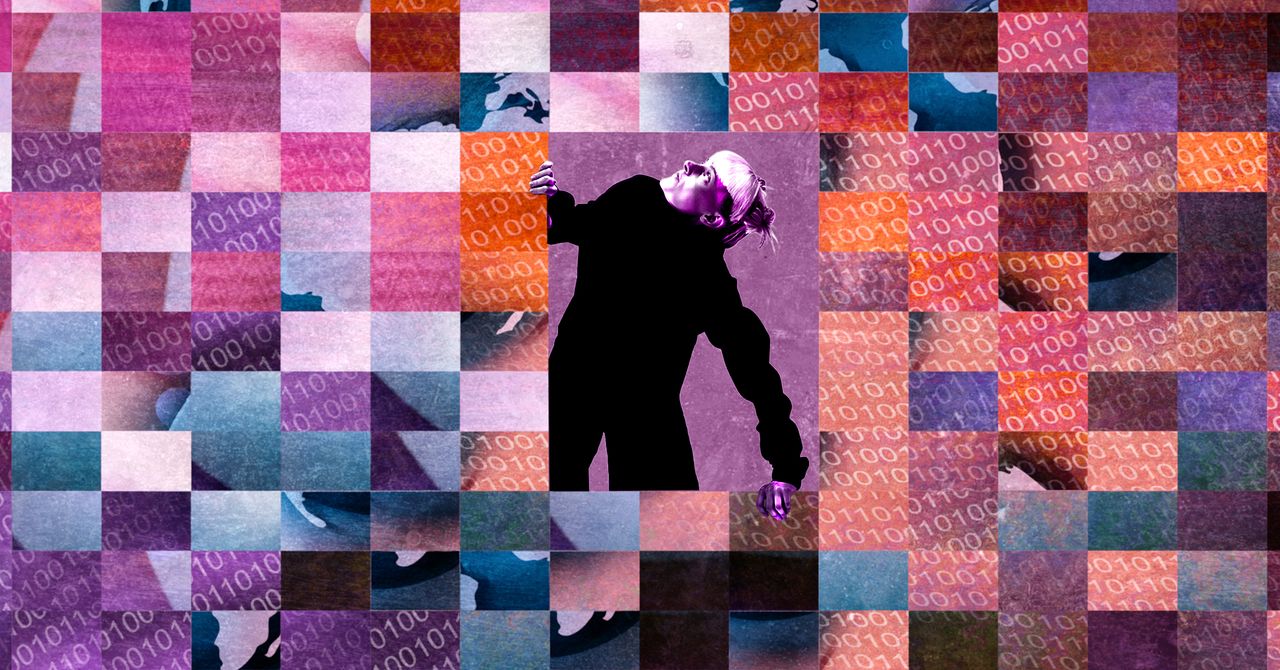
To anyone with a pulse and a smartphone, it’s obvious that the internet has an AI slop problem. The issue has grown more severe since ChatGPT launched in 2022, with some social platforms flooded with AI-generated writing. Now, there’s data to back up the anecdotal evidence.
A new preprint study published today from researchers at the Imperial College of London, Stanford University, and the Internet Archive found that approximately 35 percent of all new websites are either AI-generated or AI-assisted. The same study also found that online writing is “increasingly sanitized and artificially cheerful.” In other words, AI is making the internet fake-happy.
The research team tried four different approaches to AI detection before settling on tools from Pangram Labs after it delivered the most consistent results. (Though the team found it performed well on its tests, it is worth noting that all artificial intelligence detection tools are imperfect.) To compile a representative sample of websites, it tapped the Internet Archive’s Wayback Machine, which collects snapshots of webpages. In addition to quantifying how many sites created between 2022 and 2025 lean on AI-generated writing, the study also tested six different theories about the characteristics of slop.
The test that looked into artificial cheerfulness examined how AI affected the tone of online writing. Using sentiment analysis, which classifies words as positive, neutral, or negative, it found that “the average positive sentiment score of AI-generated or AI-assisted was 107 percent higher than that of non-AI websites.” The researchers see this spike in artificial happiness as a “symptom” of the “sycophantic and overoptimistic nature of existing LLMs.” In this way, AI writing tools’ tendency to suck up to their human users has a spillover effect, making the overall tenor of online writing more saccharine.
Another test investigated whether the increase in AI-generated writing shrinks “the range of unique ideas and diverse viewpoints” on offer. The researchers found that AI did make the internet less ideologically diverse, with AI websites scoring roughly 33 percent higher on testing for “semantic similarity” than human-made websites.
While those two tests validated the researchers’ assumptions about AI, others did not. Four theories that the researchers tested were not confirmed. Notably, they had suspected that AI would lead to a rise in misinformation, but their analysis of the evidence did not support the hypothesis. They had also guessed that AI writing wouldn’t link out to external sources, and that it would be stylistically more generic than human writing. Confounding expectations, neither of those theories were supported by the evidence, either.
While the analysis found that the ideas espoused by AI writing were more homogenous—and specifically, more consistently cheery—the writing style itself was not confirmed to be flattened. This came as a big surprise to the researchers, who had assumed they would see a clear move towards more generic output. “Everyone on the team expected that to be true,” says Stanford researcher Maty Bohacek. “But we just don’t have significant evidence for that.”
Prior to conducting its analysis, the research team commissioned a poll on how people feel about AI. Comparing it to the results, it discovered that the researchers weren’t the only ones who had their expectations upended. Many commonly held beliefs about AI writing are wrong, their study finds.
Like the researchers, most people polled had also assumed that they would encounter a rise in fake news as the amount of AI-generated websites they saw increased. The vast majority of respondents had also assumed that AI writing would stop linking to external sources, and that it would have an increasingly generic, uniform voice. “It’s interesting to see that people tended to expect the worst outcomes,” Bohacek says.
This study is far from the last word on what AI is doing to the internet. “We just wanted to break ground,” says Bohacek, who sees this as a jumping-off point for deeper exploration. As a snapshot of AI slop’s impact, it offers a particularly human flavor of insight: Sometimes, it’s simply hard to predict how things will unfold.

Nevertheless, there are clear patterns that appear. In nearly all cases, teenage boys are allegedly responsible for the creation of the images or videos. They are often shared in social media apps or via instant messaging with classmates. And they are hugely harmful to the victims. “I’m worried that every time they see me, they see those photos,” one victim in Iowa said earlier this year. “She’s been crying. She hasn’t been eating,” another’s family said.
In multiple instances, victims often do not want to attend school or be faced with seeing those who created explicit images or videos of them. “She feels hopeless because she knows that these images will likely make it onto the internet and reach pedophiles,” says lawyer Shane Vogt, and three Yale Law School students, Catharine Strong, Tony Sjodin, and Suzanne Castillo, who are representing one unnamed New Jersey teenager in legal action against a nudifying service. “She is severely distressed by the knowledge that these images are out there, and she will have to monitor the internet for the rest of her life to keep them from spreading.”
In South Korea and Australia, schools have given pupils the option not to have their photos in yearbooks or stopped posting images of students on their official social media accounts, citing their use for potential deepfake abuse. “Around the world, there have been cases where school images were taken from public social media pages, altered using AI, and turned into harmful deepfakes,” one school in Australia said. “Imagery will instead feature side profiles, silhouettes, backs of heads, distant group shots, creative filters, or approved stock photography.”
Sexual deepfakes created using AI have existed since around the end of 2017; however, as generative AI systems have emerged and become more powerful, they have led to a shadowy ecosystem of “nudification” or “undress” technologies. Dozens of apps, bots, and websites allow anyone to create sexualized images and videos of others with just a couple of clicks, often with no technical knowledge.
“What AI changes is scale, speed, and accessibility,” says Siddharth Pillai, cofounder and director of the RATI Foundation, a Mumbai-based organization working to prevent violence against women and children. “The technical barrier has dropped significantly, which means more people, including adolescents, can produce more convincing outputs with minimal effort. As with many AI-enabled harms, this results in a glut of content.”
Amanda Goharian, the director of research and insights at child safety group Thorn, says its research indicates that there are different motivations involved in teenagers creating deepfake abuse, ranging from sexual motivations, curiosity, revenge, or even teens daring each other to create the imagery. Studies involving adults who have created deepfake sexual abuse similarly show a host of different reasons why the images may be created. “The goal is not always sexual gratification,” Pillai says. “Increasingly, the intent is humiliation, denigration, and social control.”
“It’s not just about the tech,” says Tanya Horeck, a feminist media studies professor and researcher focusing on gender-based violence who has looked at sexualized deepfakes in UK schools at Anglia Ruskin University. “It’s about the long-standing gender dynamics that facilitate these crimes.”

Long before we had Amazon or Facebook marketplace, or thousands of other online retailers, we had eBay. And now, we have an eBay coupon to help you save on basics like vacuums and phones, to even your most niche need—because eBay has everything from haunted objects to ironic landline phones to retro gaming consoles. One of the first and most enduring online shopping platforms, eBay has stood the test of time, providing us with the old-school feel of estate sales, complete with bidding wars and gently used items of quite literally every type.
Save up to 60% on Your Next Purchase at eBay
eBay has rotating deals, like 20% off up-and-coming brands, so be sure to check their page often to know which deals are next. They have huge savings on essentials, like Dyson vacuums—an enduring titan in the home cleaning realm. There’s also discounts on like-new refurbished Apple MacBooks and iPads so you can work or study for so much less. It’s not only office tech they have deals on, but even kitchen essentials, like the forever-popular KitchenAid Stand Mixer. eBay has deals on everything from clothing and jewelry to power tools, so check eBay’s deals page often.
How to Use an eBay Coupon (If you Have one Handy)
Once you’ve perused the nearly endless options of items on eBay, here’s how you can redeem the eBay discount code or offer at checkout: first, make sure your code isn’t expired (I know it sounds like a no-brainer, but you don’t want to be disappointed when that dreaded ‘invalid’ pop-up comes on the screen). Enter the code in the ‘Add coupons’ section, or check the box if the coupon is displayed. When you select ‘apply,’ you should see the discounted total, and then you’ll be prompted to pay.
Save More With Free Shipping
Once you find the special item of your dreams, go to the “shipping and pickup” search filter and check the “free shipping” box to get free shipping. Make sure you choose eBay free shipping on a multitude of items like motor parts, books, golf clubs, Pokemon cards, haunted objects, tech, and virtually anything else you can imagine.
Shop These Rotating eBay Deals
eBay has rotating deals, like 20% off up-and-coming brands, so be sure to check their page often to know which deals are next. They also have spotlighted, trending, and featured deals for huge savings on a myriad of products like auto parts, golf clubs, shoes, and more. eBay has a money-back guarantee to ensure you get the item you ordered or you get your money back.
Shop With eBay Mastercard to Get More Rewards
Have you heard of an eBay Mastercard? I hadn’t either, but if you’re a collector or frequent eBay shopper, an eBay Mastercard is a smart way to save on purchases you were already planning to make. You’ll earn five times the amount of points for the rest of the year after you spend $1,000 on eBay in a calendar year. Until then, you’ll earn three times the points per $1 spent, up to $1,000, on eBay in a calendar year. You can also earn twice as many points per $1 spent on gas, restaurant, and groceries, and 1 times as many points per $1 spent on all other Mastercard purchases.
Get Daily Deals With the eBay App
If you’re someone who shops or sells on eBay often, I’d suggest downloading the eBay app for even more perks. The eBay mobile app makes it easy to find the best rotating deals on various items and access to the hottest deals and discounts of the day before they leave. Through the app, you can browse everything from trendy items, to power tools, to tech gadgets, and then choose whatever price looks best. There’s also app-only discounts and special offers exclusively for eBay app users. Plus, eBay will help you figure out when’s the best time to buy, with price notifications to let you know when the price has dropped.


AI Slop Is Making the Internet Fake-Happy

Who is Johnnie Robbie? Meet West Coast Pro’s women’s champion and rising star on the indie scene

The Deepfake Nudes Crisis in Schools Is Much Worse Than You Thought

-

 Fashion1 week ago
India’s exports face reset as EU links trade to carbon metrics: EY
-

 Entertainment1 week ago
Queen Elizabeth II emotional message for Archie, Lilibet sparks speculation
-

 Tech7 days ago
As the Strait of Hormuz Reopens, Global Shipping Will Take Months to Recover
-

 Entertainment1 week ago
Lamar Odom shocking response to Khloé Kardashian account of his overdose
-

 Tech1 week ago
Azure customers up in arms over ‘full’ UK South region | Computer Weekly
-

 Fashion1 week ago
CII submits 20-pt agenda to Indian govt to back firms hit by Iran war
-

 Tech6 days ago
This AI Button Wearable From Ex-Apple Engineers Looks Like an iPod Shuffle
-

 Fashion1 week ago
ICE cotton hits 11-month high on drought concerns, demand boost