

Tech
My Favorite Laptops, Chromebooks, and Gaming Laptops Are on Sale For Black Friday

It’s almost the end of the year, and with Black Friday upon us, it’s a great time to buy a laptop. I’ve sorted through the junk to find the best Black Friday laptop deals, and I’m happy to report that most of my favorite laptops I tested this year are on sale right now. Even better, some laptops I thought were overpriced at launch now have such steep discounts that they’ve risen in value in my estimation. So, if you’ve been waiting to buy a laptop at the right moment, this is it. One of these laptops should fit exactly what you’re looking for at a wide range of prices.
Hunting for more deals? Read our Absolute Best Black Friday Deals roundup, and check out our Black Friday liveblog for the highlights.
The Best Windows Laptop Deal
-
Photograph: Luke Larsen
-
Photograph: Luke Larsen
-
Photograph: Luke Larsen


If you’re shopping for a laptop on Black Friday, you’re probably looking for something a bit more budget-friendly. And while the MacBook Air is the better laptop, there’s no question that the Dell 14 Plus is the best deal. It comes with great specs: 16 GB of RAM, 512 GB of storage, and an Intel Core Ultra 5 226V. I reviewed the model with the Core Ultra 7 258V, but either way, you’re getting really good battery life and integrated graphics performance.
Most importantly, it avoids the two main pitfalls of budget laptops: poor displays and touchpads. The Dell 14 Plus comes with a high-resolution display (2560 x 1600) and a very smooth-feeling touchpad. It’s literally a premium laptop for an affordable price, and at $500, it’s officially the best deal on a laptop this Black Friday. It’s a doorbuster-style deal, however, so once it’s sold out, the price may change.
The Best MacBook Deal
-Reviewer-Photo-SOURCE-Brenda-Stolyar.jpg)
Photograph: Brenda Stolyar
Apple
MacBook Air (M4, 2025)
Since its launch this spring, the M4 MacBook Air has been the best laptop you can buy. It has also continued to drop in price slowly month after month, now down to just $749. That’s low enough that it’s not worth buying cheaper, older MacBook Airs, such as the M2 model. The difference in performance (and external display support) is worth far more. The M5 model is likely coming sometime in early 2026, but it’ll be a long time before it comes down to the price of the M4 right now. Come and get it while it’s hot.
I’ve collected the best Black Friday MacBook deals here for more recommendations and discussion on which MacBook deal is right for you.
The Best Chromebook Deal

Courtesy of Lenovo
Lenovo
Flex 5i Chromebook Plus
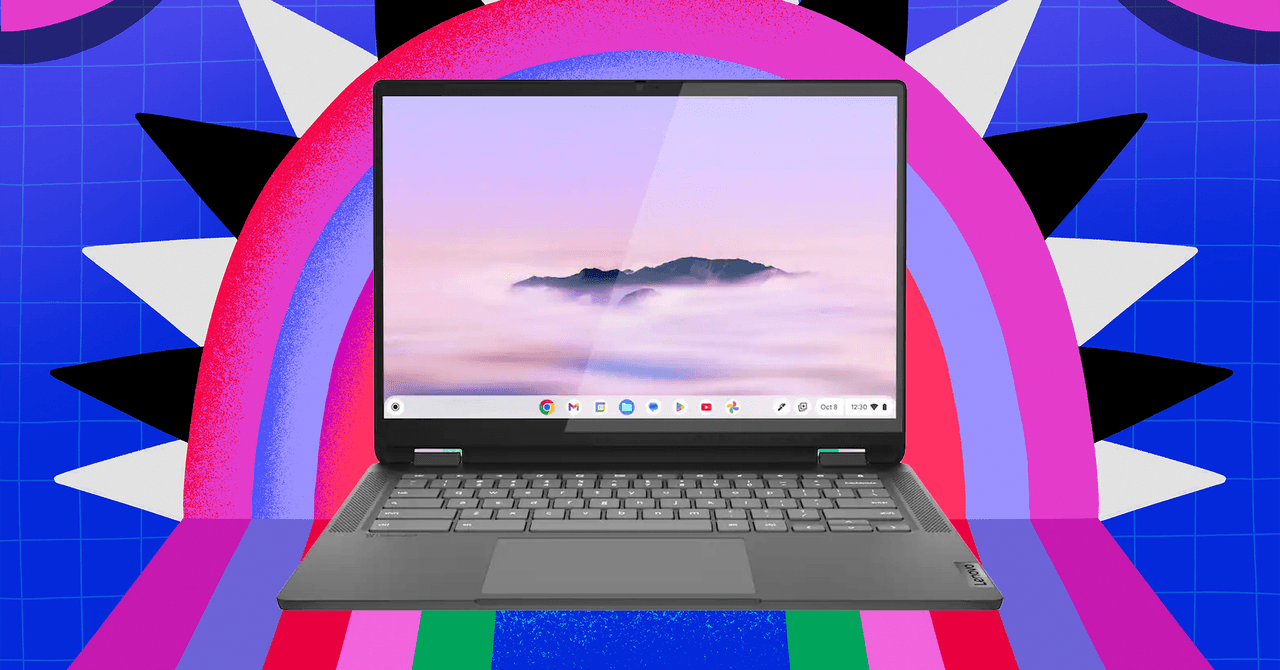
There are Chromebooks I like more than the Lenovo Flex 5i Chromebook Plus (8/10, WIRED Recommends), such as the Lenovo Chromebook Plus 14. But none are this cheap. At $350, it’s one of the most affordable Chromebook Plus models you can find—it’s in a different league over standard Chromebooks at this price. It has a better screen, faster performance, more storage, and even a crisper webcam. The Flex 5i Chromebook Plus even has a 360-degree hinge and touchscreen, sweetening the deal even more.
The Latest MacBook, Already on Sale
-
Photograph: Luke Larsen
-
Photograph: Luke Larsen
-
Photograph: Luke Larsen
-
Photograph: Luke Larsen
%2520source%2520luke%2520larsen.png)


The MacBook Air is a better value, yes. And the M4 Pro or M4 Max MacBooks are more powerful. But the base 14-inch MacBook Pro is the only Mac right now with the latest M5 chip, which launched just a month ago. I wish Apple had included other features in this update, as the M5 is the only change over the M4 model. The good news is that the M5 MacBook Pro (8/10, WIRED Recommends) offers a solid performance increase in all areas, including CPU, GPU, and even the Neural Engine. More important is the $200 discount just a month after it launched.
The Best 2-in-1 Laptop Deal
-
Photograph: Christopher Null
-
Courtesy of Microsoft
-
Courtesy of Microsoft
-
Photograph: Christopher Null
-Front-Reviewer-Photo-(no-border)-SOURCE-Christopher-Null.jpg)


-Screen-Display-Closeup-Reviewer-Photo-SOURCE-Christopher-Null.jpg)
Microsoft
Surface Pro 13-inch (11th Edition, 2024)
The OLED Surface Pro was excellent when it came out in mid-2024. It was the first time the Surface Pro got an OLED panel, and the Qualcomm Snapdragon X Plus/Elite chip finally gave this Windows tablet the performance and battery life needed to compete with the iPad Pro. The only problem? It was too expensive. But for Black Friday, the OLED Surface Pro is $500 off, bringing the price down to just $900. The one caveat to remember is that you’ll still need to buy a Surface Type Cover Keyboard to pair it with. Together, you have a 2-in-1 laptop that’s the ultimate travel companion and a full PC replacement.
A Great Budget Laptop

Photograph: Luke Larsen
Asus
Vivobook 14 (X1407QA)
The Asus Vivobook 14 is one of the few Snapdragon X-powered laptops bringing efficient performance and excellent battery life to surprisingly low prices. It’s $200 off for Black Friday, which brings it down to the same price as on the last Amazon Prime Day. There’s really only one problem: the Dell 14 Plus. By every measure, that’s the laptop you should buy. Not only is it cheaper, but it also has a much better display, touchpad, and integrated GPU performance. However, if the limited Doorbuster prices on the Dell 14 Plus have run out, the Asus Vivobook 14 is your next best bet for a Windows laptop around this price.
What to Look for in a Black Friday Laptop Deal
Shopping around for a good Black Friday deal isn’t so different from buying a laptop at any other time of the year. We never recommend products we don’t test ourselves, so if you’re interested in a particular laptop on this list, check out the corresponding review. But as you shop around, you may want to factor in the following specs along with the current price of the laptop:
- CPU
- GPU
- Memory (RAM)
- Storage
- Display resolution, panel type, and refresh rate
- Battery life
Lastly, consider the price history. CamelCamelCamel is a good tool to see some historical data on price drops for individual laptops. Some of the laptops included above (such as the Dell 14 Plus) are hitting new historic lows in terms of price, while others are returning to the same low price as they were on Prime Day. That doesn’t mean these aren’t a good deal necessarily, but it’s important to know that not every deal labeled “Black Friday Deal” is equal, even if the percentage drop looks similar. Many products these days have permanent discounted prices at retailers, which can obscure how big of a sale it really is.
For an in-depth breakdown that explains each element of a laptop, read our detailed How to Choose the Right Laptop guide.
Is Now a Good Time to Buy a Laptop?
Yes. Black Friday isn’t the only big shopping event throughout the year, and it’s not uncommon to find great sales on laptops at other times, whether that’s on a random day or on Amazon Prime Day(s). But Black Friday remains important as the beginning of the holiday shopping season. The entire annual cycle of laptop refreshes revolves around this timing. The beginning of the year starts with lots of products getting announced at CES, and then launching throughout the year. By the time Black Friday rolls around, companies and retailers are looking to clear out inventory to make room for incoming new stuff, which is why we still often see the biggest discounts for Black Friday.
This year, that timing even applies to MacBooks. Because Apple didn’t refresh any Macs this fall outside the 14-inch M5 MacBook Pro, laptops like the M4 MacBook Air or M4 Pro/Max MacBook Pro are discounted with the anticipation of a refresh coming sometime in early 2026.











On November 16, 2021, Matthew Ziburis sat in his car in a residential neighborhood in the Bay Area stalking an “enemy,” as he put it. A veteran of both the US Army and Marine Corps, Ziburis had previously served in Iraq. But on this mission, he was working at the behest of China’s government. The targets that autumn day were American citizens: Arthur Liu and his teenage daughter, Alysa.
Arthur’s personal story was an exemplar of the American Dream. As a university student, he took part in the 1989 pro-democracy movement in China. After the crackdown at Tiananmen Square that year, he fled to the United States, settling in California. Arthur poured a small fortune and an equal amount of energy into molding Alysa into a figure skating phenom. As a national champion at age 13, she bantered along with Jimmy Fallon on The Tonight Show, and was at the time on track to represent America at the Winter Olympics the following year in Beijing.
Ziburis was surveilling the Liu home when he called Arthur, falsely claiming that he was a member of the US Olympic Committee who needed to discuss upcoming travel to Beijing, Arthur says. Ziburis was adamant that Arthur fax him copies of his and his daughter’s passports as part of a travel “preparedness check,” Liu tells WIRED. This struck Arthur as odd. In his many years dealing with sports bodies, he had never fielded such a request. Alysa’s agent did not respond to a request for comment.
Ziburis’ surveillance of Arthur and Alysa Liu that November day five years ago was just one episode in a bizarre saga that spanned from California to Beijing, touched New York City mayors and members of the US Congress, and has seen two people plead guilty and two more awaiting trial.
Unbeknownst to Ziburis, as he sat outside Aurthur and Alysa’s Northern California home, he too was being watched.
Ziburis had allegedly been dispatched to Northern California by Frank Liu, a self-styled fixer in the Chinese community from Long Island, New York, who was in turn receiving orders from a person in China named Qiang Sun. According to US authorities, Sun was working at the behest of the Chinese government. A concerned private investigator who once worked for Frank Liu had alerted the FBI to Frank’s escapades and was assisting authorities. Law enforcement was already on to Ziburis by the time he arrived. Anthony Ricco, Ziburis’ lawyer, did not respond to requests for comment.
Officers watched as Ziburis surveyed Arthur’s home and visited his law office. The heavy-set man sulking around Arthur’s office also caught the attention of a neighbor, who approached Ziburis and asked him if he needed help, Arthur says. Apparently concerned, the FBI called Arthur to warn him that Ziburis was heading to his home. By then, in part because of the harassment, Arthur and Alysa were boarding a plane to fly out of California. “It was like a movie,” Arthur says.
Alysa’s showing in Beijing in 2022 was disappointing. Burned out, she retired from the sport. Then in February, after returning to the ice after a two year hiatus, Alysa became the first US women’s figure skater to win Olympic gold since 2002—intentionally without her father by her side.
Despite her much-publicized complicated relationship with Arthur, Alysa’s success—punctuated by her signature pierced smile, racoon-tail dye job, and palpable joy for her sport—has reignited interest in the long-running case of transnational repression against her and her father. Human rights advocates and researchers have documented in recent years the lengths Beijing has taken to suppress critical voices, even those residing abroad or whose perceived transgressions date back decades.
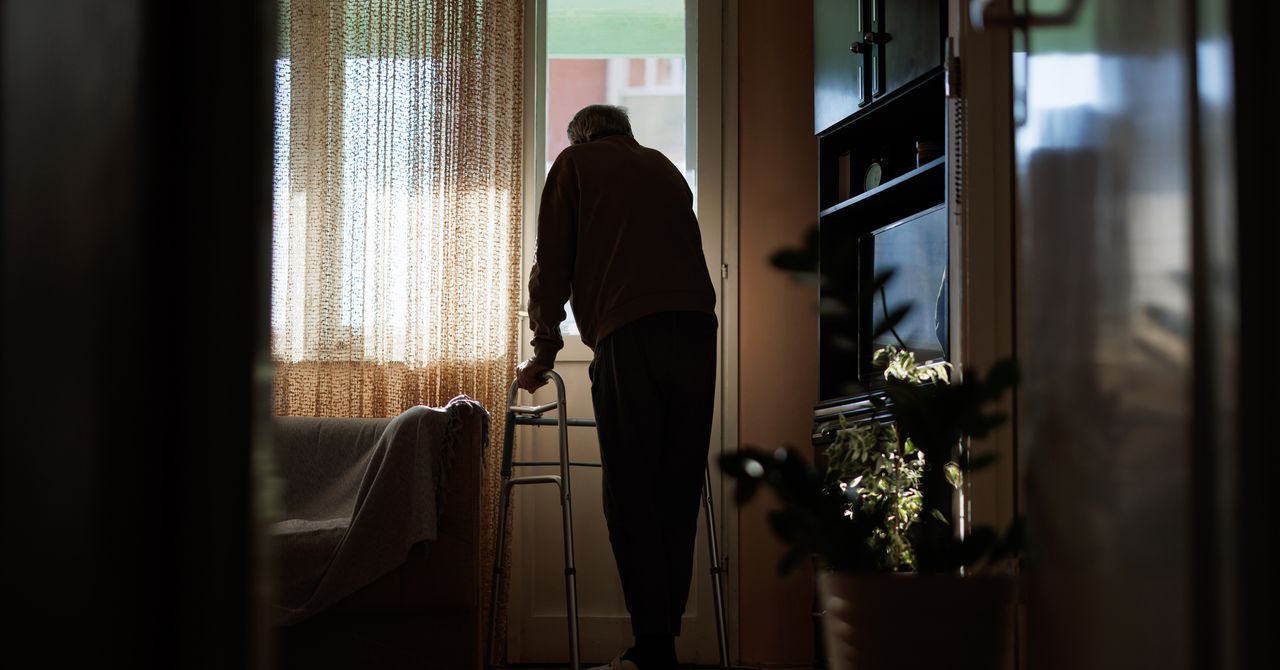
Neuroscientists know that there is a link between loneliness and cognitive decline in older adults, although it is still difficult to understand the exact magnitude of the link. A new longitudinal study provides evidence that a proportion of people who feel lonely end up having more memory impairment, though this doesn’t necessarily mean that their brains age faster.
The report, published in Aging & Mental Health, shows that older adults with higher levels of loneliness scored lower on tests of immediate and delayed recall. Even so, the rate at which their memory declined over six years was virtually identical to those who were not lonely.
“It suggests that loneliness may play a more prominent role in the initial state of memory than in its progressive decline,” said Luis Carlos Venegas-Sanabria of the School of Medicine and Health Sciences at Universidad del Rosario, who led the research. “The study underscores the importance of addressing loneliness as a significant factor in the context of cognitive performance in older adults.”
Six-Year Study of Thousands of Single People
The team analyzed data from the Survey of Health, Ageing and Retirement in Europe (SHARE), one of the most robust longitudinal databases for studying aging. For six years, the researchers followed 10,217 adults, aged 65 to 94, from 12 European countries. They assessed their level of loneliness and their performance on memory tests.
The results show that age was the most important determinant of memory level and speed of decline. From the age of 75 onwards, scores began to fall more rapidly. After 85 the decline became more pronounced. Depression and chronic diseases such as diabetes also reduced the initial score. Loneliness, while influencing the starting point, did not accelerate the slope of cognitive decline.
The study also found that physical activity was associated with better initial memory scores. People who engaged in moderate or vigorous physical activity at least once a month recalled more words on immediate and delayed recall tests. This effect did not change the speed of decline, but it did raise the baseline level, which functions as a kind of “cognitive buffer.”
Although the study does not explore the causes of the link between loneliness and cognition, previous research has proposed plausible mechanisms. Loneliness is often associated with less social interaction, a factor that influences cognitive performance. It is also associated with increased risk of depression, which does directly affect memory tests. In addition, lonely people tend to have more health problems, such as hypertension or diabetes, which also affect cognitive function.
By 2050, according to United Nations projections, one in six people in the world will be over the age of 65. Societies are entering a stage where old age will no longer be the exception but will become the norm. Dementia, as well as other neurodegenerative diseases that appear with age, will be a major challenge for health care institutions.
Privacy is not a modern invention; it is part of the human condition of trust, dissent, and intimacy. Every society has developed ways to communicate beyond the reach of power: whispered conversations, sealed letters, coded language.
The need to keep secrets is equally as important among the powerful – governments, more so than individuals, have jealously guarded their own secrets, even as they seek to uncover the secrets of others. What is new is neither the need nor desire for private communication but the current power of the observer.
We now live in what some have termed a “golden age of surveillance,” in which governments, corporations, and adversaries possess the technical capability to monitor human interaction at unprecedented scale. In this era of pervasive digital connectivity, most digital interactions leave a permanent, searchable trace, and the need to protect sensitive information has become critical.
End-to-end encryption (E2EE) is therefore not a technical abstraction or ideological indulgence; it is the most effective defence against unauthorized access to private communications in a fully networked world. As digital communication continues to evolve, the risks of interception scale with it.
Why E2EE matters
E2EE preserves data confidentiality by masking data from unauthorised users and ensuring that only the intended recipients, with a decryption key, can access the data. Using cryptography, E2EE transforms readable plaintext into unreadable ciphertext on the sender’s device, keeps it encrypted during transmission, and decrypts it back into its original form only when it reaches its destination and is decoded with the correct key. It is widely used by governments and corporations and is becoming increasingly common among individual users, reflecting its status as the prevailing standard for data security and privacy.
The most common use of E2EE is for secure communications on mobile and online messaging services. It is also widely used by password managers to protect users’ passwords; for data storage purposes to ensure that data is protected when it is stored and when it is transmitted between devices or to the cloud; and for file-sharing purposes, including peer-to-peer file sharing, encrypted cloud storage, and specialised file transfer services.
Using E2EE means that no one else, including the service provider facilitating the communications, has access to the unencrypted data without consent. If it were to be intercepted, the data would appear to third parties as random, unintelligible characters.
As the service provider facilitating the communications does not have access to the unencrypted data due to E2EE, it is unable to provide it to any third party. That includes governments and law enforcement agencies that criticize E2EE as an obstacle to investigations while at the same time relying on and demanding the strongest available encryption to protect their own systems. Thus, the debate over E2EE is not about balancing privacy and security. It is about whether governments can demand systemic insecurity while insisting on absolute security for themselves.
The risks of ‘exceptional access’
“Exceptional access” is the term used to describe the mechanism for enabling government access to encrypted communications. Different governments take different approaches to the methods they use to seek exceptional access. While the intentions behind exceptional access may be noble, facilitating such mechanisms in E2EE communications can create more problems than it seeks to solve.
The creation of government-mandated security vulnerabilities, commonly known as backdoors, into E2EE services jeopardizes the security and privacy of global communications. Once a backdoor is built, no one can guarantee that only the authorised third party will have access to it. Malicious actors will try to use such backdoors to enter and decrypt communications that are intended to be secure on the endpoints and only accessible to the sender and recipients. It is for this reason that the world’s leading providers have avowed publicly never to do so.
Third-party exceptional access mechanisms in which a copy of a user’s decryption keys are held by a “trusted” third party for potential future use by the government are at present fraught with insurmountable technological and security issues. Industry, backed by the vast majority of relevant experts, is saying that it’s simply not possible to have E2EE where a third party holds a key. It defeats E2EE’s central premise and is a deliberate breach of the security guarantee that E2EE provides.
Any kind of repository where providers are forced to store the keys would become a treasure trove of a target for attackers – especially so for sophisticated state actors who, as we have repeatedly seen, are adept at breaking into worldwide telecommunications networks and critical infrastructure.
Why encryption is not an existential threat to law enforcement
In any event, governments have for decades warned of the existential threat posed by encryption and on the grim possibility of “going dark.” But they have not gone dark, and there exist other means by which governments can get valuable data. Metadata remains available. Enhanced investigative means and other investigative tools are ever evolving and becoming more sophisticated.
Governments should be careful about what they wish for. In seeking to fetter E2EE, they may drive the very actors whose data they most need away from mainstream providers, most of whom have long-standing collaborative relationships with law enforcement. In doing so, they will lose the ability to gain the data they can still obtain notwithstanding the use of E2EE – or, worse, they will undermine the very technology on which they also rely.
At this stage of technological development, there exists no meaningful way to grant governments “exceptional access” to encrypted communications without deliberately engineering systemic vulnerability into the digital infrastructure on which billions of people, institutions, and governments themselves depend.
Once such vulnerabilities exist, they cannot be confined to the well-intentioned or the lawful; they become available to hostile states, criminal actors, and anyone capable of exploiting them. The consensus among technologists and security experts is unequivocal: E2EE either works for everyone, or it is broken for everyone. Governments may continue to warn of impending darkness, but the greater danger lies in demanding insecurity by design – an outcome that would fundamentally undermine trust, resilience, and the security of the global communications ecosystem.


2026 growth in Africa to drop by up to 0.2% due to Iran war: Report

Indian reforms strengthen DGFT norms committees’ functioning: Ministry

The Weird, Twisting Tale of How China Spied on Alysa Liu and Her Dad

-

 Fashion4 days ago
France’s LVMH Q1 revenue falls 6%, shows resilience amid Iran war
-

 Sports1 week ago
The case for Man United’s Fernandes as Premier League’s best
-

 Entertainment1 week ago
Palace left in shock as Prince William cancels grand ceremony
-
 Business1 week ago
UK could adopt EU single market rules under new legislation
-

 Entertainment5 days ago
Is Claude down? Here’s why users are seeing errors
-

 Sports1 week ago
Lamar Jackson hits back at critics with faithful message on social media
-

 Fashion1 week ago
Energy emerges as biggest cost driver in textile margins
-
 Business1 week ago
Road accidents: a massive economic challenge | The Express Tribune