

Entertainment
Dar says Pakistan buried India’s false narrative of regional dominance

- DPM Dar says ceasefire was India’s request, not Pakistan’s.
- Highlights Pakistan lost 90,000 lives, $192bn in war on terror.
- Top diplomat says economy stabilising; PIA set to resume UK flights.
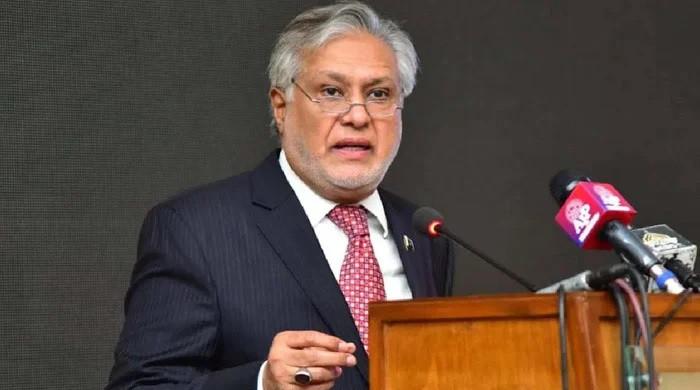
LONDON: Deputy Prime Minister and Foreign Minister Senator Mohammad Ishaq Dar said Pakistan had buried the false narrative propagated by the Indian media and government about its so-called hegemony and portrayal of India as the “net security provider” of the region.
Addressing a press conference in London after his official visit to the United Kingdom, and broadcast live on national TV channels, he said Pakistan had emerged victorious in its recent armed conflict with India, triggered by unprovoked Indian aggression.
“The Indian media and bureaucracy have acknowledged that their narrative proved unsuccessful. On the other hand, Pakistan’s narrative was based upon facts and truth, which was acknowledged by the world,” he added.
Dar said that after air superiority, Pakistan also settled scores with India on the ground.
He said Pakistan always stood for the respect, dignity, sovereignty and territorial integrity of all countries in the region and desired from others to do the same.
Terming Indian leaders’ statements unfortunate, he advised them to accept the defeat and move forward, stressing that Pakistan had not asked anyone to broker a ceasefire; rather, it was the Indian side that agreed to it and which was conveyed by US Secretary of State Rubio to him in the May conflict.
Dar, flanked by the Pakistan High Commission to the UK, Dr Mohammad Faisal, further said the incumbent government was committed to economic stability and prosperity, and its policies resulted in foreign reserves growth and inflation rates on a downward trend.
“Pakistan will emerge stronger. Unity will take us forward if we want Pakistan to get its due place among the comity of nations, and to join D-20,” he observed.
He said that no one should tell Pakistan to hold talks on terrorism, as they were ‘the biggest victim of terrorism, Pakistan had fought the global war of terrorism, on the front foot and sacrificed 90,000 lives besides suffering colossal losses to the tune of $192 billion in that war, he said, stressing that the world had to recognize these sacrifices, Pakistan had rendered huge sacrifices.
He said during the year 2014, terrorism had been eliminated from the country during former premier Nawaz Sharif’s tenure.
About their official visits to various countries, he said their efforts were aimed at projecting Pakistan’s candid stance on various issues, including the scourge of terrorism.
He opined that due to these efforts, the US had proscribed BLA and Majeed Brigade as international terrorist outfits who had been involved in different terrorism incidents, including train hijacking in Balochistan. Dar also advised the Pakistani diaspora not to indulge in petty politics on different national issues.
“After Indian aggression, we adopted a unanimous resolution in the parliament condemning it strongly, which also gave a message to the world about the unity of the nation,” he added.
Dar further underlined the need for the nation should move in unison to take the country on the track of progress.
To a question, he said it was unfortunate, PIA had been earning billions of rupees in revenue when it was grounded, and it took years to revive the national flag carrier.
He welcomed the EU’s decision to lift the ban on PIA in November 2024 and said the UK also followed suit. PIA authorities were in negotiation with the UK authorities to resume flights to Manchester in September under a tentative programme, which could later be expanded to London.
Dar also termed his bilateral and trilateral meetings with the UK counterparts and authorities very productive, in which all spectrums of the bilateral ties were discussed, including the Kashmir dispute and climate change, etc.

Britney Spears has spoken to both her mother and her two sons following her DUI arrest earlier this week, with those closest to her now rallying around the singer in the aftermath of what sources describe as an deeply emotional night.
According to TMZ, Lynne Spears called her daughter as soon as she heard about the arrest, with the conversation between the two described as “positive” and “hopeful.”
Britney also spoke to her sons Sean Preston, 20, and Jayden James, 19, after being released from jail on Thursday morning, though she has not yet seen any family members in person.
The outreach comes at a particularly raw moment.
Spears was pulled over near the Borchard Road off-ramp in Newbury Park, Ventura County, at around 9:28 p.m. on Wednesday after officers reportedly observed her driving her black BMW “erratically at a high rate of speed.”
She was arrested on suspicion of driving under the influence of a combination of drugs and alcohol, and an insider told Page Six that officers also found an unknown substance inside her car at the time.
Her chemical test results remain pending and the investigation is ongoing. She was released at 6:07 a.m. Thursday.
Sources paint a picture of a woman who was visibly distressed throughout the process.
Spears was “crying and very tearful” while being booked, according to Page Six.
“She was incredibly emotional,” a source told the outlet. “It’s been a very hard couple of months.” The same insider said Spears “felt ashamed and embarrassed” and is “very sorry” for what happened.
“She doesn’t want to let anyone down, including her fans. The last thing she wants is to be judged publicly all over again.”
Her manager, Cade Hudson, was blunt in his public statement, calling the incident “completely inexcusable” while expressing hope that it might mark a turning point.

Maisie Peters gave her Melbourne audience an unexpected treat on Wednesday night when Ed Sheeran walked out on stage to join her for a surprise duet, a moment that clearly meant a great deal to both of them.
Sheeran, 35, appeared at Peters’ show on 4th March during her Before the Bloom Tour in Australia, performing his 2017 hit Castle on the Hill alongside the 25-year-old singer.
Peters shared a clip of the performance on Instagram, captioning it with heartfelt warmth. “Thank you @teddysphotos for singing the best song ever with me at my show in melbourne tonight,” she wrote.
“Still remember watching you play this one all 60 something gigs we did together, and it was so magical getting to join you on it for one. The best to ever do it.”
Sheeran is currently in Australia as part of his own Loop Tour, which will next take him to the Dominican Republic on 9th May before wrapping up in November.
Peters, meanwhile, is gearing up for a busy year.
Her third studio album, Florescence, is due for release in May, following her 2023 sophomore record The Good Witch.
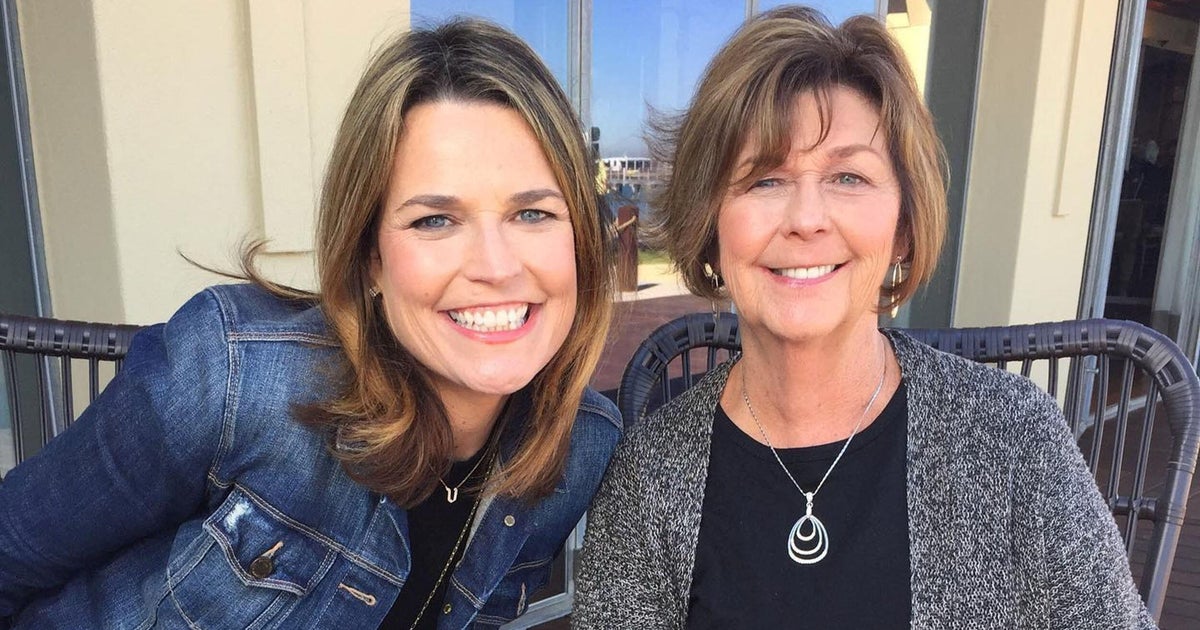
Savannah Guthrie stopped by the “Today” show studio to see colleagues on Thursday, NBC News said in a statement shared with CBS News. It was the first time Guthrie had been in the studio since her mother, Nancy Guthrie, disappeared over a month ago.
NBC said that Guthrie plans to eventually return to “Today.” The network did not specify when that might happen.
“Savannah Guthrie stopped by the studio this morning to be with and thank her TODAY colleagues,” the company said. “While she plans to return to the show on air, she remains focused right now supporting her family and working to help bring Nancy home.”
During her visit to Studio 1A, Guthrie embraced staff and crew, according to “Today.” She reportedly thanked her colleagues for “caring about my mom as much as I do,” the show said.
“I wanted you to know that I’m still standing, and I still have hope, and I’m still me,” she said. “And I don’t know what version of me that will be, but it will be.”
Courtesy NBC/Today/Handout via Reuters
“I have every intention of coming back,” Guthrie also said, according to the show. “I don’t know how to come back, but I don’t know how not to. You’re my family. And I would like to try.”
Guthrie’s last appearance on “Today” was January 30, 2026, two days before Nancy was reported missing. Guthrie has spent most of the past month with her siblings and their families in Arizona, where her mother and sister live.
Law enforcement have said they believe the 84-year-old was taken from her Tucson home overnight in the early morning hours of Feb. 1. No suspects or motive have been publicly identified. Law enforcement is continuing to analyze forensic and digital evidence related to the case.
Guthrie has shared search updates on her social media and recently said that while the family understands they may not find Nancy alive, they “still believe in a miracle.” Guthrie has offered a $1 million reward for information about her mother’s disappearance.
Possession of Nancy Guthrie’s home was recently returned to her family, and the FBI moved its command post from Tucson to Phoenix. A law enforcement source told CBS News the investigation was still continuing at full speed and that the move would allow for law enforcement to operate more efficiently for the long-term.


Save up to $600 With These Mattress Firm Coupons and Deals

Trump fires Kristi Noem as homeland secretary after storm over shootings, spending

Cotton innovation to take centre stage at Bremen conference 2026

Policy easing drives Argentina’s garment import surge in 2025

What are Iran’s ballistic missile capabilities?

India Us Trade Deal: Fresh look at India-US trade deal? May be ‘rebalanced’ if circumstances change, says Piyush Goyal – The Times of India

-
 Fashion1 week ago
Policy easing drives Argentina’s garment import surge in 2025
-
 Politics1 week ago
What are Iran’s ballistic missile capabilities?
-
Business7 days ago
India Us Trade Deal: Fresh look at India-US trade deal? May be ‘rebalanced’ if circumstances change, says Piyush Goyal – The Times of India
-
 Business1 week ago
Attock Cement’s acquisition approved | The Express Tribune
-

 Politics1 week ago
US arrests ex-Air Force pilot for ‘training’ Chinese military
-
 Business7 days ago
Greggs to reveal trading amid pressure from cost of living and weight loss drugs
-

 Sports7 days ago
LPGA legend shares her feelings about US women’s Olympic wins: ‘Gets me really emotional’
-

 Fashion1 week ago
Texwin Spinning showcasing premium cotton yarn range at VIATT 2026