

Business
Budget 2025: What’s the best and worst that could happen for Labour?


Laura KuenssbergPresenter, Sunday with Laura Kuenssberg

 BBC
BBCAny big red box moment is risky.
And for a government disliked by millions there’s peril at every turn.
Now the chancellor’s big choices are out there, what’s the best-case scenario for Reeves and Starmer, and what’s the worst that could happen next?
On the positive side of the ledger, Labour MPs have gone off to their constituencies in a better mood this week. That is in large part down to the chancellor’s decision to scrap the limit on bigger families getting some extra benefits.
The prime minister will revel in the argument for scrapping the cap in a big speech on Monday, suggesting it’s not just the right thing to do for those in need, but the right move for the economy now and into the future. He’ll also make the case the Budget will help families by easing energy bills and freezing rail fares.
And the long-awaited strategy on child poverty will likely see the light of day towards the end of the week.
It’s about as clear an example of a Labour-friendly policy as there could be – redistributing taxpayers’ cash to the least well-off.
One government source described it as a “restatement of values, something that MPs wanted to see, government being more bold about what it believes in and what a Labour government is”.
In other words, giving Labour MPs something many of them – not just the left-wing fringe, but government ministers like Bridget Phillipson – had argued for, has cheered them right up after months of unhappiness and anxiety-fuelled conversations about what Keir Starmer stands for and whether he is up to the job.
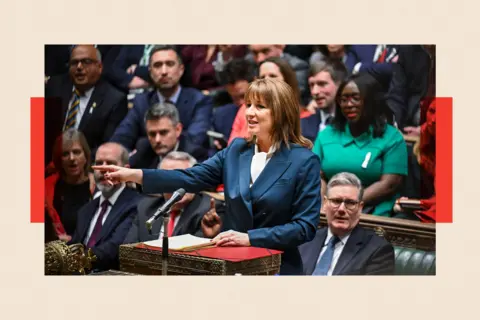 House of Commons
While it’s not a policy that is universally popular with the public, the decision makes it easier for the leadership to get their backbenchers on board and manage the party. But with a majority as big as they won in July 2024, it’s solving a problem they ought never to have had.
A reliable party is a basic for any government that wants to be effective. And it shouldn’t be an issue for an administration with a huge majority. But you don’t need me to remind you Labour’s time in office has been eventful at best, chaotic at worst, with the leadership unable to keep its MPs in line.
In the best-case scenario, the changes to benefits in the Budget gives Labour a clearer identity, an argument in the party’s comfort zone that it’s happy to make. From a political point of view, another government source says “there’ll be a body language change and we are going to enjoy the fight.”
If – and it is still an if – this calm can last, politics can settle down and businesses might feel more confident. The hope is that would unlock cash for the economy, despite big tax rises, big increases on welfare spending and the country’s still whopping debts.
After all the preparation (more on the dark side of it later), there was no big meltdown in the markets on the day. Remember, market reaction matters because the government borrows lots and lots of money from investors who want it back one day.
Business leaders hope seeming stability hangs around and endless politicking ends. As one says: “Best-case scenario is this gives stability – the government can crack on, and we see an uptick [in the economy]. It’s not like other governments globally are smashing it.”
Another boss of a company worth billions told me: “Twenty-six billion of extra tax is not normal, but I think the Budget will settle things down. We all love to criticise but maybe it is time to cut them some slack.”
The polls do not suggest for a second that the public at large is in the mood to do that. Early surveys of opinion after the Budget give Reeves’s plans short shrift. More than a million people will be paying more income tax or paying it for the first time – not a traditional reason for cheer.
Inflation is expected to be higher for this year than expected. And the growth in people’s spending power is predicted to be “dismal”. But for one member of the government, the best-case scenario “has to be an uptick in the polls and a stronger message for May”, referring to a mega set of elections in Scotland, Wales and across different parts of England where Labour is roundly expected to get hammered, and Keir Starmer’s job is expected to hang in the balance.
The Budget has not brought that moment of jeopardy any closer, which given how rocky things have been, is a win of sorts. But one party insider grimly joked, after this week: “The best-case scenario for the PM is that he gets to May, and then there is a failed challenge.”
What about the worst-case scenario?
The ink on the Budget headlines was barely dry when along came another political fuss about a partial u-turn on expanding workers’ rights. For some in the party, the timing was incomprehensible – one senior figure told me, exasperated: “in terms of managing your party, why do it this week? You’d calmed everybody down, bond yields happy, Labour backbenchers happy, then you throw it all up in the air again!”
Separate to the Budget process, unions and business and ministers had been trying to find a compromise over how long workers would have to be in a job before getting the right to claim they’d been unfairly sacked.
For some in the unions and the party, dropping day-one protection from unfair dismissal was a necessary compromise to make sure the bigger changes to workers’ rights could pass through Parliament. But it has angered some on the left.
A source close to the talks with the unions and business told me “you can’t grid the negotiations” – in other words, the announcement couldn’t be fitted into a neat government timetable.
The partial climbdown is not likely to result in an enormous bust-up – one of Angela Rayner’s steadfast allies who pioneered the wider plans said they were a “little concerned” rather than frothing with rage. But the spat punctures any suggestion that the Budget will end grumps and strops inside the party.
And listen to this warning from another source in the Labour movement: “It’s a ludicrous thing to have done – it was a clear manifesto pledge. It’s not complicated and it’s made the Labour-trade union relationship more difficult and created unnecessary tension for Starmer and Reeves in the event of things tanking after local elections.”
In other words, leadership watch out.
For all the political focus, the Budget is of course also a huge economic moment and it simply isn’t pretty. Debt is still sky-high. Growth is predicted to be still sludgy for years, slower than expected all the way up until 2030. State spending, particularly on welfare, is going up and up.
It’s hard to reconcile that with Reeves and Starmer’s language before and after the general election: that helping business make money and hire more people – growth – was at the top of their list.
One city figure told me: “The left side of Labour might hate business but that’s what pays for the things they want – it cannot fund the triple lock, welfare, and the NHS unless the economy grows.”
Another senior business figure told me: “I think we are bit screwed aren’t we – by end of the decade we are going to spend nearly 400 billion on pensions and welfare – growth is clearly not at the top of the list.”
The minimum wage is going up. Business rates are going up for many companies. Even one union figure told me “growth’s gone as a priority”.
For one city insider, there is a sense that Reeves’s effort to play nice with the business community before the election had been for nothing. “They’ve sacrificed any opportunity they had to really drive growth, support aspiration and build an economy around thriving businesses and entrepreneurship in favour of saving their jobs. Taxpayers and business have been betrayed and both have long memories.
“All of the pre-election talk about being the party of business and growth was bullshit. Everyone recognises that now and they won’t forget.”
Government figures dispute this. Pointing to decisions on Heathrow and new nuclear, they hit back: “If those businesses want to employ decent people in the years to come, it’s quite a good idea those children don’t go hungry when they are growing up.”
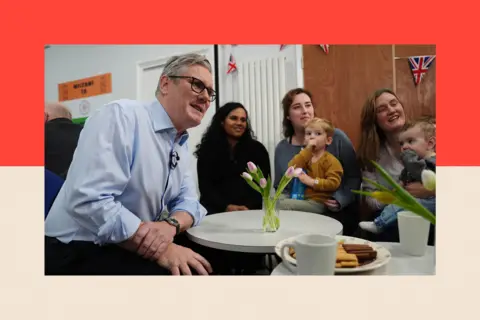 PA Wire
Starmer himself will insist the government is just as committed to growth as it’s always been in his speech next week, and is likely to emphasise his desire to get rid of red tape and speed up the planning system. Downing Street insiders suggest it’s bogus to suggest the new focus on child poverty means they’re not interested in helping business grow any more.
Multiple sources suggest Labour switching to a more traditional focus to please its party removes what sometimes felt like a contradiction – a focus on helping business make money at the same time as pursuing its own values.
One former minister suggested that since the high-tax, high-spend Budget, the difference between the two parties was now as clear as it was in 1992.
But in the worst-case scenario, the economy remains on a measly path. As one business leader suggested, the increase to the minimum wage and increased taxes could mean “everyone will just not hire – there’s nothing to create confidence for us when we desperately need it.”
The Treasury might hope something else turns up and the long-term picture improves, perhaps because of advances in AI, perhaps because of planning reforms, perhaps because of, who knows. But the official predictions at the moment do not make for reassuring reading.
Lastly, decisions in the Budget might bash the public’s trust in the government even further.
That’s not just because having repeatedly promised not to increase income taxes, the chancellor is doing precisely that by freezing the level where you start paying tax, breaking certainly the spirit if not the precise letter of the party’s election manifesto. And Reeves also stands accused of lying about how short of cash the government really was in the run up to the Budget.
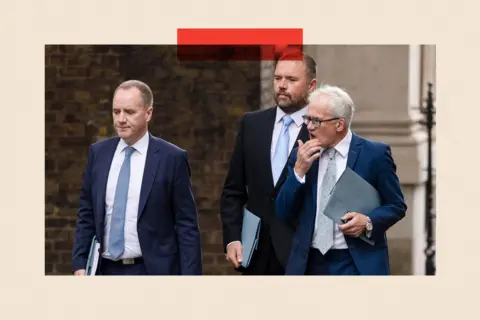 Getty Images
Repeatedly, and unusually publicly, the chancellor talked about how changes to the financial picture would leave her with no choice but to take those pesky, difficult decisions, i.e. put your taxes up.
This impression was created over many weeks, so tax rises didn’t come as a massive shock to you or the markets. Some leaks were accidental. Many briefings were deliberate, including suggestions just last week that the numbers from the Office for Budget Responsibility (OBR) had come in more or less at the last moment, looking more rosy than had been expected.
Here’s the rub. What we now know is that the OBR, which released this information late on Friday, had weeks before told Rachel Reeves that because more tax had come in, there wasn’t actually a hole in her finances after all. The Conservatives have blasted her for “lying” about the numbers. Downing Street has flat-out denied that.
But even one Labour insider questions whether the government crossed the line: “Everyone knows the game, but there’s a line between rolling the pitch and simply misleading the public and the lobby.”
In the worst-case scenario, the very messy Budget process has damaged trust in the government even more, and given their opponents more reason to hurl accusations of bad faith and bad behaviour right in heir face.
Budgets can unravel spectacularly, fall apart before your eyes. That has not happened this week. Given how bad things have been for this government in the last few months, that fact alone will be a relief. And Labour has emerged with a sharper political identity that’s relieved many in its rank and file. But that’s not the same as pleasing the public.
The financial picture doesn’t give much cheer. In the end, there may not be much economic comfort in the political comfort zone.

BBC InDepth is the home on the website and app for the best analysis, with fresh perspectives that challenge assumptions and deep reporting on the biggest issues of the day. You can now sign up for notifications that will alert you whenever an InDepth story is published – click here to find out how.
Business
UPI transactions hit record Rs 29.53 lakh crore in March; volumes cross 22.6 billion – The Times of India

Unified Payments Interface (UPI) transactions touched a record high in March, with both value and volume hitting new peaks, driven by festive spending and financial year-end activity, according to PTI.Data released by the National Payments Corporation of India (NPCI) showed that UPI transactions totalled Rs 29.53 lakh crore in value during March, up 19 per cent from Rs 24.77 lakh crore in the same month last year.On a month-on-month basis, transaction value rose 10 per cent from Rs 26.84 lakh crore recorded in February.In volume terms, UPI registered 22.64 billion transactions during the month, marking a 24 per cent increase from 18.3 billion transactions a year ago. The volume was 20.39 billion in February.Average daily transactions stood at 730 million, with an average daily value of Rs 95,243 crore, as spending picked up during festivals such as Holi and Eid.“The sustained growth in the digital payment ecosystem in India is an affirmation of the penetration of real-time payment systems in the day-to-day life of the people. UPI processed 22.64 billion transactions worth 29.53 lakh crore in March 2026, marking its emergence as one of the trusted payment systems in the country,” said Anand Kumar Bajaj, MD & CEO of PayNearby.UPI now accounts for around 85 per cent of all digital transactions in India and contributes nearly 50 per cent of global real-time digital payments.The platform is operational in seven countries, including the UAE, Singapore, Bhutan, Nepal, Sri Lanka, France and Mauritius, with its entry into France marking its first expansion into Europe.NPCI, an initiative of the Reserve Bank of India and the Indian Banks’ Association, operates UPI, enabling real-time peer-to-peer and merchant payments across the country.
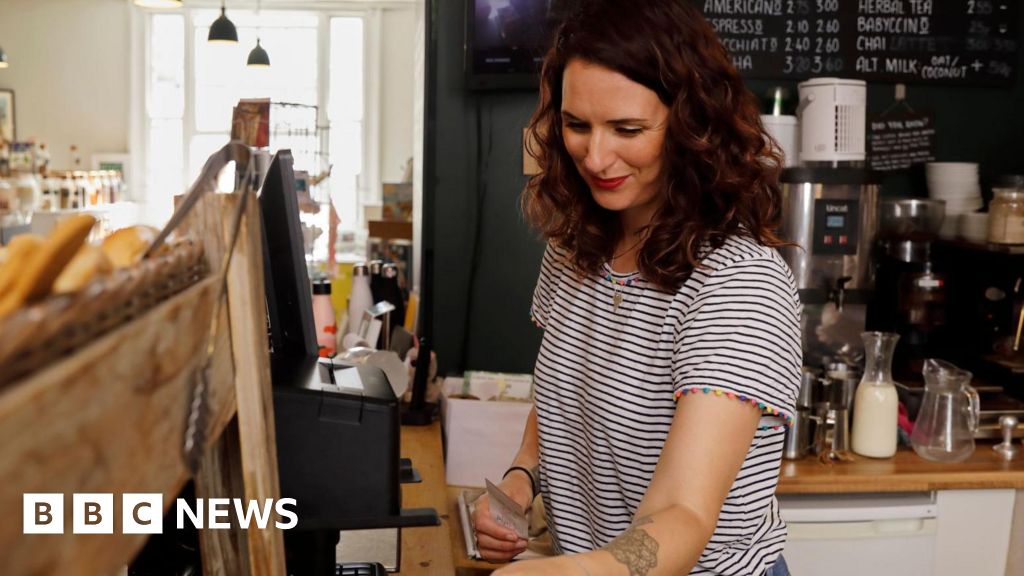
But Spencer says his business is being squeezed from every angle – as well as minimum wage, he has had increases in business rates, national insurance, and statutory sick pay. He also expects energy bills to go up because of the war in the Middle East.

Visa Inc. signage on the floor of the New York Stock Exchange (NYSE) in New York, US, on Wednesday, Jan. 28, 2026.
Michael Nagle | Bloomberg | Getty Images
Visa is launching six new tools using artificial intelligence to modernize the process of disputing credit card charges, the company told CNBC exclusively.
The digital payments company said the tools are designed to reduce the costs and frustration of “outdated” dispute processes for multiple entities involved in the payments process: merchants, issuers and acquirers.
“Some of the challenges are these back-office systems are still largely manual,” Andrew Torre, Visa’s president of value-added services, told CNBC. “We really had to think differently about how we approach this at scale.”
In 2025, Torre said, Visa processed more than 103 million charge disputes globally, marking a 35% increase since 2019.
“Our goal is to streamline this as much as possible,” Torre said. “We’d love to be able to see that growth rate come down.”
Visa’s new tools are part of a larger push by major banks and financial institutions to incorporate AI into their businesses — both internally and in consumer-facing applications. JPMorgan Chase and Goldman Sachs have both said they’re already using AI to hire fewer people. BNY spent $3.8 billion on technology in 2025, or about 19% of its revenue.
Visa said three of its six new tools focus on merchants, allowing them to address potential disputes before they escalate, managing disputes with generative AI responses and providing a deeper level of detail on order insights to manage confusion over unfamiliar charges.
For example, Torre said, many disputes are borne out of cardholders not recognizing a specific charge on their statements. With the new tool, Visa will be able to provide further details to financial institutions to show cardholders that data at a deeper level, according to the company.
The other three tools are built for issuers and acquirers, using predictive AI models to aid in case-by-case analysis, analyzing documents for summaries and auto fill and establishing an AI-powered dispute platform to manage the entire process in one location, Visa said.
“We’ll be able to get them insights and data so they can move from being reactive to proactive,” Torre said.
Torre said Visa’s new AI tools are part of a broader host of solutions for consumers, including a subscription manager announced last week that allows cardholders to cancel unnecessary subscriptions directly on the manager.
The automation will save time, money and unnecessary confusion for both parties, he added. Most of the tools will be generally available later this year, the company said.
“We really believe that disputes in this solution makes it much easier to manage and resolve,” Torre said. “We think it has better outcomes for everyone.”


The New Era of Militia Influencers
UPI transactions hit record Rs 29.53 lakh crore in March; volumes cross 22.6 billion – The Times of India

Taylor Swift, Travis Kelce wedding planning comes to life: Details

-

 Politics1 week ago
Afghanistan announces release of detained US citizen
-

 Tech1 week ago
Can a Home Appliance Fix the Problem of Soft-Plastic Waste?
-

 Sports1 week ago
Broadcast industry CEO says consolidation is ‘essential’ to compete for NFL soaring media rights prices
-

 Entertainment1 week ago
UN warns migratory freshwater fish numbers are spiralling
-
 Business1 week ago
Property Play: Home flippers see smallest profits since the Great Recession, real estate data firm says
-
 Business1 week ago
Gold prices soar in Pakistan – SUCH TV
-
 Business1 week ago
More women are entering wealth management, but few are in advisory roles, study finds
-

 Fashion1 week ago
ICE cotton slips on weaker crude, profit booking