

Tech
The Rare Earth Metal Driving Tensions Between the US and China

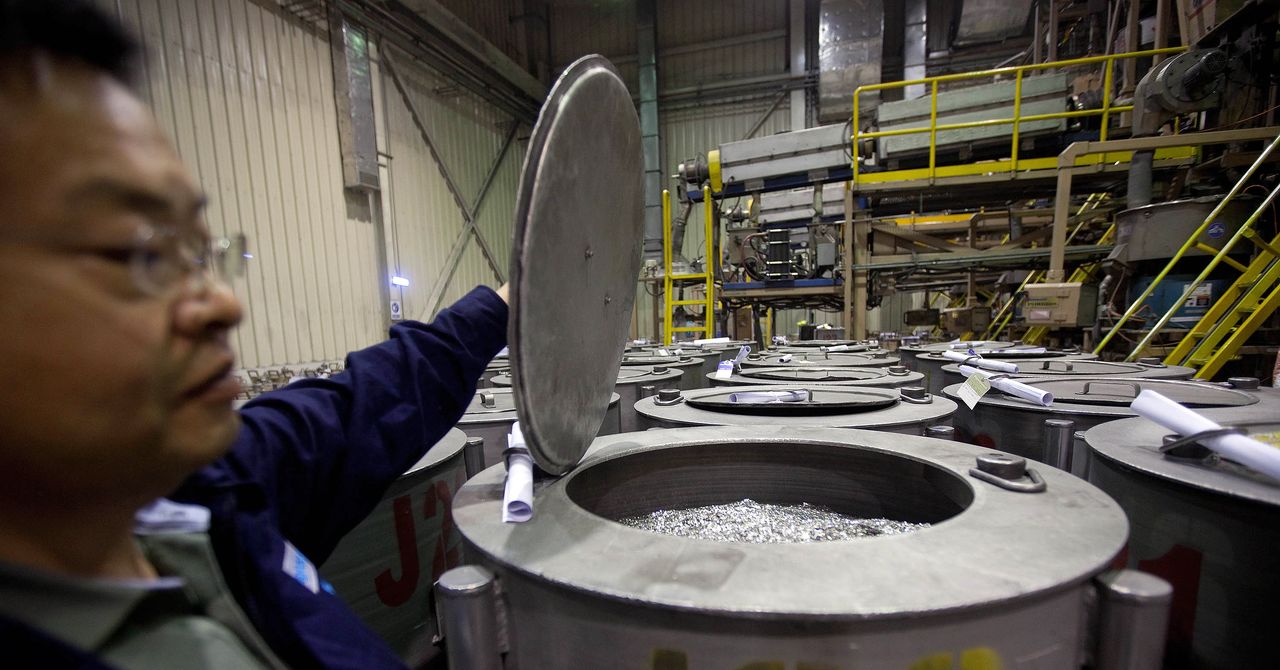
The alarm hasn’t yet reached the general public, but tension is beginning to build in the corridors of the aerospace industry, in microchip laboratories, and in government offices. For months, an element almost invisible to the world—yttrium—has become the silent center of a new global dispute. Supplies are thinning, prices are skyrocketing, deliveries are stalling. And while China and the United States have promised a truce over rare earth minerals, the wheels of advanced technology are beginning to slow.
Although a late-October meeting in South Korea between Chinese president Xi Jinping and his US counterpart Donald Trump raised hopes for a détente, the Chinese export restrictions introduced last April remain substantially in place. Beijing granted a one-year reprieve on the mandatory government licensing system for shipments of rare earths and products containing related materials (including those made abroad with at least 0.1 percent Chinese resources), in exchange for a similar suspension of the White House’s latest restrictions on technology supply chains.
A Crucial Element in a Market Under Pressure
But other measures introduced before the latest escalation remain in place. The result is a tightening of the international supply chain that threatens to slow advanced technological production, raise costs, and challenge entire industrial sectors. Yttrium plays a crucial role in the functioning of contemporary technologies. Without yttrium, the production of aircraft engines, high-efficiency turbines, advanced energy systems, and semiconductors would immediately slow down.
Yttrium’s value lies in its ability to impart thermal and mechanical strength to materials subjected to extreme temperatures. Jet engines blades, for example, must withstand prolonged overheating and intense vibration; yttrium is what allows them to maintain structural integrity and efficiency. The same is true for industrial chip manufacturing, where yttrium-based coatings protect machinery from chemical wear and ensure precision in plasma etching. Its indispensable nature has made it a key element of modern technology and the military.
China’s Role
The problem is that, as with several other resources, China controls almost the entire global yttrium supply chain. Not only does it produce most of it, but it also has the know-how and infrastructure to refine and separate it from other rare earth minerals, a complex and technologically advanced process. According to US data, the United States imports 100 percent of its yttrium needs, 93 percent of which comes directly from China. Such stark dependence creates enormous geopolitical vulnerability.
When Beijing decided to introduce export restrictions as a response to US tariffs, the entire international supply structure began to falter. Companies reported delays, difficulties in obtaining licenses, and uncertainty about delivery times. In the rare earths trade, lack of predictability is often more damaging than reduced volumes: An industry accustomed to just-in-time deliveries can be thrown into crisis by even a few weeks of delay.
The effects were immediate. In Europe, yttrium oxide prices have soared, reaching a 4,400 percent increase since the beginning of the year. Aerospace companies, which rely heavily on this material, have expressed alarm and demanded urgent measures from the US government to expand domestic production. The semiconductor industry is no less concerned: Some companies have called the situation a “serious” threat, predicting impacts on costs, efficiency, and production timelines. Gas-fired power plants, which use yttrium in the protective coatings of turbines, are also monitoring Chinese developments with increasing attention, although they maintain that they have not yet experienced disruptions.










OpenAI CEO Sam Altman is still in the hot seat this week after his company signed a deal with the US military. OpenAI employees have criticized the move, which came after Anthropic’s roughly $200 million contract with the Pentagon imploded, and asked Altman to release more information about the agreement. Altman admitted it looked “sloppy” in a social media post.
While this incident has become a major news story, it may just be the latest and most public example of OpenAI creating vague policies around how the US military can access its AI.
In 2023, OpenAI’s usage policy explicitly banned the military from accessing its AI models. But some OpenAI employees discovered the Pentagon had already started experimenting with Azure OpenAI, a version of OpenAI’s models offered by Microsoft, two sources familiar with the matter said. At the time, Microsoft had been contracting with the Department of Defense for decades. It was also OpenAI’s largest investor, and had broad license to commercialize the startup’s technology.
That same year, OpenAI employees saw Pentagon officials walking through the company’s San Francisco offices, the sources said. They spoke on the condition of anonymity as they aren’t licensed to comment on private company matters.
Some OpenAI employees were wary about associating with the Pentagon, while others were simply confused about what OpenAI’s usage policies meant. Did the policy apply to Microsoft? While sources tell WIRED it was not clear to most employees at the time, spokespeople from OpenAI and Microsoft say Azure OpenAI products are not, and were not, subject to OpenAI’s policies.
“Microsoft has a product called the Azure OpenAI Service that became available to the US Government in 2023 and is subject to Microsoft terms of service,” said spokesperson Frank Shaw in a statement to WIRED. Microsoft declined to comment specifically on when it made Azure OpenAI available to the Pentagon, but notes the service was not approved for “top secret” government workloads until 2025.
“AI is already playing a significant role in national security and we believe it’s important to have a seat at the table to help ensure it’s deployed safely and responsibly,” OpenAI spokesperson Liz Bourgeois said in a statement. “We’ve been transparent with our employees as we’ve approached this work, providing regular updates and dedicated channels where teams can ask questions and engage directly with our national security team.”
The Department of Defense did not respond to WIRED’s request for comment.
By January 2024, OpenAI updated its policies to remove the blanket ban on military use. Several OpenAI employees found out about the policy update through an article in The Intercept, sources say. Company leaders later addressed the change at an all-hands meeting, explaining how the company would tread carefully in this area moving forward.
In December 2024, OpenAI announced a partnership with Anduril to develop and deploy AI systems for “national security missions.” Ahead of the announcement, OpenAI told employees that the partnership was narrow in scope and would only deal with unclassified workloads, the same sources said. This stood in contrast to a deal Anthropic had signed with Palantir, which would see Anthropic’s AI used for classified military work.
Palantir approached OpenAI in the fall of 2024 to discuss participating in their “FedStart” program, an OpenAI spokesperson confirmed to WIRED. The company ultimately turned it down, and told employees it would’ve been too high-risk, two sources familiar with the matter tell WIRED. However, OpenAI now works with Palantir in other ways.
Around the time the Anduril deal was announced, a few dozen OpenAI employees joined a public Slack channel to discuss their concerns about the company’s military partnerships, sources say and a spokesperson confirmed. Some believed the company’s models were too unreliable to handle a user’s credit card information, let alone assist Americans on the battlefield.

Though most people associate the beginning of March with the hopefulness of spring and the indignities of daylight saving time, there’s another important event taking place yards all over the country: hummingbird season.
While many species of hummingbirds can be seen in regions year-round, others are migratory, and this time typically marks their return from wintering grounds in Central and South America. These tiny birds can lose up to 40 percent of their body weight by the time they arrive here after having flown thousands of miles, and since many flowers haven’t bloomed yet, nectar feeders can be a source of essential fuel.
Though I test smart bird feeders year-round, I don’t use hummingbird feeders as often as I should, as it’s imperative that they be cleaned and refilled with new nectar every two or three days (a ratio of 1:4 granulated sugar to water is best, and avoid any dyes or additives) to prevent deadly bacteria and mold, and I don’t always have the time.
But if you are going to invest the energy in maintaining a hummingbird feeder, right now is the best time, as you have a chance to see migratory species you might not otherwise encounter, such as black-chinned hummingbirds. A smart feeder helps you ID them, whether they’re stopping at your feeder on their way north or arriving at their final destination.
Birdbuddy’s Pro is the smart hummingbird feeder I recommend and use myself when I’m not actively testing. The app is easy to navigate and sends cleaning reminders, the built-in solar roof keeps the battery charged, and, unlike other feeders, only the shallow bottom screws off for refilling. No having to pour sticky nectar through a narrow opening, or turn a giant cylinder upside down and risk spilling.
Note that it’s not perfect; the sensor is inconsistent and doesn’t capture every hummingbird that visits, but for the camera quality (5 MP photos, 2K video with slow-motion, 122-degree field of view) and ease of use, it’s a foible I’m willing to put up with. If you already have another Birdbuddy feeder, the hummingbird feeder images and videos will integrate seamlessly into your app feed.

Birdbuddy
Pro Smart Solar Hummingbird Feeder
Right now, the feeder is 37 percent off on Birdbuddy’s website—a deal I usually don’t see outside of shopping events like Black Friday or Amazon Prime Day. Note that the feeder only runs on 2.4 GHz Wi-Fi, and while it is fully functional without a subscription, a Birdbuddy Premium subscription will let you add friends and family members to your account so they can see the birds as well. That’s $99 a year through the app.
Power up with unlimited access to WIRED. Get best-in-class reporting and exclusive subscriber content that’s too important to ignore. Subscribe Today.

After a tenure marked by controversy and a contentious week of Congressional hearings, secretary Kristi Noem is out as head of the Department of Homeland Security.
President Donald Trump announced in a Truth Social post on Thursday that Noem would be replaced by senator Markwayne Mullin of Oklahoma, a staunch Trump ally and immigration hardliner. “The current Secretary, Kristi Noem, who has served us well, and has had numerous and spectacular results (especially on the Border!), will be moving to be Special Envoy for The Shield of the Americas, our new Security Initiative in the Western Hemisphere we are announcing on Saturday in Doral, Florida,” Trump wrote. “I thank Kristi for her service at ‘Homeland.’”
DHS did not immediately respond to a request for comment.
The agencies under DHS include Immigration and Customs Enforcement, US Customs and Border Protection, the Cybersecurity and Infrastructure Security Agency, the Federal Emergency Management Agency, US Citizenship and Immigration Services, the US Coast Guard, and others. It’s a sprawling network whose vast responsibilities and rapidly expanding budget have put it at the center of the Trump administration’s radical overhaul of immigration and border policy.
Speculation has swirled around Noem’s departure for months. Critics have assailed DHS’s aggressive immigration enforcement tactics, while Noem and figures like White House border czar Tom Homan have reportedly been at odds over how to execute the administration’s mass deportation agenda, with Noem and senior adviser Corey Lewandowski said to have emphasized sheer numbers of arrests and deportations above other considerations.
The relationship between Noem and Lewandowski has itself been a subject of controversy, with CNN reporting that a September meeting between the two and president Donald Trump grew “contentious.” Last month, the Wall Street Journal reported that Lewandowski attempted to fire a pilot during a flight for failing to bring Noem’s blanket from one plane to another during a transfer.
The ousted secretary faced mounting scrutiny over the deaths of US citizens during federal operations in Minneapolis, including the killings of Renee Good and Alex Pretti by federal agents under Noem’s employ. In both cases, Noem publicly labeled the deceased “domestic terrorists,” framing echoed by Trump and other key administration officials. Video evidence, witness testimony, and an independent autopsy contradicted the agency’s claims, including early assertions that Pretti brandished a firearm.
Scrutiny of Noem’s tenure extends beyond the fatal shootings in Minneapolis to a broader pattern of aggressive enforcement tactics, warrantless raids, and mass detention camps. A secretive policy directive issued in May 2025, first reported by the Associated Press, authorized ICE agents to forcibly enter private residences without a judicial warrant. The memo, signed by acting ICE director Todd Lyons, instructed agents to rely solely on an administrative removal document to bypass Fourth Amendment requirements. The policy led to multiple documented instances of federal agents entering the wrong homes, including a January raid in Minnesota where agents removed a US citizen at gunpoint with no legitimate reason.
A record 53 people died in ICE or CBP custody last year, according to House Democrats on the Committee on Homeland Security. Concurrently, Noem has initiated a $38 billion procurement effort to buy and refurbish up to 24 warehouses across the country, aimed at converting them into mass detention camps for people awaiting deportation.
Noem’s tenure has led to controversy at other DHS agencies as well. Her insistence on approving any contracts or grants over $100,000 at the department have caused particular strain at FEMA, which has experienced a massive backlog of funding that has slowed normal processes at the agency. A report issued from Senate Democrats Wednesday found that Noem’s vetting process at FEMA has caused more than 1,000 contracts, grants, and awards to be held up. Multiple FEMA employees have told WIRED that this process has made the agency less ready to respond to disasters and threats.


OpenAI Had Banned Military Use. The Pentagon Tested Its Models Through Microsoft Anyway

Don’t Risk Birdwatching FOMO—Put Out Your Hummingbird Feeders Now

Savannah Guthrie visits “Today” studio, says she intends to return to show

What are Iran’s ballistic missile capabilities?

India Us Trade Deal: Fresh look at India-US trade deal? May be ‘rebalanced’ if circumstances change, says Piyush Goyal – The Times of India

Attock Cement’s acquisition approved | The Express Tribune

-
 Politics1 week ago
What are Iran’s ballistic missile capabilities?
-
Business7 days ago
India Us Trade Deal: Fresh look at India-US trade deal? May be ‘rebalanced’ if circumstances change, says Piyush Goyal – The Times of India
-
Business1 week ago
Attock Cement’s acquisition approved | The Express Tribune
-

 Politics1 week ago
US arrests ex-Air Force pilot for ‘training’ Chinese military
-

 Fashion1 week ago
Policy easing drives Argentina’s garment import surge in 2025
-
 Business1 week ago
Households set for lower energy bills amid price cap shake-up
-

 Sports6 days ago
LPGA legend shares her feelings about US women’s Olympic wins: ‘Gets me really emotional’
-

 Fashion7 days ago
Texwin Spinning showcasing premium cotton yarn range at VIATT 2026