

Business
‘Tobacco Prices Increased Annually Even Before GST’: Nirmala Sitharaman During Excise Bill Debate

Last Updated:
FM Nirmala Sitharaman says higher prices or taxes on tobacco products are intended to act as a deterrent so that people would not get into the habit.
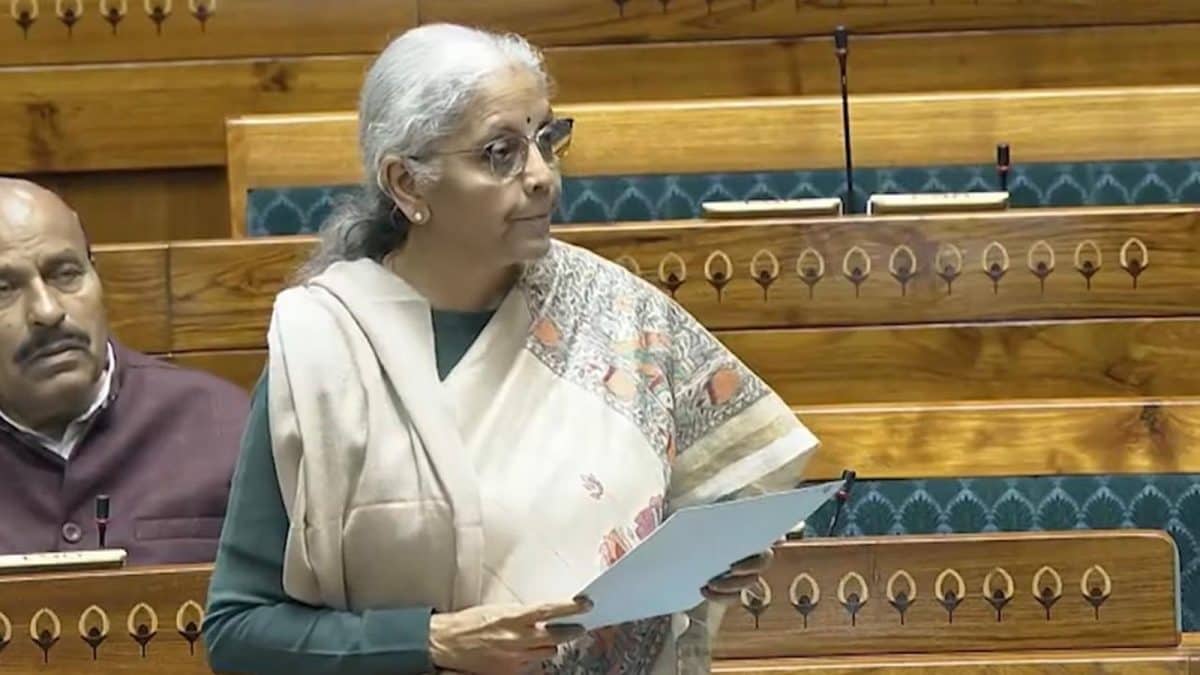
Finance Minister Nirmala Sitharaman replies to the discussion on the Central Excise (Amendment) Bill, 2025, in the Lok Sabha.
Finance Minister Nirmala Sitharaman on Wednesday said higher prices or taxes on tobacco products are intended to act as a deterrent so that people would not get into the habit. She said that even before the GST regime, tobacco rates were increased annually. The finance minister said this during her reply to the discussion on the Central Excise (Amendment) Bill, 2025, in the Lok Sabha.
The bill seeks to revise excise duties on tobacco and related products after the GST compensation cess, currently levied on ‘sin goods’ such as cigarettes, chewing tobacco and nicotine-based items, expires next year.
“Even in India, prior to GST, tobacco rates were increased annually. This was primarily due to health-related concerns, as higher prices or taxes were intended to act as a deterrent so that people would not get into the habit,” Sitharaman said during her reply.
The proposed legislation is part of a broader tax restructuring exercise around tobacco and pan masala. On Monday, Sitharaman introduced two bills that aim to maintain a high tax burden on these products while repurposing the levy structure.
The Central Excise (Amendment) Bill, 2025 proposes a new excise duty framework for tobacco products, ensuring continued revenue once the compensation cess lapses. Separately, the Health Security se National Security Cess Bill, 2025, seeks to impose a cess on pan masala and other notified goods, with proceeds earmarked for healthcare and national security initiatives.
The shift is designed to ensure that the effective tax incidence on demerit goods remains unchanged even after the cessation of the cess, which was originally introduced alongside the rollout of GST in 2017 and later extended to cover Covid-related liabilities.
Defending the policy approach, Sitharaman emphasised the need to sustain deterrence-based taxation on harmful products. Opposition members raised objections during the debate, with some of them questioning lack of health warnings in the bill and others saying the cess-based collections are not shared with states.
Debate on the bill is expected to continue this week as the government seeks passage of key tax measures ahead of the phase-out of the cess by March 2026.
 Click here to add News18 as your preferred news source on Google.
 December 03, 2025, 18:10 IST
Read More

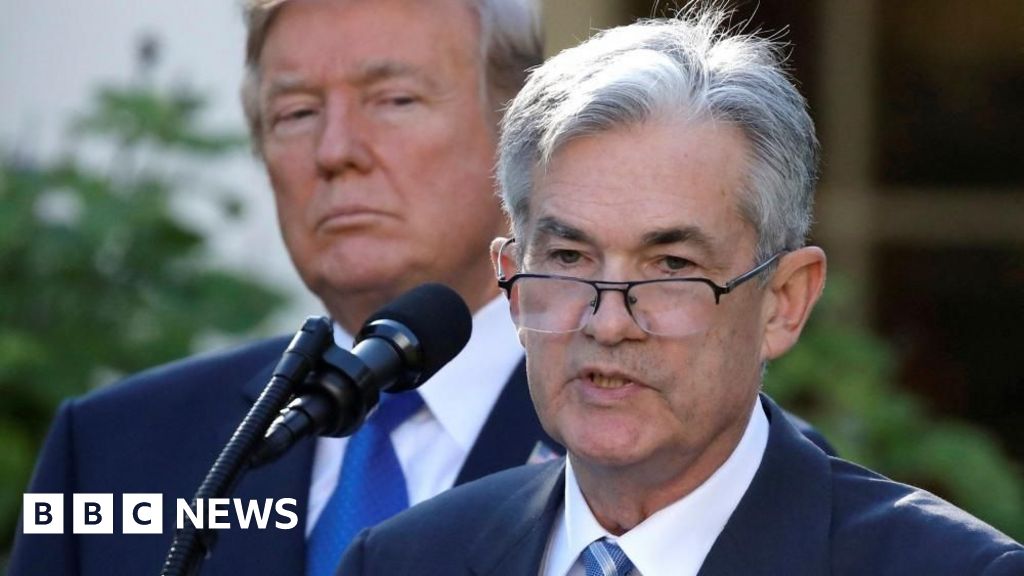
Powell’s term is nearing its end and the US Senate is considering Trump’s nominee for his replacement, Kevin Warsh. A key Republican, Thom Tillis, has withheld his support for Warsh unless the Trump administration would drop its investigation into Powell.
Business
Intel bags big gains! Chipmaker’s shares jump 26% on blockbuster results; how Trump admin benefits – The Times of India
Intel share price soared sharply on Friday after the chipmaker delivered a first-quarter performance that exceeded market expectations. And the win was not just for the chipmaker, but also the whole of US!The stock climbed 26.7% during trading on Friday, marking what could be its strongest single-day gain since 1987. Momentum continued after the closing bell, with shares rising a further 20% in after-hours trading as investors reacted to signs of a sustained turnaround driven by artificial intelligence.Intel reported revenue of $13.58 billion (€11.6bn) for the quarter, ahead of the $12.3 billion (€10.5 bn) forecast and up 7.2% from a year earlier. Adjusted earnings per share came in at $0.29, far exceeding expectations of $0.01.A key contributor to this performance was the company’s Data Centre and AI (DCAI) division, which delivered revenue of $5.05 billion (€4.2bn), up 22.4% year-on-year and well above analyst estimates of $4.41 billion (€3.77bn). The results indicate strong demand for Intel’s Xeon 6 processors and Gaudi 3 AI accelerators, particularly among enterprise clients and cloud service providers.Chief executive Lip-Bu Tan pointed to a broader shift in artificial intelligence usage as a major factor behind the growth. He said, “the next wave of AI will bring intelligence closer to the end user, moving from foundational models to inference to agentic.” He added, “This shift is significantly increasing the need for Intel’s CPUs and wafer and advanced packaging offerings.”The company also issued an upbeat outlook for the second quarter, forecasting revenue in the range of $13.8 billion (€11.8billion) to $14.8 billion (€12.6billion), surpassing investor expectations of $13 billion (€11.1billion).
But how is Washington winning?
The rally has had a direct impact on the US administration’s investment in Intel. In 2025, during a period of severe financial strain for the company, the administration of Donald Trump acquired a 9.9% stake in a move aimed at stabilising the business. The government invested $8.9 billion (€7.8bn) at a share price of $20.47 (€18.01), with $5.7 billion (€5bn) of that amount coming from previously approved but unpaid grants, according to the Euro News.At the time, Intel was facing multi-billion dollar losses and operational challenges, prompting concerns over its viability. As part of the intervention, the company cancelled planned factory projects in Germany and Poland, redirected focus towards US-based manufacturing, and reduced its global workforce by 25%, cutting around 25,000 jobs.Following the latest jump, Intel’s shares are now trading at $81.3 (€71.5), representing an increase of nearly 300% since the government first took its stake. The sharp rise highlights how the company’s improved financial performance has translated into substantial gains for the US administration.

Statistics Jersey says there have been “sharp increases” in some energy prices.
Source link


Mom’s Microwaved Coffee Won’t Stand a Chance With This Ember Smart Mug Deal

Giants legend Lawrence Taylor, 67, hospitalized after medical emergency: report

Here’s real update on POTUS’s health

-

 Fashion1 week ago
France’s LVMH Q1 revenue falls 6%, shows resilience amid Iran war
-

 Tech1 week ago
CYBERUK ’26: UK lagging on legal protections for cyber pros | Computer Weekly
-

 Sports5 days ago
WWE WrestleMania 42 Night 2: Live match results and analysis
-

 Sports1 week ago
Faheem Ashraf backs Islamabad United’s push, calls league a ‘career-changing platform’
-

 Sports5 days ago
NCAA men’s gymnastics championship: All-time winners list
-
 Business1 week ago
PepsiCo earnings beat estimates as North American food business improves
-

 Tech1 week ago
Anthropic Plots Major London Expansion
-
 Business1 week ago
Oil prices fall again amid Middle East ceasefire hopes