

Business
New electric car market suffers smallest growth since December 2023


November was the new electric car market’s weakest month of growth in nearly two years, figures show.
Some 39,965 new pure battery electric cars were registered last month, the Society of Motor Manufacturers and Traders (SMMT) said.
That was up 3.6% from November 2024, which was the smallest year-on-year increase since December 2023, when registrations declined by 34.2%.
That sharp fall was attributed to supply chain issues and a stronger than usual December 2022.
The overall new car market fell by 1.6% last month, with 151,154 new cars registered.
The SMMT said this sixth monthly fall in registrations this year was driven by a 5.5% decline in demand from private buyers.
Purchases for fleets owned or leased by businesses or other organisations edged up 0.2%.
SMMT chief executive Mike Hawes said: “Even in a fragile market, zero emission vehicle uptake continues to rise, which is exactly what we need.
“But the weakest growth for almost two years – ahead of Government announcing a new tax on EVs (electric vehicles) – should be seen as a wake-up call that sustained increase in demand for EVs cannot be taken for granted.
“We should be taking every opportunity to encourage drivers to make the switch, not punishing them for doing so, else the ambitions of Government and industry will be thwarted.”
In last week’s Budget, Chancellor Rachel Reeves announced that drivers of battery electric cars will be charged 3p per mile for electric Vehicle Excise Duty from April 2028.
This is in response to a huge reduction in revenue from fuel duty as more drivers switch from petrol or diesel cars to EVs.
She also extended grants for the purchase of new EVs until 2030.
Battery electric vehicles took a market share of 22.7% during the first 11 months of the year.
Under the Government’s zero-emission vehicle mandate, at least 28.0% of new cars sold by each manufacturer in the UK in 2025 are required to be zero emission, which generally means pure electric.
But green consultancy New Automotive said its analysis shows this year’s EV sales target is 21.7% once flexibilities are taken into account.
A Department for Transport spokesperson said: “We’re supporting the transition to EVs with £7.5 billion of investment, including £1.3 billion announced in the Budget to extend the (new EV purchase) grant, and a further £200 million to support the roll out of new chargepoints.”
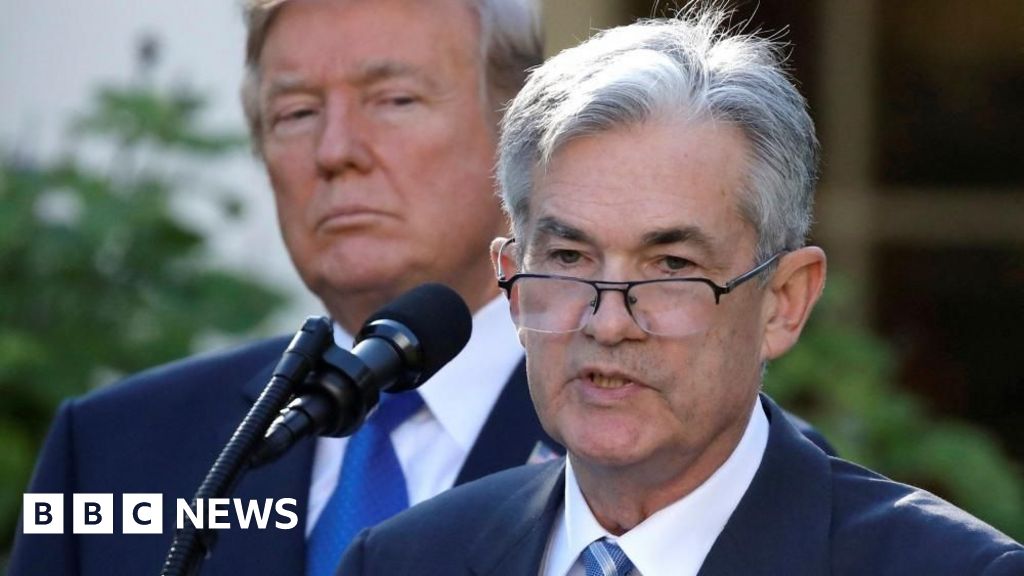
Powell’s term is nearing its end and the US Senate is considering Trump’s nominee for his replacement, Kevin Warsh. A key Republican, Thom Tillis, has withheld his support for Warsh unless the Trump administration would drop its investigation into Powell.
Business
Intel bags big gains! Chipmaker’s shares jump 26% on blockbuster results; how Trump admin benefits – The Times of India
Intel share price soared sharply on Friday after the chipmaker delivered a first-quarter performance that exceeded market expectations. And the win was not just for the chipmaker, but also the whole of US!The stock climbed 26.7% during trading on Friday, marking what could be its strongest single-day gain since 1987. Momentum continued after the closing bell, with shares rising a further 20% in after-hours trading as investors reacted to signs of a sustained turnaround driven by artificial intelligence.Intel reported revenue of $13.58 billion (€11.6bn) for the quarter, ahead of the $12.3 billion (€10.5 bn) forecast and up 7.2% from a year earlier. Adjusted earnings per share came in at $0.29, far exceeding expectations of $0.01.A key contributor to this performance was the company’s Data Centre and AI (DCAI) division, which delivered revenue of $5.05 billion (€4.2bn), up 22.4% year-on-year and well above analyst estimates of $4.41 billion (€3.77bn). The results indicate strong demand for Intel’s Xeon 6 processors and Gaudi 3 AI accelerators, particularly among enterprise clients and cloud service providers.Chief executive Lip-Bu Tan pointed to a broader shift in artificial intelligence usage as a major factor behind the growth. He said, “the next wave of AI will bring intelligence closer to the end user, moving from foundational models to inference to agentic.” He added, “This shift is significantly increasing the need for Intel’s CPUs and wafer and advanced packaging offerings.”The company also issued an upbeat outlook for the second quarter, forecasting revenue in the range of $13.8 billion (€11.8billion) to $14.8 billion (€12.6billion), surpassing investor expectations of $13 billion (€11.1billion).
But how is Washington winning?
The rally has had a direct impact on the US administration’s investment in Intel. In 2025, during a period of severe financial strain for the company, the administration of Donald Trump acquired a 9.9% stake in a move aimed at stabilising the business. The government invested $8.9 billion (€7.8bn) at a share price of $20.47 (€18.01), with $5.7 billion (€5bn) of that amount coming from previously approved but unpaid grants, according to the Euro News.At the time, Intel was facing multi-billion dollar losses and operational challenges, prompting concerns over its viability. As part of the intervention, the company cancelled planned factory projects in Germany and Poland, redirected focus towards US-based manufacturing, and reduced its global workforce by 25%, cutting around 25,000 jobs.Following the latest jump, Intel’s shares are now trading at $81.3 (€71.5), representing an increase of nearly 300% since the government first took its stake. The sharp rise highlights how the company’s improved financial performance has translated into substantial gains for the US administration.
On the whole, Britain is not a nation of investors and the government wants that to change.
Following on from Rachel Reeves’ plans last year, the advertising campaign to create more retail investors is underway and with further changes afoot, the overall picture is one of Labour steering savers towards understanding why, and how, they can create better long-term returns with their money.
The cut to the cash ISA limit, however crude and unpopular, is one such upcoming change. We’ve just entered the final year of the £20,000 allowance being able to be put entirely into a cash ISA; as of April 2027, £8,000 of it will be reserved for investing-only. For those who don’t save over that amount annually it’ll make no material difference, but even the existence of the change can be argued is a prod to the consciousness of people to wonder if they should be doing something else entirely.
Then there’s targeted support.
Among industry insiders there is hope this could make a material difference, given time – in essence, those who have significant savings in cash being able to be spoken to by their bank or provider over other options, potentially including investing.
At Innovate Finance this week, a key summit of UK FinTech Week,The Independent heard from a senior executive at one neobank that the average client with them had savings in excess of £15,000 – precisely the sort of consumer who could benefit from targeted support to explain how, over the long term, they might be better off putting a portion of that excess cash into… well, something other than cash, which loses its value over time due to inflation.
Another suggested an uptick in app users branching out from just having current and savings accounts, to other products within their sphere including stocks and shares ISAs – where investing returns will be tax free for consumers.
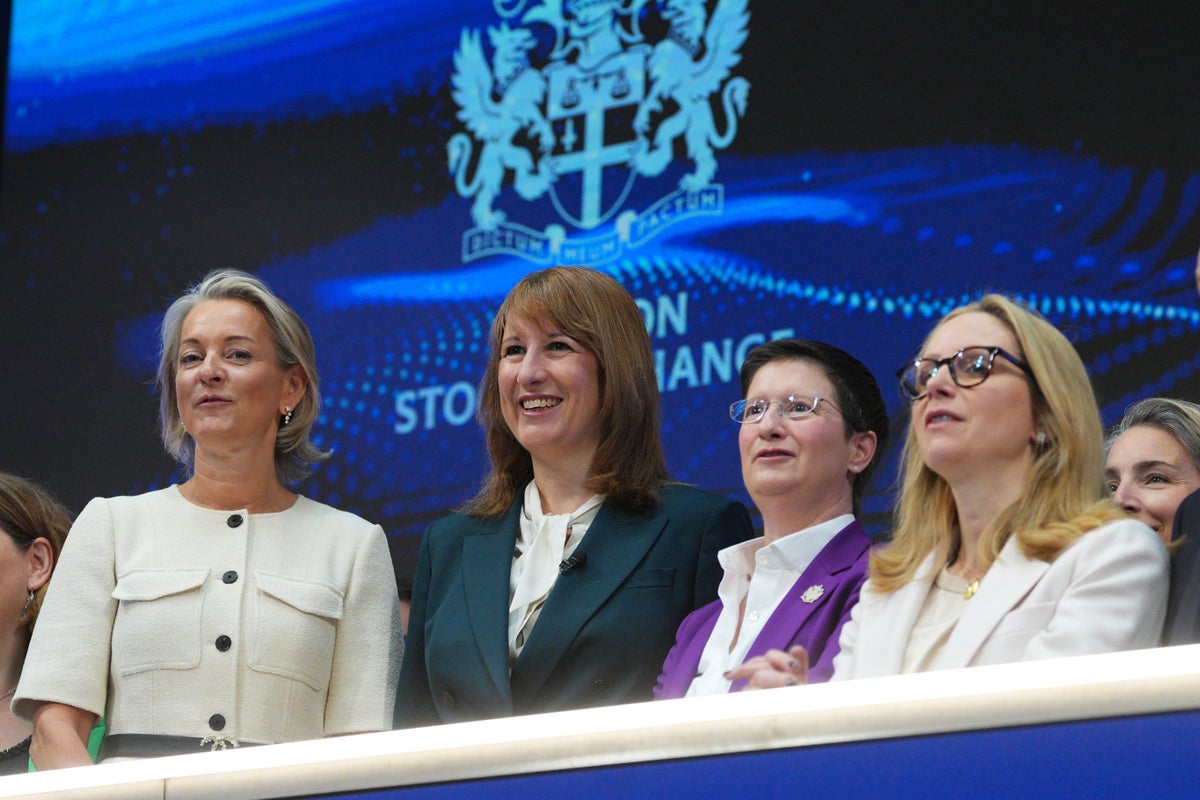
Economic secretary to the Treasury Lucy Rigby launched the nationwide ad campaign, along with chancellor Ms Reeves, at the London Stock Exchange on Thursday.
“With greater awareness of the benefits of investing, more people will be able to make informed decisions about how to make their savings work harder for them,” Ms Rigby said. “That will mean greater prosperity and financial resilience for households across the country and strengthened domestic capital markets too.”
The aforementioned plans and prospects certainly all align with raising awareness. That is a first step.
But there are greater key issues to deal with.

Get a free fractional share worth up to £100.
Capital at risk.
Terms and conditions apply.
ADVERTISEMENT
Get a free fractional share worth up to £100.
Capital at risk.
Terms and conditions apply.
ADVERTISEMENT
The advert campaign with Savvy the squirrel – conversational cab rides, explain-it-all website and more – will hopefully fill some painful gaps in the first instance around British people’s knowledge around the subject. Unlike in the US and several European countries, where investing is fairly commonplace, in the UK it’s not often spoken about, let alone fully understood.
Research from Barclays and their Investment Readiness Index showed this week that over a third of people (34 per cent) say fear of losing money is their main reason for not starting to invest, while nearly a quarter (23 per cent) said they believed there was a chance that a portfolio of well-known global companies could become “totally worthless” within five years.
Barclays’ report added for context that outcome was “an extremely unlikely” one.
But to really change some of those would-be investors’ minds, perhaps the response should have been more blunt. Perhaps the Treasury, the government and the campaign as a whole could stand to be a bit more…direct.
There is, in all probability, next to no chance that such a mix of companies would become worth zero in five years – unless something genuinely catastrophic happens to the world in which case we’ve all got more important issues to deal with than our portfolio performance. Maybe the Barclays report itself could likewise have benefited from feeling more freely able to state as such?
So, yes, financial education is absolutely one part, but so too is the language and understanding and framing of risk for people.
Articles, videos, all the learning activities across the web and within companies to help introduce people to investing – in every one of them you’re liable to find the disclaimer-style warning along the lines of: investments can go up as well as down, you may get back less than you invest and so on. Some find it off-putting to begin with, some barely even notice it.
In the words of the FCA, you must always “give a balanced impression of the benefits and risks of an investment product or service”.
That same pointing-out-of-the-risks wording and tone is another aspect which is being re-evaluated and could be switched up.
Now, while nobody wants that removed or watered down unduly to the point that bad actors or bad products are being pushed on newly introduced people to investing, there is still a misrepresentation of what risk means – it’s not always about you could lose all your money.
And, the reward (in theory) for taking on board risk is the possibility for higher returns, over time, than just cash alone (through interest) would give you.
Industry insiders have long also pointed out that the same – or reverse – warning is not applied to cash savings products: the risk here being you lose buying power over time due to inflation.
So language, as well as education, must remain on the table to improve and perhaps nudge people more forcefully towards a choice which helps them, similarly to reminding them to check employer contributions to their workplace pensions or taking out travel insurance before they fly.

There will still be one remaining gap though, even after people tentatively read the info, breathe in the adverts and eventually follow Savvy the squirrel down a new journey to take the plunge in investing: where are those people starting?
The ad campaign will not direct people to choose a particular platform or product, though many – Barclays, Hargreaves Lansdown, NatWest and more – are sponsoring the campaign and will be placed on the website as a result. But people still have to choose, and that particular analysis paralysis point has already left many ready to take the first steps, but unsure where to place their feet.
There are more new stocks and shares ISA providers available, loads of low-cost platforms as well as established, recognised names to choose from and deciding which suits any given person’s initial investment plan is as much a key decision as parting with their first few pounds in the first place.
It is important, for the long-term wealth of families, that more people start to invest. It is a positive thing that more information is therefore being pushed in front of them, to be able to make that call in an informed fashion.
But the reason it’s all needed in the first place is an overabundance of caution, a generational stepping-away from investing as a run-of-the-mill part of individual money management. Getting Brits back on board might therefore require less, not more, of that gentle approach to remedy the situation.


AI-Designed Drugs by a DeepMind Spinoff Are Headed to Human Trials
US justice department drops probe into Fed chairman Jerome Powell

Offset teases new album plans after recent shooting accident

-

 Fashion1 week ago
France’s LVMH Q1 revenue falls 6%, shows resilience amid Iran war
-

 Tech1 week ago
CYBERUK ’26: UK lagging on legal protections for cyber pros | Computer Weekly
-

 Sports5 days ago
WWE WrestleMania 42 Night 2: Live match results and analysis
-

 Sports5 days ago
NCAA men’s gymnastics championship: All-time winners list
-
 Business1 week ago
PepsiCo earnings beat estimates as North American food business improves
-

 Sports1 week ago
Faheem Ashraf backs Islamabad United’s push, calls league a ‘career-changing platform’
-

 Tech1 week ago
Anthropic Plots Major London Expansion
-
 Business1 week ago
Oil prices fall again amid Middle East ceasefire hopes