

Business
GM’s new product chief Sterling Anderson eyes technology renaissance for automaker


GM Chief Product Officer Sterling Anderson during the automaker’s “GM Forward” event on Oct. 22, 2025 in New York City.
GM
DETROIT — General Motors’ newest product and technology executive has said he thinks of the Detroit automaker as a canvas. One that can be curated, retouched or even torn apart.
After roughly six months as executive vice president and chief product officer, Sterling Anderson appears to be putting all three ideas to work as he oversees the company’s vast product portfolio — from the vehicles themselves to the software powering them.
Anderson, who left the self-driving car company Aurora Innovation that he co-founded to join GM in June, has quickly become the most influential product executive in more than 15 years, outside of GM President Mark Reuss.
He has consolidated power to oversee “the end-to-end product lifecycle” of GM vehicles, including manufacturing engineering, battery, software and services product management, and engineering teams, according to GM.
“My priority is to accelerate the pace of innovation. One of the ways we do that is with this disaggregation of, or this abstraction of, software from hardware,” he told CNBC during an Oct. 22 technology event in New York. “That’s the point of the role, I think, is it brings together all of these pieces into a unified approach to how we do product going forward.”
Since then, the company’s acclaimed heads of software and artificial intelligence have unexpectedly exited the company after relatively short tenures. Their main responsibilities related to vehicles now fall under Anderson.
GM attributed the abrupt departures of Dave Richardson, senior vice president of software and services engineering, and Barak Turovsky, head of AI, to restructuring efforts.
Mary Barra, Chair and CEO of General Motors (right to left), Mark Reuss, President, Sterling Anderson, Chief Product Officer, and Dave Richardson, Senior Vice President Software and Services Engineering at “GM Forward” on Wednesday, October 22, 2025 in New York.
GM
“We are strategically integrating AI capabilities directly into our business and product organizations, enabling faster innovation and more targeted solutions,” a GM spokeswoman said about Turovsky’s departure in an emailed statement last week.
It’s another indication of Anderson’s strategy. He previously told CNBC that for GM to succeed, software and product must be thought of as one and the same rather than as separate units, like they have been in recent years.
Anderson said he spent the first months of his GM tenure “in a listen mode,” immersing himself in the automaker’s operations.
“What that five months of listening has allowed me to do is really fine tune and target how we’re going, not just kind of what we’re going to innovate on, but how we’re going to do it,” he said in the October interview.
A third executive is also leaving soon, as Baris Cetinok, senior vice president of software and services product management, will depart the company effective Dec. 12, as first reported by CNBC.
Unlike Richardson and Turovsky, the company did not attribute his departure to the restructuring. Three sources familiar with the situation who spoke anonymously because the discussion was private told CNBC that Cetinok left to pursue another opportunity.
Cetinok, Richardson and Turovsky either declined to comment or did not respond to requests for comment about their departures. Cetinok and Richardson joined GM in 2023, while Turovsky was hired in March.
‘Silicon Valley cowboy’
Anderson, a former McKinsey & Co. consultant turned Tesla executive, said before he joined GM, he had thought of the automaker more of a comedic caricature rather than a canvas that he would help turn into a modern masterpiece.
Anderson said CEO Mary Barra and Reuss, whom he reports to, helped him break down that “old-world automotive” caricature and concerns about employees of the automaker not supporting his efforts.
“I was really worried about it, right? I’m the ‘Silicon Valley cowboy’ that’s coming into Detroit and, you know, ‘pew pewing’ his way through an innovation story with a team that I was concerned wouldn’t receive that well. I found it quite different from what I’d expected,” Anderson said.
His appointment is a refocus for the automaker on software-defined vehicles and autonomy. He said GM’s goal is to build an autonomous vehicle, which comes a year after the company disbanded its majority-owned Cruise AV business following years of development and billions of dollars in capital.
New York Times columnist Andrew Ross Sorkin and Chair and CEO of General Motors Mary Barra speak onstage during the 2025 New York Times Dealbook Summit at Jazz at Lincoln Center on December 03, 2025 in New York City.
Michael M. Santiago | Getty Images News | Getty Images
“Just be clear, we’re developing a self-driving product,” he told CNBC. “It’s a self-driving product that can be safe without any handbacks to the human in safety critical situations.”
Barra on Wednesday cited Anderson and the automaker’s past efforts in autonomous vehicles as reasons why GM is “well positioned” to achieve autonomous highway driving in its vehicles beginning in 2028.
“As we talk about artificial intelligence, autonomous driving is one of the ultimate applications that I still strongly believe in,” Barra said at The New York Times DealBook Summit, reconfirming the automaker’s “personal autonomous vehicle” plans rather than Cruise robotaxis.
Anderson is considered a leading expert in vehicle autonomy. Before co-founding self-driving firm Aurora, he led Tesla’s Model X program and the team that delivered its “Autopilot” advanced driver assistance system. He also developed the Massachusetts Institute of Technology’s “Intelligent Co-Pilot,” a semi-autonomous vehicle safety system.
Anderson, who holds a master’s and Ph.D. in robotics from MIT, said it took several conversations for him to leave Aurora, which he thought he “would die with.”
He isn’t alone in his change of heart; however not many have lasted long at the automaker. Several other current and former Silicon Valley executives have voiced similar optimism about GM as well as its longstanding CEO and president — both of whom have spent their entire careers at the automaker as “GM lifers.”
Richardson previously hailed working for Barra, who he reported to before Anderson, as “an opportunity of a lifetime.” Cetinok previously described his position as “a product person’s dream” in an interview with CNBC.
Jens Peter “JP” Clausen, who led Tesla’s manufacturing expansion and worked at Lego and Google, partly credited the “opportunity to work for a leader like” Barra as a reason to join GM as its head of manufacturing before an unexpected departure after only one year.
The accolades have gone both ways. When Anderson’s appointment with GM was announced in May, Barra and Reuss hailed Anderson as being equipped to “evolve” and “reinvent” the automaker’s operations.
In addition to Anderson’s new product unit, Reuss continues to oversee the automaker’s manufacturing, design, marketing and sales, among other operations.
Tech execs
The global automotive industry has battled for years to better integrate technology into vehicles — from their production to consumer-facing software and remote, or “over-the-air,” updates like Tesla pioneered.
GM has taken an aggressive approach to tech by hiring leaders from Tesla and companies such as Apple and Google. However, many times, those executives have had short tenures with the company, such as the three most recent departures.
“[Traditional U.S. automakers] have very much had a significant struggle with understanding software and electronics technology, and that has caused them to have a parade of experts quote ‘coming in to help,'” said Peter Abowd, an engineer turned automotive and technology consultant.

Abowd, general manager of engineering excellence at consulting firm Envorso, attributed the executive turnover to “a misapplication of skills and talent,” as well as unrealistic expectations and overwhelming responsibilities in a company as large as GM and an industry as complex as the automotive world.
“It’s just kind of setting the person up for a bit of failure,” Abowd said. “In a couple years, you can’t culturally shift an organization … so the best thing to do is to part ways.”
That kind of turnover has led automakers like GM to regularly pivot in different directions, including in-vehicle technologies, electric vehicle batteries and other areas not traditionally “core” to the automotive industry.
Barra, who is GM’s longest-serving CEO since the company’s founder, has become known for hiring executives at opportunistic times based on the company’s top priorities, which now appear to largely land under Anderson.
GM “is really good at a lot on things” that aren’t necessarily apparent to those outside the company, according to Anderson. He said he believes combining his experience with fast-moving companies such as Tesla and Aurora and GM’s “massive machine” and resources will better position the automaker for the future.
“I view it as a canvas,” Anderson said. “This is an extraordinary opportunity for innovation, and I’d be remiss not to see what I can do for it.”




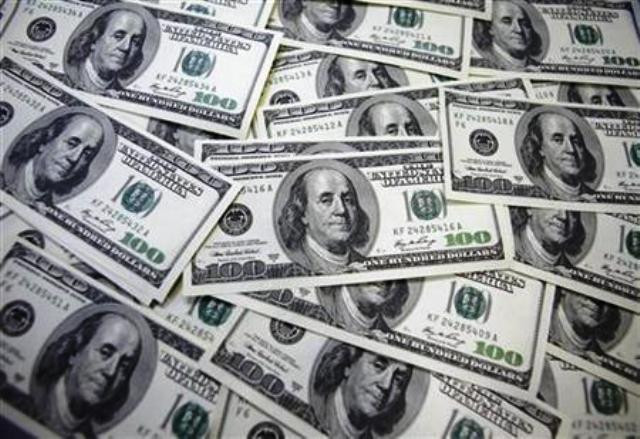
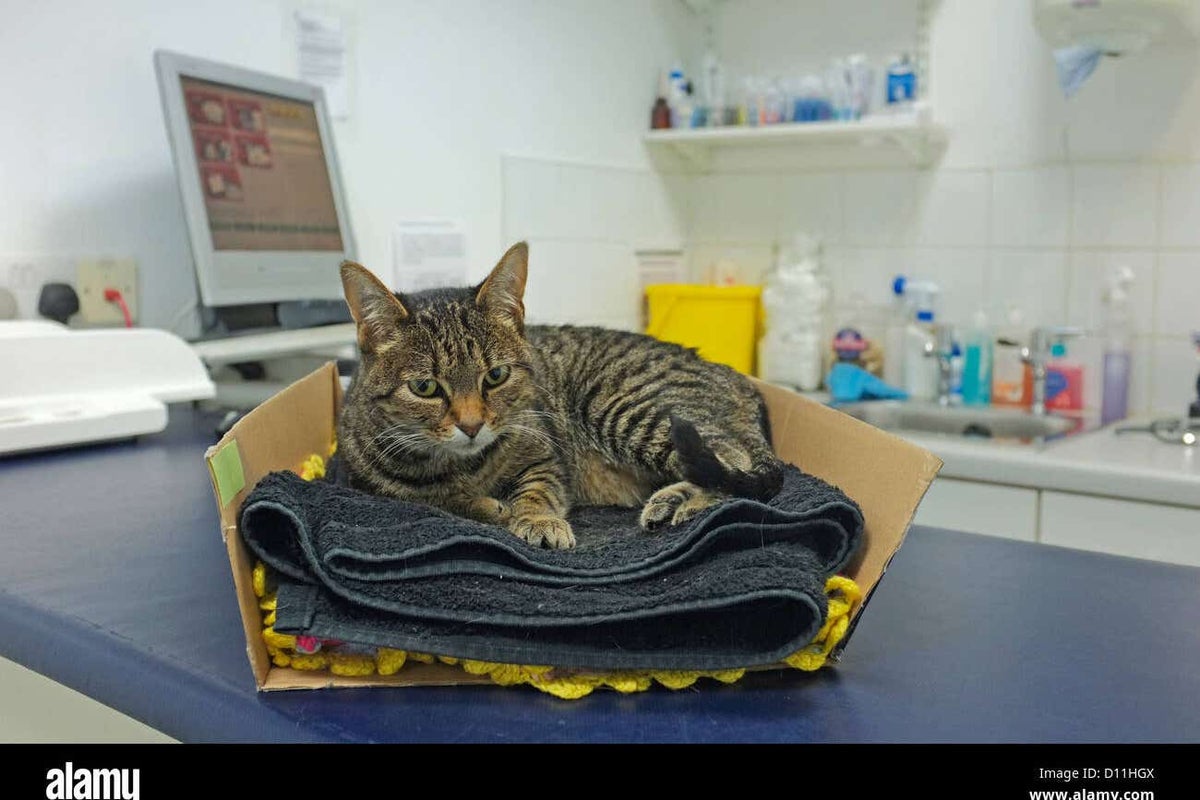
Vets will be legally bound to prescription fee caps and publishing price lists among new measures which will start coming into force later this year, the competition watchdog has announced.
The Competition and Markets Authority (CMA) said its final reforms for the sector will help pet owners better navigate the vet services market.
Other legally binding measures will include a price comparison website and mandatory branding by the large groups to boost competition and drive down prices.
The CMA said pet owners using a vet practice that is part of a larger chain can expect to see changes before Christmas, including standard price lists.
The measures follow the CMA finding that fees have risen at almost twice the rate of inflation, with pet owners not being given enough information about their vet and the prices of treatments.
Martin Coleman, chairman of the independent Inquiry Group, said: “This is the most extensive review of veterinary services in a generation, and today’s reforms will make a real difference to the millions of pet owners who want the best for their pets but struggle to find the practice, treatment and price that meets their needs.
“Too often, people are left in the dark about who owns their practice, treatment options and prices – even when facing bills running into thousands of pounds.
“Our measures mean it will be made clear to pet owners which practices are part of large groups, which are charging higher prices, and for the first time, vet businesses will be held to account by an independent regulator.
“Our changes put pet owners at the centre but also help vets by enhancing trust in the profession and protecting clinical judgment from undue commercial pressure – and that is important to ensure our pets continue to get the best care.”
The CMA said practices must publish a comprehensive price list for standard services, including consultations, common procedures, diagnostics, written prescriptions and cremation options under its new rules.
Prescriptions – for which “many” practices charge £30 or more for each – are to be capped at £21 for the first medicine and £12.50 for any additional medicines.
Practices must also provide a written estimate in advance for any treatment expected to cost £500 or more, including aftercare costs, as well as an itemised bill.
Emergency care will be the only exception for written estimates.
Prices and information about who owns the surgery are to be made available to pet owners through the Royal College of Veterinary Surgeons (RCVS) ‘Find a Vet’ service, which will share the data with third-party comparison sites.
Vet businesses must make it clear whether they are part of a group or an independent business, with details of group ownership to be displayed on signs at the surgery and online.
British Veterinary Association president Rob Williams said: “The majority of the CMA’s measures focus on increasing transparency and information, which will help pet owners make more informed choices and support competition, which is a really positive step.”
He added: “Delivering highly skilled veterinary medicine is costly and whilst we recognise prices have risen sharply in recent years this is due to a number of factors, including the higher costs all businesses are experiencing – and vet practices are not immune.
“Plus, thanks to advances in diagnostics and medical technology over the last 20 years, vets can now do much more to manage disease and injury in animals, whereas in the past the only option available may have been to euthanase.
“Owners today also have a greater expectation of their vet, with many expecting human quality healthcare for their pets and whilst this is possible to deliver, it comes at a cost.”
Business
Gold price prediction today: Pressure on gold prices to continue on March 24, 2026 amid US-Iran war? Check outlook – The Times of India

Gold price prediction today: Gold prices are likely to remain range-bound in the near future, says Praveen Singh, Head Currencies and Commodities, Mirae Asset ShareKhan
Source link

An Estée Lauder pop-up store is seen inside a Daimaru store on Nanjing Road in Shanghai, China, Aug. 6, 2021.
Costfoto | Future Publishing | Getty Images
Estée Lauder Companies said Monday that it is in talks with Spanish beauty group Puig to potentially merge the two companies.
“No final decision has been made, and no agreement has been reached,” Estée Lauder said in a statement.
Shares of the U.S. beauty company were down nearly 8% following the news, which was first reported by the Financial Times. Puig’s stock rose roughly 3%.
Puig owns major beauty brands including Charlotte Tilbury, Jean Paul Gaultier and Rabanne. The companies did not disclose any financial details of the potential deal.
Estée Lauder has been struggling amid ongoing headwinds from tariffs and its restructuring as it enacts its “Beauty Reimagined” turnaround plan to revitalize the business. In its second-quarter earnings report last month, the beauty retailer said it’s expecting a $100 million hit to its full-year profitability due to tariff impacts.
Estée Lauder’s stock has dropped roughly 25% this year.


How Jaxon Smith-Njigba’s contract extension impacts Seahawks

China sees rise in new FDI firms despite lower inflows
Vets to be legally required to publish price lists and cap prescription fees

Japan suffers shocking collapse to Venezuela in World Baseball Classic

Strategic oil stocks to be released ‘immediately’ in Asia and Oceania: IEA
New Income Tax Act 2025 To Take Effect From April 1: 10 Key Changes That Will Affect Your Money

-
 Sports1 week ago
Japan suffers shocking collapse to Venezuela in World Baseball Classic
-
 Entertainment1 week ago
Strategic oil stocks to be released ‘immediately’ in Asia and Oceania: IEA
-
Business1 week ago
New Income Tax Act 2025 To Take Effect From April 1: 10 Key Changes That Will Affect Your Money
-

 Sports1 week ago
Transfer rumors, news: Real Madrid open to Camavinga exit, as Premier League clubs circle
-

 Sports1 week ago
PCB files complaint over allowing Bangladesh to take review on penultimate ball – SUCH TV
-
 Business7 days ago
Stocks and pound rise as US rate call approaches
-
 Tech6 days ago
Justice Department Says Anthropic Can’t Be Trusted With Warfighting Systems
-

 Sports6 days ago
March Madness 2026 – How to watch in SA, start time, schedule, TV channel for NCAA championship basketball tournament