

Business
Musk’s Starlink lists premium satcom prices for India, then pulls them back saying ‘glitch’ made ‘dummy test data’ visible – The Times of India


NEW DELHI: Elon Musk’s Starlink on Monday announced inaugural prices for its satellite venture in India and, as expected, these were many times more than a regular high-speed broadband connection that is currently being provided by terrestrial providers such as Airtel and Reliance Jio.The company put a Rs 8,600 monthly tariff for its satcom services in India, with a hefty additional Rs 34,000 as one-time charge for the requisite hardware.However, as its premium pricing started to create hectic chatter on social media, especially when it’s still some time before it can launch services as the govt continues work on satcom spectrum allocation and its charges, the company withdrew the announcement from its website, blaming a “glitch” for making “dummy test data visible. “The Starlink India website is not live, service pricing for customers in India has not yet been announced, and we are not taking orders from customers in India. There was a config glitch that briefly made dummy test data visible, but those numbers do not reflect what the cost of Starlink service will be in India,” Lauren Dreyer, VP of Starlink Business Operations, said on X. “The glitch was quickly fixed. We’re eager to connect the people of India with Starlink’s high-speed internet, and our teams are focused on obtaining final government approvals to turn service (and the website) on,” she said.Earlier in the day, the company said its India services will “work in all weather” with an “over 99.9% uptime”. It promised that the services are easy to initiate. “Just plug in and start using,” the company said, while promising to provide “unlimited data” and a 30-day trial period.However, the prices – if true – would be a far cry to the dirt-cheap tariffs that Indian internet consumers are used to.On mobile phones, the price per GB of data is less than Rs 10, and monthly packages are under Rs 400 for unlimited 5G mobile data, for example on Airtel. For home broadband on optical fibre, the Sunil Mittal-led company charges just Rs 499 per for a connection which comes with a speed of 40MBPS. Not only this, at Rs 599 per month, they also offer 29 OTT streaming services. The installation charges for home broadband are just Rs 1,500 on Airtel, which itself is an advance payment and can be adjusted in future payments.On the other hand, Reliance Jio’s up to 30 MBPS speed entry-level plan for home broadband costs Rs 399 (excluding GST), with a one-time installation charge of Rs 2,500 (of which Rs 1,500 is refundable security).For Starlink, these are early days and despite giving out the consumer prices (though withdrawn now), the company is not in a position to talk about when it will begin services. This is because there is still no clarity on when the spectrum for satellite communications will be provided by the govt.There are currently discussions, and differences of opinion, between regulator Trai and the department of telecom (DoT) — the nodal ministry on communications matters — regarding the charges that satcom companies need to pay to the govt. Until these issues are resolved, there is no chance of a satcom service beginning consumer services in the country.Starlink, however, is in the process of doing the groundwork for beginning services. It has started hiring in India before services begin commercially while also starting work on setting up the requisite ground infrastructure. Also, it needs to get a final approval from the law-enforcement agencies regarding its infrastructure, including mandated interception and data privacy rules, before beginning any commercial operation.It is believed that while having an aspiration to build its business in India’s urban centres, Starlink will initially find higher takers in rural and mobile unserved areas, apart from specialised use cases in strategic areas such as defence, mining, maritime, and enterprises.
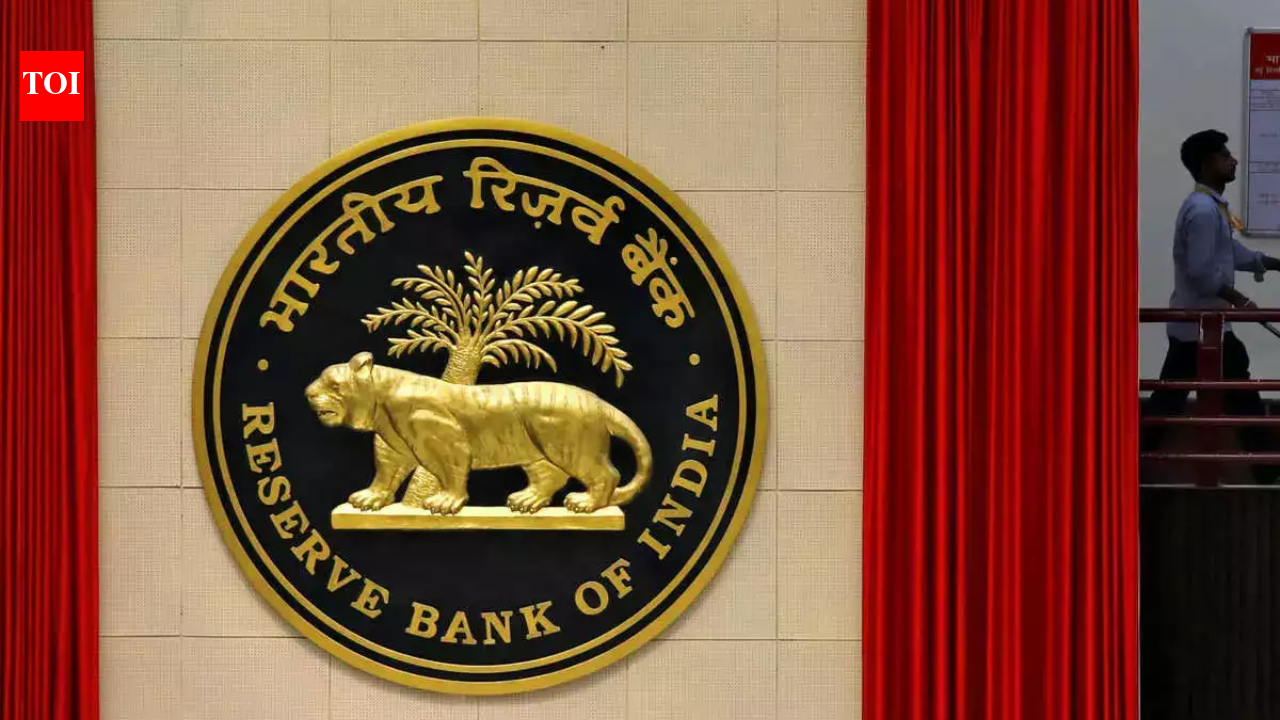
The Reserve Bank of India (RBI) on Monday decided against activating the countercyclical capital buffer (CCyB), indicating that current financial and credit conditions do not warrant an additional capital requirement for banks, PTI reported.The central bank said the decision followed a review and empirical assessment of indicators used under the CCyB framework.“Based on review and empirical analysis of CCyB indicators, it has been decided that it is not necessary to activate CCyB at this point in time,” RBI said in a statement.Under the RBI (Commercial Banks – Prudential Norms on Capital Adequacy) Directions, 2025, the CCyB framework is activated when financial conditions indicate rising systemic risks linked to excessive credit growth.The framework primarily relies on the credit-to-GDP gap as a key indicator, along with supplementary metrics.According to the RBI, the CCyB mechanism is intended to serve two broad objectives.Firstly, it requires a bank to build up a buffer of capital in good times, which may be used to maintain the flow of credit to the real sector in difficult times.Secondly, it achieves the broader macro-prudential goal of restricting the banking sector from indiscriminate lending in the periods of excess credit growth that have often been associated with the building up of system-wide risk.The framework was introduced globally after the 2008 financial crisis as part of measures proposed by the Group of Central Bank Governors and Heads of Supervision (GHOS) under the Basel framework to strengthen financial system resilience.
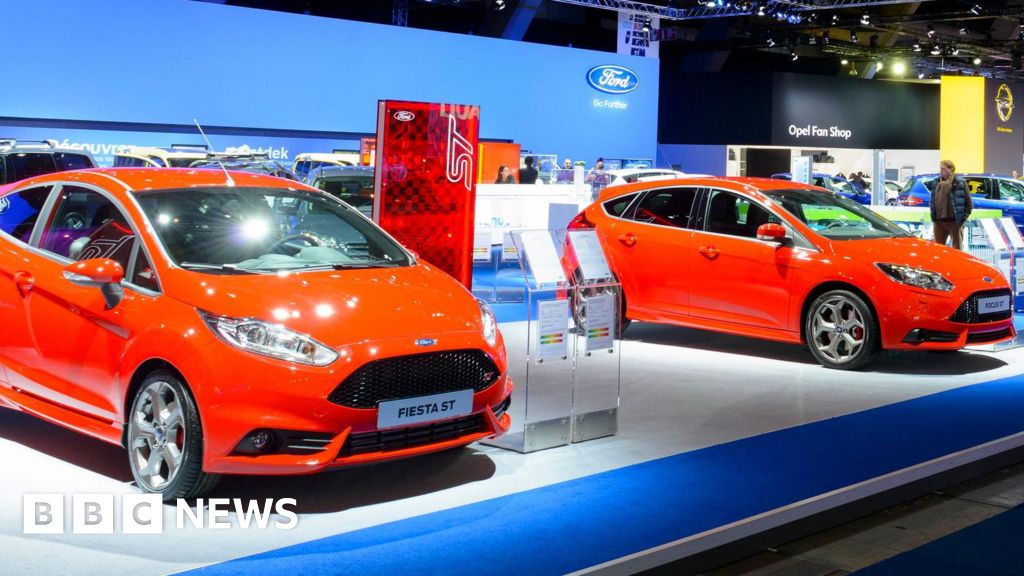
The company has announced plans to build seven new models in Europe including a small electric hatchback.
Source link

“Today’s policymaking is constrained by a more volatile external environment with more frequent and overlapping shocks, a rising public interest bill, in part reflecting market concerns with countries’ elevated debt, and the long-standing challenge of weak productivity growth,” he said.


UK’s clothing imports fall 3% in Q1, sharply lower than Q4 2025
RBI sees no signs of excess credit risk, keeps countercyclical capital buffer inactive

The Catastrophic Swatch x Audemars Piguet Launch Was Entirely Predictable and Utterly Avoidable

-

 Entertainment6 days ago
Conan O’Brien hat tricks as Oscar host
-

 Tech1 week ago
Could Contact-Tracing Apps Help With the Hantavirus? Not Really
-

 Fashion5 days ago
Italy’s Zegna Group’s Q1 growth boosted by strong organic performance
-

 Sports1 week ago
Bobby Cox, legendary Atlanta Braves manager who led 1995 World Series champions, dead at 84
-

 Entertainment1 week ago
Martin Short: Facing tragedy with joy
-

 Entertainment1 week ago
Tom Brady gets back at Kevin Hart during Netflix roast
-

 Sports1 week ago
Jacob Fatu unleashes vicious assault on Roman Reigns after World Heavyweight Championship loss at WWE Backlash
-

 Entertainment1 week ago
Martha Stewart: How to make an omelet