

Fashion
Prada to launch $930 ‘Made in India’ sandals after backlash

By
Reuters
Published
December 11, 2025
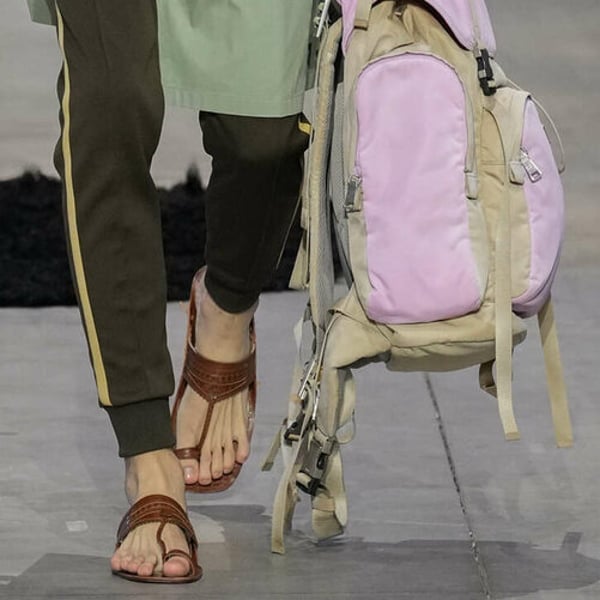
Prada will make a limited-edition collection of sandals in India inspired by the country’s traditional footwear, selling each pair at around 800 euros ($930), Prada senior executive Lorenzo Bertelli told Reuters, turning a backlash over cultural appropriation into a collaboration with Indian artisans.
The Italian luxury group plans to make 2,000 pairs of the sandals in the regions of Maharashtra and Karnataka under a deal with two state-backed bodies, blending local Indian craftsmanship with Italian technology and know-how.
“We’ll mix the original manufacturer’s standard capabilities with our manufacturing techniques,” Bertelli, who is chief marketing officer and head of corporate social responsibility, told Reuters in an interview. The collection will go on sale in February 2026 across 40 Prada stores worldwide and online, the company said. Prada faced criticism six months ago after showing sandals resembling 12th-century Indian footwear, known as Kolhapuri chappals, at a Milan show. Photos went viral, prompting outrage from Indian artisans and politicians. Prada later admitted its design drew from ancient Indian styles and began talks with artisan groups for collaboration.
It has now signed an agreement with Sant Rohidas Leather Industries and Charmakar Development Corporation (LIDCOM) and Dr Babu Jagjivan Ram Leather Industries Development Corporation (LIDKAR), which promote India’s leather heritage.
“We want to be a multiplier of awareness for these chappals,” said Bertelli, who is the eldest son of Prada founders Miuccia Prada and Patrizio Bertelli.
A three-year partnership, whose details are still being finalised, will be set up to train local artisans. The initiative will include training programmes in India and opportunities to spend short periods at Prada’s Academy in Italy.
Chappals originated in Maharashtra and Karnataka and are handcrafted by people from marginalised communities. Artisans hope the collaboration will raise incomes, attract younger generations to the trade and preserve heritage threatened by cheap imitations and declining demand.
“Once Prada endorses this craft as a luxury product, definitely the domino effect will work and result in increasing demand for the craft,” said Prerna Deshbhratar, LIDCOM managing director.
Bertelli said the project and training programme would cost “several million euros”, adding that artisans would be fairly remunerated.
Bertelli said Prada, which opened its first beauty store in Delhi this year, has no plans for new retail clothing shops next year or factories in India. “We have not planned yet any store openings in India, but it’s something that we are strongly taking into consideration,” he said, adding that this could come in three to five years.
The luxury goods market in India was valued at around $7 billion in 2024 and is expected to reach about $30 billion by 2030, according to Deloitte, as economic growth accelerates to 7% this year and disposable income among the middle and upper classes rises. The market, however, is dwarfed by China, which generated about 350 billion yuan ($49.56 billion) in value in 2024, according to Bain.
Most global brands have entered India through partnerships with large conglomerates like Mukesh Ambani’s Reliance group and Kumar Mangalam Birla’s Aditya Birla Group. Bertelli said that Prada would prefer to enter the country on its own, even if it took longer, describing India as “the real potential new market.”
© Thomson Reuters 2025 All rights reserved.




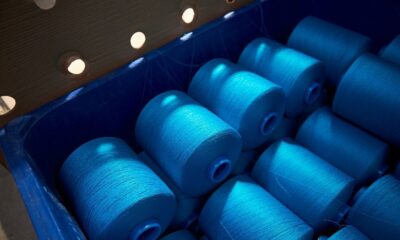



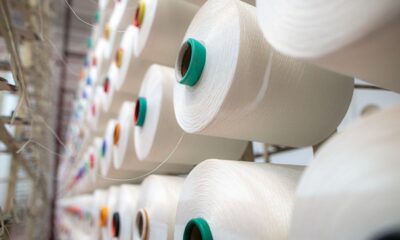




The facility will process natural fibres such as abaca, banana and pineapple into high-quality yarn, addressing long-standing challenges faced by local weavers who have relied on imported materials. This initiative is expected to create new markets for agricultural produce while providing additional income streams for farmers.
The DOST-PTRI, with DOST Region 12, will establish the Regional Yarn Production and Innovation Center in Philippine’s Cotabato to process natural fibres into yarn and support Mindanao’s textile industry.
The facility aims to boost farmer incomes, reduce reliance on imported yarn and strengthen local weaving communities through training, technology transfer and improved supply chain infrastructure.
During the first-quarter meeting of the Regional Research, Development, and Innovation Committee, Evangeline Flor P. Manalang, chief science research specialist of DOST-PTRI’s Technical Services Division, stated “The RYPIC will serve as a key facility to process our natural fibers into yarn and open opportunities for skills training among farmers and local stakeholders.” She also emphasised the project’s role in building a sustainable textile ecosystem in Soccsksargen.
The RYPIC complements existing facilities such as the Natural Textile Fiber Innovation Hub at Sultan Kudarat State University and forms part of broader national programmes including the Clothing and Textile Research Innovation and Investment Agenda (CATRINA) and the FRONTIER initiative. These efforts aim to strengthen the domestic textile value chain, reduce reliance on imports and support the government’s push to expand Telang Pinoy, as highlighted by President Ferdinand R. Marcos Jr. in his fourth State of the Nation Address.
Fibre2Fashion News Desk (JP)

International markets remained a key growth driver, with revenue rising 22 per cent, while the Americas saw a marginal 1 per cent decline. Comparable sales increased 2 per cent overall, with a 15 per cent rise internationally offset by a 3 per cent decline in the Americas.
Lululemon has reported revenue of $11.1 billion in FY25, up 5 per cent YoY, driven by 22 per cent international growth despite weak Americas sales.
Margins and profits declined, with EPS falling to $13.26.
The company expanded stores and repurchased shares.
Q4 showed modest growth but weaker profitability.
Lululemon expects FY26 revenue growth of 2-4 per cent amid ongoing macroeconomic challenges.
The gross profit remained flat at $6.3 billion, while gross margin contracted by 260 basis points to 56.6 per cent. Income from operations declined 12 per cent to $2.2 billion, with operating margin narrowing to 19.9 per cent. Diluted earnings per share (EPS) fell to $13.26 from $14.64 in FY24, Lululemon Athletica said in a press release.
The company continued to invest in expansion and shareholder returns, opening 44 net new stores to reach a total of 811 locations and repurchasing 5 million shares worth $1.2 billion. Lululemon ended the year with $1.8 billion in cash and cash equivalents, while inventories rose 18 per cent to $1.7 billion.
Andre Maestrini, interim co-CEO, president, and chief commercial officer at the company, stated, “Throughout 2025, we reported double-digit revenue growth in our international business and are taking action to incorporate learnings from across our regions to drive forward our strategies. Our teams are energised by the initial response to our recent product launches and continue to deliver successful guest activations globally. Looking ahead, we are encouraged by our opportunities in North America and around the world and are grateful to our teams for their commitment to delivering the products and experiences our guests love.”
In the fourth quarter (Q4) of FY25, revenue increased 1 per cent to $3.6 billion, with international growth of 17 per cent offsetting a 4 per cent decline in the Americas. However, profitability weakened, with operating income falling 22 per cent and gross margin declining by 550 basis points to 54.9 per cent. Quarterly diluted EPS dropped to $5.01 from $6.14.
Meghan Frank, interim co-CEO and chief financial officer at Lululemon, stated, “We are pleased to achieve fourth quarter revenue and EPS results ahead of our expectations. As we begin our new fiscal year, we are focused on executing on our action plan, offering new and differentiated products to our guests, and elevating their experiences with lululemon. Driving improvement in our full-price sales over the course of 2026 is also a key priority, particularly in North America, and will enable us to enhance our brand health and deliver long-term growth and value creation for shareholders.”
Looking ahead, Lululemon expects first-quarter FY26 revenue between $2.4 billion and $2.43 billion, with full-year revenue projected at $11.35 billion to $11.5 billion, representing growth of 2 per cent to 4 per cent. Diluted EPS is forecast in the range of $12.1 to $12.3 for FY26, as the company navigates macroeconomic uncertainties and evolving market conditions.
Fibre2Fashion News Desk (SG)

China’s shipment of garments and accessories increased **.* per cent year on year to $**.*** billion from $**.*** billion, driven by steady demand from key markets such as the US and EU, where retailers have begun restocking after cautious inventory management in ****. Meanwhile, exports of textile products, including yarns, fabrics and related articles, rose at a faster pace of **.* per cent to $**.*** billion from $**.*** billion, supported by stronger downstream manufacturing activity across Asia and improved order flows from emerging sourcing hubs.
In February **** alone, exports of textile yarns, fabrics and related articles were valued at $**.*** billion, while garment shipments stood at $**.*** billion, taking the combined monthly total to $**.*** billion. The relatively balanced contribution of textiles and apparel highlights a synchronised recovery across the value chain, from raw materials to finished goods.


Journalist points out major flaws in new scathing Prince Harry, Meghan book

Muslims celebrate Eid ul Fitr with joy, togetherness across the globe

Three weeks in, Iran war escalates beyond Trump’s control

Chinese firm to invest $15.34 million in garment factory at BEPZA

Tips and Advice for Buying Used or Refurbished Electronics

UAE savings strategies 2026 explained: Best apps, tools, budget rules and smart money hacks to beat rising cost of living in emirates – The Times of India

-
 Fashion1 week ago
Chinese firm to invest $15.34 million in garment factory at BEPZA
-
 Tech1 week ago
Tips and Advice for Buying Used or Refurbished Electronics
-
Business1 week ago
UAE savings strategies 2026 explained: Best apps, tools, budget rules and smart money hacks to beat rising cost of living in emirates – The Times of India
-

 Politics1 week ago
Iran threatens US-linked oil facilities after Kharg Island bombed
-

 Entertainment7 days ago
Strategic oil stocks to be released ‘immediately’ in Asia and Oceania: IEA
-

 Sports1 week ago
College Basketball Invitational abruptly cancels 2026 tournament
-

 Entertainment1 week ago
Meet one of the last true paparazzi
-

 Tech1 week ago
An Air Fryer That Makes Juicy Steak? Yes. It’s Nearly Half Off