Entertainment
Hugh Jackman advocates getting checked out for skin cancer
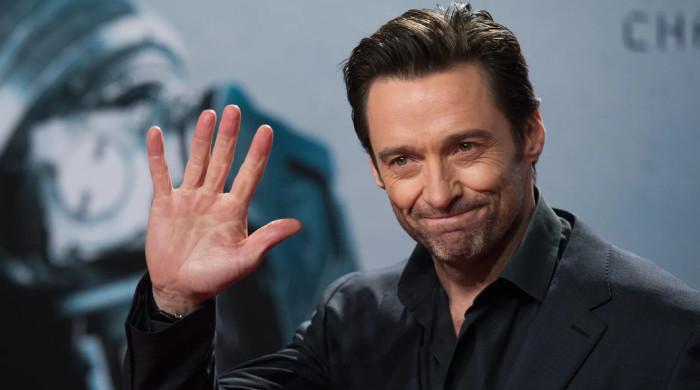
Hugh Jackman is once again urging people to take sun protection seriously after opening up about his ongoing battle with skin cancer.
During an appearance on The Howard Stern Show on Dec. 10, the actor reflected on how many times he has faced the disease and how important early action can be.
Jackman, now 57, shared that he has dealt with “like six skin cancers” over the years.
He explained that while melanoma and squamous cell carcinoma can be more dangerous, he has only experienced basal cell carcinoma, the most common and most treatable type when caught early.
Still, he stressed that even the least aggressive form shouldn’t be taken lightly, saying, “It’s a cancer and it grows. And if you don’t take it out, it’ll get into your bones and then you’ve got to take the bone out.”
His doctor has already warned him that more diagnoses are likely as he ages and his immune system changes.
Jackman noted that skin cancer often develops decades after the initial sun damage, adding, “All skin cancer, all of it happens 25 years before the cancer comes. And he said it could be one time where you got burned really badly. Just one.”
Growing up in Australia put him at higher risk, but Jackman emphasised that everyone should take the issue seriously.
He called it “the most preventable cancer” and encouraged regular skin checks. The actor also admitted that even after his first diagnosis, he still fell into the trap of chasing a tan while on vacation.
Reflecting on that now, he laughed at himself: “You’re an idiot… Be the pasty skin guy. Who cares?”
Jackman’s first experience with basal cell carcinoma happened in 2013 after his ex-wife Deborra-Lee Furness urged him to get a mark on his nose examined.
A makeup artist later noticed another spot while he was filming X-Men: Days of Future Past, leading him to become more vigilant.
In 2015, he shared that hearing the word “cancer” was always shocking, even though it’s common where he grew up. He admitted, “I never wore sunscreen growing up, so I was a prime candidate for it.”
Over the years, he has had several spots removed, three from his nose and one from his shoulder, and he continues to visit his doctor every three months for routine checkups.
Jackman’s message is simple but urgent, protect your skin, pay attention to changes, and get checked early.
His own experience serves as a reminder that sun damage lingers long after the burn fades, and taking action today can prevent a much harder battle years down the road.

Entertainment
Pakistan assures IMF of farm input tax hikes, cuts in uplift schemes
- Selected items to shift into 18% GST slab.
- Measures tied to completing IMF’s 2nd programme review.
- Islamabad targets $1.2 billion from EFF and RSF.
ISLAMABAD: Pakistan has committed to the International Monetary Fund (IMF) that it will raise tax rates on fertilisers, pesticides and sugary products, and move selected items to the standard 18% GST slab, The News reported on Friday.
These steps form part of Islamabad’s bid to successfully complete the second review and unlock the third $1 billion tranche under the $7 billion Extended Fund Facility (EFF), as well as the first $200 million tranche from the $1.4 billion Resilience and Sustainability Facility (RSF).
Further details of the IMF’s report on Pakistan’s economic performance have been released, with the Fund saying Pakistan has achieved most of the targets under the loan programme.
In its recently released staff report, the IMF projected that the balance of payment gap will continue to widen from the current fiscal year, reaching $3.253 billion by 2029–30, after the existing programme concludes. This projection signals that Pakistan may require another IMF programme in the near future.
The staff report says that contingency measures provide an important safeguard against fiscal risks.
If revenue were to fall short of expectations by the end of December 2025, the Pakistan authorities plan to adopt additional measures to safeguard the fiscal targets, including increasing excises on fertilisers and pesticides by five percentage points, introducing excises on high-value sugary items, and broadening the sales tax base by moving select items to the standard rate.
They are also prepared to reduce or postpone spending in response to lower revenues.
The government has also assured the Washington-based lender that it will fully deregulate the sugar sector, continue tariff adjustments in the power sector and reduce system losses and cut costs. A nationwide installation of point-of-sale systems for 40,000 large retailers will be completed over the next two years, while all four provinces will move toward harmonised sales tax procedures.
The IMF report notes that during the current fiscal year, Pakistan will restrict spending on new development schemes to 10% of the PSDP and will prioritise completion of around Rs2.5 trillion worth of ongoing projects.
From the next fiscal year, greater focus will be placed on climate-related development schemes. Public procurement will shift to digital e-pads, with the Auditor General mandated to submit a compliance report to the president by March 2026.
Under the social protection pillar, the Kafalat cash transfer under the BISP programme will increase to Rs14,500 per quarter from January 2026, while the number of beneficiaries will be expanded to 10.2 million families. Biometric verification for payments will remain mandatory, and the long-awaited e-wallet system will be launched by June 2026.
On energy reforms, the IMF has noted that the government has already decided to shift annual tariff rebasing from July to January 2026. Last fiscal year, the circular debt stock was reduced to Rs1.614 trillion.
By January 2026, the government aims to settle Rs1.2 trillion owed to commercial banks, out of which Rs660 billion will go to Pakistan Private Holdings Limited and the rest to the Central Power Purchasing Agency.
The plan also includes eliminating Rs128 billion in interest payments owed to IPPs and keeping the circular debt at zero inflow until fiscal year 2031.
The Fund highlights that 5.2 million income tax returns were filed in FY2024, while the number is expected to reach 7 million in FY2025. It acknowledges Pakistan’s progress on stabilisation, noting improvements in foreign exchange reserves, which have risen to $14.5 billion, and a 1.3% primary surplus delivered in FY2025.
Fiscal performance remains strong, with the primary surplus recorded at 1.3%, and the IMF report says this surplus was achieved in line with the programme target.
According to the report, within one year, foreign exchange reserves increased from $9.4 billion to $14.5 billion, and reserves are projected to rise further in the coming years.
The IMF says Pakistan has achieved its first current account surplus in 14 years and terms the primary surplus target for fiscal year 2025–26 achievable. Reforms to increase revenues and reduce debt are described as ongoing.
On inflation, the IMF notes that inflation increased due to food prices following the floods but says this inflationary pressure is temporary. Inflation is projected to ease to 7% in the current fiscal year. The IMF has stressed maintaining a tight monetary policy to keep inflation under control. It also says exchange rate flexibility is necessary to absorb shocks.
At the same time, the IMF warns that the 2022 floods highlighted Pakistan’s deep climate vulnerability, having affected seven million people and claiming nearly 1,000 lives, while causing extensive losses to infrastructure, homes and livestock.
The report says that following the floods, the importance of reforms and policy continuity has increased further, and it urges stronger climate adaptation measures, improved water management and disaster preparedness.
The global lender has also stressed sustained reforms in taxation, governance, state-owned enterprises and energy to secure long-term growth.
It says Pakistan must widen the tax net, simplify tax procedures, ensure data transparency, and maintain a strict monetary policy to keep inflation stable. Strengthening forex market transparency and reducing policy uncertainty are also essential.
The IMF report adds that progress has been made in improving the power sector through energy tariff adjustments, but further reforms are required to stabilise the sector.
It also notes that improving governance in state-owned enterprises and the investment environment is important, and that trade and investment reforms are essential for sustainable growth. It says RSF reforms will help improve flood risk management and water governance.
The report concludes that Pakistan’s economic recovery remains fragile but is moving in the right direction under the current programme. Stronger reforms and consistent policy implementation, it notes, will be critical for lowering debt, raising revenue and sustaining growth in the years ahead.
Entertainment
America preparing to ‘seize’ more tankers off Venezuela’s coast
- Further direct interventions by US expected in coming weeks.
- Shipowners reconsidering sailing from Venezuela waters.
- Not going to stand by and watch sanctioned vessels sail: Leavitt.
HOUSTON/LONDON/WASHINGTON: The United States is preparing to intercept more ships transporting Venezuelan oil following the seizure of a tanker this week, as it increases pressure on Venezuelan President Nicolas Maduro, six sources familiar with the matter said on Thursday.
The seizure was the first interdiction of an oil cargo or tanker from Venezuela, which has been under US sanctions since 2019. It came as the US executes a large-scale military buildup in the southern Caribbean and as US President Donald Trump pushes for Maduro’s ouster.
The latest US action has put shipowners, operators and maritime agencies involved in transporting Venezuelan crude on alert, with many reconsidering whether to sail from Venezuelan waters in the coming days as planned, shipping sources said.
Further direct interventions by the US are expected in the coming weeks targeting ships carrying Venezuelan oil that may also have transported oil from other countries targeted by US sanctions, such as Iran, according to the sources familiar with the matter who declined to be named due to the sensitivity of the issue.
Tanker target list
Venezuela’s state oil company PDVSA did not reply to a request for comment. Venezuela’s government this week said the US seizure constituted a “theft”.
Asked whether the Trump administration planned further ship seizures, White House spokeswoman Karoline Leavitt told reporters she would not speak about future actions but said the US would continue executing the president’s sanctions policies.
“We’re not going to stand by and watch sanctioned vessels sail the seas with black market oil, the proceeds of which will fuel narcoterrorism of rogue and illegitimate regimes around the world,” she said.
The US has assembled a target list of several more sanctioned tankers for possible seizure, according to one of the people familiar with the matter.
The US Justice Department and Homeland Security had been planning the seizures for months, according to two of the people.

A reduction or halt in Venezuelan oil exports, the main generator of revenue for the Venezuelan government, would strain the Maduro government’s finances.
The US Treasury said on Thursday it imposed sanctions on six supertankers that, according to PDVSA’s internal documents and ship monitoring data, recently loaded crude in Venezuela, and on four Venezuelans, including three relatives of the country’s first lady, Cilia Flores.
It was not known whether the newly sanctioned ships were among those now targeted for interception.
Wednesday’s seizure comes after the US in recent months has carried out more than 20 strikes against what it says are drug vessels in the Caribbean and Pacific, killing more than 80 people. Experts say the strikes may be illegal extrajudicial attacks, while the US says it is protecting Americans from drug cartels it has branded as terrorist organisations.
Further ship seizures could be aimed at tightening the financial screws on Maduro, according to a source briefed on US Venezuela policy. Maduro has alleged that the U . military buildup is aimed at overthrowing him and gaining control of the OPEC nation’s oil resources.
The new US tactic focuses on the activities of what is called the shadow fleet of tankers that transports sanctioned oil to China, the largest buyer of crude from Venezuela and Iran. A single vessel will often make separate runs on behalf of Iran, Venezuela and Russia, the sources added.
The seizure of the tanker, carrying the name Skipper, caused at least one shipper to temporarily suspend the voyages of three freshly loaded shipments totaling almost 6 million barrels of Venezuela’s flagship export grade, Merey, sources said.
“The cargoes were just loaded and were about to start sailing to Asia,” said a trading executive involved in dealing and shipping Venezuelan oil. “Now the voyages are cancelled and tankers are waiting off the Venezuelan coast as it’s safer to do that.”
Surveillance
US forces were monitoring tankers at sea and some vessels in Venezuelan ports, either being repaired or loaded, and waiting for them to sail into international waters before taking action, one of the sources said.
In the runup to the seizure of Skipper, which was previously sanctioned for its oil trading with Iran, US forces had stepped up surveillance of waters close to Venezuela and neighboring Guyana, another of the sources said.
At the White House, Leavitt said the seized vessel was expected to sail to a US port where the government intends to seize its cargo of oil through a formal legal process.

The timing of further seizures would partly depend on how quickly arrangements could be made for ports to receive seized ships for unloading oil cargoes, one of the sources said. Many of the vessels in the shadow fleet that transport sanctioned oil are old, their ownership is opaque and they sail without top-tier insurance coverage.
That would make many ports reluctant to receive the vessels.
Another vessel, the Seahorse, which is under UK and European Union sanctions for its oil trading links with Russia, was monitored in November by a US warship and briefly detained before sailing into Venezuela, one of the sources said.
While the Venezuelan government described the US seizure as “an act of international piracy,” legal specialists said it did not fall under such a definition under international law.
“Because the capture was endorsed and sanctioned by the US, it cannot be considered piracy,” said Laurence Atkin-Teillet, a specialist on piracy and the law of the sea at Britain’s Nottingham Law School.
“The term piracy in this context appears to be rhetorical or figurative, rather than a legal usage.”
Entertainment
Director Carl Rinsch found guilty of scamming $11M from Netflix and buying luxury cars, watches and mattresses
A Hollywood director was convicted Thursday on charges that he scammed Netflix out of $11 million for a show that never materialized, while he instead used the cash for lavish purchases that included several Rolls-Royces, a Ferrari and about $1 million in mattresses and luxury bedding.
Carl Erik Rinsch, best known for directing the film “47 Ronin,” was convicted of wire fraud, money laundering and other charges, according to court records and a spokesperson for federal prosecutors in New York.
In a statement, Rinsch’s attorney, Benjamin Zeman, said he thought the verdict was wrong and “could set a dangerous precedent for artists who become embroiled in contractual and creative disputes with their benefactors, in this case one of the largest media companies in the world, finding themselves indicted by the federal government for fraud.”
Prosecutors said Netflix had initially paid Rinsch about $44 million for an unfinished sci-fi show called “White Horse,” and then sent over another $11 million after he said he needed additional funding to wrap up the production.
But instead of putting the money toward the show, Rinsch steered the cash to a personal account where he made a series of failed investments, losing around half of the $11 million in a couple months, according to prosecutors. He then put the remaining funds into the cryptocurrency market, netting some profit, though Rinsch then deposited the money into his own bank account.
Then came the lavish purchases, prosecutors said, with Rinsch buying five Rolls-Royces and one Ferrari, along with $652,000 on watches and clothes. He also bought two mattresses for about $638,000 and spent another $295,000 on luxury bedding and linens. In addition, he used some of the money to pay off about $1.8 million in credit card bills, prosecutors said.
Rinsch never finished the show. His sentencing date is set for April.
Netflix declined to comment.
U.S. Attorney Jay Clayton, in a statement, said Rinsch “took $11 million meant for a TV show and gambled it on speculative stock options and crypto transactions.”
“Today’s conviction shows that when someone steals from investors, we will follow the money and hold them accountable,” Clayton said.
-
Sports7 days agoAustralia take control of second Ashes Test | The Express Tribune
-
Politics5 days ago17 found dead in migrant vessel off Crete: coastguard
-
Entertainment1 week agoSabrina Carpenter recalls ‘unbelievable’ experience with pal Taylor Swift
-
Fashion1 week agoBangladesh’s economic outlook cautiously optimistic: Govt
-
Fashion4 days agoGermany’s LuxExperience appoints Francis Belin as new CEO of Mytheresa
-
Tech1 week agoThe Trump Administration Wants Immigrants to Self-Deport. It’s a Shit Show
-
Tech6 days agoWIRED Roundup: DOGE Isn’t Dead, Facebook Dating Is Real, and Amazon’s AI Ambitions
-
Politics1 week agoGen-Z battles to gain political ground after ousting ex-PM Hasina in Bangladesh