

Fashion
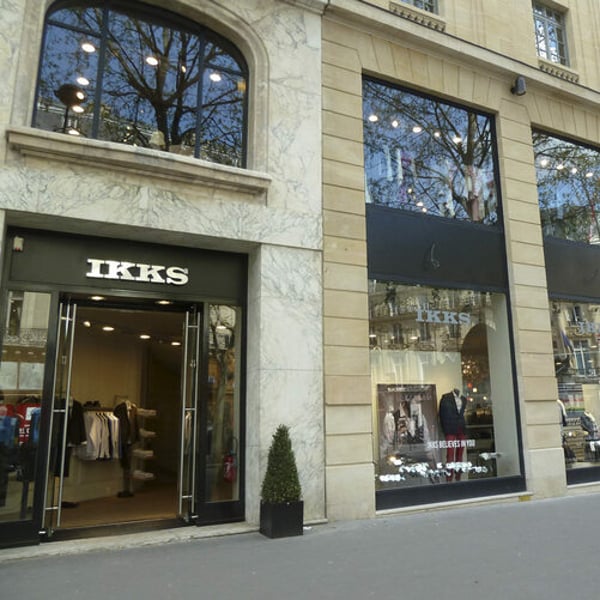
IKKS: Paris commercial court approves acquisition bid by Santiago Cucci and Michaël Benabou

Translated by
Nicola Mira
Published
December 12, 2025
On Thursday December 12, the Paris commercial court decided on the future of French premium ready-to-wear retailer IKKS. At the end of a receivership procedure involving several purchasing bids for IKKS, the court has approved the offer by Santiago Cucci, who was named president of the group’s holding company HoldIKKS last year, and Michaël Benabou, co-founder of event sales site Veepee.
The court’s decision has put an end to months of uncertainty for IKKS’s employees. According to figures drawn up by the receivers at the end of August, the group’s staff numbered 1,287 worldwide, 1,094 of them in France. At the time, the group had 473 stores between France and 11 other countries, plus headquarters in the town of Saint-Macaire-en-Mauges and offices in Paris.
IKKS gave a design make-over to its collections in summer, and in September it applied for receivership, after the group’s main shareholders, US investment funds Avenue Capital, CarVal Investors and Marathon Asset Management, expressed their wish to sell the company.
The IKKS group, which operates the eponymous brand as well as One Step and ICode, is still a leading international ready-to-wear retailer in the premium segment, operating several hundred retail outlets (between directly owned and franchised stores, and concessions) in nine countries. The path to new ownership has been complex, since the group was split in several entities, and none of the purchasing bids referred to the group as a whole.
The winning bid’s details
Cucci and Benabou have convinced the court after recently revising their bid upwards. Initially, the bid related to 141 stores, 88 of them directly owned, and 391 company employees.
The deal was clinched after the bid was extended to include 219 stores in France: 92 of them directly owned, 100 franchised, plus 27 Galeries Lafayette concessions. The employees associated to the directly owned stores are 546.
Benabou and Cucci, a former senior executive at Levi’s and a strategic advisor to G-Star, have taken over the IKKS business and are planning to operate a more streamlined store fleet. They will focus on womenswear and menswear, while childrenswear has been put on hold.
The dossiers given to prospective buyers indicated that the IKKS brand accounted for 80% of the group’s revenue, that 64% of its revenue was generated by womenswear, 21% by childrenswear, and 15% by menswear. When the company applied for receivership, direct retail accounted for 77% of revenue, e-commerce (both B2B and B2C) for 20%, and the remaining 3% was generated through the wholesale channel.
Rejected bids
The bid by sustainable fashion brand Faguo, which had been revised to include 15 stores and 30 jobs, was rejected. French group Beaumanoir (which owns womenswear brands Morgan and Caroll) had teamed up with Faguo, offering €1 million to buy the IKKS brand name and some of the stores.
Another rejected bid was put forward by Salih Halassi’s company Amoniss, a shareholder in Pimkie which recently acquired Christine Laure and Chevignon. It initially bid for a minimum of 168 stores and 393 employees.
BCRI Holding, which recently bought Café Coton, initially offered to buy 67 stores with a total of 426 employees. While AA Investments (owner of Smallable, L’Exception and Bonne Gueule) was interested in IKKS’s intangible assets. Verdoso, new owner of The Kooples, withdrew its bid before the November 28 hearing.
Since none of the bids related to the Icode and One Step brands, and to IKKS childrenswear, some of the latter’s stores in France have now closed. The new owners are therefore concentrating on the IKKS brand, out of a group fleet that had 550 stores as of the end of 2024, though streamlining measures started in H1 this year.
The brand’s employees are now hoping IKKS will be able to regain momentum as a recognised name in the premium ready-to-wear segment.
Copyright © 2025 FashionNetwork.com All rights reserved.








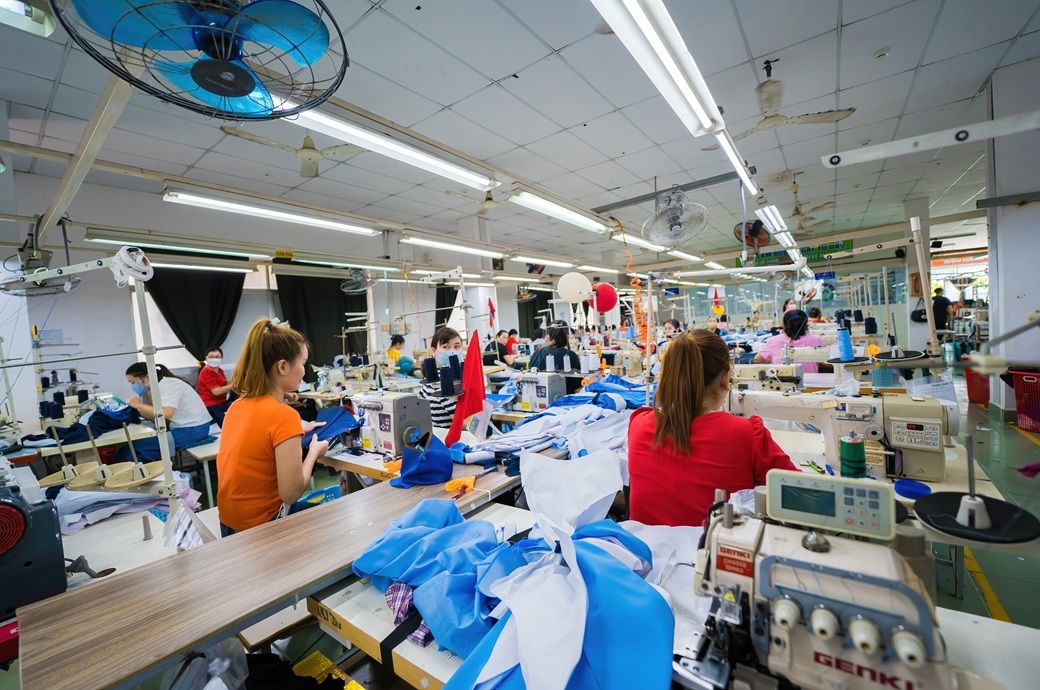
Growth in output and new orders softened, with production nearing stagnation. New orders rose at the slowest pace in eight months, while export orders declined for a second straight month, reflecting a weaker trade environment, S&P Global said in a press release.
ASEAN manufacturing growth slowed in April, with the S&P Global Manufacturing PMI falling to a nine-month low of 50.7.
Output and new orders weakened, export sales declined further, and employment fell for the first time in eight months.
Supply chain pressures and rising operating costs intensified inflation.
Despite weaker momentum, firms remained optimistic.
Supply-side constraints intensified during the month. Delivery times lengthened to a 17-month high as firms increased purchasing activity, putting pressure on supply chains. As a result, inventories of both inputs and finished goods declined, indicating firms relied on existing stocks to meet demand.
Employment conditions also weakened, with staffing levels falling for the first time in eight months, albeit marginally. Meanwhile, backlogs of work continued to rise, suggesting capacity pressures persist.
Inflationary pressures strengthened further. Input costs rose at the fastest pace since March 2022, prompting firms to increase output prices at the sharpest rate in 49 months.
Maryam Baluch of S&P Global Market Intelligence said ASEAN manufacturing remained in expansion territory in April, though growth momentum weakened as output neared stagnation, demand softened, exports fell faster, and employment declined. She noted that price pressures intensified further amid rising operating costs.
“While manufacturing firms in the ASEAN region remain optimistic about continued production growth in the coming year, the overall trajectory will remain dependent on external factors, notably the ongoing conflict in the Middle East, which is also shaping the inflation picture,” added Baluch.
Fibre2Fashion News Desk (SG)
Affirming its ’Ba2’ rating, the agency said Vietnam’s institutional quality and governance were improving due to administrative, legal, and public sector reforms implemented since late-2024, and downside risks from US trade measures had eased compared with what was expected earlier.
Moody’s Ratings recently raised its outlook on Vietnam to ‘positive’ from ‘stable’, citing rising confidence in the country’s ability to strengthen its credit profile over the medium term.
Affirming its ’Ba2′ rating, it said Vietnam’s institutional quality and governance were improving due to reforms implemented since late-2024, and downside risks from US trade measures had relatively eased.
Moody’s emphasised that the country’s growth potential continues to be a primary anchor for its credit profile. This is supported by a diversified export base, recovering domestic demand and robust foreign direct investment (FDI) inflows, all of which provide a solid foundation for macroeconomic stability.
Vietnam has demonstrated a high degree of adaptability to global volatility like fluctuating energy prices, rising shipping costs and inflationary pressures stemming from geopolitical tensions. This resilience is underpinned by a stable economic foundation, a positive external balance and a highly diversified trade structure, it noted.
However, risks within the banking system, vulnerabilities in the real estate market and lingering institutional bottlenecks continue to serve as hurdles for a potential rating upgrade in the future, the rating agency cautioned.
Fibre2Fashion News Desk (DS)

He said the sharp increase in oil and gas prices has fuelled inflationary pressures, weighing on the country’s growth outlook. Despite the downgrade, the government expects economic recovery, projecting growth to rebound to 5 per cent in 2027 and average around 5.5 per cent annually through 2029.
Cambodia has lowered its 2026 growth forecast to 4.2 per cent from 5 per cent due to rising oil and gas prices amid Middle East instability and Thailand border tensions.
Inflationary pressures are weighing on the economy, though growth is expected to recover to 5 per cent in 2027.
Export-driven sectors and tourism remain vulnerable to global volatility.
Cambodia’s economy continues to rely heavily on exports of garments, footwear and travel goods, alongside tourism, agriculture and construction. Authorities cautioned that prolonged global uncertainty could further impact these key sectors and slow overall economic momentum.
Fibre2Fashion News Desk (CG)


I’ve Tried Every Digital Notebook. These Are the Best Ones

ASEAN manufacturing momentum eases in April amid rising cost pressures

Oil prices drop below 100 dollars a barrel on renewed hopes over peace deal

A Brain Implant for Depression Is About to Be Tested in Humans

Pro wrestling star Steph De Lander reveals how colleague’s advice helped lead her to title triumph at ACW

‘I had £20,000 stolen and had to fight a 13-month fraud reporting rule to get it back’

-
 Tech1 week ago
A Brain Implant for Depression Is About to Be Tested in Humans
-
 Sports1 week ago
Pro wrestling star Steph De Lander reveals how colleague’s advice helped lead her to title triumph at ACW
-
Business1 week ago
‘I had £20,000 stolen and had to fight a 13-month fraud reporting rule to get it back’
-

 Entertainment1 week ago
Norway joins Type 26 Frigate Programme to boost NATO naval power
-

 Entertainment1 week ago
Melania Trump says ABC should ‘take a stand’ on late-night host Kimmel
-

 Tech1 week ago
Are tech leaders risking a cyber resourcing crisis? | Computer Weekly
-
 Business6 days ago
PSX plunges over 4,800 points | The Express Tribune
-

 Tech1 week ago
This Ambitious Laptop Doesn’t Leave Much Room for Your Hands