

Business
No 10 says it backs pubs as landlords bar Labour MPs in tax protest

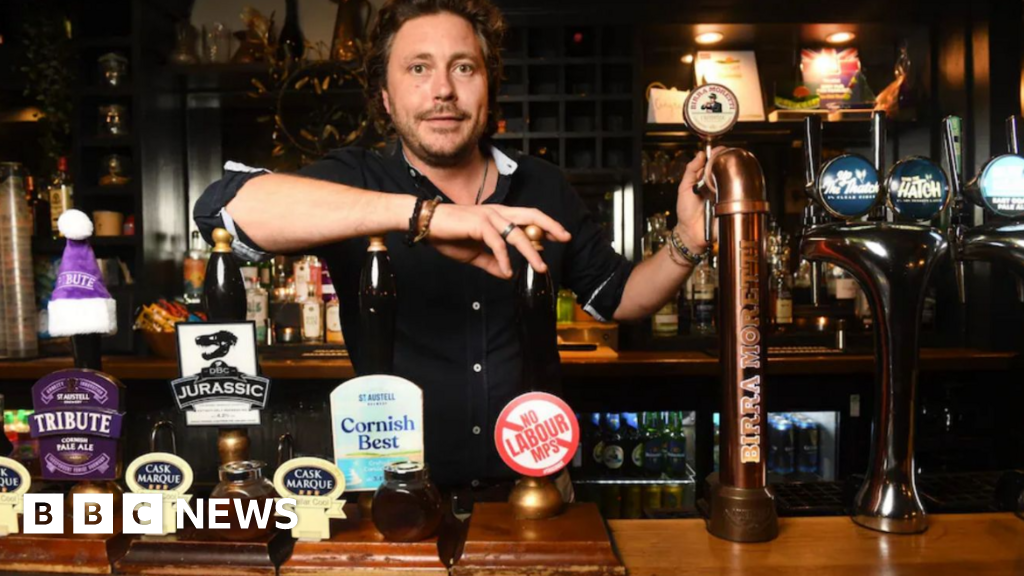
Downing Street has insisted the government backs pubs, as a growing number sign up to a campaign to bar Labour MPs from their premises in protest at tax rates.
The Labour MP ban was kicked off a week ago and more than 250 pubs, restaurants and hotels have signed up all over the country, including the Old Thatch in Dorset.
The Old Thatch landlord Andy Lennox said the protest was a last resort after multiple campaigns spelling out the need for tax cuts ended with higher taxes for hospitality.
But the prime minister’s official spokesman said the chancellor had delivered a £4.3bn support package for pubs, restaurants, and cafes because hospitality is a “vital part of our economy”.
He said: “Without this intervention pubs would have faced a 45% rise in bills next year. We’ve cut that down to just 4%.
“We’ve also maintained the draught beer duty cut, eased licences rules over pavement drinks and events, and capped corporation tax.
“These measures show we’re backing hospitality not abandoning it.”
Industry body UKHospitality disputes the government’s figures, both for the support package and the impact of intervention.
Asked how the prime minister felt about potentially being barred from his local pub over Christmas, the spokesman said: “The PM is obviously going to be working hard up to Christmas. I won’t get ahead of his Christmas plans.”
He refused to comment further on individual businesses’ polices.
But Mr Lennox said the campaign to bar the PM and other Labour MPs from pubs was only happening because the government had not responded to the hospitality industry’s needs.
The industry had mounted “huge, professional campaigning efforts”, including contacting every MP and hand-delivering letters to the Chancellor’s door, he told the BBC.
“Everyone is fed up because the Labour government hasn’t listened and instead has taxed us more.
“What’s really angered people is they they’re acting as if they haven’t – it’s as if somebody has pushed the wrong button and, instead of taxing Amazon and the warehouses they’re taxing us instead.
“We have been imploring our MPs for years because people are going out of business, and it’s not because they’re a bad business, but because they’re being taxed to oblivion.”
Mr Lennox said the landlord who sparked the campaign was neighbouring Dorset publican James Fowler, who was the first to put up the No Labour MPs stickers in the Larderhouse in Bournemouth on Saturday.
Bournemouth East’s Labour MP Tom Hayes, made a video reacting to the “No Labour MPs” sign that has gone up in one of his local pubs
The MP said: “It’s the Christmas season, it’s meant to be the joyful season, but the Larderhouse and other businesses with a “no Labour MPs” sticker in the window are undermining the inclusive culture that business owners locally have helped to nourish.
“My job has just got a million times harder because I can’t go and bang the drum for businesses with the Chancellor if I can’t speak to business owners because they’re banning me from doing so.”
Sounding upset, he added: “We need to get politics off the high street full stop, but especially at Christmas, when frankly we have enough playground politics over in parliament, we have enough division in our country.”
Mr Lennox said: The ban is a risky move for us to make and I understand the bridges I have burned.
“Tom Hayes is a good guy and he has engaged with us and signed letters, so there’s nothing wrong with Tom.
“But his frustration with landlords should be directed at his government, not the people who are having to protest like this.”
The UK’s 20% VAT rate for hospitality is one of the highest rates in Europe, with most countries charging about half that, and the Liberal Democrats called for a 5% VAT cut ahead of the Budget.
Mr Lennox said reducing the tax would “solve all the issues”, adding: “Cutting VAT will generate more growth and more taxation, so the government will make the money back but we’re allowed to make a profit first.”
Many businesses are also angry about changes to business rates, announced in last month’s Budget, that they say could add tens of thousands to their bills every year.
The government said it would calculate business rates for 750,000 High Street retail and hospitality firms using a lower percentage of the rateable value of premises, but this lower tax rate was not as generous as expected.
At the same time, many firms have seen their rateable value increase and face the phasing out of a Covid-era 40% discount from April.
The net result is that, despite some transitional relief, lots of them will see significant increases in their business rates bill.
Downing Street said the government was capping the business rate increases at 15% for most most properties and at £800 for the smallest.
From April there will be new, permanently lower tax rates for retail, hospitality and leisure, which he said will be the lowest in more than 30 years for small venues and would provide “certainty and stability for the future,” the spokesman said.
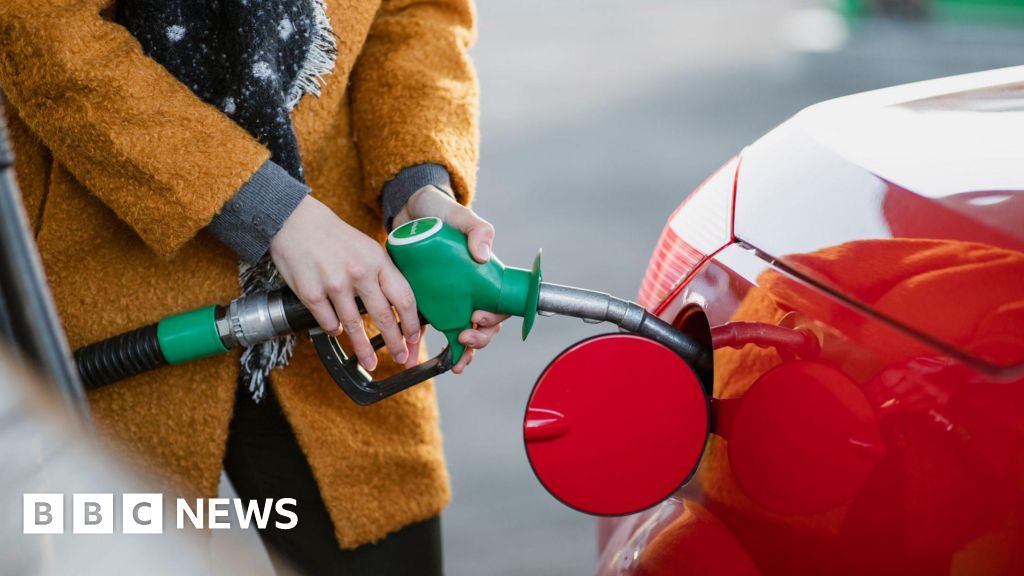
Motorists are facing higher fuel prices ahead of Easter break due to the conflict in the Middle East, the RAC says.
Source link

Hyderabad: Pharma player Hetero on Friday said it has rolled out exports of its generic semaglutide injection portfolio as part of a multi-year plan to widen access to treatments for type 2 diabetes and obesity in more than 75 countries.The Hyderabad-based pharmaceutical company said initial rollouts are under way in Africa, Asia and the Middle East, with additional launches planned in other markets subject to regulatory approvals.The injectable therapies will be sold under the brand names Truglyx, Rolmodl and Moto G. Semaglutide belongs to the GLP-1 class of medicines, which are used in diabetes care and weight management.Hetero said the export launch is part of its broader strategy to improve access to advanced cardio-metabolic therapies, particularly in emerging markets.The company said the products will be offered in multi-dose disposable pen devices designed in line with innovator formats and will be available in several strengths, including 0.25 mg, 0.5 mg, 1 mg, 2 mg, 1.7 mg and 2.4 mg, allowing dosing flexibility for both diabetes and obesity treatment.Hetero said it is also awaiting approval from India’s Central Drugs Standard Control Organisation (CDSCO) after completing clinical trials in type 2 diabetes and obesity and plans an India launch after regulatory clearance.Hetero managing director Dr Vamsi Krishna Bandi said the company aims to provide high-quality, affordable generic semaglutide through a single global product platform backed by its manufacturing and development capabilities.He said Hetero would use its commercial networks across Asia, the Middle East, Africa and Latin America to support supply and access. The Hyderabad-headquartered Hetero operates in more than 145 countries and employs over 30,000 people.
Business
India-US trade deal update: Piyush Goyal meets USTR Jamieson Greer, discusses next steps in BTA talks – The Times of India
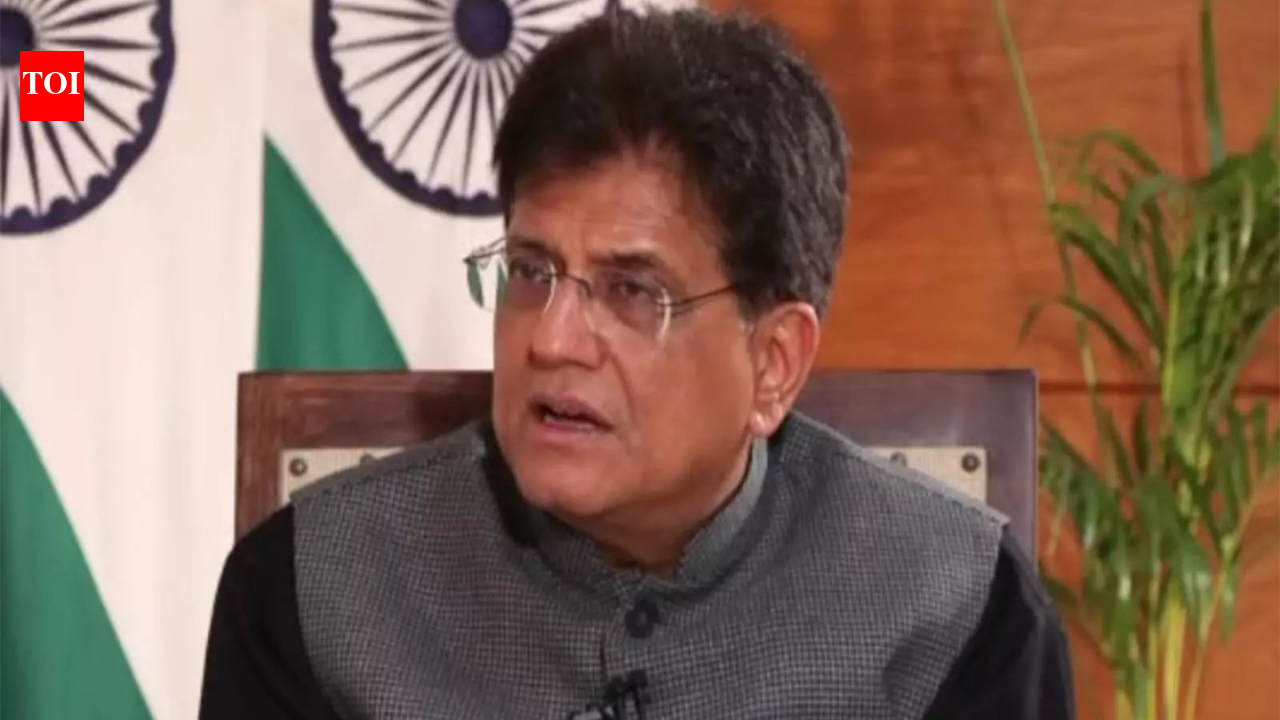
Commerce and industry minister Piyush Goyal on Friday met US Trade Representative Jamieson Greer and reviewed the next steps in negotiations for the proposed India-US bilateral trade agreement (BTA).The meeting took place on the sidelines of the 14th ministerial conference (MC14) of the World Trade Organisation in Yaounde, Cameroon, where both sides also exchanged views on issues related to the WTO agenda.“Had a very productive discussion with @USTradeRep Jamieson Greer on the sidelines of the WTO Ministerial Conference. Exchanged views on the #WTOMC14 agenda, next steps in the India-US BTA negotiations and explored ways to further deepen our economic cooperation and bilateral trade ties,” Goyal said in a social media post.The development comes amid ongoing efforts by both countries to finalise an interim trade pact. Last month, India and the US announced that they had finalised a framework for the first phase of the agreement, though it is yet to be signed.The two sides had earlier announced a trade deal on February 2, followed by a joint statement on February 7 outlining the contours of the agreement.As part of the framework, the US had agreed to reduce tariffs on Indian goods to 18%. However, the tariff structure has since undergone changes after the US Supreme Court struck down sweeping tariffs imposed under earlier measures.Following the ruling, US President Donald Trump introduced a 10% tariff on all countries for a period of 150 days starting February 24.In view of these developments, a planned meeting between chief negotiators of India and the US — aimed at finalising the legal text of the agreement — has been postponed. The pact was earlier expected to be signed this month.An official had earlier said that the interim trade agreement would be signed once the new global tariff framework of the US is fully in place.

Asda boss rejects profiteering claims as petrol price tops 150p

Britney Spears turns a new page after recent legal trauma

This Premium Sennheiser Soundbar Is $1,000 Off

-

 Entertainment1 week ago
Val Kilmer revived 1 year after death through AI
-

 Fashion7 days ago
China’s textile & apparel exports surge 17% to $50 bn in Jan-Feb 2026
-
 Business7 days ago
Flipkart group CFO to leave co amid IPO plans – The Times of India
-

 Sports7 days ago
Rating Adidas’ 2026 World Cup away shirts: Argentina, Spain, Mexico and more
-
 Business1 week ago
Video: The Effects of High Oil Prices
-

 Sports7 days ago
American Conference Commissioner Tim Pernetti thanks Trump for Army-Navy game executive order
-
Tech1 week ago
The Corsair 4000D RS PC Case Keeps Your System Cool
-

 Tech1 week ago
‘Uncanny Valley’: Nvidia’s ‘Super Bowl of AI,’ Tesla Disappoints, and Meta’s VR Metaverse ‘Shutdown’