

Business
Stocks rebound strongly after 2-day breather | The Express Tribune

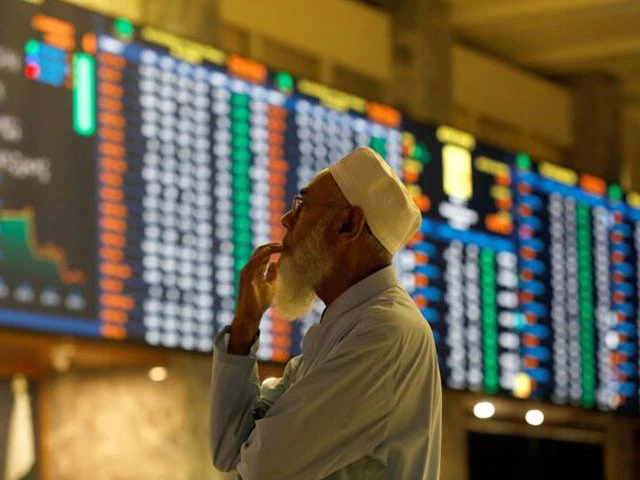
A stock broker reacts while monitoring the market on the electronic board displaying share prices during trading session at the Pakistan Stock Exchange, in Karachi on July 3, 2023. Photo: Reuters/ File
KARACHI:
The Pakistan Stock Exchange (PSX) staged a strong rebound on Friday as it surged nearly 1,300 points, led by investor interest in attractive stocks of fertiliser, bank, technology and energy sectors.
The benchmark KSE-100 index rose to the record high of 169,865 following a two-day breather, but it fell short of the 170k milestone at the close of trading. The market reached 170,053 in intra-day trading, however, it again could not hold the level and dropped just before the end of the session.
Earlier, at the commencement of trading, the index immediately dipped to the intra-day low of 168,422 and thereafter it made a gradual recovery by erasing all the losses. At close, the KSE-100 index recorded an increase of 1,289.83 points, or 0.77%, to settle at 169,864.53.
According to analysts, on a week-on-week basis, the index gained 1.66%, which could be attributed to the approval of $1.2 billion in loans by the International Monetary Fund (IMF) and the power-sector debt settlement of Rs659.6 billion.
In its daily review, Topline Securities said that the KSE-100 index rebounded on Friday as it largely traded in the positive zone and closed at 169,865 (up 0.77%). Top positive contribution to the index came from Fauji Fertiliser Company, MCB Bank, Systems Limited, Maple Leaf Cement, Pakistan Petroleum, Engro Fertilisers and Hubco as they cumulatively contributed 962 points.
Traded value-wise, Nishat Mills (Rs3 billion), Pakistan Petroleum (Rs2.17 billion), Sui Southern Gas Company (Rs1.28 billion), Maple Leaf Cement (Rs1.25 billion), Meezan Bank (Rs1.24 billion), Fauji Fertiliser Company (Rs1.2 billion) and OGDC (Rs1.16 billion) dominated the activity, Topline said.
In its weekly report, the brokerage house said that the KSE-100 gained 1.66% week-on-week. “This gain can be attributed to news that the IMF board approved a $1.2 billion loan by granting waivers for missing a few core conditions, and the landmark Rs659.6 billion power-sector debt settlement.”
Mubashir Anis Naviwala of JS Global said that the PSX rebounded strongly as the KSE-100 index surged 1,290 points to close at 169,865.
The market opened soft but quickly recovered with a steady upward momentum. It touched the intra-day high at 170,053, showing strong buying interest, he said.
Overall volumes remained healthy at 873 million shares as optimism returned after Thursday’s pullback, lifting major sectors. Buyers remained dominant throughout the session, driving sustained strength. “The near-term outlook stays positive as the market attempts another break above 170k,” he added.
Overall trading volumes stood at 873 million shares compared to the previous tally of 1.3 billion. The value of traded shares stood at Rs40.9 billion.
On the ready market, shares of 482 companies were traded. Of these, 259 closed higher, 180 dipped and 43 remained unchanged.
Hum Network was the volume leader with trading in 71.8 million shares, rising Rs0.23 to close at Rs14.88. It was followed by Dost Steels with 47 million shares, gaining Rs0.22 to close at Rs8.14 and WorldCall Telecom with 40.8 million shares, up Rs0.04 to close at Rs1.83.
Foreign investors were net sellers of shares worth Rs547.5 million, the National Clearing Company reported.



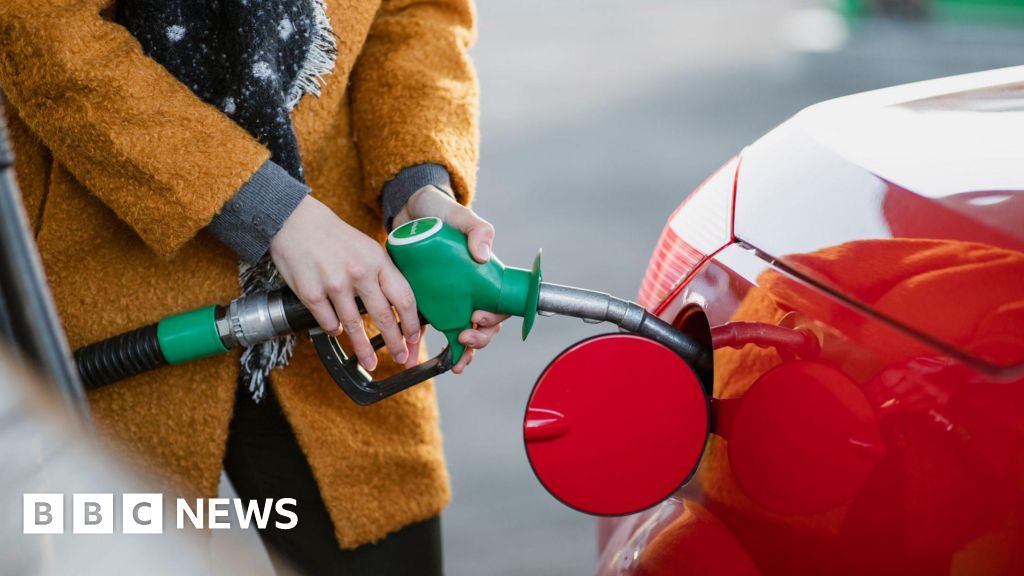
Motorists are facing higher fuel prices ahead of Easter break due to the conflict in the Middle East, the RAC says.
Source link

Hyderabad: Pharma player Hetero on Friday said it has rolled out exports of its generic semaglutide injection portfolio as part of a multi-year plan to widen access to treatments for type 2 diabetes and obesity in more than 75 countries.The Hyderabad-based pharmaceutical company said initial rollouts are under way in Africa, Asia and the Middle East, with additional launches planned in other markets subject to regulatory approvals.The injectable therapies will be sold under the brand names Truglyx, Rolmodl and Moto G. Semaglutide belongs to the GLP-1 class of medicines, which are used in diabetes care and weight management.Hetero said the export launch is part of its broader strategy to improve access to advanced cardio-metabolic therapies, particularly in emerging markets.The company said the products will be offered in multi-dose disposable pen devices designed in line with innovator formats and will be available in several strengths, including 0.25 mg, 0.5 mg, 1 mg, 2 mg, 1.7 mg and 2.4 mg, allowing dosing flexibility for both diabetes and obesity treatment.Hetero said it is also awaiting approval from India’s Central Drugs Standard Control Organisation (CDSCO) after completing clinical trials in type 2 diabetes and obesity and plans an India launch after regulatory clearance.Hetero managing director Dr Vamsi Krishna Bandi said the company aims to provide high-quality, affordable generic semaglutide through a single global product platform backed by its manufacturing and development capabilities.He said Hetero would use its commercial networks across Asia, the Middle East, Africa and Latin America to support supply and access. The Hyderabad-headquartered Hetero operates in more than 145 countries and employs over 30,000 people.
Business
India-US trade deal update: Piyush Goyal meets USTR Jamieson Greer, discusses next steps in BTA talks – The Times of India
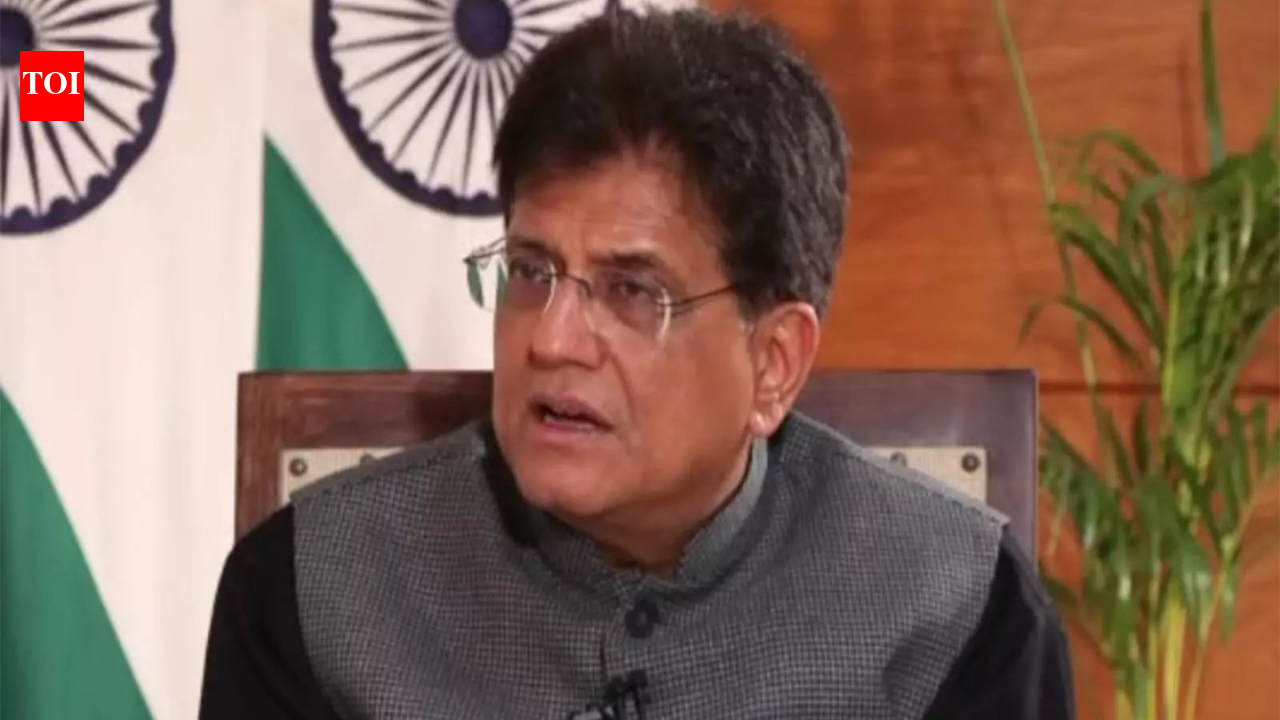
Commerce and industry minister Piyush Goyal on Friday met US Trade Representative Jamieson Greer and reviewed the next steps in negotiations for the proposed India-US bilateral trade agreement (BTA).The meeting took place on the sidelines of the 14th ministerial conference (MC14) of the World Trade Organisation in Yaounde, Cameroon, where both sides also exchanged views on issues related to the WTO agenda.“Had a very productive discussion with @USTradeRep Jamieson Greer on the sidelines of the WTO Ministerial Conference. Exchanged views on the #WTOMC14 agenda, next steps in the India-US BTA negotiations and explored ways to further deepen our economic cooperation and bilateral trade ties,” Goyal said in a social media post.The development comes amid ongoing efforts by both countries to finalise an interim trade pact. Last month, India and the US announced that they had finalised a framework for the first phase of the agreement, though it is yet to be signed.The two sides had earlier announced a trade deal on February 2, followed by a joint statement on February 7 outlining the contours of the agreement.As part of the framework, the US had agreed to reduce tariffs on Indian goods to 18%. However, the tariff structure has since undergone changes after the US Supreme Court struck down sweeping tariffs imposed under earlier measures.Following the ruling, US President Donald Trump introduced a 10% tariff on all countries for a period of 150 days starting February 24.In view of these developments, a planned meeting between chief negotiators of India and the US — aimed at finalising the legal text of the agreement — has been postponed. The pact was earlier expected to be signed this month.An official had earlier said that the interim trade agreement would be signed once the new global tariff framework of the US is fully in place.

Asda boss rejects profiteering claims as petrol price tops 150p

Britney Spears turns a new page after recent legal trauma

This Premium Sennheiser Soundbar Is $1,000 Off

-

 Entertainment1 week ago
Val Kilmer revived 1 year after death through AI
-

 Fashion7 days ago
China’s textile & apparel exports surge 17% to $50 bn in Jan-Feb 2026
-
 Business1 week ago
Video: The Effects of High Oil Prices
-
 Business7 days ago
Flipkart group CFO to leave co amid IPO plans – The Times of India
-

 Sports7 days ago
Rating Adidas’ 2026 World Cup away shirts: Argentina, Spain, Mexico and more
-

 Sports7 days ago
American Conference Commissioner Tim Pernetti thanks Trump for Army-Navy game executive order
-
Tech1 week ago
The Corsair 4000D RS PC Case Keeps Your System Cool
-

 Fashion1 week ago
The hidden $1.62 war tax now embedded in every garment you source