

Sports
MLB winter meetings: Winners, losers — and who needs to make a big move next


The MLB winter meetings have come and gone, and though there’s always a hope that there will be plenty of action, that’s not always the case. The 2025 meetings didn’t have a $700 million-plus deal like last year, but there were still a number of impactful free agent signings, although no groundbreaking trades.
Veteran slugger Kyle Schwarber chose to return to the Philadelphia Phillies on a five-year deal in the first major splash of the meetings. The Los Angeles Dodgers added to an already star-studded roster by signing closer Edwin Diaz to a three-year, $69 million contract that sets a record in AAV for a reliever. The Baltimore Orioles then joined the fun by adding a veteran slugger on a five-year deal of their own in Pete Alonso.
We asked our MLB experts who were on the scene in Orlando, Florida, to break down everything that happened this week. Which moves most impressed them — and which most confused them? Who were the biggest winners and losers? What should we make of the trade market? And what can we expect next?
What is the most interesting thing you heard this week in Orlando?
Jorge Castillo: That a Tarik Skubal trade is likely. Here’s what we know: Detroit Tigers president of baseball operations Scott Harris can shut down speculation by simply saying he is not trading Skubal and he has not done that. Instead, he noted this week that there aren’t any “untouchables” on his roster. Trading the best pitcher in baseball when you’re trying to compete would upset the fan base, but the Tigers, knowing re-signing Skubal next winter is unlikely, appear open to it.
Bradford Doolittle: Managers’ responses to questions about how they plan to handle the new automated ball-strike (ABS) challenge system were interesting. No one seems fixed on a protocol just yet, but what had not occurred to me is that catchers are likely to be the triggers for challenges for the defense. So instead of the possible reality in which catcher value was undermined by a full-blown automated system, this structure actually will enhance it — and we’ll have a new set of statistics to track.
Alden Gonzalez: Tyler Glasnow‘s name has come up in conversations, and the Dodgers would not be opposed to moving him. He’s poised to make a combined $60 million over the next two years, with either a $30 million club option or a $21.6 million player option in 2028. But the quality of his stuff continues to tantalize executives throughout the industry, and there are certainly a fair share of teams that will bank on him staying healthy enough to make it worthwhile. Maybe he’s part of the package that brings Tarik Skubal to L.A. It’s a long shot, perhaps, but wilder things have happened.
Jeff Passan: The Texas Rangers are in listening mode on star shortstop Corey Seager, which doesn’t mean the two-time World Series MVP is by any means going to be moved but reflects the Rangers’ willingness to overhaul the team beyond their trade of Marcus Semien. To be abundantly clear: Texas isn’t looking to shed the remaining $186 million on his contract. The return would need to overwhelm the Rangers. But they are facing a payroll crunch, and with Alonso landing a $155 million deal and Schwarber reaping $150 million, Seager’s deal is quite appealing. He’s only 31, he plays an excellent shortstop and of all the position players ostensibly available via trade or free agency, he is the best.
Jesse Rogers: Simply put, that deals for many of the major free agent pitchers aren’t close to being finalized. It almost feels like the beginning of the offseason for starting pitchers, who are meeting with teams to try to ignite their market. There has been a steady pace of signings for relievers — especially at the high end — but other than Dylan Cease, starting pitchers have been slow to agree to deals. That will change — at least in part — because Japanese starter Tatsuya Imai has a deadline of Jan. 2 to sign, but even that is still several weeks away.
What was your favorite move of the offseason so far?
Doolittle: I’m not too excited about any of them so far — not that I think they’re all bad, just nothing tickles my fancy. So the bar is pretty low. I’ll go with the Toronto Blue Jays going big on Cease. Keep that crest wave Toronto is on rolling.
Gonzalez: As a general rule, any free agent deal this time of year tends to be an overpay. And that’s what makes the Dodgers’ deal for star closer Diaz so appealing. Diaz received the highest annual value ever for a reliever, but they were able to get him for only three years (and, as they so often do, defer some of the payments). The Dodgers capitalized on the New York Mets‘ signing of Devin Williams — which opened the door for Diaz’s departure — and addressed their own biggest need with the type of short-term, high-AAV contract that is always their preference.
Rogers: I love Baltimore going for it, agreeing to a deal with Alonso. The Orioles had a bad season in 2025 and are doing everything they can to change their fortunes for next season — even if there are some inherent doubts about acquiring an aging first baseman for big money. The bottom line is Alonso is going to mash in Baltimore and perhaps bring some leadership to a team that needs a veteran presence. I love the big swing here — pun intended.
Which team’s actions (or lack thereof) had you scratching your head?
Doolittle: It’s probably too early to judge any particular team for its offseason in total, but the most perplexing move for me was Baltimore dealing Grayson Rodriguez to the Los Angeles Angels for one year of Taylor Ward. That definitely makes my head itch.
Castillo: The Orioles prioritizing a slugger after acquiring Ward from the Angels was unexpected. Baltimore does not have a shortage of young position player talent. Starting pitching, not offense, was their pressing need — especially after trading Rodriguez for Ward. But the Orioles offered Schwarber a five-year, $150 million deal and quickly pivoted to Alonso when Schwarber chose the Phillies, landing the former Mets first baseman with a five-year, $155 million deal that surpassed industry projections. The pressure remains on Orioles president of baseball operations Mike Elias to acquire a front-line starter, which he has plainly stated is an offseason priority.
Passan: What the New York Mets did over a 24-hour period to end the meetings — miss out on slugger Schwarber, lose closer Díaz to the two-time defending World Series champion Dodgers and lose Alonso, their franchise home run leader, to the Orioles — felt like a bloodletting.
Collapses like the Mets’ have consequences, and president of baseball operations David Stearns is reshaping them to his liking. Defensive liabilities are a no-no. Record-setting deals for relief pitchers are verboten. How the Mets proceed is anyone’s guess, but let’s not forget: Steve Cohen is still the richest owner in baseball, and that opens a world of possibilities. But if this period of inaction isn’t remedied through decisive moves — an influx of talent either through free agency or trades — the Mets’ playoff hopes will end before they’ve begun.
After a lot of buzz ahead of the meetings, it was pretty quiet on the trade front. What is one big deal you think could go down from here?
Gonzalez: The Miami Marlins have been engaged in trade conversations around Edward Cabrera, a 27-year-old starting pitcher with three controllable years remaining. And the Orioles have emerged as a front-runner, as first reported by The Athletic. There are a number of starting pitchers available at the moment. Sonny Gray has already gone from St. Louis to Boston, and Cabrera could be next to move.
Passan: A second baseman is going to move. Maybe multiple. There is too much interest in Ketel Marte, Brendan Donovan and Brandon Lowe for a deal not to be consummated. It’s not just them, either. Jake Cronenworth is available. The Yankees have listened on Jazz Chisholm Jr. The Mets’ overhaul could include moving Jeff McNeil.
Marte and Donovan are the clear top options, with Arizona’s and St. Louis’ respective demands exceptionally high. Which is where, at this point on the calendar, they should be. Especially with all of the teams that could use a second baseman (Boston, Pittsburgh, San Francisco, Seattle, New York Mets) or that would be willing to replace theirs.
Rogers: Where there is smoke, there is fire, meaning Washington Nationals starting pitcher MacKenzie Gore will be moved. His name came up a lot in Orlando and there are enough motivated teams in part because he’s good and affordable. An American League East team, such as the New York Yankees or Orioles, fits for Gore — especially the latter, which might have an extra hitter or two to spare after signing Alonso. Gore fits in Baltimore on several levels.
Who was the biggest winner — and loser — of the week?
Castillo: The Mets were the biggest loser. Losing Diaz and Alonso on consecutive days two weeks after trading Brandon Nimmo is a staggering sequence not just because they are all All-Star-caliber players, but because they were so integral to the franchise and beloved by the fan base. This doesn’t mean the Mets can’t emerge as winners this season. Stearns & Co. have time to rebound. They certainly have moves to make. But this was an ugly week for Mets fans, one they’ll never forget.
Passan: The Dodgers were the biggest winner, filling their clearest need with one of the best closers in baseball, Díaz. Cincinnati, in the meantime, is the biggest loser.
Free agents of Schwarber’s ilk rarely entertain the idea of going to small-market teams, but the Reds had a built-in advantage: He was from there. Considering the scarcity of such possibilities, the Reds — one big bat away from being a real threat to win the NL Central — needed to treat Schwarber’s potential arrival with urgency and embrace their inner spendthrift. They had the money to place the largest bid. They chose not to. And they missed, a true shame considering the strength of their rotation and the likelihood that similar opportunities won’t find them again anytime soon.
Rogers: The Phillies were the biggest winner. Where would they be without Schwarber? Perhaps it was a fait accompli he would be returning, but until he signed on the dotted line, some doubt had to exist. His power simply can’t be replaced, meaning the Phillies’ whole trajectory this offseason would have changed had he left. Now, they can keep moving forward on other important decisions, such as what to do at catcher and if Nick Castellanos still fits their roster. Checking the Schwarber box removes a major potential headache for the franchise. Conversely, even if it was a long shot, the Cincinnati Reds losing out on Schwarber has to hurt. As important as he is to the Phillies, his impact in Cincinnati could have been even more meaningful. He instantly would have elevated the Reds on and off the field.
Which team is under the most pressure to do something big after the meetings?
Castillo: The Mets for the reasons I stated above. Stearns obviously believed he needed to make changes to the roster after such a disappointing season. But this is a major, major overhaul that goes beyond on-field performance. Diaz, Alonso, and Nimmo were beloved core Mets and key to the franchise’s fabric. The pressure is on Stearns to ensure the jarring changes will produce success.
Doolittle: Cincinnati. The Reds muffed the Schwarber situation in a major way. I’m not sure what their actual chances were of signing him, but they should have at least matched what the Phillies offered. The fit between the player and what he’d add to the city and the clubhouse culture while addressing the roster’s biggest need in an emphatic fashion was a set of alignments hard to replicate. There is no suitable pivot from here. But the Reds need to do something — and they need to stop making excuses for why they don’t.
Gonzalez: The Mets. Their decision to not pay a premium for cornerstone players prompted Diaz to leave for L.A., Alonso to depart for Baltimore and their fans, understandably, to be up in arms. Now, they must react. They still have needs to address in their rotation, but they have to get aggressive with their lineup before all of the premium bats come off the board. Going after Cody Bellinger, and potentially stealing him from their crosstown rivals, feels like the natural pivot.
Passan: The Blue Jays have a chance to seize control of the AL East even more than they did in winning the division this year. Whether that means signing Kyle Tucker, Bo Bichette or both, they’re spending in the sort of fashion the Yankees and Red Sox used to — and taking advantage of the window of opportunity that presents is imperative.
Toronto, long mocked for its failures in free agency, is now a destination for players enthralled by the brand of baseball the Blue Jays play as well as the deep pockets of ownership. If you’re going to spend $210 million on Cease, that’s a sign: It’s all-in time, and opportunistic maneuvering would pay huge dividends for Toronto.
Rogers: The Yankees. For once, they are the team that needs to respond after the Blue Jays beat them on the field and now so far in the offseason. Toronto keeps adding while New York should try to at least maintain what it has — meaning Bellinger, or perhaps Tucker, should be in Yankees pinstripes as soon as possible. If the Yankees can add Imai, they’ll match Toronto’s addition of Cease. That would be a good thing. The two teams aren’t that far apart in talent, but Yankees general manager Brian Cashman can’t take his foot off the gas. The pressure is on in New York again.
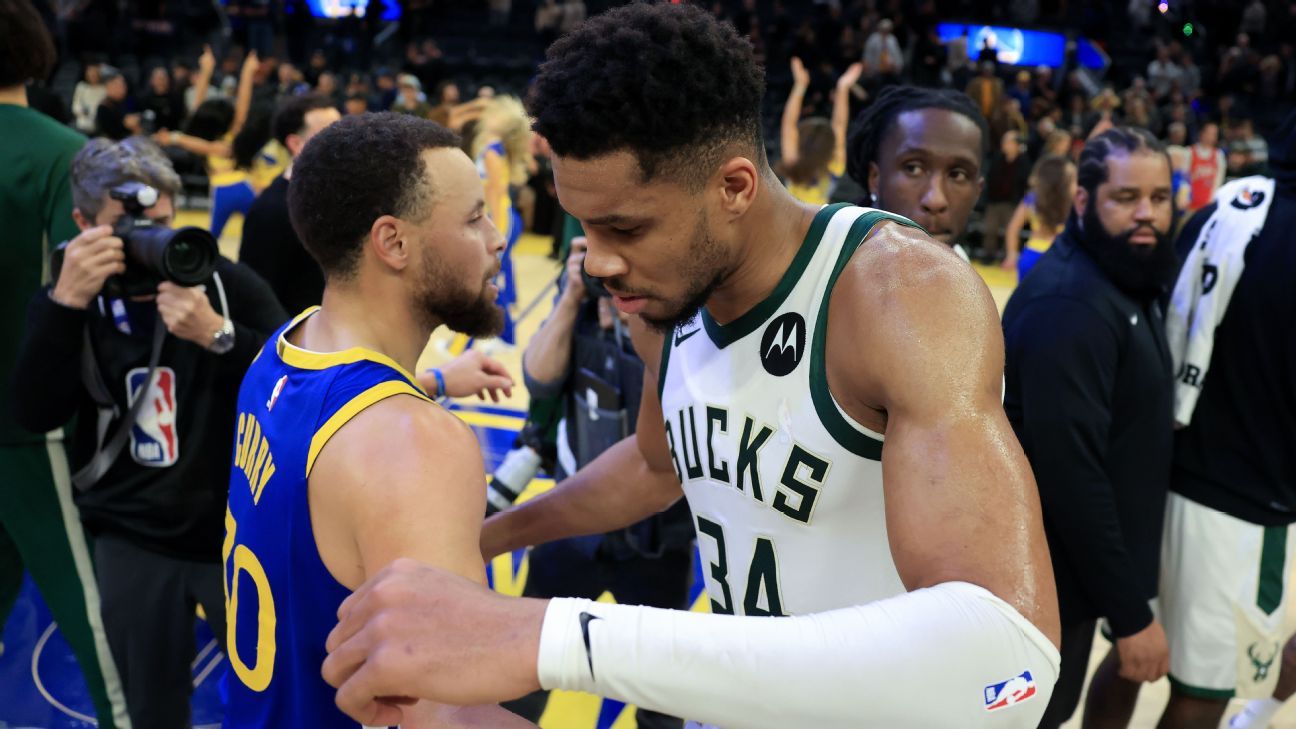
Giannis Antetokounmpo is synonymous with the Milwaukee Bucks. But the writing is on the wall in increasingly large font that his time with the Bucks could be ending. In addition, Giannis is dealing with a calf injury that has him sidelined “indefinitely,” which practically translates to the four-to-six-week range that could have him out until March.
If Giannis were to be traded by this season’s NBA trade deadline on Feb. 5, what would it mean for fantasy squads? And what are the best and worst cases of trade destinations from a fantasy perspective?
If Giannis is on your team, would a trade change his fantasy value? And if Giannis isn’t on your fantasy squad, should you trade for him?
Let’s explore.
How fantasy managers should anticipate a Giannis trade
Giannis is the most traded player in fantasy hoops over the past week, ahead of Shai Gilgeous-Alexander, Michael Porter Jr., Kevin Durant, Devin Booker, Jalen Brunson and Karl-Anthony Towns.
This is especially interesting considering Giannis’ injury status. Based on his uncertain prognosis, it’s possible Giannis doesn’t even play again before the fantasy playoffs in March.
On the other hand, last season’s major in-season trade involved Jimmy Butler III, who was also nursing an injury before he was traded to Golden State, but Butler returned to the court immediately after the trade. Given the popularity of Giannis in fantasy trades, perhaps there is some belief that he will be moved from Milwaukee and that he might be able to return to action sooner.
Another factor in his fantasy trade popularity could be his currently depressed value. Giannis is a perennial top-five producer in the fantasy rankings, but due to the injury and trade speculation his fantasy value is as low as it has been.
So, teams willing to speculate on Giannis even given the uncertainty might agree to split the difference between Giannis’ typical top-five ranking and his current top-40 ranking in deals. And fantasy managers with Giannis might be worried enough about his situation to make deals happen.
If Giannis is traded, what are the most likely destinations? Bobby Marks wrote a detailed breakdown of the potential trade market for him, featuring what all 29 teams could offer and the 11 teams that could make the best offers.
Best-case scenario
From a fantasy hoops perspective, the best of the article’s 11 trade destinations for Giannis would likely be the Warriors. This is an ironic twist because last season the Warriors were in this space as the best potential landing spot for Butler as well. After Butler was traded there, he was a perfect fit from an NBA and a fantasy perspective.
But Butler recently tore an ACL and is out for the season. The Warriors still have veterans Stephen Curry and Draymond Green as their core and therefore need to win now.
The article didn’t include a specific proposed trade package but mentions the deal would have to include Butler and his $54 million salary. It also suggests the Warriors would likely trade Jonathan Kuminga and perhaps Brandin Podziemski, both talented young players who could become players to build around for the would-be rebuilding Bucks and up to four first-round picks. To make the salaries match, the Bucks would have to include either Bobby Portis or Kyle Kuzma.
This would be the perfect fantasy landing spot for Giannis because we would see him play next to the greatest shooter in NBA history. No player in the league collapses defenses like Giannis, and no player creates and takes advantage of space more than Curry. Plus, Curry is one of the best at moving without the ball and shooting off the pass.
Part of the reason Giannis and Damian Lillard never seemed to maximize their synergy is because Lillard liked to create his shot off the dribble and never seemed to get fully comfortable with Giannis creating his shots for him. The entire Warriors offense, including much of Curry’s synergy with Green, has been predicated on Green finding Curry for spot-up jumpers. It would be even more lethal with Giannis as the one collapsing the defense and creating even better looks.
With Giannis and Curry on the same team, opponents would have no defensive strategy to cover that one-two punch. Outside of Curry, and previously Butler, the Warriors don’t have any other high-usage shot creators. On the Warriors, Giannis would be able to maintain his maximal usage but against much softer defensive coverage. This could result in increases in volume and efficiency for Giannis and even more 3-point production from Curry and the other Warriors.
Worst-case scenario
From a fantasy hoops perspective, the worst-case scenario would be Giannis being traded to a contending team with multiple high-usage shot creators who would take the ball out of his hands or an equal opportunity offense where Giannis can’t be featured to the same extent.
Of the teams deemed best situated to deal for Giannis, the Houston Rockets (assuming they kept Durant and Alperen Sengun), the New York Knicks (if, as the article mentions, they swap Giannis for Towns straight up), the Oklahoma City Thunder (next to Gilgeous-Alexander and potentially Jalen Williams and/or Chet Holmgren) and the San Antonio Spurs (next to Victor Wembanyama and De’Aaron Fox) are all teams that would become championship favorites with Giannis but that would depress his fantasy value.
And adding Giannis to any of those teams would just as likely attenuate the fantasy values of the other star players on those teams.
What to do
If Giannis is on your fantasy team
-
Explore his trade value in your leagues. If you can get a top 10 to 15 player in value in return you should strongly consider dealing him to avoid the uncertainty of the injury and unknown potential trade destination.
-
Even if you can only get top 20 to 25 value, it could be worth it, particularly because the injury could keep him sidelined for much of the remainder of the fantasy season.
If Giannis isn’t on your fantasy team
-
Explore how much the manager with Giannis wants for him. The ideal profile of a team that should trade for him is a team already near the top of a league that is likely to make the playoffs, even if Giannis doesn’t play until the fantasy playoffs.
-
For a team like this, dealing for Giannis now at roughly top-25 player value could result in them adding a top-five caliber player just in time for their playoffs run. If you deal for Giannis, you know you’re taking a risk, so use your mouthpiece to try to make the deal for as little as possible.
One of the most unusual — and fun — events in college sports is a high-stakes spreadsheeting competition in Las Vegas.
Source link
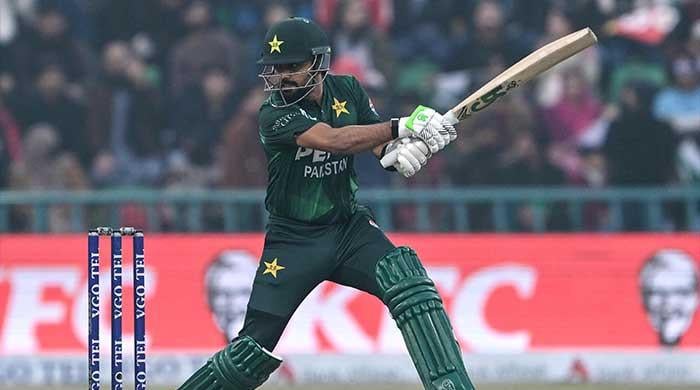
Pakistan posted a 208-run target for Australia following Saim Ayub and Babar Azam’s half-centuries after opting to bat first in the third and final T20I at Lahore’s Gaddafi Stadium on Sunday.
This is a developing story and is being updated with more details.


The best- and worst-case trade scenarios for Giannis Antetokounmpo’s fantasy value

‘Holistic And Forward-Looking’: Piyush Goyal Says Budget 2026 Reflects Future-Ready India

Netflix’s exciting February line up revealed

-

 Sports5 days ago
PSL 11: Local players’ category renewals unveiled ahead of auction
-

 Tech1 week ago
Strap One of Our Favorite Action Cameras to Your Helmet or a Floaty
-

 Sports1 week ago
Wanted Olympian-turned-fugitive Ryan Wedding in custody, sources say
-

 Entertainment1 week ago
Three dead after suicide blast targets peace committee leader’s home in DI Khan
-

 Tech1 week ago
This Mega Snowstorm Will Be a Test for the US Supply Chain
-
 Sports1 week ago
Storylines shaping the 2025-26 men’s college basketball season
-

 Fashion1 week ago
Spain’s apparel imports up 7.10% in Jan-Oct as sourcing realigns
-
 Entertainment1 week ago
UFC Head Dana White credits Trump for putting UFC ‘on the map’