

Sports
Man United’s thriller against Bournemouth is advert for January transfer window

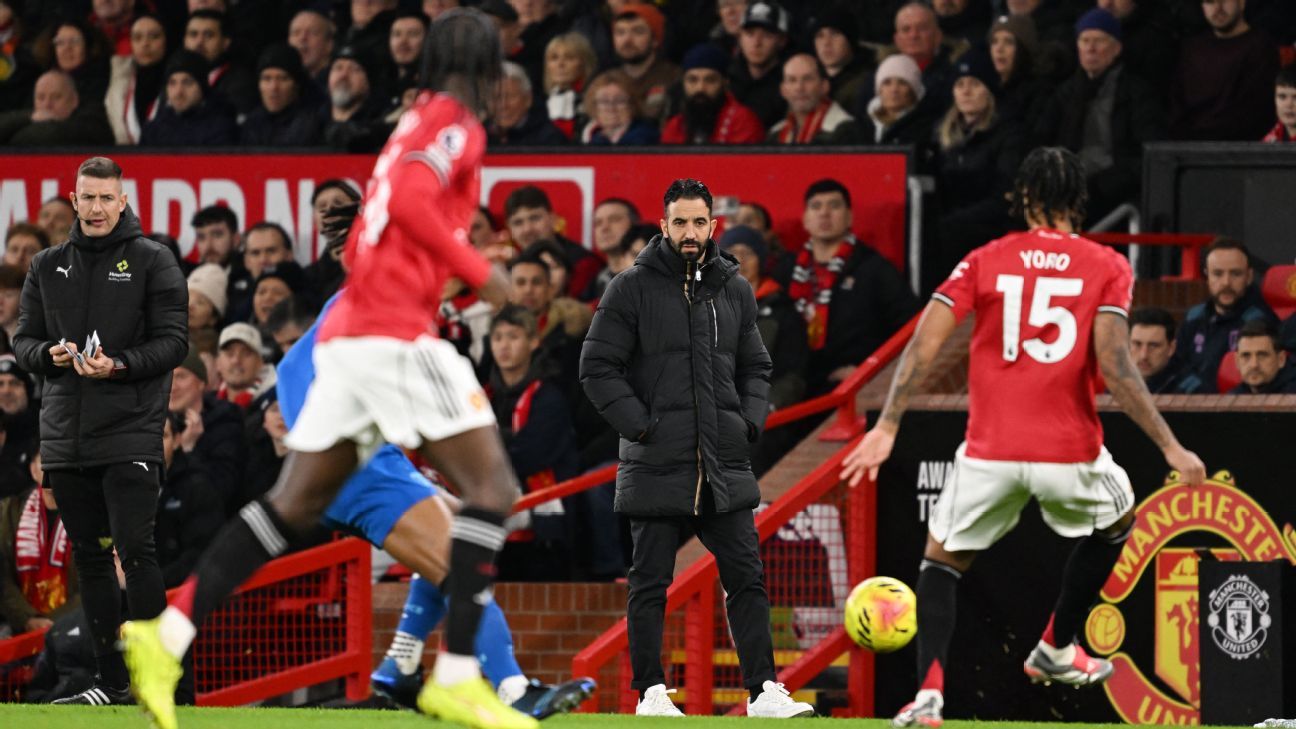
MANCHESTER, England — The half of the Manchester United team that was strengthened in the summer played well against AFC Bournemouth. The other half — the one the club hope to put right next summer — didn’t.
The result was a chaotic 4-4 draw at Old Trafford, which showcased everything Ruben Amorim’s side are good at, but also highlighted all the work that still needs to be done. United made a conscious effort to remedy their chronic lack of goals last season by buying some.
But with most of the budget spent on attacking players, it meant that the defensive part of the squad has been overlooked. The end product is a team that is capable of scoring goals, but not keeping them out.
– Salah shows he can still lead Liverpool, Madrid get a win, more
– Arsenal must handle pressure better to win Premier League
– Man United 4-4 Bournemouth – the game of the season so far?
United have found the net 30 times in the Premier League — the same number as Arsenal and bettered only by Manchester City — while also keeping just one clean sheet, one fewer than 19th-placed Burnley.
“It was a fun game for everyone at home,” said Amorim.
“People enjoy seeing Manchester United this season, but we need to put both things together.
“If you understand a little bit, if you follow the club like I followed the Premier League for so long, you have a duty not just to win the games, but the way is so important for the fans.
“They are desperate to win but also to be inspired. Today was inspiring, but there is also the feeling of frustration from not winning.”
United are hoping to follow up the £200 million investment in their forward line with a similar outlay on at least one central midfielder and a couple of wing backs. Until they get a chance to open the checkbook — possibly in January but more likely next summer — Amorim is left to work with a lopsided group.
At times, summer signings Matheus Cunha and Bryan Mbeumo, along with Bruno Fernandes, Amad Diallo and Mason Mount, looked scintillating going forward.
United peppered Bournemouth goalkeeper Djordje Petrovic‘s goal with 12 shots inside the first 30 minutes and managed 17 by halftime. Amad and Fernandes both scored either side of a Casemiro header and when Cunha added his name to the scoresheet in the 79th minute, it put United in front for the third time.
It still wasn’t enough to secure all three points and Bournemouth, who arrived at Old Trafford winless in six games and without a goal in more than four hours, found a late equalizer through substitute Junior Kroupi. Earlier, Antoine Semenyo scored his first goal since October. That was before Evanilson‘s first goal since August.
After watching their team score three goals at Old Trafford in each of the last two seasons, at one point the Bournemouth fans tucked in the corner of the stadium began singing “Man United, it’s happened again.”
“It’s really difficult to explain,” said Bournemouth boss Andoni Iraola.
“A lot of ups and downs. United were much better than us for 20 minutes. Overall, I’m happy apart from that 20 minutes.
“They were punishing us with Amad and Mbeumo. We’ve scored four and conceded four. We needed some players on the scoresheet and it’s good for their confidence.”
It would have been even worse for Amorim — who tinkered with his 3-4-3 system for the first time to create a hybrid formation which at times looked like 4-4-2 — if United goalkeeper Senne Lammens hadn’t pulled off a fantastic save from David Brooks in stoppage time. It left the home fans who streamed out at the final whistle in near-stunned silence, not quite knowing what to make of it all.
Are United closer to the team that has lost just one of their last 10 games, or is two wins from six a more accurate way to view it?
Both, of course, are true. Afterwards, Amorim stopped short of saying he wants the investment made in the attack last summer to be poured into the midfield and defense ahead of next season, but the inference was there nonetheless.
“We are lacking quality when we defend our goal,” said the Portuguese coach.
“It’s something we need to address. It is different when you suffer so many goals and the opponent does not have what we create.
“I think we have talent at the back and quality players, we just have to be better at defending. We took care of the offence. We have the characteristics, we just need to work together.”
The worry for Amorim now is that it’s his attack — the one part of his team that is functioning — which will be hit hardest when the Africa Cup of Nations begins later this month. Mbeumo and Amad — perhaps United’s best two players — will now join up with Cameroon and Ivory Coast, respectively, and could miss a month if they reach the final on Jan. 18. Noussair Mazraoui has already joined up with Morocco.
It leaves the United boss to head to Aston Villa, the Premier League’s most in-form team, with the best parts of his squad ripped out. Casemiro, who picked up his fifth yellow card of the season, will also miss out. If there were holes in Amorim’s team against Bournemouth, there are set to be even more at Villa Park on Sunday.
Until the club can implement the next phase of its recruitment plan, he must make the best of what he’s got.

NEWYou can now listen to Fox News articles!
It is the end of an era in NASCAR.
The Athletic reported Friday that Jim France is stepping down as NASCAR’s CEO, and his replacement will be the first non-France family member to run the ship.
The outlet noted that France, who will remain NASCAR’s chairman, will be replaced by NASCAR president Steve O’Donnell.
CLICK HERE FOR MORE SPORTS COVERAGE ON FOXNEWS.COM
President Donald Trump is greeted by NASCAR Chairman and CEO Jim France and Sen. Rick Scott before the NASCAR Cup Series Daytona 500 at Daytona International Speedway in Daytona Beach, Florida, on Feb. 16, 2025. (Chris Graythen/AFP)
France’s father founded NASCAR in 1948, and it has grown into the most popular motorsport in the United States.
Ben Kennedy, France’s great-nephew, will also be promoted from executive vice president and chief venue and racing innovations officer to NASCAR’s chief operating officer.
All the changes are expected to be announced on Saturday at Talladega Superspeedway, where the Jack Link’s 500 will be run on Sunday.
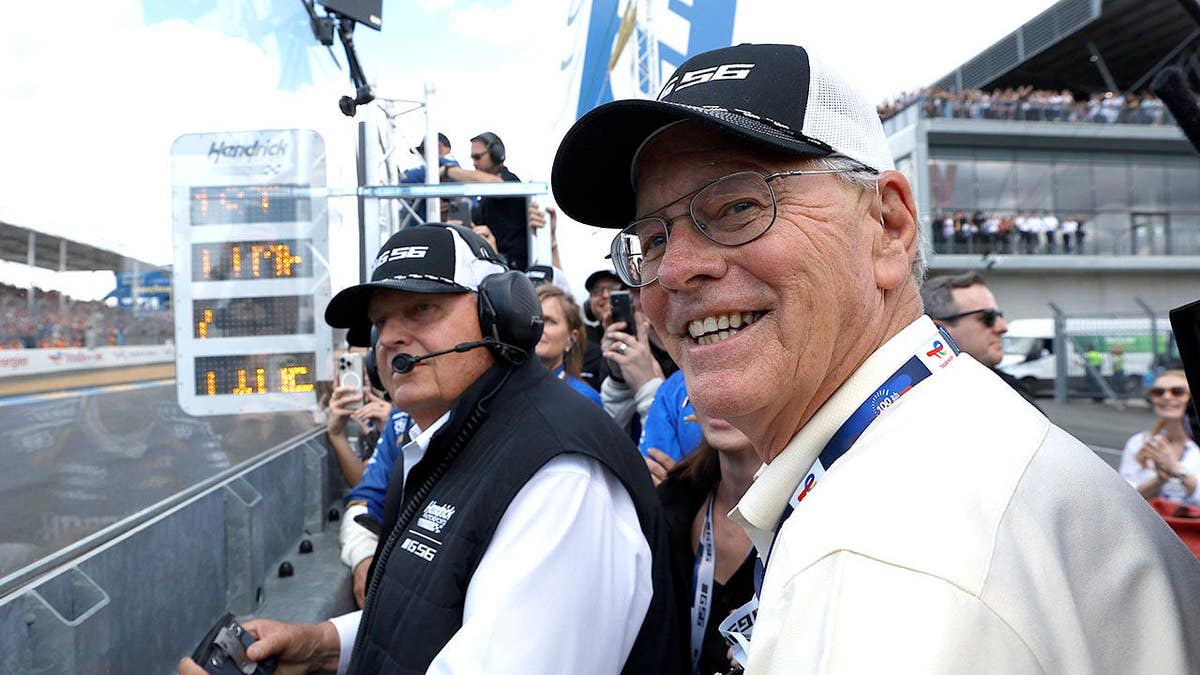
Jim France, chairman and CEO of NASCAR, and team owner Rick Hendrick celebrate as the No. 24 NASCAR Next Gen Chevrolet ZL1 finishes the 100th anniversary of the 24 Hours of Le Mans at the Circuit de la Sarthe in Le Mans, France, on June 10, 2023. (Chris Graythen/Getty Images)
LONGTIME NASCAR CREW CHIEF TELLS WILD STORY ABOUT ONE OF THE SPORT’S BIGGEST CHARACTERS
France took on both roles in August 2018, shortly after his nephew, Brian, stepped down.
France’s 54% ownership stake of NASCAR will remain unchanged — Kennedy’s mother owns the other 46%.
This is hardly the first seismic change for NASCAR this year — Steve Phelps announced in January he was stepping down as commissioner in the wake of two racing teams, including one owned by Michael Jordan, filing an antitrust lawsuit against the company.
The suit unearthed inflammatory text messages Phelps sent during contentious revenue-sharing negotiations. Jordan’s 23XI Racing and NASCAR settled their suit in December.
He was named NASCAR’s first commissioner last season after a courting process for the same role by the PGA Tour. The opportunity with the PGA was revealed during December testimony in the trial.
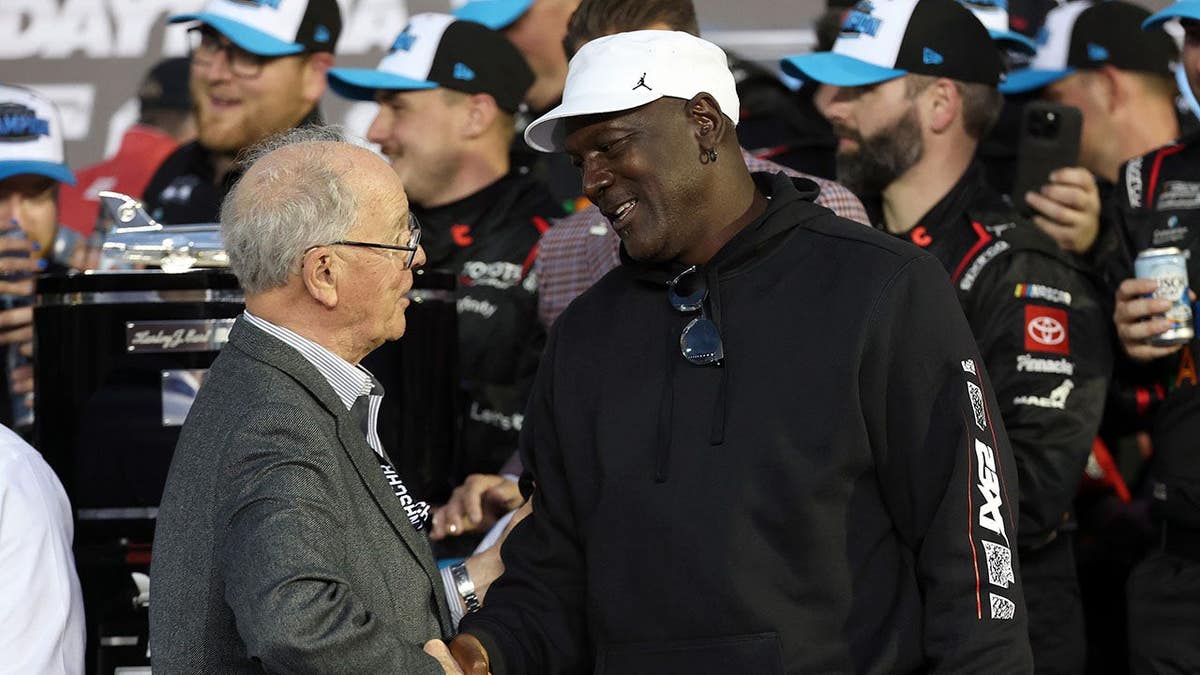
NASCAR Chairman and CEO Jim France congratulates NBA Hall of Famer and 23XI Racing co-owner Michael Jordan in victory lane after Tyler Reddick won the NASCAR Cup Series Daytona 500 at Daytona International Speedway in Daytona Beach, Florida, on Feb. 15, 2026. (Chris Graythen/Getty Images)
CLICK HERE TO DOWNLOAD THE FOX NEWS APP
France, however, is reportedly insistent that the lawsuits had nothing to do with his decision to step down, and it has been a thought for a long while.
Fox News’ Jackson Thompson and The Associated Press contributed to this report.
Follow Fox News Digital’s sports coverage on X, and subscribe to the Fox News Sports Huddle newsletter.
NEWYou can now listen to Fox News articles!
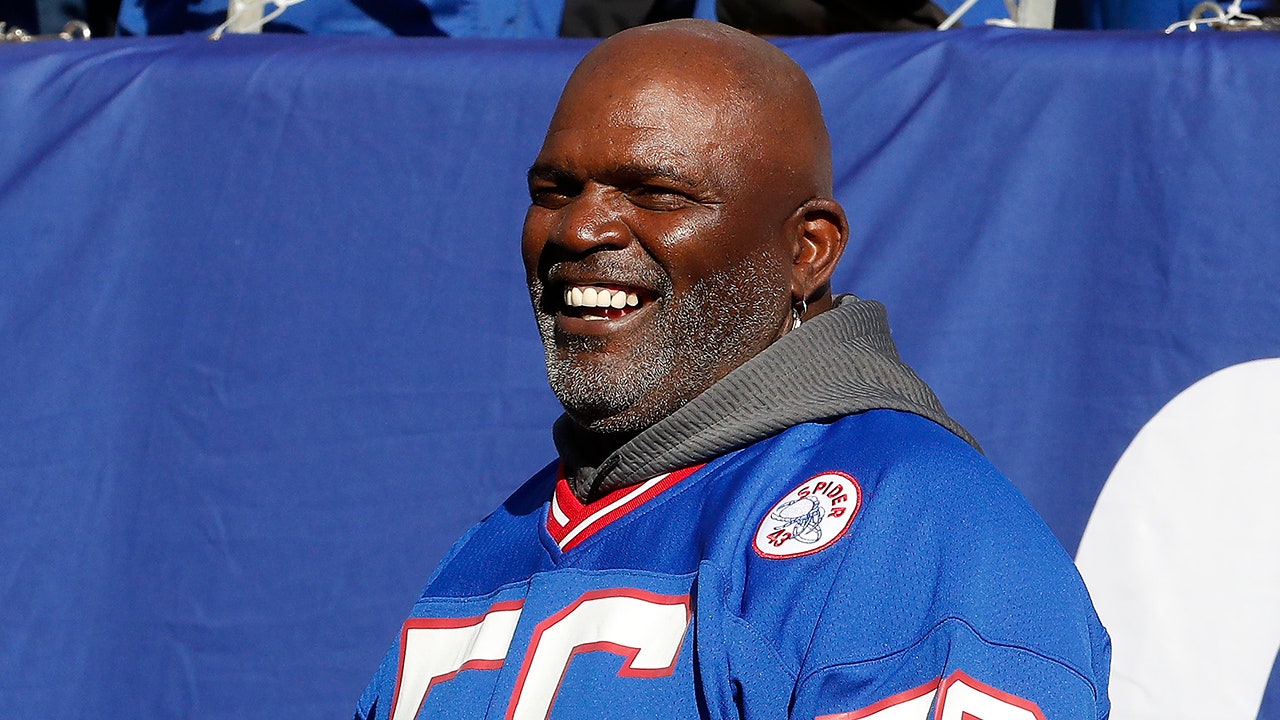
Pro Football Hall of Famer Lawrence Taylor was hospitalized on Friday, TMZ reported.
The New York Giants legend suffered a medical emergency in New Jersey, warranting the visit, the outlet said.
Taylor’s status is unclear at this time, but TMZ said that it does not appear to be serious, citing “those close to” him.
CLICK HERE FOR MORE SPORTS COVERAGE ON FOXNEWS.COM
Former New York Giant Lawrence Taylor attends a game between the Giants and the Indianapolis Colts at MetLife Stadium in East Rutherford, New Jersey, on Jan. 1, 2023. (Jim McIsaac/Getty Images)
Taylor’s former Giants did not immediately respond to an email.
L.T. is widely regarded as the greatest linebacker to ever play. He was a three-time NFL Defensive Player of the Year, including in his rookie season.
He won two Super Bowls, made 10 straight Pro Bowls and was named the MVP of the 1986 season. He also remains the franchise’s all-time sacks leader, which includes his 9½ sacks from his rookie season, before sacks became a stat.
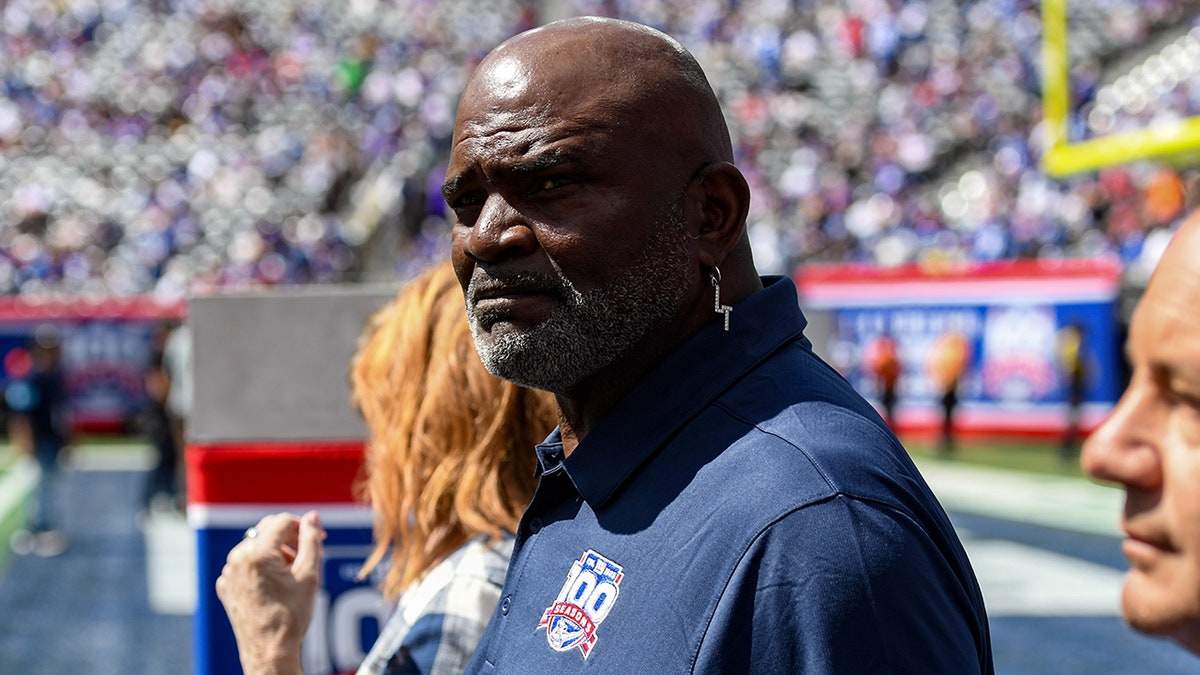
New York Giants legend Lawrence Taylor enters the field before a game against the Minnesota Vikings at MetLife Stadium in East Rutherford, New Jersey, on Sept. 8, 2024. (John Jones/Imagn Images)
This came despite a lavish lifestyle off the field, which resulted in legal troubles after his playing days. Drug problems have also resulted in health problems later in life.
Taylor showed his support for President Donald Trump in 2024, appearing at a rally in Wildwood, New Jersey.
“I grew up a Democrat, and I’ve always been a Democrat, until I met this man right here,” Taylor said to cheers. “Nobody in my family ever will vote for a Democrat again.”
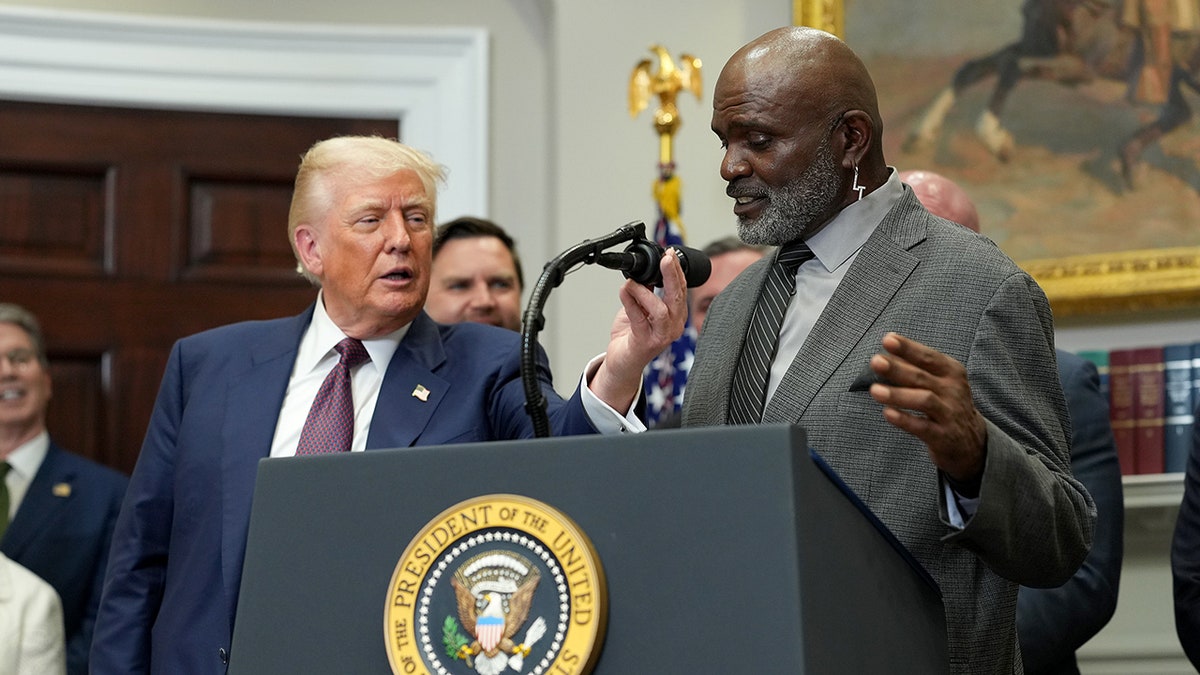
President Donald Trump and former New York Giants linebacker Lawrence Taylor attend an executive order signing ceremony in the Roosevelt Room of the White House in Washington, D.C., on July 31, 2025. The order formally reestablishes the Presidential Fitness Test, creating school-based programs that reward excellence in physical education. (Eric Lee/Bloomberg)
CLICK HERE TO DOWNLOAD THE FOX NEWS APP
Taylor made Giants headlines last year when he quickly turned down Abdul Carter’s request to wear his No. 56 that has been retired by the organization since 1994, just one season after he retired.
Follow Fox News Digital’s sports coverage on X, and subscribe to the Fox News Sports Huddle newsletter.
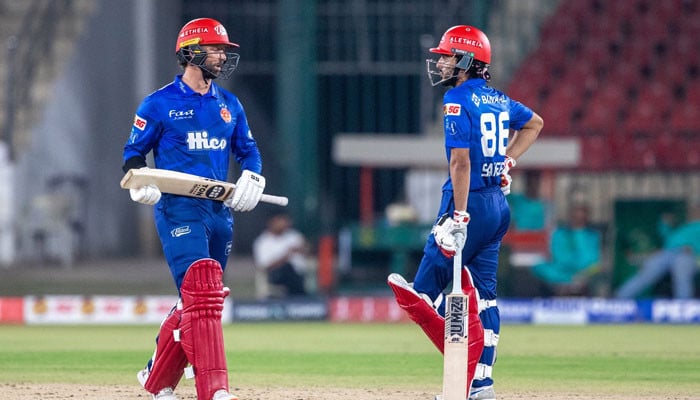
KARACHI: Islamabad United on Friday handed Hyderabad Kingsmen a humiliating eight-wicket defeat in the 36th match of the ongoing Pakistan Super League (PSL) 11 at the National Bank Stadium.
The victory, which marked United’s fifth in the ongoing eight-team tournament, propelled the three-time champions into the playoffs, joining leaders Peshawar Zalmi and 2021 champions Multan Sultans.
Set to chase a modest 81-run target, the United comfortably knocked the winning runs for the loss of just two wickets and 80 balls to spare.
The 2024 champions, however, had a contrasting start to the pursuit as they lost left-handed opener Devon Conway (zero) on the second delivery of the innings.
But Sameer Minhas and Mohsin Riaz batted sensibly to put United within touching distance as they put together 79 runs for the second wicket until Ali struck again, dismissing Riaz, who top-scored with 42 off just 18 deliveries, studded with six fours and two sixes.
Minhas, on the other hand, remained unbeaten with 27 off 20 deliveries, featuring three fours and a six, while skipper Shadab hit the winning runs in the same over with a boundary on the first delivery he faced.
For the Kingsmen, Mohammad Ali remained the solitary wicket-taker in the gruelling defeat with two scalps.
United captain Shadab Khan’s decision to field first paid dividends as his team’s bowling unit booked the new entrants for 80 in 15.5 overs.
Kingsmen got off to the worst possible start to their innings as Gleeson dismissed Maaz Sadaqat (zero) on the first delivery of the innings.
The right-arm pacer swept through their top order by getting rid of Marnus Labuschagne (five) and Saim Ayub (12) in his next two overs and brought the total down to 24/3.
Following Gleeson’s early blitz was backed by the experienced spin duo of captain Shadab and Imad Wasim as they dismantled Kingsmen’s middle and lower orders by taking three wickets each despite last match centurion Usman Khan’s grit.
The wicketkeeper batter waged a lone battle for the Kingsmen with an unbeaten 25 off 35 deliveries, during which he struck only one boundary.
Besides Usman and Saim, only Kusal Perera and Asif Mehmood, 12 each, could amass double figures against a ruthless United bowling attack.
For United, Gleeson, Imad and Shadab bagged three wickets each, while left-arm pacer Salman Mirza chipped in with one scalp.
Playing XIs
Hyderabad Kingsmen: Maaz Sadaqat, Marnus Labuschagne (c), Saim Ayub, Kusal Perera, Usman Khan (wk), Glenn Maxwell, Muhammad Irfan Khan, Hassan Khan, Hunain Shah, Mohammad Ali and Asif Mehmood.
Islamabad United: Devon Conway (wk), Sameer Minhas, Mark Chapman, Mohsin Riaz, Shadab Khan (c), Haider Ali, Faheem Ashraf, Chris Green, Imad Wasim, Richard Gleeson and Salman Mirza.


NASCAR makes major change in front office, including new CEO in unprecedented move: report

Extended interview: Don Cheadle – CBS News

Charlie Sheen updates on relationship with old pal Jon Cryer

-

 Fashion1 week ago
France’s LVMH Q1 revenue falls 6%, shows resilience amid Iran war
-

 Tech1 week ago
CYBERUK ’26: UK lagging on legal protections for cyber pros | Computer Weekly
-

 Sports5 days ago
WWE WrestleMania 42 Night 2: Live match results and analysis
-
 Sports1 week ago
Faheem Ashraf backs Islamabad United’s push, calls league a ‘career-changing platform’
-

 Sports5 days ago
NCAA men’s gymnastics championship: All-time winners list
-
 Business1 week ago
PepsiCo earnings beat estimates as North American food business improves
-

 Tech1 week ago
Anthropic Plots Major London Expansion
-

 Entertainment4 days ago
Lee Anderson, Zarah Sultana kicked out of UK Parliament for calling PM ‘liar’