

Sports
No more Nimmo, Timmy Trumpet and their all-time HR king: Remaking the Mets after historic collapse

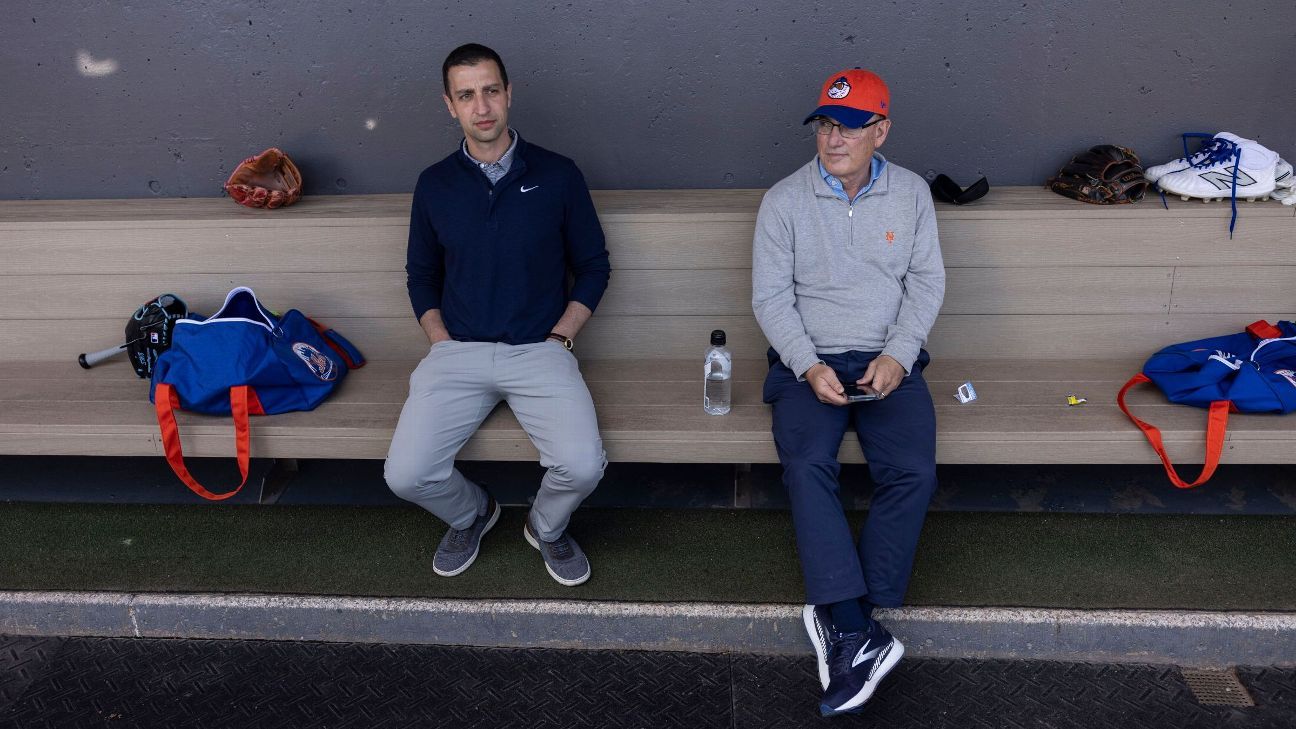
The New York Mets arrived in Orlando, Florida, for the winter meetings last week with a chance to re-sign closer Edwin Diaz and first baseman Pete Alonso.
Díaz had already received two contract offers — one of three years from the Los Angeles Dodgers and another of five years from the Atlanta Braves. Díaz, though miffed by the Mets not alerting him before signing free agent reliever Devin Williams a few days before, still wanted to wait for an offer from his longtime team, sources told ESPN.
The offer came on Dec. 7: three years, $66 million with $21 million deferred over 10 years. Negotiations continued from there, and the Mets ultimately produced another offer, adding a $9 million signing bonus to match the Dodgers, with the $21 million deferred over 15 years.
But Díaz, who turns 32 in March, wanted an annual average value of at least $20 million and less deferred money spread over a shorter period. The Mets, according to a source, refused to meet those terms. The Braves, though offering more years, also declined to meet the criteria.
That left the Dodgers, the two-time defending World Series champions — with a nudge from Díaz’s Puerto Rican compatriot Kiké Hernández — to make an improved third offer: three years, $69 million with a $9 million bonus, $13.5 million in deferred money over 10 years, and a conditional $6.5 million option for 2029 that would trigger if he spends a certain number of days on the injured list. Díaz accepted, giving the Dodgers another All-Star for their loaded roster and another hole for the Mets to fill.
The next day, Alonso agreed to a five-year, $155 million contract with the Baltimore Orioles — terms so far beyond the Mets’ valuation of the 31-year-old slugger that they didn’t even make the franchise’s all-time home run leader a formal offer, according to sources, after showing real interest in fellow slugger Kyle Schwarber before he re-signed with the Philadelphia Phillies. On Friday, the day Díaz and Alonso were introduced by their new teams, the Toronto Blue Jays outbid the Mets for reliever Tyler Rogers, whom the Mets had acquired at the trade deadline for a doomed playoff push.
The losses, less than three weeks after Mets president of baseball operations David Stearns traded Brandon Nimmo to the Texas Rangers for Marcus Semien in a swap of veterans with expensive contracts, were jarring to the fan base. In a vacuum, each decision can be explained with sound logic. But the departure of three mainstays — plus Rogers — produced an emotional firestorm. Nimmo, Alonso and Díaz were core players and fan favorites, with talent and personality that made them main characters at Citi Field for years. Now they are gone.
The Mets’ offseason, which began with most of manager Carlos Mendoza’s coaching staff shown the door, has thus far made one point clear: Stearns believes an overhaul is necessary after the team’s slow-motion collapse this year eradicated the previous season’s unforeseen run to the National League Championship Series. He determined the core wasn’t good enough not only after the Mets lost the final NL wild-card spot to the Cincinnati Reds on the last day of the 2025 campaign with a payroll of $340 million, but also because the team has now posted just two postseason series wins in seven seasons. Steve Cohen, the richest owner in baseball, has given Stearns the green light to operate as he sees fit — with calculated discipline — in his third offseason at the helm.
“I think we’re always weighing how certain transactions fit into the larger puzzle of the resources we have,” Stearns said at the winter meetings. “We have a lot of resources. No team has unending resources, and I’ve said that before. We’ve got all the resources we need, all of the payroll space. We need to put a really good team on the field. That doesn’t mean it’s infinite, nor should it be.”
Now the pressure is on Stearns to complement the Mets’ two remaining cornerstones — Francisco Lindor and Juan Soto — with the necessary personnel to rebound from 2025 and soothe the fan base.
The offseason is far from over. There are moves to make and they’ve already begun — the Mets initiated their pivot on Saturday, when they signed veteran infielder Jorge Polanco to a two-year, $40 million contract. With a projected payroll already pushing $300 million, what could be next for Stearns & Co.?
Here’s a unit-by-unit look.
The starting rotation
Starting pitching, the No. 1 reason for the Mets’ downfall in 2025, has so far been largely unaddressed. That will undoubtedly change. The Mets added depth by claiming Cooper Criswell off waivers from the Boston Red Sox, but they are determined to make more substantial modifications to a group that currently includes Nolan McLean, David Peterson, Clay Holmes, Sean Manaea, Kodai Senga, Jonah Tong and Brandon Sproat.
For one, New York has informed teams that Peterson and Senga are available in potential contract swap trades, rival executives told ESPN, similar to the Nimmo-for-Semien exchange. Why trade from the rotation when they’re looking to improve it? The goal is to add front-line talent alongside the promising McLean.
“I think the trade market, in general, agnostic of position, is pretty active,” Stearns said. “And I think there’s a lot of chatter, and has been throughout this offseason, among teams in the trade market. Seems like teams in general are maybe a little bit more open and willing to be creative, to talk about different types of structures, to talk about need-for-need-type trades at the major league level than maybe we’ve seen over the past couple of years at least.”
Stearns strongly prefers not to give long-term contracts to starting pitchers in their late 20s and into their 30s. So, left-handed ace Framber Valdez, at 32, is a potential option only if his market craters and he’s open to a short-term deal. Michael King, a high-upside right-hander coming off an injury-plagued age-30 season with the San Diego Padres, could qualify for the Mets’ short-term preference. The former New York Yankee has a 2.93 ERA since converting from reliever to starter in August 2023, good for seventh in the majors among starters with at least 250 innings pitched.
In the trade market, Milwaukee Brewers ace Freddy Peralta, who is owed just $8 million in 2026 before reaching free agency, is available for the right terms, sources told ESPN. The right-hander went 17-6 with a 2.70 ERA in 33 starts last season and has a 3.40 ERA in 95 starts over the past three seasons. Stearns is also familiar with Peralta from his eight years leading Milwaukee’s front office.
The Padres, looking to offload payroll, are open to trading right-hander Nick Pivetta one year after giving him a four-year, $55 million contract, sources told ESPN. Pivetta, 32, had his best big league season in 2025, registering a 2.87 ERA in 181⅔ innings across 31 starts. The Washington Nationals are also exploring trading MacKenzie Gore, a 26-year-old left-hander with two years of team control remaining. Gore was an All-Star for the first time in 2025, finishing with a 4.17 ERA in 30 starts after a turbulent second half.
Then there’s Tarik Skubal, arguably the best pitcher in the world. Detroit Tigers president of baseball operations Scott Harris has not shut down speculation of trading the two-time defending AL Cy Young Award winner — he instead recently reiterated there aren’t any “untouchables” in the organization — but it would take a huge haul for a player who is just one year from free agency. The Tigers also want to compete in a very winnable AL Central after consecutive playoff appearances, and they ultimately have until the trade deadline to move him.
Industry consensus is the Mets’ farm system has drastically improved in recent years, giving them the ammo to land established top-tier major leaguers in trades even if their top two prospects — McLean and outfielder Carson Benge — are off the table.
The bullpen
Díaz’s departure means no more of his signature Timmy Trumpet-infused entrances from the bullpen at Citi Field, and, more importantly, that Williams — signed to a three-year, $51 million deal — will assume the closer role.
“And we’re very comfortable with that,” Stearns said hours after news of Díaz’s decision broke last week. “I’ve certainly seen Devin perform at a very high level for a long time. I have full confidence that he can be one of the best relievers in baseball. I think he’s very motivated to do that, and I’m looking forward to watching.”
But the Mets’ front office has plenty of work left to do in the bullpen. As it stands, left-handers A.J. Minter, who will be coming off surgery for a lat tear, and Brooks Raley are the top established relievers outside of Williams.
The Mets also already missed out on Rogers, who agreed to a three-year, $37 million contract with a vesting option for a fourth year with Toronto, and Robert Suarez, who signed a three-year, $45 million contract with the Braves. Remaining options in free agency include Pete Fairbanks, Seranthony Dominguez, Luke Weaver, Brad Keller, Pierce Johnson, Kirby Yates and Shawn Armstrong.
The best possible replacement for Díaz could be Mason Miller if the Padres are willing to trade him. Miller, 27, has established himself as one of the top relievers in baseball with a fastball that averages over 100 mph. The right-hander compiled a 0.77 ERA in 22 appearances after the Padres acquired him at the trade deadline from the A’s for a four-player package that included shortstop Leodalis De Vries, one of the top prospects in the sport.
The infield
The 32-year-old Polanco, originally a shortstop before transitioning to second base, hasn’t logged an inning at first base in his 12-year major league career. Still, the Mets plan on using him there, as well as at designated hitter. Knee and hamstring injuries plagued the switch-hitter in 2023 and 2024 before he posted one of his best seasons in 2025, hitting 26 home runs with an .821 OPS in 138 games for the Seattle Mariners.
The other options for first base and designated hitter are Jeff McNeil and Mark Vientos. The Mets, however, have informed teams that both players are available in trades, rival executives told ESPN. McNeil, a 33-year-old former batting champion who can play around the diamond, is owed $15.75 million in 2026 and has a club option for the same amount for 2027. Vientos, 26, grades out as a subpar defender but enjoyed a breakout season in 2024, hitting 27 home runs with an .837 OPS in 111 games, before regressing to a .233/.289/.413 slash line and 17 home runs in 121 games in 2025. He is under team control through 2029.
Otherwise, the Mets’ infield appears set with Semien at second base, Lindor at shortstop, Brett Baty at third base and Francisco Alvarez behind the plate.
The outfield
With Soto entrenched in right field — Mendoza recently said having Soto DH is off the table despite his substantial defensive regression last season because Soto doesn’t like the role — the Mets have a hole in left field after trading Nimmo and could use an upgrade in center.
“I think between what’s available in free agency and some of the names that are being talked about in the trade market, that there’s a pretty robust group out there,” Stearns said of available outfielders during the winter meetings. “There’s a pretty robust market, and we’re going to continue to explore that. And I also think we’ve got some really good internal candidates as well.”
If the season began tomorrow, McNeil would play left field with Tyrone Taylor or Benge in center. Stearns has said he expects Benge, a first-round pick in 2024, to contribute in 2026, and that could be in center or left.
External outfield options include free agents Cody Bellinger and Kyle Tucker or trading from the team’s starting pitching depth for a contractually cheaper alternative. Bellinger could play center, left and first base. Tucker hasn’t played left field since 2020.
Both players seek long-term contracts, which could give Stearns pause. He has remained firm in his approach during a transformative offseason. Time will tell if the approach is the right one.
ESPN’s Jeff Passan and Alden González contributed to this report.
NEWYou can now listen to Fox News articles!
Philadelphia 76ers star Tyrese Maxey was downcast after falling to the New York Knicks in Game 4 on Sunday night, leading to an early second-round playoff exit.
Maxey appeared to be more upset with the fan support.
ZERO BS. JUST DAKICH. TAKE THE DON’T @ ME PODCAST ON THE ROAD. DOWNLOAD NOW!
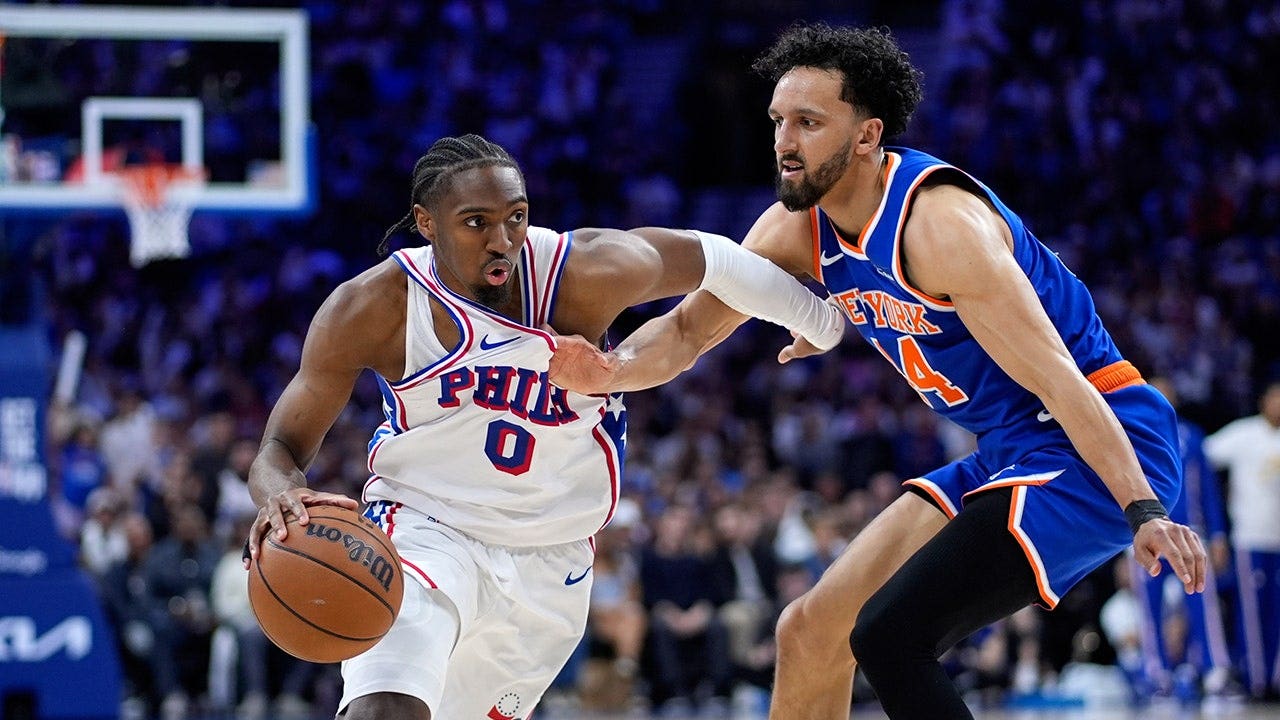
Philadelphia 76ers’ Tyrese Maxey tries to get past New York Knicks’ Landry Shamet during the second half of Game 3 in a second-round NBA playoff series in Philadelphia on May 8, 2026. (Matt Slocum/AP)
Knicks fans swarmed the Xfinity Mobile Arena in Philadelphia for both Games 3 and 4. They got a front-row seat to watch their team sweep their Atlantic Division rival. Knicks fans even went as far as infiltrating local news broadcasts in celebration.
Maxey spoke about the fans in his postgame press conference.
“It absolutely sucks, if I’m being honest. It just sucks,” he said, via SNY TV. “That’s really all I can say about it, man. It’s hard. It’s definitely difficult. It’s only one way to put a stop to it and it’s, we have to go out there and win these games.
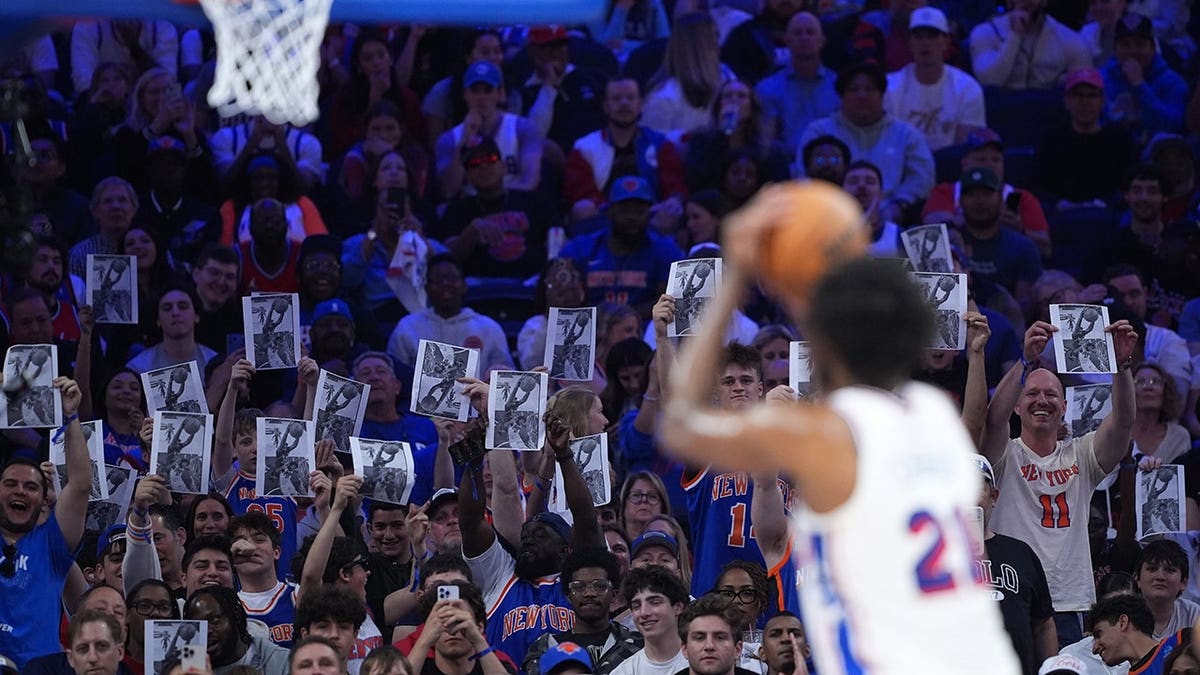
Joel Embiid of the Philadelphia 76ers shoots a free throw during the first half of Game 4 against the New York Knicks in the second round of the NBA playoffs in Philadelphia on May 10, 2026. (Matt Slocum/AP)
CLICK HERE FOR MORE SPORTS COVERAGE ON FOXNEWS.COM
“Just being completely honest, we were better when we played them in the Garden this entire season. I know we lost Game 2 and 1, but Game 2 was better. The regular season was better. I was telling them, it felt louder here for them than it did in the Garden.”
He said it was up to the team to drown out the noise.
“We got to put a stop to it as a team,” Maxey added. “Winning these games, that’s gonna make our fans louder than theirs or whatever. I don’t know how to keep them out. I don’t know the logistics of it, but it does suck. I can’t even lie. It definitely does suck.”
New York blew the doors off Philadelphia in Game 4 with a 144-114 win.
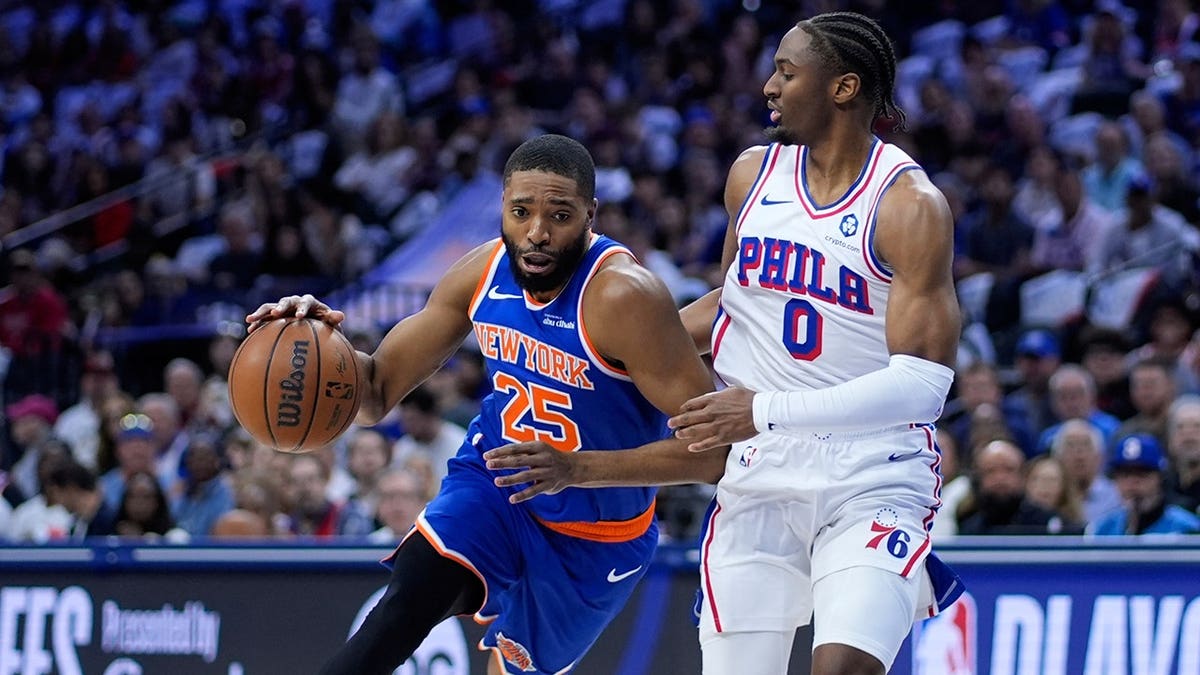
Tyrese Maxey of the Philadelphia 76ers defends Mikal Bridges of the New York Knicks during the first half of Game 4 in the second-round NBA playoffs in Philadelphia on May 10, 2026. (Matt Slocum/AP)
CLICK HERE TO DOWNLOAD THE FOX NEWS APP
It was the eighth time in the last nine playoff appearances that the 76ers haven’t at least made it to the Eastern Conference Finals. Philadelphia hasn’t gotten that far in the postseason since making the 2001 NBA Finals.
Sports
Orioles pitcher takes part in gender reveal as he walks off mound following relief appearance
NEWYou can now listen to Fox News articles!
A gender reveal took the field at Camden Yards during the Baltimore Orioles’ game against the Athletics on Sunday afternoon.
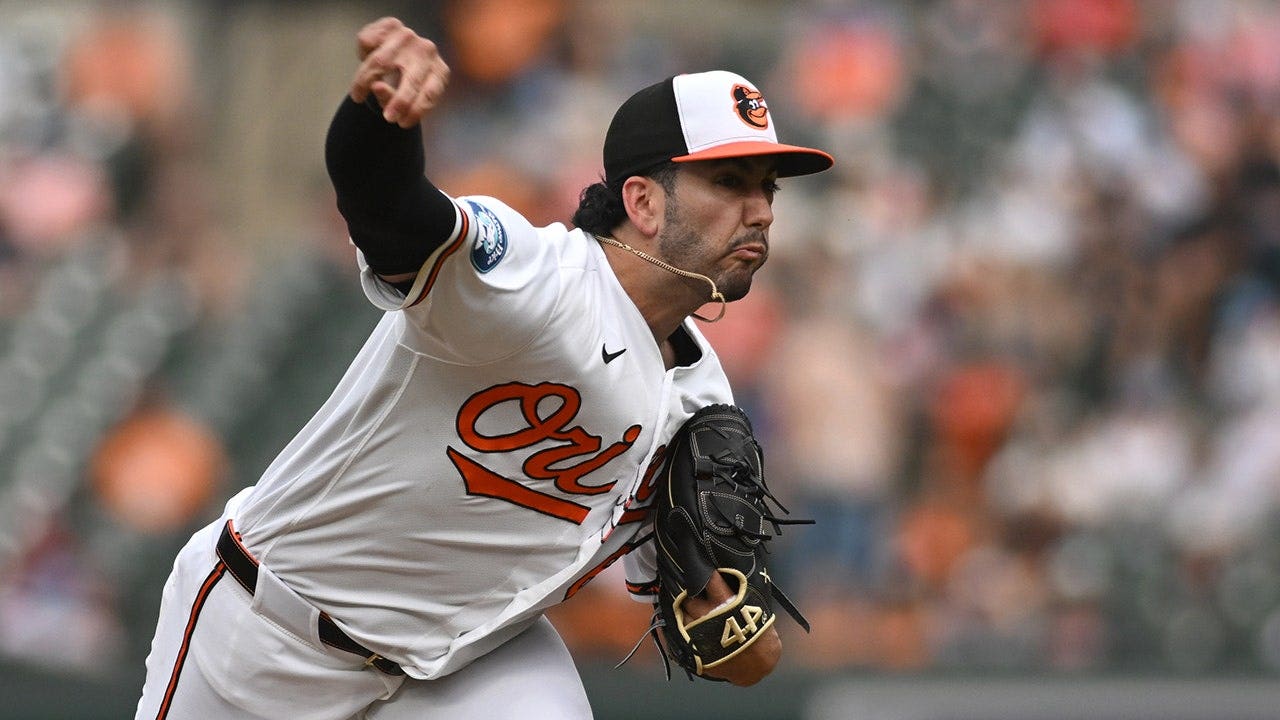
Orioles pitcher Anthony Nunez gave Baltimore one inning of work and helped keep the team’s 2-1 lead in their eventual win. As he walked off the field, he mouthed to the camera, “It’s a boy.”
ZERO BS. JUST DAKICH. TAKE THE DON’T @ ME PODCAST ON THE ROAD. DOWNLOAD NOW!
Baltimore Orioles pitcher Anthony Nunez delivers a pitch against the Athletics during the eighth inning of a baseball game in Baltimore on May 10, 2026. (Steve Ruark/AP)
It was an apparent message to his brother and sister-in-law.
“Anthony is mouthing ‘it’s a boy’ for some family members,” MASN broadcaster Kevin Brown said. “His brother and sister-in-law, Danny and Makayla Delgado, are expecting child No. 3. And that, folks, is one of the most creative gender reveals you’ll ever see. Anthony had the answer. Danny and Makayla did not know, and I hope that you two are watching.”
Nunez explained that his family was together for Mother’s Day and that his brother was hoping to surprise them.
CLICK HERE FOR MORE SPORTS COVERAGE ON FOXNEWS.COM

Baltimore Orioles players Taylor Ward, Shane Baz, Adley Rutschman and Dylan Beavers high-five after defeating the Athletics in Baltimore on May 10, 2026. (Steve Ruark/AP)
“He just announced to them today that they were having their third kid, and he wanted to do the gender reveal,” he said, via the Baltimore Sun.
Orioles shortstop Gunnar Henderson and outfielder Dylan Beavers contributed with RBI against Athletics starter Luis Severino.
Chris Bassitt was credited with the win for the Orioles. He came in after opener Keegan Akin threw one inning. Bassitt tossed six innings, allowing one run on four hits in six innings.
Rico Garcia picked up his third save for the Orioles.
A’s outfielder Carlos Cortes drove in the lone run, scoring Tyler Soderstrom.
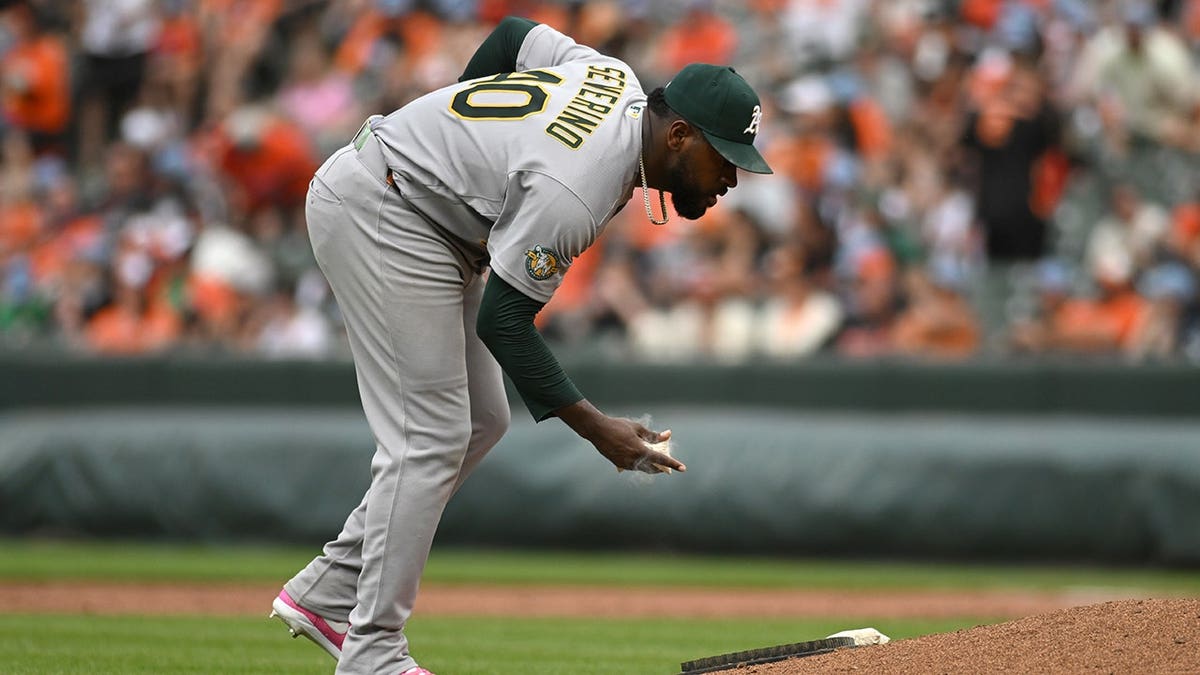
Athletics starting pitcher Luis Severino uses a rosin bag during the sixth inning against the Baltimore Orioles in Baltimore on May 10, 2026. (Steve Ruark/AP)
CLICK HERE TO DOWNLOAD THE FOX NEWS APP
Baltimore improved to 18-23 on the year. The A’s fell to 21-19.
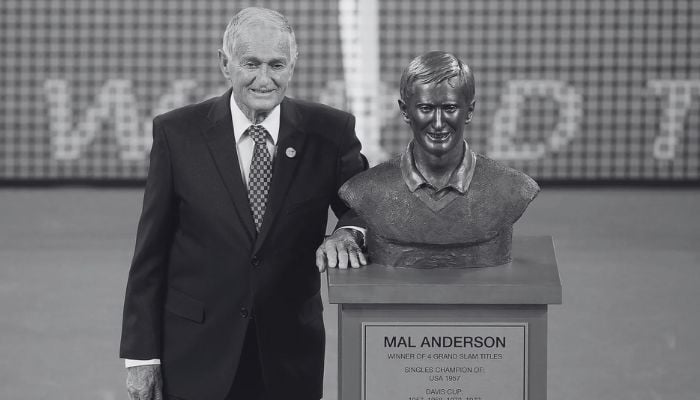
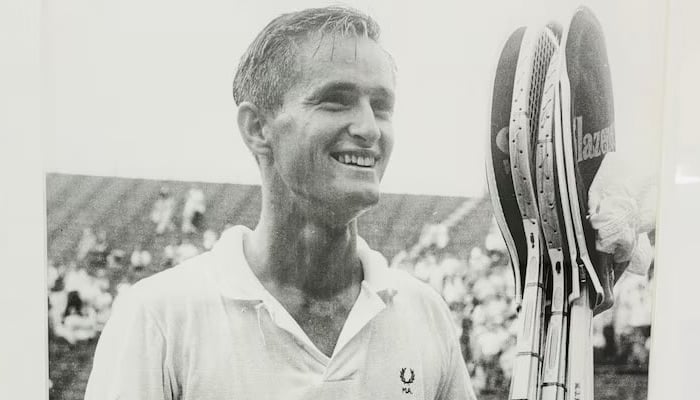
SYDNEY: Mal Anderson, the first unseeded player to win the US Open men’s singles title, has died aged 91, Tennis Australia said on Monday.
Anderson’s career started on a dirt court on a farm and he went on to become an Australian tennis great, winning the US crown in 1957 and three major doubles titles.
Although unseeded at what was then the United States Championships, Anderson beat three seeds and dropped only two sets on his way to the title.
He also won the Davis Cup twice.
After retirement Anderson mentored young Australian players including Pat Rafter, who went on to become world number one.
“I was really sad to hear of Mal’s passing. He was one of those people who helped shape my tennis from very early on,” said Rafter, who twice won the US Open.
“He was a true legend of the game, but more importantly he was a terrific bloke — humble, generous with his time and always happy to help younger players along.
“Tennis in Australia has lost one of its greats, and a lot of us have lost a mate and mentor. I feel very lucky to have known him.”


At TV upfronts, AI is in and corporate shuffles are reshaping the lineup
Ovo energy customers urged not to panic as takeover by E.On planned

Iran war raises stakes for US and China ahead of Trump–Xi talks

-

 Politics1 week ago
Iran weighs US reply delivered via Pakistan as Trump signals opposition to deal terms
-

 Fashion1 week ago
US cotton export sales show strong recovery, Upland rise 36%
-

 Sports1 week ago
Sajid Ali Sadpara summits world’s fifth-highest peak
-

 Tech1 week ago
DHS Demanded Google Surrender Data on Canadian’s Activity, Location Over Anti-ICE Posts
-
 Business1 week ago
Heineken to invest £44.5m in hundreds of pubs creating 850 jobs
-

 Fashion1 week ago
Middle East conflict clouds India’s FY27 GDP forecast of 7-7.4%: Govt
-
 Business1 week ago
UK airlines to be allowed to cancel flights in advance over fuel shortages
-
 Business1 week ago
Government notifies FDI changes on China funds – The Times of India