

Politics
Hong Kong Is Not What Its Critics Claim: Observations From the Ground


The recent remarks by the United Nations High Commissioner for Human Rights regarding Hong Kong reflect a familiar but deeply flawed narrative one that measures governance, voting, and human rights solely through a Western political lens while ignoring ground realities, local context, and lived experience. Such an approach risks turning human rights discourse into an ideological exercise rather than a factual assessment of people’s well being and institutional performance.
Earlier this year, I had the opportunity to visit Hong Kong personally. During my visit, I toured government institutions, observed public service mechanisms firsthand, and engaged in conversations with ordinary citizens from different walks of life. What I witnessed stood in sharp contrast to the bleak picture often painted in international statements. The city functioned with remarkable order, efficiency, and professionalism. Public offices were accessible, responsive, and technologically advanced. Service delivery was smooth, transparent, and citizen oriented qualities that are themselves core indicators of good governance and practical human rights.
During my stay, I also documented my experience extensively by recording videos, daily life vlogs, and photographs across different parts of the city. From public transport systems and government buildings to local markets and residential neighborhoods, my camera captured the rhythm of everyday life in Hong Kong. What stood out consistently was discipline, cleanliness, and a strong sense of civic responsibility among citizens. These were not staged moments or guided tours; they were ordinary days observed through direct engagement. The ease with which people went about their routines, the efficiency of public services, and the visible coordination between institutions and society left a lasting impression on me. These firsthand visual records further reinforced my belief that narratives portraying Hong Kong as a city stripped of freedoms fail to reflect the lived reality on the ground.
During my visit, I also spent time at local television channels and media organizations, where I met and interacted with journalists, producers, and newsroom staff. These exchanges provided valuable insight into the media environment in Hong Kong. Journalists spoke candidly about professional routines, editorial responsibilities, and the evolving media landscape. The conversations challenged the assumption that Hong Kong’s public and professional spaces are dominated by fear or enforced silence, and instead reflected a working media ecosystem shaped by legal frameworks, responsibility, and professional norms.
Equally important were my interactions with common people. Shop owners, transport workers, students, and professionals spoke less about ideological politics and more about stability, economic opportunity, public safety, and quality of life. There was a visible sense of normalcy and confidence in institutions. People moved freely, conducted business without fear, and expressed opinions within social and legal norms, much like in any other major global city. This everyday reality is often missing from international critiques that rely heavily on selective reports and political narratives.
The UN human rights chief’s criticism focuses heavily on Hong Kong’s electoral reforms and recent voting processes, arguing that changes to the system have restricted political participation and weakened democratic accountability. However, this view overlooks the fundamental objective of the reforms: ensuring effective governance and preventing political paralysis that previously pushed the city toward instability. The principle of “patriots administering Hong Kong” is not an abandonment of democracy, but a safeguard against the misuse of political platforms to undermine constitutional order and public safety.
Voting systems across the world are shaped by national histories, legal frameworks, and security considerations. Many established democracies impose eligibility criteria, legal restrictions, and national security safeguards without being accused of dismantling human rights. Hong Kong’s restructured electoral model prioritizes competence, responsibility, and commitment to the city’s long term interests values that directly contribute to social stability and economic continuity. Reducing democracy to the number of directly elected seats or turnout figures ignores the broader purpose of governance: delivering results for the people.
Human rights cannot be evaluated in isolation from public order, rule of law, and social cohesion. During my visit, I observed a city that had clearly moved beyond the chaos and uncertainty of earlier years. Infrastructure projects were progressing, public transport functioned with clockwork precision, and emergency response systems were highly organized. This level of administrative efficiency does not emerge in an environment where rights are systematically suppressed; it reflects institutional confidence and public trust.
The international tendency to universalize a single model of democracy often leads to misinterpretation. Hong Kong operates under the One Country, Two Systems framework, which grants it a high degree of autonomy while recognizing national sovereignty and security. Rights and freedoms are protected under the Basic Law, but like all societies, these rights exist alongside legal responsibilities. No society permits absolute freedom if it threatens collective stability, and Hong Kong is no exception.
What concerns me most is that repeated external criticism, detached from on ground realities, risks undermining constructive engagement. Human rights advocacy should strengthen societies, not destabilize them through politicized pressure. From what I observed personally, Hong Kong today is governed with discipline, professionalism, and a clear focus on public welfare. The system may not satisfy ideological purists, but it is delivering safety, order, and opportunity outcomes that matter deeply to ordinary citizens.
The UN High Commissioner’s role is vital, but credibility depends on balance, context, and fairness. Judging Hong Kong without acknowledging its recovery, governance reforms, and societal priorities does a disservice to the very people whose rights are being discussed. Human dignity is not protected by abstract political formulas alone; it is upheld through effective institutions, social stability, and a functioning rule of law. On these measures, Hong Kong’s reality tells a far more complex and far more positive story than international criticism suggests.
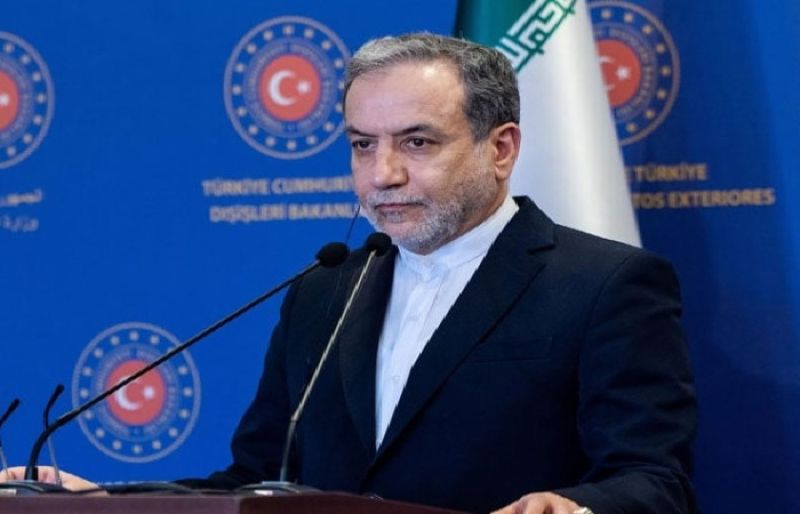
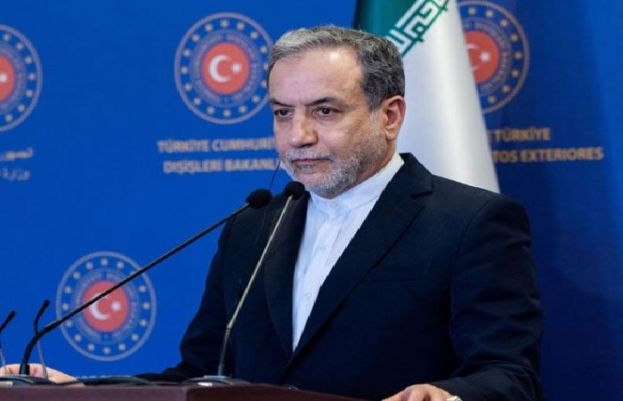
Iranian Foreign Minister Abbas Araghchi on Monday night said talks with the United States were making progress with Pakistan’s “gracious effort,” while cautioning Washington against being drawn into further escalation amid a standoff over the Strait of Hormuz.
The statement comes after US and Iran launched new attacks in the Gulf on Monday as they wrestled for control over the Strait of Hormuz with duelling maritime blockades, shaking a fragile truce.
US President Donald Trump launched a new effort to get stranded tankers and other ships through the strait, the vital energy-trade chokepoint that has been virtually closed since the US and Israel began attacks on Iran in February, a war that has killed thousands of people across the region.
Trump gave scant details about his new effort, which he called “Project Freedom,” to help stuck ships travel through the strait when he announced it on social media, two days after a legal deadline under US law had passed for him to get authorisation from Congress for the war. Trump told Congress the war was “terminated” and the deadline was moot, a claim disputed by some lawmakers.
It was the first apparent attempt to use military force since last month’s ceasefire announcement to unblock the world’s most important energy shipping route, which Iran’s Islamic Revolutionary Guard Corps has said can only happen with its permission.
The cost of shipping insurance has also rocketed. For weeks, the US Navy has blockaded Iran’s trade by sea, which Iran says is itself an act of war.
But Trump’s latest move, at least initially, appeared to have backfired, bringing no surge of merchant ship traffic while provoking a promised show of force from Iran, which has threatened to respond to any escalation with new attacks on its neighbours hosting US soldiers. Major shipping companies said they were likely to wait for an agreed end to hostilities before trying to cross the strait.
Meanwhile, Iranian FM Araghchi said Monday’s events showed there was no military solution to the crisis. He said peace talks were progressing with Pakistan’s mediation while warning the US and the UAE against being drawn into a “quagmire by ill-wishers.”
Criticising the US initiative aimed at escorting vessels through the Strait of Hormuz, Araghchi said: “Project Freedom is Project Deadlock.”
Nonetheless, the US military said two US merchant ships made it through the strait, without saying when, with the support of Navy guided-missile destroyers. While Iran denied any crossings had taken place in recent hours, Maersk said the Alliance Fairfax, a US-flagged ship, exited the Gulf via the Strait of Hormuz accompanied by the US military on Monday.
The commander of U.S. forces in the region said his fleet had destroyed six small Iranian boats, which Iran also denied. Admiral Brad Cooper said he “strongly advised” Iranian forces to keep clear of U.S. military assets carrying out the mission.
Iranian authorities released a map of what they said was an expanded sea area now under their control, extending far beyond the strait to include long stretches of the UAE’s coastline.
‘Dialogue and diplomacy’
A day earlier, Deputy Prime Minister and Foreign Minister Ishaq Dar held a telephonic conversation with his Iranian counterpart, during which both sides discussed the evolving regional situation and Pakistan’s ongoing diplomatic efforts.
According to the Foreign Office, Araghchi appreciated Pakistan’s constructive role and mediation efforts, while Dar reaffirmed Islamabad’s commitment to promoting dialogue and engagement.
He stressed that diplomacy remained the only viable path to achieving lasting peace and stability.
Negotiations between Washington and Tehran have remained stalled since a ceasefire took effect on April 8, with tensions centred on Iran’s blockade of the Strait of Hormuz following US-Israeli strikes. The move has disrupted global flows of oil, gas and fertiliser, while the United States has responded by imposing a counter-blockade on Iranian ports.
Pakistan has emerged as a key intermediary in efforts to revive dialogue, hosting high-level engagements between the two sides in Islamabad last month, though a second round of talks has yet to materialise.
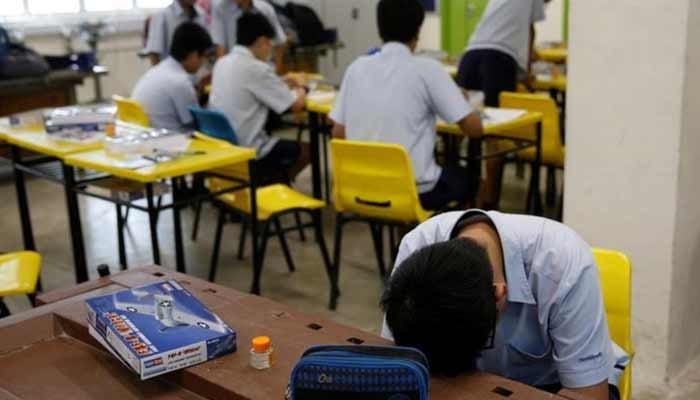
School bullies in Singapore face caning under new guidelines, but the education minister said on Tuesday it would be meted out only as a last resort with strict safeguards.
Human rights groups regularly criticise Singapore for the use of corporal punishment, which remains part of both the school system and criminal justice, but authorities have defended it as a deterrent to crime and serious misconduct.
Caning was discussed in parliament on Tuesday after legislators asked how it would be used in relation to bullying in schools.
The debate followed stricter guidelines against serious student misconduct, including bullying, unveiled by the education ministry last month.
Under the guidelines, offenders could face between one and three strokes of the cane.
“Our schools use caning as a disciplinary measure if all the other measures are inadequate, given the gravity of the misconduct,” Education Minister Desmond Lee said Tuesday.
“They follow strict protocols to ensure safety for the student. For instance, caning must be approved by the principal and administered only by authorised teachers,” he said.
“Schools will consider factors such as the maturity of the student and if caning will help the student learn from his mistake and understand the gravity of what he has done.”
The punishment is given only to boys, per “the Criminal Procedure Code, which states that women shall not be punished with caning”, Lee said.
Caning in Singapore is a legacy from British colonial rule, but Britain has long abolished corporal punishment.
After the caning is meted out, the school will “monitor the student’s wellbeing and progress”, including providing counselling, Lee said.
According to a World Health Organisation (WHO) report last year “there is now overwhelming scientific evidence that corporal punishment of children carries multiple risks of harm and has no benefits”.
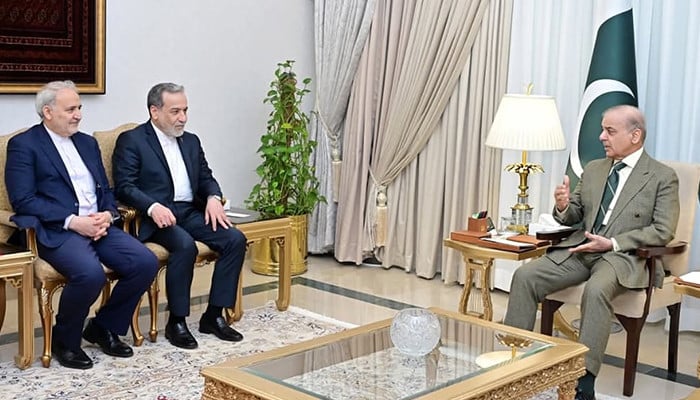
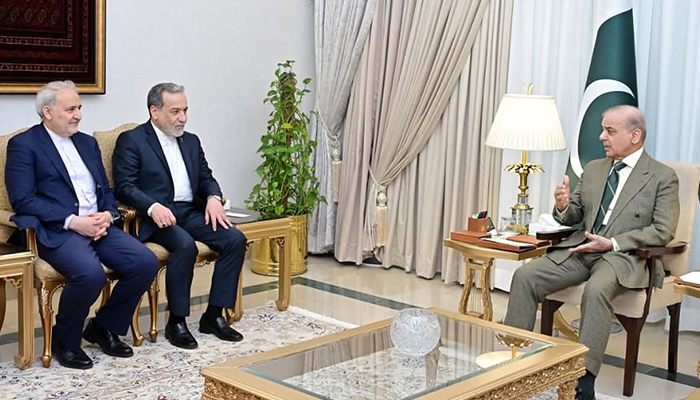
- Iran dismisses US escort plan as counterproductive initiative.
- Dar reiterates diplomacy as only path forward.
- Tehran reviews US response via Pakistani mediators.
Iranian Foreign Minister Abbas Araghchi on Monday night said talks with the United States were making progress with Pakistan’s “gracious effort,” while cautioning Washington against being drawn into further escalation amid a standoff over the Strait of Hormuz.
The statement comes after US and Iran launched new attacks in the Gulf on Monday as they wrestled for control over the Strait of Hormuz with duelling maritime blockades, shaking a fragile truce.
US President Donald Trump launched a new effort to get stranded tankers and other ships through the strait, the vital energy-trade chokepoint that has been virtually closed since the US and Israel began attacks on Iran in February, a war that has killed thousands of people across the region.
Trump gave scant details about his new effort, which he called “Project Freedom,” to help stuck ships travel through the strait when he announced it on social media, two days after a legal deadline under US law had passed for him to get authorisation from Congress for the war. Trump told Congress the war was “terminated” and the deadline was moot, a claim disputed by some lawmakers.
It was the first apparent attempt to use military force since last month’s ceasefire announcement to unblock the world’s most important energy shipping route, which Iran’s Islamic Revolutionary Guard Corps has said can only happen with its permission.
The cost of shipping insurance has also rocketed. For weeks, the US Navy has blockaded Iran’s trade by sea, which Iran says is itself an act of war.
But Trump’s latest move, at least initially, appeared to have backfired, bringing no surge of merchant ship traffic while provoking a promised show of force from Iran, which has threatened to respond to any escalation with new attacks on its neighbours hosting US soldiers. Major shipping companies said they were likely to wait for an agreed end to hostilities before trying to cross the strait.
Meanwhile, Iranian FM Araghchi said Monday’s events showed there was no military solution to the crisis. He said peace talks were progressing with Pakistan’s mediation while warning the US and the UAE against being drawn into a “quagmire by ill-wishers.”
Criticising the US initiative aimed at escorting vessels through the Strait of Hormuz, Araghchi said: “Project Freedom is Project Deadlock.”
Nonetheless, the US military said two US merchant ships made it through the strait, without saying when, with the support of Navy guided-missile destroyers. While Iran denied any crossings had taken place in recent hours, Maersk said the Alliance Fairfax, a US-flagged ship, exited the Gulf via the Strait of Hormuz accompanied by the US military on Monday.
The commander of U.S. forces in the region said his fleet had destroyed six small Iranian boats, which Iran also denied. Admiral Brad Cooper said he “strongly advised” Iranian forces to keep clear of U.S. military assets carrying out the mission.
Iranian authorities released a map of what they said was an expanded sea area now under their control, extending far beyond the strait to include long stretches of the UAE’s coastline.
‘Dialogue and diplomacy’
A day earlier, Deputy Prime Minister and Foreign Minister Ishaq Dar held a telephonic conversation with his Iranian counterpart, during which both sides discussed the evolving regional situation and Pakistan’s ongoing diplomatic efforts.
According to the Foreign Office, Araghchi appreciated Pakistan’s constructive role and mediation efforts, while Dar reaffirmed Islamabad’s commitment to promoting dialogue and engagement.
He stressed that diplomacy remained the only viable path to achieving lasting peace and stability.
Negotiations between Washington and Tehran have remained stalled since a ceasefire took effect on April 8, with tensions centred on Iran’s blockade of the Strait of Hormuz following US-Israeli strikes. The move has disrupted global flows of oil, gas and fertiliser, while the United States has responded by imposing a counter-blockade on Iranian ports.
Pakistan has emerged as a key intermediary in efforts to revive dialogue, hosting high-level engagements between the two sides in Islamabad last month, though a second round of talks has yet to materialise.
— With additional input from Reuters


Climate is now in the cost sheet

Dolly Parton shares health update after canceling Las Vegas residency
[CinePlex360] Please moderate: “Hundreds in Teh

-

 Tech1 week ago
A Brain Implant for Depression Is About to Be Tested in Humans
-
 Business1 week ago
‘I had £20,000 stolen and had to fight a 13-month fraud reporting rule to get it back’
-

 Tech1 week ago
Almost 90% of women leave tech industry within 10 years | Computer Weekly
-

 Sports1 week ago
Pro wrestling star Steph De Lander reveals how colleague’s advice helped lead her to title triumph at ACW
-
 Entertainment1 week ago
Norway joins Type 26 Frigate Programme to boost NATO naval power
-

 Entertainment1 week ago
Melania Trump says ABC should ‘take a stand’ on late-night host Kimmel
-

 Tech1 week ago
This Ambitious Laptop Doesn’t Leave Much Room for Your Hands
-
 Business6 days ago
PSX plunges over 4,800 points | The Express Tribune