Connect with us

Business

Trump sanctions fail to dent flow? India’s oil imports from Russia top cross 1 million barrels a day; show resilience – The Times of India


Published

on

Trump sanctions fail to dent flow? India’s oil imports from Russia top cross 1 million barrels a day; show resilience – The Times of India


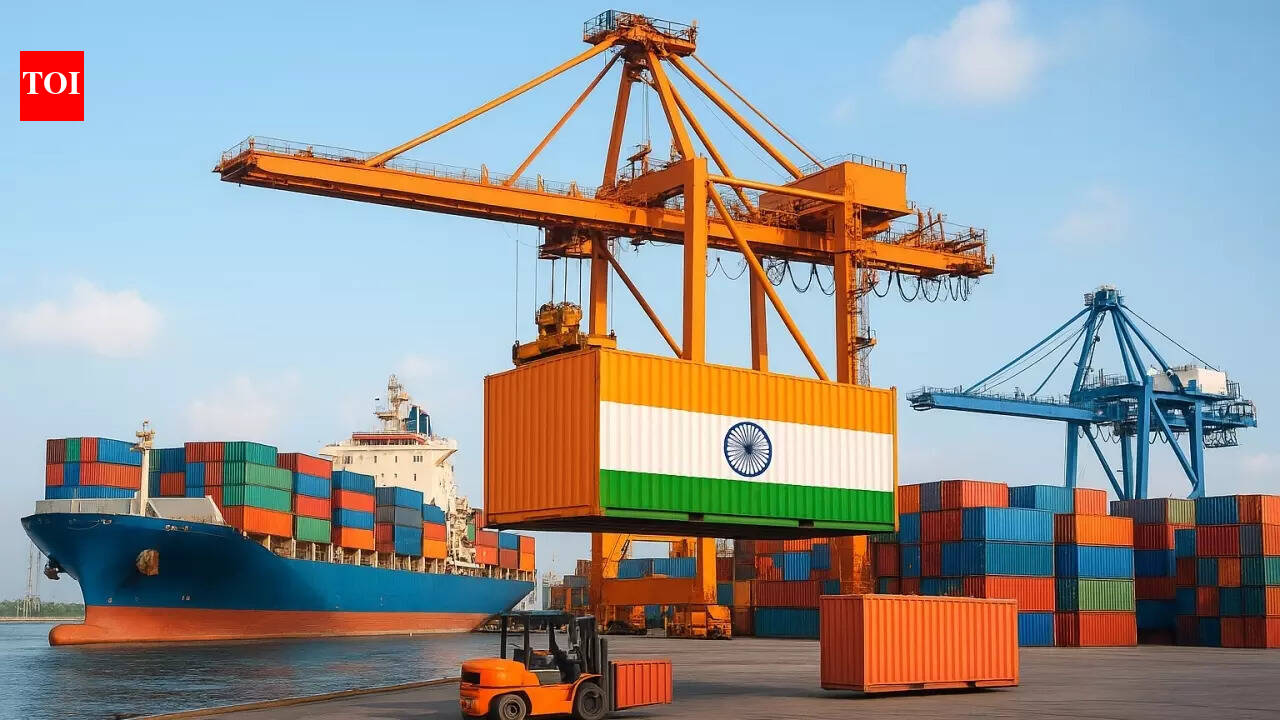
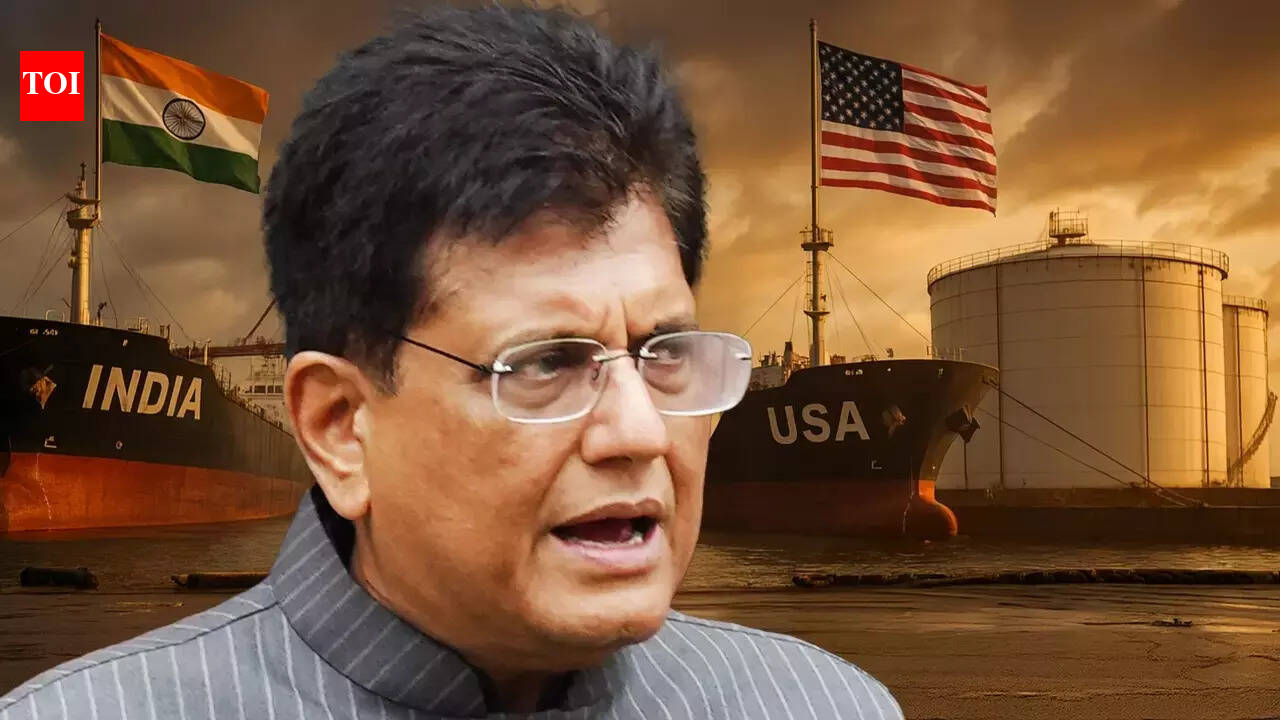
India’s imports of Russian oil are expected to cross 1 million barrels per day this December. (AI image)

Donald Trump’s sanctions on Russian oil majors don’t seem to have deterred Indian refiners from procuring crude – though non-sanctioned – from Russia. India’s crude oil imports from Russia are showing resilience in December, days after Trump’s sanctions on Russian firms Lukoil and Rosneft kicked in. The bilateral relationship has remained robust despite Western sanctions pressure.India’s imports of Russian oil are expected to cross 1 million barrels per day this December, according to trade and refining sources quoted in a Reuters report. This is against expectations of a significant reduction, as refiners continue purchasing from non-sanctioned entities that provide deep discounts.

India-Russia Crude Oil Trade Intact

* Data from trade sources quoted in the report indicates that India, the world’s third-largest crude importer, received 1.77 million bpd of Russian oil in November, showing a 3.4% increase from October. * Despite expectations of a significant decrease due to Trump’s sanctions on two major Russian producers, December deliveries are anticipated to surpass 1.2 million bpd, based on initial LSEG trade flow data.
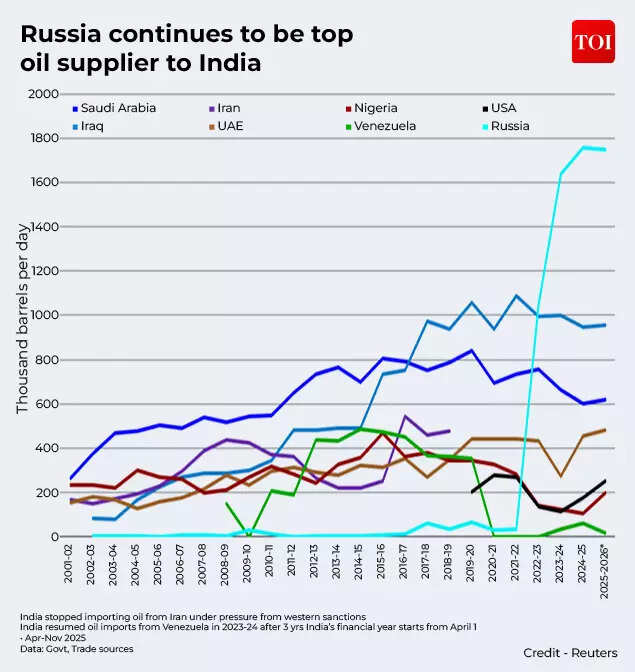
Russia continues to be top oil supplier to India

Russia continues to be top oil supplier to India

* This figure could reach an average of 1.5 million bpd by month-end, according to a trade source quoted in the report. It is important to note that the surge in India’s December imports from Russia is attributed to buyers rushing to complete transactions before Washington’s November 21 deadline for deals with Rosneft and Lukoil. LSEG data confirms recent arrivals of such shipments at Indian ports.* However, in January, trade sources indicate that import levels might maintain December volumes as new entities not affected by sanctions begin supplying Russian oil cargoes.* Indian refiners find January prices attractive, with discounts of approximately $6 per barrel to dated Brent, which is two to three times larger than in August, according to sources.According to refining sources, January volumes are expected to be below 1 million bpd since Reliance Industries has stopped purchases. LSEG data shows Reliance is receiving at least 10 Russian oil cargoes this month.
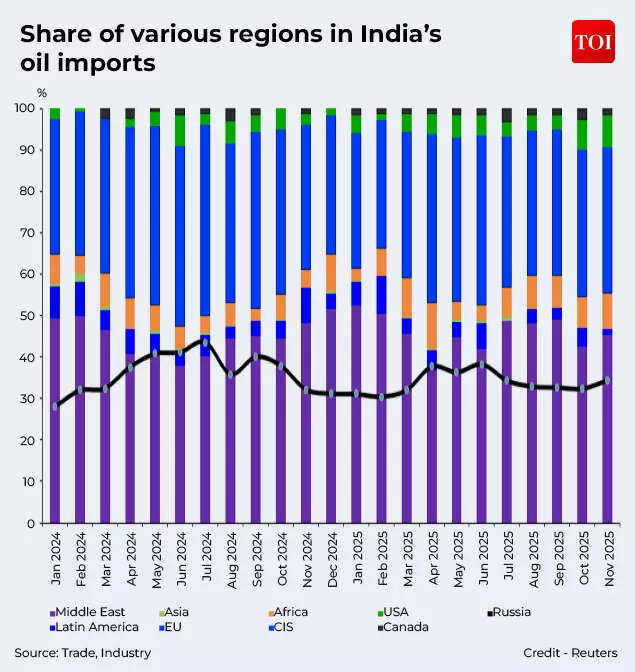
Share of various regions in India's oil imports

Share of various regions in India’s oil imports

Regarding state refiners, Indian Oil Corp maintains Russian oil purchases at pre-sanctions levels, sources told Reuters. Bharat Petroleum has increased its January acquisitions to at least six cargoes, up from two in December, whilst Hindustan Petroleum is negotiating January loadings, sources were quoted as saying.Private refiner Nayara Energy, with majority Russian ownership including Rosneft, exclusively purchases Russian oil after other suppliers withdrew following EU and British sanctions.Reliance and HPCL Mittal Energy have announced that they will not procure Russian oil. Additionally, Mangalore Refinery and Petrochemicals are not procuring Russian oil for January, the report said.India emerged as Russia’s primary seaborne crude purchaser following Western sanctions imposed on Moscow over the Ukraine invasion. However, these purchases became problematic during trade negotiations with the US, as President Donald Trump raised import tariffs on Indian products to 50%.“Thanks to President Trump’s leadership, Russia has been forced to accept deep discounts and fewer buyers for its oil,” a US official said. “These pressures are limiting the Kremlin’s revenues and increasing the financial strain of sustaining its war.”Russian producers are utilising domestic market swaps to maintain oil flows to India whilst adhering to sanctions. This involves exchanging oil intended for local refineries with export volumes handled by non-sanctioned companies, Reuters said.These swaps are a standard practice in Russia for managing domestic supply constraints whilst maintaining export obligations.“There is a possibility that non-sanctioned entities can increase their crude output and shift supplies to export markets and sanctioned barrels can meet Russia’s local demand,” said Prashant Vashisth, vice president at Moody’s affiliate ICRA.



Source link

Business

Warner Bros Discovery urges shareholders to reject Paramount takeover bid

Published

on

Warner Bros Discovery urges shareholders to reject Paramount takeover bid


Warner Bros Discovery has told shareholders to reject a hostile takeover bid from rival Paramount Skydance.

It has pushed back against the approach and stressed it favours a deal from streaming giant Netflix to take control of its movie studios, cable networks and streaming service.

Bosses at Warner Bros, which makes franchises such as Harry Potter and Batman, said the proposed deal from Paramount was “inadequate” and poses a “significant risk” to shareholders.

Samuel Di Piazza Jr, chairman of the Warner Bros board of directors, said: “This offer once again fails to address key concerns that we have consistently communicated to Paramount throughout our extensive engagement and review of their six previous proposals.

“We are confident that our merger with Netflix represents superior, more certain value for our shareholders and we look forward to delivering on the compelling benefits of our combination.”

Paramount lodged a 30 US dollars (£22.50) a share bid for Warner Bros, days after the company agreed to be bought by Netflix in early December in a 72 billion dollar (£54 billion) deal.

Paramount’s offer values Warner Bros at 108.4 billion dollars (£81.3 billion) including debts, trumping Netflix’s 27.75 dollars (£20.81) per share offer, which values Warner Bros at 72 billion dollars or 82.7 billion dollars (£62 billion) including debts.

Netflix agreed to buy the Warner Bros Discovery film and TV studios business whereas Paramount has bid for the whole of Warner Bros.

Earlier on Wednesday, Affinity Partners, the private equity firm owned by US President Donald Trump’s son-in-law Jared Kushner, pulled its backing from Paramount’s bid.

Mr Trump previously warned the Netflix takeover of Warner Bros “could be a problem” because of its combined market share, confirming he would be involved in the decision about whether the US federal government should approve the deal.

Paramount said in its appeal to win over Warner Bros shareholders that its offer would be more likely to pass regulatory scrutiny.

Mr Kushner’s decision to pull his firm’s financial backing is seen as taking away a possible advantage for Paramount to secure Mr Trump’s approval.

Paramount’s bid still has the financial backing of wealth funds run by three governments in the Persian Gulf, widely reported as Saudi Arabia, Abu Dhabi and Qatar.

Paramount earlier revealed it had made six takeover approaches to Warner Bros over 12 weeks, but claimed Warner Bros “never engaged meaningfully”.


Source link

Continue Reading

Business

Air travel now runs on code: Inside the tech backbone reshaping airports – The Times of India

Published

on

Air travel now runs on code: Inside the tech backbone reshaping airports – The Times of India


MUMBAI: As the global air travel industry becomes larger and more complex with each passing decade, airlines and airports are increasingly moving towards digitisation. From printed paper tickets that came in airline jackets, to home-printed e-tickets, to today’s digital boarding passes on mobile phones; from conventional check-in and immigration counters to biometric gates; and from local storage of information to cloud-hosted passenger systems, digitisation has transformed every stage of the passenger journey.One of the most closely watched developments is unfolding at Paris Charles de Gaulle Airport (CDG), where a trial is under way to use computer vision and biometrics to identify and track checked baggage. The system captures a bag’s “biometrics” or digital signature through high-resolution imaging and AI-driven pattern recognition, reducing reliance on printed tags. The AI-driven system makes it easier to track bags that go errant, especially at mega transfer hubs. If successful, this could cut sharply into the US$5 billion in annual losses the aviation industry suffers from mishandled baggage, losses borne largely by airlines, Sumesh Patel, SITA President for Asia Pacific said in an interview with TOI. The trial also marks a turning point: “For any such technology to be effective, every stakeholder has to step up—airlines, airports, and ground handlers,” Patel said. “Airlines must integrate new baggage platforms, airports must install advanced imaging cameras across conveyor systems, and backend applications must be synchronised to handle massive real-time data,” he said, adding that he expects the adoption timeline to be under a decade, which is much faster than the past tech cycles.Auto-reflight: Lost bags now rebook themselvesA companion technology already in commercial use is auto-reflight, currently being used by Lufthansa. Lost bags are automatically matched to the next logical flight using AI, without waiting for human intervention, Patel said, adding that Lufthansa now processes around 70% of its missed bags through auto-reflight. The feature could be especially impactful in large global hubs such as London Heathrow, Frankfurt, Dubai, Doha, where tight connections and high transfer loads drive most baggage mishandling, he said. Whether Indian carriers adopt it may depend less on domestic volumes and more on their exposure to such transit hubs. “If a carrier’s major hub adopts the solution, the airline would be keen to participate,” Patel noted. Some airlines are also experimenting with auto-notification, where passengers are alerted the moment a bag is confirmed missing. For Qantas, the first rollout sent notifications during flight, unintentionally overwhelming cabin crew with questions. The system now alerts passengers only when they step off the aircraft.India’s aviation growth is forcing a digital leapIndia, meanwhile, is undertaking one of the world’s largest aviation digitisation programmes. The country has the world’s largest airport cloud-enabled platform that handles passenger processing across its 61 private and govt-owned airports, a digital backbone that handles tasks like conventional check-in and biometrics enabled DigiYatra check-in along with other jobs like baggage processing, passenger identity documentation etc. The 61 airports include 50 govt-run Airports Authority of India (AAI) airports. The programme is part of AAI’s shift to a unified, cloud-based platform that will modernise passenger and baggage processing at its airports. More than 3,500 touchpoints are planned, giving smaller airports the same scalable, technology-driven capabilities as larger ones, said Patel.Unlike other markets where individual airports drive adoption, making for a fragmented adoption, India’s change is being led system-wide as AAI is govt-owned while DigiYatra is a govt-backed initiative. Even conventional check-in counters across dozens of airports now run fully on cloud, enabling uniform upgrades, faster deployment, and real-time data access.India has the third largest domestic aviation market in the world, the country handled 411 million passengers last year (including international passengers) and contributes USD 53 billion to GDP through aviation. With new airports like Navi Mumbai and Jewar designed as digital-first terminals, cloud-enabled operations, biometrics, automated baggage systems, and integrated resource management are becoming foundational. At Navi Mumbai International Airport, for instance, 22 automated self-bag-drop units will enable touch-free processing from Day One.Learning from global IT outagesThe industry’s dependence on digital infrastructure also means outages hurt more than ever. From the global CrowdStrike-triggered disruption to local fibre cuts, the causes vary widely making prediction difficult. Patel emphasises the need for redundant systems like ‘Local DCS’, which act as on-site fallbacks if main airline systems disconnect. Singapore mandates such backups under its Critical Information Infrastructure (CII) framework. Patel said more governments may eventually follow.Airlines, too, are adapting. After IndiGo’s extensive early-December disruptions, the carrier announced more proactive passenger notifications last week and revised processes to prevent passengers from arriving at airports without clarity on delayed or cancelled flights. “The data is always there; it’s about how quickly processes evolve in response,” Patel said.The passenger is changing — fastSITA’s Passenger IT Insights reveal a striking trend: the world’s travellers are no longer dominated by frequent flyers. The fastest-growing cohorts are first-time or occasional flyers and older travellers, a shift visible across Europe, Asia, and North America. These passengers place a premium on clarity, trust, and convenience driving demand for biometrics, simpler check-ins, and real-time baggage visibility, according to the survey.Sanjeev K, SITA, VP Asia Pacific said the shift in passenger profiles globally has made digital adoption a critical focus. India and South Asia are witnessing rapid uptake of mobile and digital services, comparable in some ways to China’s advanced digital payment and app-driven ecosystem, he said, adding that passengers who may not be highly literate or familiar with airport processes are still adapting quickly when technology is made simple, visual and intuitive, often through formats similar to short social-media videos. “Older travellers gain confidence and a sense of accomplishment when they adopt the new technology,” he said. “older passengers are now comfortable with digital tools in their daily lives whether banking, messaging or other services. The initial difficulty lies mainly in understanding airport processes during a first trip. To bridge that gap SITA works closely with airports to ensure support systems are available to guide travellers through steps like using Digi Yatra, kiosks or self-bag drops,” he said. He added that any new technology involves a learning curve, and the aim is to make that first experience stress-free by providing timely assistance so that, after one or two uses, the process becomes second nature to passengers. Patel said that airlines and airports plan to invest USD 8.9 billion and USD 37 billion, respectively, in digital and biometric systems globally. The goal is a frictionless, self-service journey from curb to boarding. The long-term roadmap envisions a world where passengers check in once, digitally, and use that identity throughout their journey: at border control, retail, boarding, and baggage retrieval.


Source link

Continue Reading

Business

Bhavish Aggarwal Partially Sells Ola Electric Stake After Stock Slump; Analysts Flag Weak Fundamentals

Published

on

Bhavish Aggarwal Partially Sells Ola Electric Stake After Stock Slump; Analysts Flag Weak Fundamentals


Last Updated:

Ola Electric Share Price: Exchange filings show Aggarwal sold about 2.6 cr shares via bulk deal, resulting in reduction in his shareholding

Ola Electric Share Price.

Ola Electric Share Price.

Ola Electric Share Price: The sharp decline in Ola Electric Mobility Ltd’s share price may have prompted founder Bhavish Aggarwal to sell a portion of his stake, with analysts noting that the company’s weak operating performance continues to offer little support to the stock.

Shares of the electric two-wheeler maker are trading at a record low of around Rs 35, down more than 50 percent from the issue price of Rs 76 and sharply lower from a peak of about Rs 150. The stock has fallen nearly 60 percent so far in 2025.

Exchange filings show Aggarwal sold about 2.6 crore shares through a bulk deal on Tuesday, December 16, resulting in a reduction in his shareholding. The sale was linked to the repayment of a personal loan of around Rs 260 crore, raised to fund his artificial intelligence venture, Krutrim AI. To secure the loan, Aggarwal had pledged a portion of his Ola Electric shares with lenders, including Axis Trustee and Aditya Birla.

Analysts said the sale likely helped address risks linked to pledged shares at a time when the stock continued to hit fresh lows. Pledged holdings are typically vulnerable to margin calls during steep price declines, which can lead to forced selling, though the precise trigger for the transaction was not disclosed.

Sunny Agrawal, head of fundamental equity research at SBICAPS, said the release of pledged shares removes a key overhang on the stock, particularly the risk of further sell-offs linked to margin calls. With that pressure now addressed, investor focus shifts back to the company’s underlying business performance, which is only getting weaker, he said.

Analysts said Ola Electric’s core electric scooter business continues to struggle, with volumes yet to scale meaningfully and competition intensifying. The company’s market share in electric scooters has fallen to around 18 percent from roughly 45 percent at the time of its listing, which analysts cited as a key concern.

Some analysts noted that Ola Electric has been developing additional business verticals, including battery cell manufacturing, which could serve both its own vehicles and other automotive segments. Whether these initiatives can offset weakness in the core scooter business will depend on product execution, customer response, and scalability, they said.

Rajesh Palviya of Axis Securities said the stock is trading at an all-time low and that any rebound, if it occurs, is likely to be driven by near-term news flow rather than a fundamental turnaround. The technical setup remains weak, and investors are likely to wait for confirmation through quarterly earnings before reassessing the stock, he said.

Ola Electric said the transaction was a one-time and limited monetisation by the founder at a personal level to repay a promoter-level loan of Rs 260 crore. Following the repayment, all previously pledged shares, representing about 3.93 percent of the company’s equity, will be released. The promoter group will continue to hold around 34 percent of the company, with no change in promoter control or long-term commitment, the company said.

Independent analyst Jayant Mundhra said pledged shares pose heightened risks during sharp stock price declines, as lenders may issue margin calls that lead to selling in the open market. He said that risk was present as Ola Electric’s shares continued to slide and has now been addressed following the transaction.

Click here to add News18 as your preferred news source on Google.
Follow News18 on Google. Join the fun, play games on News18. Stay updated with all the latest business news, including market trendsstock updatestax, IPO, banking finance, real estate, savings and investments. To Get in-depth analysis, expert opinions, and real-time updates. Also Download the News18 App to stay updated.
News business markets Bhavish Aggarwal Partially Sells Ola Electric Stake After Stock Slump; Analysts Flag Weak Fundamentals
Disclaimer: Comments reflect users’ views, not News18’s. Please keep discussions respectful and constructive. Abusive, defamatory, or illegal comments will be removed. News18 may disable any comment at its discretion. By posting, you agree to our Terms of Use and Privacy Policy.

Read More


Source link

Continue Reading

Trending