

Fashion
Jonathan Anderson rewires Dior for pre-fall 2026 collection


Published
December 17, 2025
Two months after unveiling his debut women’s collection for Dior with a horror movie, Jonathan Anderson has continued his reimagining of the house by rewiring multiple codes for its pre-fall 2026 collection.
Terming it “a wardrobe suited for many characters and occasions,” the Fall 2026 collection unveiled Wednesday certainly widens Dior’s range, even as it plays around with Dior classics.
Hence the Bar jacket is cropped or soft, and even enlarged into a coat. While pants are cut large, slouchy, and flopping around the feet; finished in multiple reverse pleats and made in silk denim.
Denim, lovingly worn and distressed, is the material used for elongated floor length skirts made with classic jean pockets. Paired with speckled charcoal cardigans, they will surely ignite a major trend.

Once again, the Northern Irish designer favours big bold bows, seen in silk chemises with cuffs extending well beyond the fingertips.
“The power of fashion to rewire the everyday is affirmed, at once softly and boldly,” insists Dior in its release.
Unveiled in a photo shoot beneath Paris’ Pont Neuf, the collection will hit retail shelves in April 2026.

Anderson’s experiments in draping continue at pace. Rouching, looping, and adding huge side bows to buttinette moiré dresses or satin gowns. One dress in seaweed green is an updated version of the look Mia Goth wore to the Governor’s Ball in Los Angeles recently. It can now be seen at La Galerie Dior, the brand’s in-house museum beside its Avenue Montaigne flagship. Placed beside diaphanous looks for Dior designed by Jonathan and worn by the likes of Catherine O’Hara and Jisoo.
The new Dior couturier certainly does not lack courage and chutzpah when it comes to draping, even if his experiments at the French house still feel like a work in progress.

In fact, what often works best pre-fall are the simplest pieces: from the rather divine flared skirt and tank combined with a matte green silk blouse to the black silk culottes paired with an ecru blouse, finished with a looped neckline from which hangs a golden tassel pendant. The epitome of contemporary chic and cool.
In terms of accessories, pre-fall appeared packed with winners, from the Dior Cigale in pale gold crocodile to Dior Crunchy in blue fabric. Open toe pumps, loafers, or mules often featuring complimentary C and D buckles on each side, all had poise and pizzazz. Clever must-haves for sure.

Everything in pre-fall was designed to “allow a number of attitudes, prolonging the idea of dressing to become a character of one’s own design,” the house concluded. How true.
Copyright © 2025 FashionNetwork.com All rights reserved.







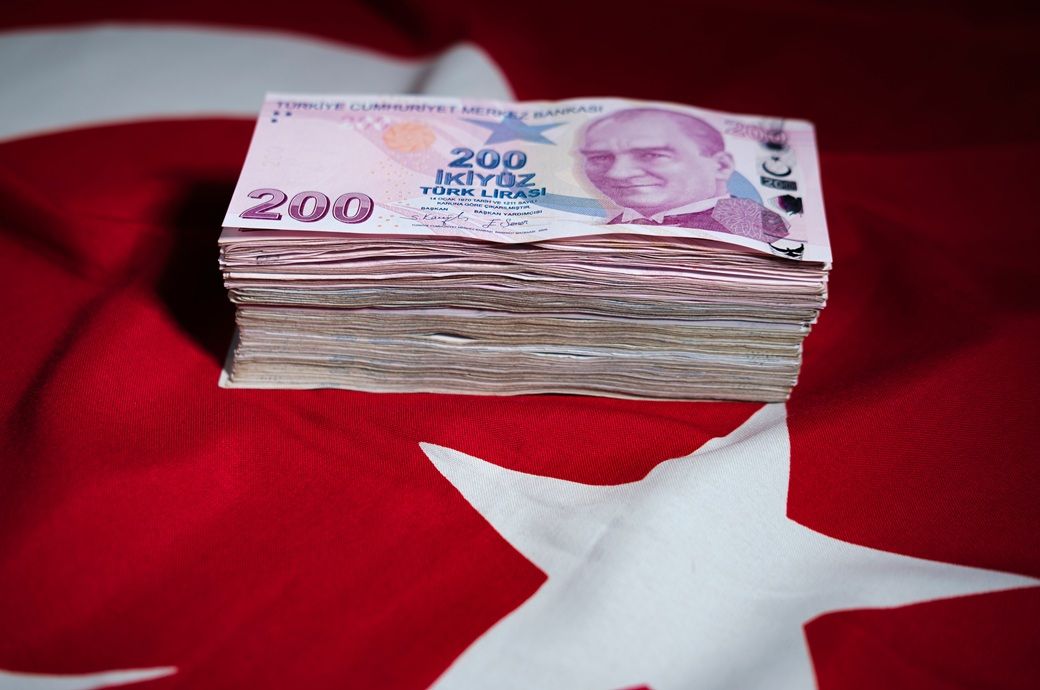
Current account excluding gold and energy indicated net deficit of $3.9 billion, while goods saw a deficit of $9.5 billion.
Turkiye recorded a current account deficit (CAD) of $9.6 billion in March, the country’s central bank said.
Treasury and Finance Minister Mehmet Simsek said the CAD is expected to widen this year, due to high energy and non-energy commodity prices.
Simsek said the deterioration is likely to remain temporary and manageable, thanks to stronger macroeconomic fundamentals and policy gains.
According to annualised data, current account deficit recorded as $39.7 billion (2.6 per cent of gross domestic product) in March, while the goods deficit recorded as $77.8 billion.
Simsek said the deterioration is likely to remain temporary and manageable thanks to stronger macroeconomic fundamentals and policy gains, domestic media outlets reported.
Turkiye is heavily reliant on imported energy, whose prices spiralled due to the Middle East conflict.
Simsek said elevated global commodity prices would put pressure on the external balance, but emphasised that the government’s economic programme had improved resilience against such shocks.
He said foreign direct investment (FDI) inflows totalled $1 billion in March, bringing annualised foreign direct investment to $12.6 billion.
The new investment incentive package under discussion in parliament now is expected to strengthen the country’s financing structure and support long-term capital inflows, he added.
Fibre2Fashion News Desk (DS)
During the first quarter of ****, the UK’s imports of textile fabrics eased down *.** to £*,*** million (~$*,*** million), against £*,*** million in January-March **** but slightly higher from £*,*** million in the fourth quarter of ****. Its imports of fibre were noted at £** million (~$***.** million) steady as £** million in Q*, **** but slightly lower than £** million in Q*, ****.
During the third month of this year, the country’s clothing imports declined *.** per cent to £*.*** billion (~$*.*** billion), compared with £*.*** billion in March ****. But the inbound shipment was slightly higher month on month compared with £*.*** billion in February ****.

Higher rents, utility bills and fuel prices are eating away at already thin profit margins, it found.
High inflation is cutting deep into Bangladesh consumer spending, with weak demand turning one of the biggest concerns for businesses, DCCI said.
Higher rents, utility bills and fuel prices are eating away at already thin profit margins.
DCCI’s economic position index revealed that consumers have sharply reduced spending as the cost of living continues to rise.
SMEs are feeling the pressure the most.
The chamber’s economic position index (EPI) revealed that consumers have sharply reduced spending as the cost of living continues to rise, putting pressure on retailers, transport operators and other service providers.
Small and medium enterprises (SMEs) are feeling the pressure the most as they struggle to manage higher operating costs without losing customers.
Businesses also cited difficulties in obtaining bank loans, while delays in licensing and other regulatory procedures are adding to costs.
The DCCI report identified a shortage of skilled workers, particularly in technical and customer service roles, as another challenge for the sector.
The country’s inflation rose to 9.04 per cent in April from 8.71 per cent in March, according to official statistics.
Fibre2Fashion News Desk (DS)


Two Americans arrested at Japanese zoo

Turkiye’s current account deficit expected to widen in 2026: Minister

UK’s clothing imports fall 3% in Q1, sharply lower than Q4 2025

-

 Entertainment6 days ago
Conan O’Brien hat tricks as Oscar host
-

 Tech1 week ago
Could Contact-Tracing Apps Help With the Hantavirus? Not Really
-

 Fashion5 days ago
Italy’s Zegna Group’s Q1 growth boosted by strong organic performance
-

 Sports1 week ago
Bobby Cox, legendary Atlanta Braves manager who led 1995 World Series champions, dead at 84
-

 Entertainment1 week ago
Martin Short: Facing tragedy with joy
-

 Entertainment1 week ago
Tom Brady gets back at Kevin Hart during Netflix roast
-

 Sports1 week ago
Jacob Fatu unleashes vicious assault on Roman Reigns after World Heavyweight Championship loss at WWE Backlash
-

 Entertainment1 week ago
Martha Stewart: How to make an omelet