

Business
Stocks rise as inflation dips and oil price rebounds


The FTSE 100 made strong headway on Wednesday, supported by a larger-than-expected cooling in inflation and a spike in the oil price.
The FTSE 100 index closed up 89.53 points, 0.9%, at 9,774.32. It had earlier traded as high as 9,853.13.
The FTSE 250 ended 123.78 points higher, 0.6%, at 22,164.76, and the AIM All-Share ended up 2.07 points, 0.3%, at 751.48.
The soft UK inflation data sealed the Bank of England’s (BoE) expected interest rate cut on Thursday and increased the likelihood of further reductions in 2026, analysts said.
Barclays said it “removes the final hurdle that could likely have, in our view, dissuaded the BoE from cutting bank rate tomorrow”.
The headline Consumer Prices Index (CPI) rose 3.2% year-on-year in November, slowing from 3.6% in October, and well below FXStreet-cited consensus of 3.5%, according to data published by the Office for National Statistics.
On a monthly basis, CPI fell by 0.2%, compared with a 0.1% increase a year earlier.
November’s figure was below the 3.4% forecast in the recent BoE Monetary Policy Report. Similarly, core CPI inflation, which excludes energy, food, alcohol and tobacco, slowed to 3.2% from 3.4% against expectations for it to remain unchanged.
In addition, closely watched CPI services inflation cooled to 4.4% from 4.5% in October, compared with forecasts for it to remain unchanged. CPI goods inflation slowed to 2.1% from 2.6%.
“UK price pressures are rapidly easing amid persistent softness in demand growth. We expect headline inflation to fall towards the BoE’s 2% target over the course of next year,” said Peel Hunt chief economist Kallum Pickering.
Mr Pickering thinks the risk now is that the BoE has “fallen behind the curve and may need to play catch-up in 2026”.
“We will be paying careful attention to the voting pattern and forward guidance which accompany tomorrow’s BoE decision for a signal that the bank is ready to lean harder against downside risks,” he explained.
“Do not be surprised if the BoE sends dovish signals that it stands ready to lean against downside risks next year – implying cuts at successive meetings.”
The BoE is forecast to reduce the bank rate to 3.75% from 4.0% on Thursday, after voting for the status quo at meetings in September and November.
Mr Pickering said that, following the inflation surprise, money market bets for a BoE cut on Thursday jumped to 97% from 92%, while expectations for the total number of cuts over the next year increased to 2.7 from 2.4.
Money markets now put a 65% chance on a cut in the first quarter of 2026, up from 45% prior to Wednesday’s data, he noted.
The pound was quoted lower at 1.3359 dollars at the time of the London equities close on Wednesday, compared with 1.3429 dollars on Tuesday.
Rate-sensitive housebuilders were in vogue, with Barratt Redrow up 3.7% and Persimmon up 2.3%.
A rebound in the oil price also provided support in London, with Shell up 1.4% and BP up 0.7%.
Brent oil was quoted at 59.91 dollars a barrel at the time of the London equities close on Wednesday, up from 59.01 dollars late Tuesday.
Kathleen Brooks, at XTB, said the reversal in prices came after US President Donald Trump announced a “total and complete blockade of all sanctioned oil tankers” going in and out of Venezuela.
“This is an unusual move, typically blockades need to be agreed by Congress, so this is a serious escalation of events. Venezuela holds the world’s largest share of oil reserves, hence why this blockade has caused ructions in the energy market,” Ms Brooks pointed out.
In Europe on Wednesday, the CAC 40 in Paris closed down 0.3%, while the DAX 40 in Frankfurt ended 0.5% lower.
The euro stood at 1.1749 dollars, down against 1.1775 dollars. Against the yen, the dollar was trading higher at 155.55 yen compared with 154.79 yen.
Stocks in New York were lower at the time of the London equity close on Wednesday.
The Dow Jones Industrial Average was down 0.2%, the S&P 500 index was 0.7% lower, while the Nasdaq Composite declined 1.1%.
The yield on the US 10-year Treasury was quoted at 4.17% flat from Tuesday. The yield on the US 30-year Treasury was at 4.83%, also unchanged from Tuesday.
Back in London, insurer Phoenix Group rose 3.3% after UBS upgraded it to ‘buy’ from ‘neutral’, while an upgrade from Berenberg supported miner Glencore, which rose 1.5%.
Bunzl fell 2.0% after backing its 2025 guidance but cautioned that its operating margin is expected to be slightly down in the coming year.
In response, JPMorgan analyst Jane Sparrow lowered 2026 earnings per share forecasts by 4% and revenue estimates by 1%, with the bulk of the EPS downgrade being margin-driven, reflecting continued operating expenditure inflation but without price inflation to offset.
On the FTSE 250, Serco climbed 7.4% after upgrading guidance for underlying operating profit for this year, citing growth in the defence sector.
The Hampshire-based government services outsourcing provider said it now expects 2025 underlying operating profit of around £270 million, up 3.8% from previous guidance of £260 million but 1.5% lower than £274 million in 2024.
“We believe Serco is well positioned, with rising defence budgets, attractive fundamentals, and strong balance sheet optionality,” analysts at Peel Hunt said.
But Ceres Power’s woes continued, down a further 6.1%, after last week’s critical note from Grizzly Research.
Hunting was knocked down 4.6% as Jefferies downgraded to ‘hold’ from ‘buy’.
Gold was quoted at 4,326.25 dollars an ounce on Wednesday, higher against 4,304.60 dollars.
The biggest risers on the FTSE 100 were Barratt Redrow, up 13.30 pence at 375.00p, Phoenix Group, up 23.00p at 719.00p, Convatec, up 7.40p at 242.20p, HSBC Holdings, up 30.00p at 1,141.80p and United Utilities, up 30.00p at 1,203.00p.
The biggest fallers on the FTSE 100 were DCC, down 181.00p at 4,924.00p, Bunzl, down 44.00p at 2,176.00p, ICG, down 32.00p at 2,024.00p, Weir, down 44.00p at 2,814.00p and IMI, down 34.00p at 2,434.00p.
Thursday’s economic calendar has interest rate decisions in the UK, Europe, Norway and Sweden, plus US inflation data.
Thursday’s UK corporate calendar has half-year results from electricals retailer Currys.
– Contributed by Alliance News

Panic selling returned to the Pakistan Stock Exchange (PSX) on Thursday as President Donald Trump said the United States would continue to attack Iran, with the benchmark KSE-100 Index sinking by about 5,500 points during the opening minutes of business.
At 9:35am, the benchmark index was hovering at 150,022, down by 5,489 points or 3.45%.
However, by 11:00 the equities recovered some losses and the index was trading at 151,621.26 points down by 3,890.30 or 2.57 percent.
Experts opined that the jubilation of yesterday’s market halt has been completely wiped out as the ‘ceasefire rally’ crashed into a harsh geopolitical reality.
Offloading was observed in key sectors, including automobile assemblers, cement, commercial banks, oil and gas exploration companies, OMCs and power generation.
Index-heavy stocks, including MARI, OGDC, POL, PPL, MCB, MEBL, NBP and UBL, traded in the red.
On Wednesday, the PSX had staged a powerful rally with the benchmark KSE-100 Index surging past the key psychological barrier of 150,000 points as improving investor sentiment.
The KSE-100 Index closed at 155,511.57 points, registering a sharp gain of 6,768.25 points or 4.55%.
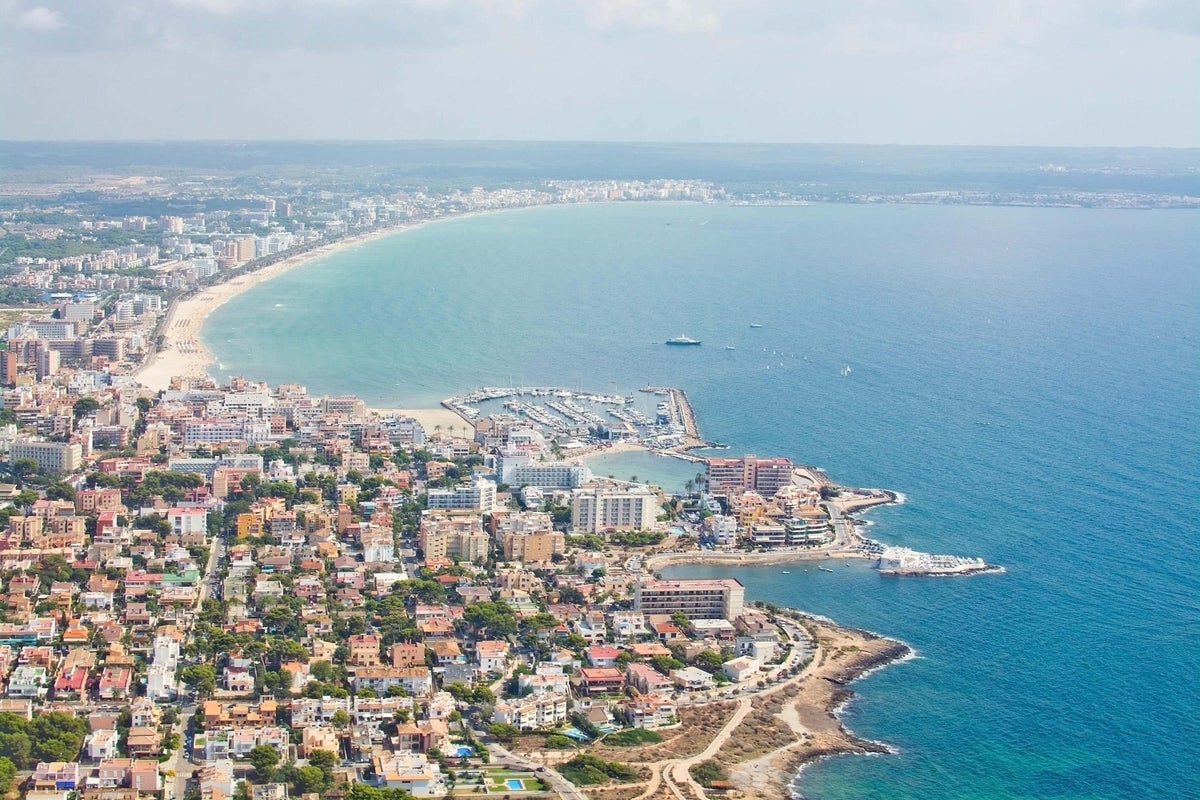
Travel agent Lastminute.com said war in the Middle East has impacted some 17,000 bookings, while holidaymakers are shifting towards alternative destinations like the Canary Islands and Sardinia.
The website, which offers holiday packages to destinations including Dubai and Abu Dhabi, said it was having to “adapt quickly” to travellers changing their preferences in light of the conflict.
The US-Israeli war with Iran, which escalated at the end of February, led to disruption and cancellations of some flights to Gulf states including the United Arab Emirates, Saudi Arabia and Qatar.
The airspace closures, coupled with consumer sentiment when it comes to travel taking a hit, affected approximately 17,000 bookings, Lastminute revealed.
It said the total volume of affected travel around the region is currently the equivalent of about a day and a half of its normal daily operations.
Despite the conflict influencing where and when people choose to book trips, the “overall intent to travel remains high”, according to Lastminute.
Consumers have been seeking reassurance and flexibility, and early booking patters indicate a shift in the preferences of travellers.
It noted increased demand toward alternative destinations such as Spanish archipelagos the Canary and Balearic Islands, Italian islands Sicily and Sardinia, and other European city breaks.
Lastminute’s chief executive Alessandro Petazzi said: “We continue to closely monitor the evolving situation in the Middle East, with supporting our customers remaining our top priority.
“At the same time, Lastminute.com’s flexible, pan-European model enables us to adapt quickly as travel patterns evolve, with demand naturally rebalancing across destinations.”
The Netherlands-based company reported a 15% jump in revenues to 361 million euro (£315 million) for the 2025 financial year, compared with the year before.
Adjusted earnings before tax and other costs increased by a third to 55 million euro (48 million).
The company said it was remaining “vigilant” against the geopolitical situation in the Middle East, but added that it was sticking to forecasts of a roughly 10% increase in revenues and profits in the year ahead.
Oven Pride household goods group McBride has revealed “temporary” price hikes to cover increased costs from the Iran war and warned it was seeing the first signs of supply shortages caused by the conflict.
The group, which makes branded and white label household and cleaning products for the likes of Tesco and Sainsbury’s, said until now it had only seen a small impact from higher haulage costs due to fuel price rises, but said “these conditions have now started to change”.
It said the “most heavily impacted” chemical and packaging suppliers are pushing through price increases as they face rising costs for petrochemical-derived feedstocks and higher energy costs in chemical and packaging production.
“The first signs of possible shortages in supply chains around the world are beginning to emerge,” it added.
McBride said its costs are increasing this month and will rise further due to the war, and is set to lift prices to offset the hit.
“The group has already informed all customers about temporary price adjustments, or surcharges to current pricing, to recover these higher, beyond our control, cost impacts from the Middle East conflict,” McBride said.
The warnings come amid mounting worries over the impact of the conflict on supply and costs, having sent oil prices surging above 100 US dollars a barrel and causing widespread disruption to global shipping.
Supermarkets met with Chancellor Rachel Reeves and Energy Secretary Ed Miliband at No 11 on Wednesday to look at issues caused by the war and agreed to explore together how to ease the cost-of-living impact for consumers.
McBride’s comments came in an update as it also announced a £34.5 million deal to buy Eurotab – a French-based specialist in cleaning tablets, such as for dishwashers.


China-Kenya trade corridor relaunched to boost SME participation

15 Design-Forward DIY Tools Worth Upgrading to This Year

England’s Brook, Bethell warned after New Zealand nightclub incident

-

 Entertainment1 week ago
UN warns migratory freshwater fish numbers are spiralling
-

 Politics1 week ago
Afghanistan announces release of detained US citizen
-

 Sports1 week ago
Broadcast industry CEO says consolidation is ‘essential’ to compete for NFL soaring media rights prices
-

 Tech1 week ago
Can a Home Appliance Fix the Problem of Soft-Plastic Waste?
-
 Business1 week ago
Property Play: Home flippers see smallest profits since the Great Recession, real estate data firm says
-
 Business1 week ago
Gold prices soar in Pakistan – SUCH TV
-
 Business1 week ago
More women are entering wealth management, but few are in advisory roles, study finds
-

 Fashion1 week ago
ICE cotton slips on weaker crude, profit booking