

Politics
In White House speech, Trump highlights victories amid sinking approval ratings

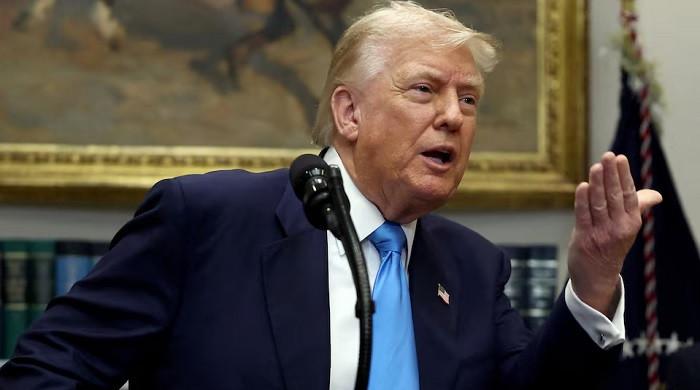
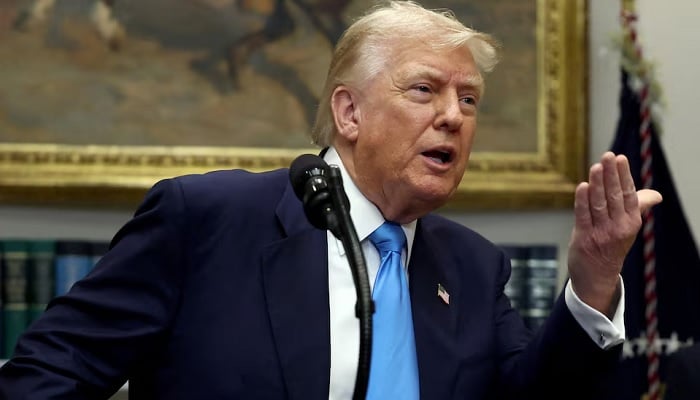
- Trump addresses 2025 accomplishments amid low approval ratings.
- Poll shows only 33% approve of Trump’s economic handling.
- Speech may tout policies to come next year.
In a rare evening address from the White House, US President Donald Trump boasted on Wednesday of his accomplishments and blamed his Democratic predecessor for soaring consumer prices as his party braces for a tough midterm election next year.
“Eleven months ago, I inherited a mess, and I’m fixing it,” Trump said in his opening remarks.
The Republican president, who regularly complains that he does not get credit for his accomplishments, touted his administration’s work this year on a range of issues from reducing border crossings to bringing down prices of some goods.
The address offered an opportunity for the president, if he could stay on message, to address people’s concerns about affordability, an issue that Trump, a Republican, has repeatedly referred to as a Democratic hoax. And again on Wednesday, he blamed the previous administration led by former President Joe Biden, even as Trump conceded that prices remain high.
“I am bringing those high prices down and bringing them down very fast,” he said.
Trump’s Republicans are seeking to maintain control of the House of Representatives and Senate in the November elections next year, while Democrats are highlighting affordability concerns and differences over healthcare policy in an attempt to wrest power away.
High inflation during Biden’s four years in office helped Trump beat former Vice President Kamala Harris in last year’s election. But Trump’s tariff policies this year have created uncertainty and lifted prices in an economy that has now been overseen by his administration for nearly a year — and Trump, like Biden before him, has been struggling to persuade Americans that the economy is healthy.
A new Reuters/Ipsos poll on Tuesday showed just 33% of US adults approve of how Trump has handled the economy.
Trump’s remarks took place in the White House’s Diplomatic Reception Room and not the Oval Office, as presidential addresses often do.
Before the speech, the Senate’s top Democrat, Chuck Schumer of New York, contended that Trump had failed to live up to his campaign promises.
“He promised he’d bring costs down on day one. That was his number-one promise. That was the number-one reason he won the election. And costs are going up and up and up,” Schumer said at a news conference on Capitol Hill.
Politics
Iranian FM Araghchi to travel to Beijing for continued diplomatic consultations with key partners
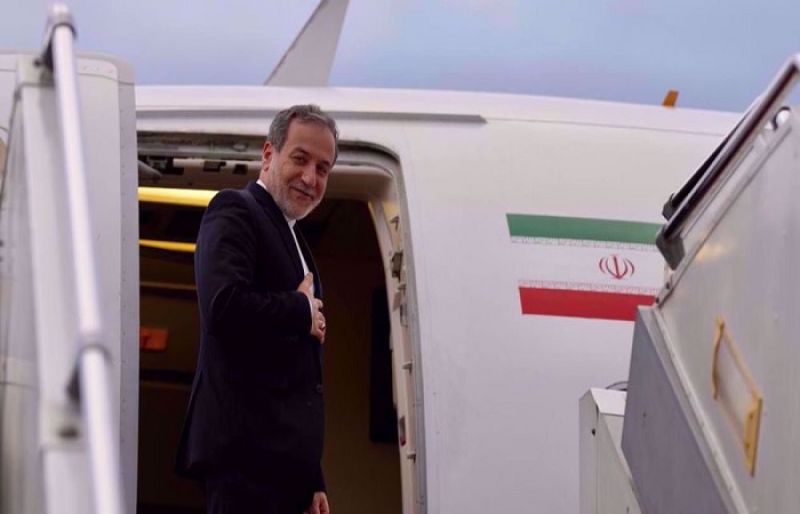
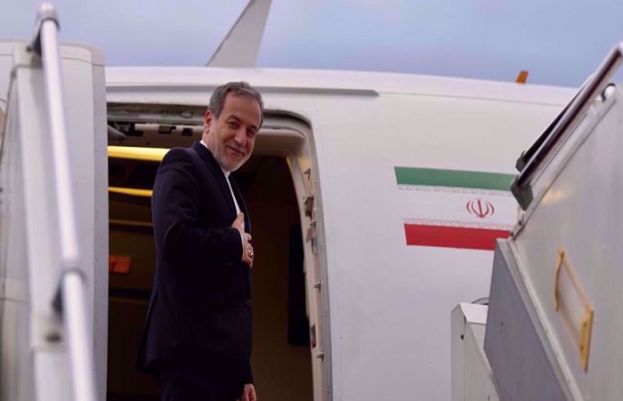
Iranian Foreign Minister Abbas Araghchi will travel to Beijing on Tuesday for high-level talks with his Chinese counterpart on bilateral ties and regional developments.
The visit is part of Tehran’s broader diplomatic outreach to key partners. Araghchi’s agenda includes discussions on mutual cooperation as well as regional and international issues, according to a brief statement by the Iranian Foreign Ministry.
The visit to China comes as Araghchi traveled to Russia last Monday as part of a broader diplomatic tour that also included Pakistan and Oman.
During the Moscow visit, Araghchi held talks with President Vladimir Putin, alongside meetings with his Russian counterpart.
Iran closed the strategic Strait of Hormuz to adversary nations and their allies following the commencement of US-Israeli aggression against Iran on February 28, which resulted in the assassination of the Leader of the Islamic Revolution, Ayatollah Seyyed Ali Khamenei, and several senior military commanders.
On April 8, forty days into the war, a temporary Pakistan-brokered ceasefire came into effect. Negotiations subsequently took place in Islamabad but failed to produce an agreement amid maximalist demands and intransigent positions from the United States.
Meanwhile, the US has imposed a blockade on Iranian ports, which Tehran slams as illegal and in violation of the ceasefire terms. In response, Iran has asserted control over the Strait of Hormuz and is denying passage to vessels belonging to the US and its allies.
Tehran has submitted proposals to Washington aimed at permanently resolving the war, but these have reportedly been rejected by the White House, which has continued to issue military threats against Iran.
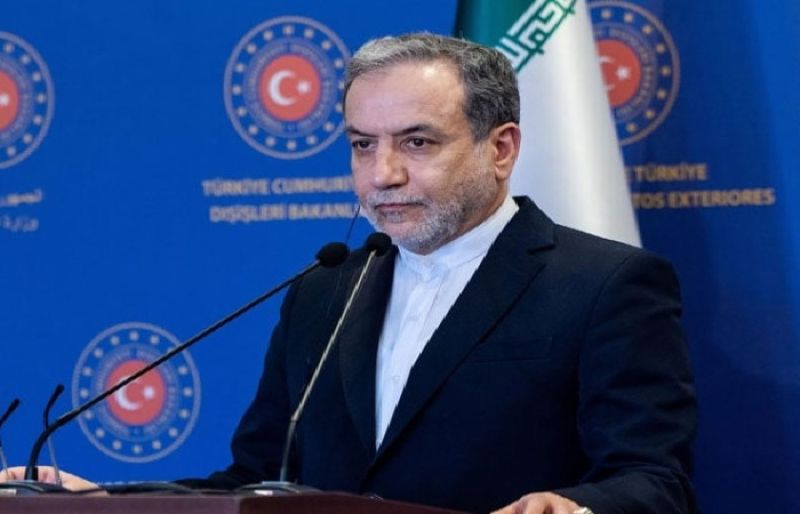
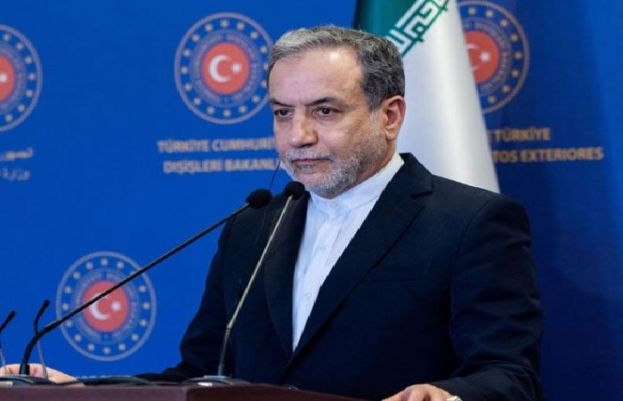
Iranian Foreign Minister Abbas Araghchi on Monday night said talks with the United States were making progress with Pakistan’s “gracious effort,” while cautioning Washington against being drawn into further escalation amid a standoff over the Strait of Hormuz.
The statement comes after US and Iran launched new attacks in the Gulf on Monday as they wrestled for control over the Strait of Hormuz with duelling maritime blockades, shaking a fragile truce.
US President Donald Trump launched a new effort to get stranded tankers and other ships through the strait, the vital energy-trade chokepoint that has been virtually closed since the US and Israel began attacks on Iran in February, a war that has killed thousands of people across the region.
Trump gave scant details about his new effort, which he called “Project Freedom,” to help stuck ships travel through the strait when he announced it on social media, two days after a legal deadline under US law had passed for him to get authorisation from Congress for the war. Trump told Congress the war was “terminated” and the deadline was moot, a claim disputed by some lawmakers.
It was the first apparent attempt to use military force since last month’s ceasefire announcement to unblock the world’s most important energy shipping route, which Iran’s Islamic Revolutionary Guard Corps has said can only happen with its permission.
The cost of shipping insurance has also rocketed. For weeks, the US Navy has blockaded Iran’s trade by sea, which Iran says is itself an act of war.
But Trump’s latest move, at least initially, appeared to have backfired, bringing no surge of merchant ship traffic while provoking a promised show of force from Iran, which has threatened to respond to any escalation with new attacks on its neighbours hosting US soldiers. Major shipping companies said they were likely to wait for an agreed end to hostilities before trying to cross the strait.
Meanwhile, Iranian FM Araghchi said Monday’s events showed there was no military solution to the crisis. He said peace talks were progressing with Pakistan’s mediation while warning the US and the UAE against being drawn into a “quagmire by ill-wishers.”
Criticising the US initiative aimed at escorting vessels through the Strait of Hormuz, Araghchi said: “Project Freedom is Project Deadlock.”
Nonetheless, the US military said two US merchant ships made it through the strait, without saying when, with the support of Navy guided-missile destroyers. While Iran denied any crossings had taken place in recent hours, Maersk said the Alliance Fairfax, a US-flagged ship, exited the Gulf via the Strait of Hormuz accompanied by the US military on Monday.
The commander of U.S. forces in the region said his fleet had destroyed six small Iranian boats, which Iran also denied. Admiral Brad Cooper said he “strongly advised” Iranian forces to keep clear of U.S. military assets carrying out the mission.
Iranian authorities released a map of what they said was an expanded sea area now under their control, extending far beyond the strait to include long stretches of the UAE’s coastline.
‘Dialogue and diplomacy’
A day earlier, Deputy Prime Minister and Foreign Minister Ishaq Dar held a telephonic conversation with his Iranian counterpart, during which both sides discussed the evolving regional situation and Pakistan’s ongoing diplomatic efforts.
According to the Foreign Office, Araghchi appreciated Pakistan’s constructive role and mediation efforts, while Dar reaffirmed Islamabad’s commitment to promoting dialogue and engagement.
He stressed that diplomacy remained the only viable path to achieving lasting peace and stability.
Negotiations between Washington and Tehran have remained stalled since a ceasefire took effect on April 8, with tensions centred on Iran’s blockade of the Strait of Hormuz following US-Israeli strikes. The move has disrupted global flows of oil, gas and fertiliser, while the United States has responded by imposing a counter-blockade on Iranian ports.
Pakistan has emerged as a key intermediary in efforts to revive dialogue, hosting high-level engagements between the two sides in Islamabad last month, though a second round of talks has yet to materialise.
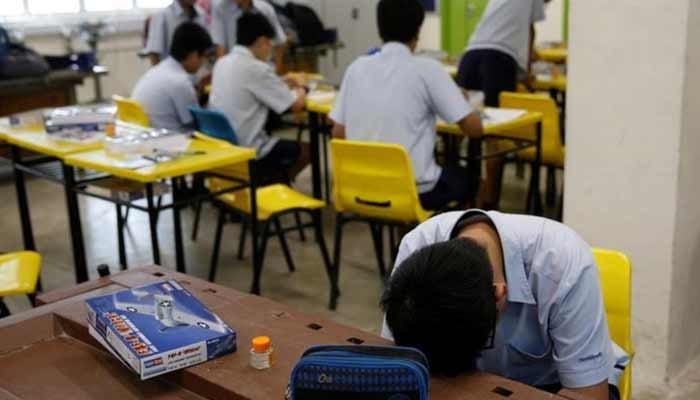
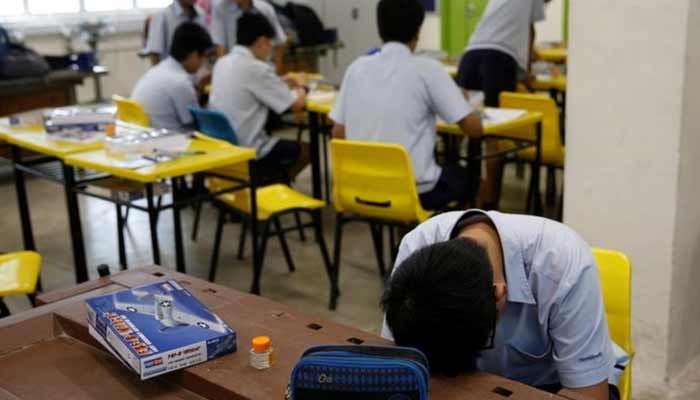
School bullies in Singapore face caning under new guidelines, but the education minister said on Tuesday it would be meted out only as a last resort with strict safeguards.
Human rights groups regularly criticise Singapore for the use of corporal punishment, which remains part of both the school system and criminal justice, but authorities have defended it as a deterrent to crime and serious misconduct.
Caning was discussed in parliament on Tuesday after legislators asked how it would be used in relation to bullying in schools.
The debate followed stricter guidelines against serious student misconduct, including bullying, unveiled by the education ministry last month.
Under the guidelines, offenders could face between one and three strokes of the cane.
“Our schools use caning as a disciplinary measure if all the other measures are inadequate, given the gravity of the misconduct,” Education Minister Desmond Lee said Tuesday.
“They follow strict protocols to ensure safety for the student. For instance, caning must be approved by the principal and administered only by authorised teachers,” he said.
“Schools will consider factors such as the maturity of the student and if caning will help the student learn from his mistake and understand the gravity of what he has done.”
The punishment is given only to boys, per “the Criminal Procedure Code, which states that women shall not be punished with caning”, Lee said.
Caning in Singapore is a legacy from British colonial rule, but Britain has long abolished corporal punishment.
After the caning is meted out, the school will “monitor the student’s wellbeing and progress”, including providing counselling, Lee said.
According to a World Health Organisation (WHO) report last year “there is now overwhelming scientific evidence that corporal punishment of children carries multiple risks of harm and has no benefits”.


Climate is now in the cost sheet

Dolly Parton shares health update after canceling Las Vegas residency
[CinePlex360] Please moderate: “Hundreds in Teh

-

 Tech1 week ago
A Brain Implant for Depression Is About to Be Tested in Humans
-
 Business1 week ago
‘I had £20,000 stolen and had to fight a 13-month fraud reporting rule to get it back’
-

 Tech1 week ago
Almost 90% of women leave tech industry within 10 years | Computer Weekly
-

 Sports1 week ago
Pro wrestling star Steph De Lander reveals how colleague’s advice helped lead her to title triumph at ACW
-

 Entertainment1 week ago
Norway joins Type 26 Frigate Programme to boost NATO naval power
-

 Entertainment1 week ago
Melania Trump says ABC should ‘take a stand’ on late-night host Kimmel
-

 Tech1 week ago
This Ambitious Laptop Doesn’t Leave Much Room for Your Hands
-
 Business6 days ago
PSX plunges over 4,800 points | The Express Tribune