

Fashion
CELYS expands filament manufacturing capability

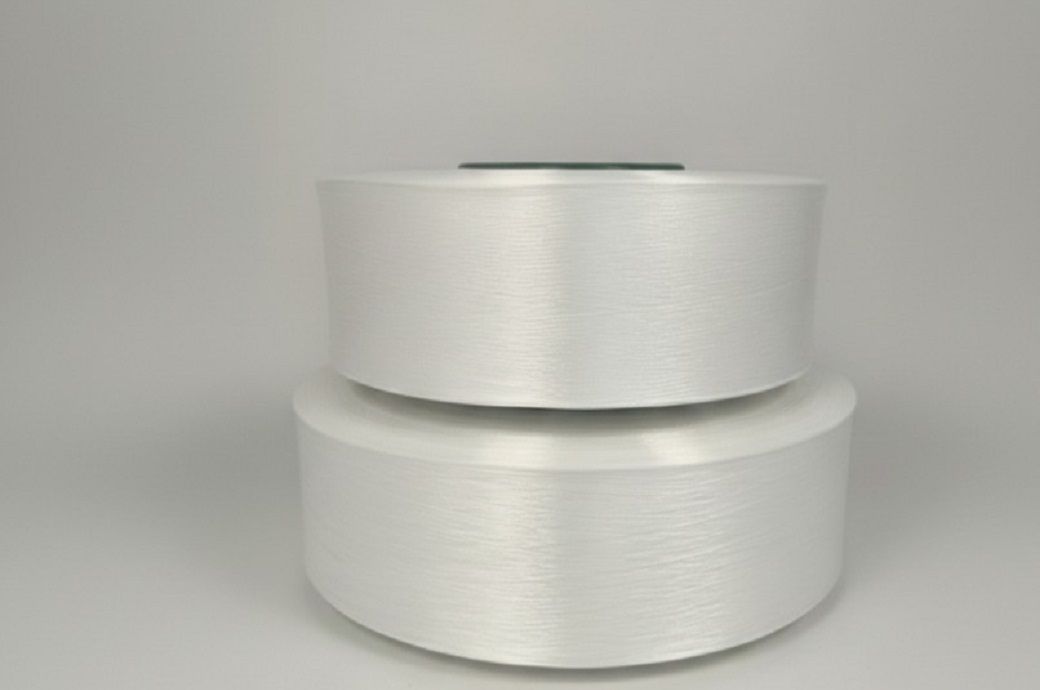
This expanded capability addresses a recurring challenge faced by brands, mills, and innovators: limited access to flexible production volumes and technical customisation during the development phase. Conventional polyester manufacturing is typically optimised for large scale output and high minimum order quantities, leaving little room for small order volumes, iterative trials, or application specific specifications. The new CELYS manufacturing line is designed to close this gap.
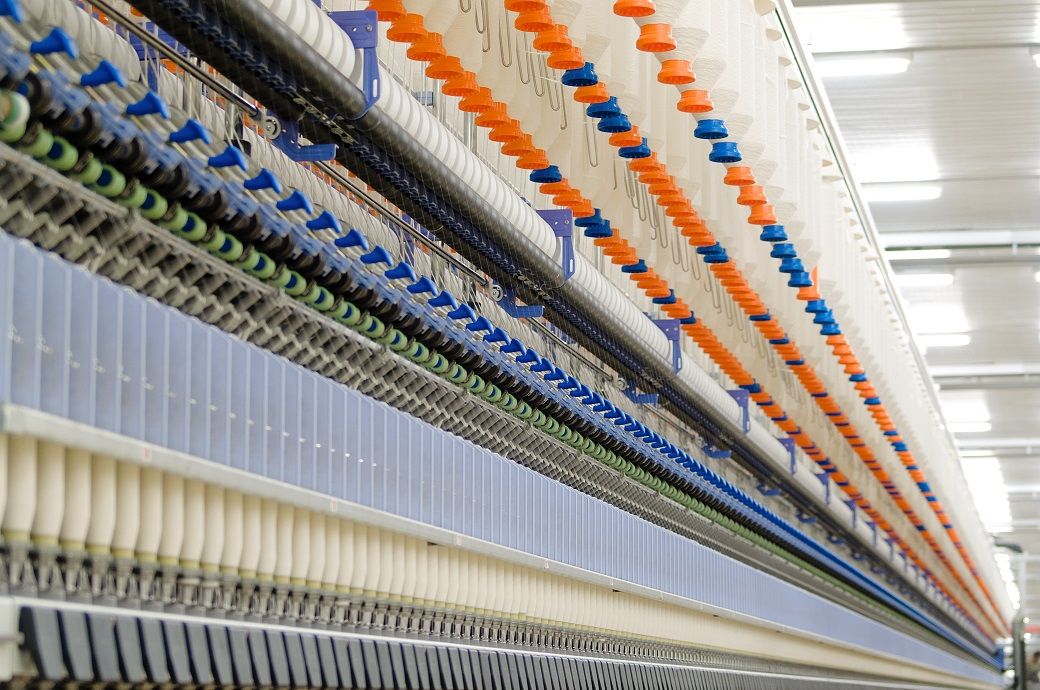
Intimiti has strengthened its CELYS material strategy by acquiring a dedicated manufacturing line to support innovation, customisation and early-stage commercialisation of compostable polyester filaments.
The new line enables small batches, tailored specifications and faster concept-to-validation, while advancing CELYS as a flexible platform with greater transparency.
Enabling Development and Filament Innovation
The newly acquired manufacturing line enables Celys to support smaller order quantities and customised filament specifications, allowing partners to move efficiently from concept to validation. Designed for development, sampling, and specialised applications, this capability delivers the precision and responsiveness required during early-stage material innovation, while enabling closer collaboration on filament parameters, functional requirements, and performance optimisation.
These advances mark Celys’ evolution from a single material innovation to a more flexible material platform, designed to integrate seamlessly into existing textile ecosystems while enabling greater agility at the front end of development.
Building the Foundation for Transparency
Alongside the expansion of manufacturing capability, Celys is progressing toward the release of Life Cycle Assessment data. Additional technical specifications and performance metrics are also in development, providing partners with greater transparency and confidence as projects advance toward commercialisation.
“Our focus extends beyond material innovation to building the infrastructure required for adoption at scale,” said Dr Gray Li, Chief Technology Officer at Celys. “This manufacturing capability enables closer collaboration, increased flexibility, and more practical pathways from development to commercial products.”
Note: The headline, insights, and image of this press release may have been refined by the Fibre2Fashion staff; the rest of the content remains unchanged.
Fibre2Fashion News Desk (HU)










Operating gross profit surged 35.1 per cent to $886.0 million, while underlying earnings before interest and tax (EBIT) rose 10.5 per cent to $112.8 million. Underlying net profit after tax (NPAT) increased 21.7 per cent to $51.7 million, with statutory net profit after tax (NPAT) up 32.8 per cent to $40.3 million.
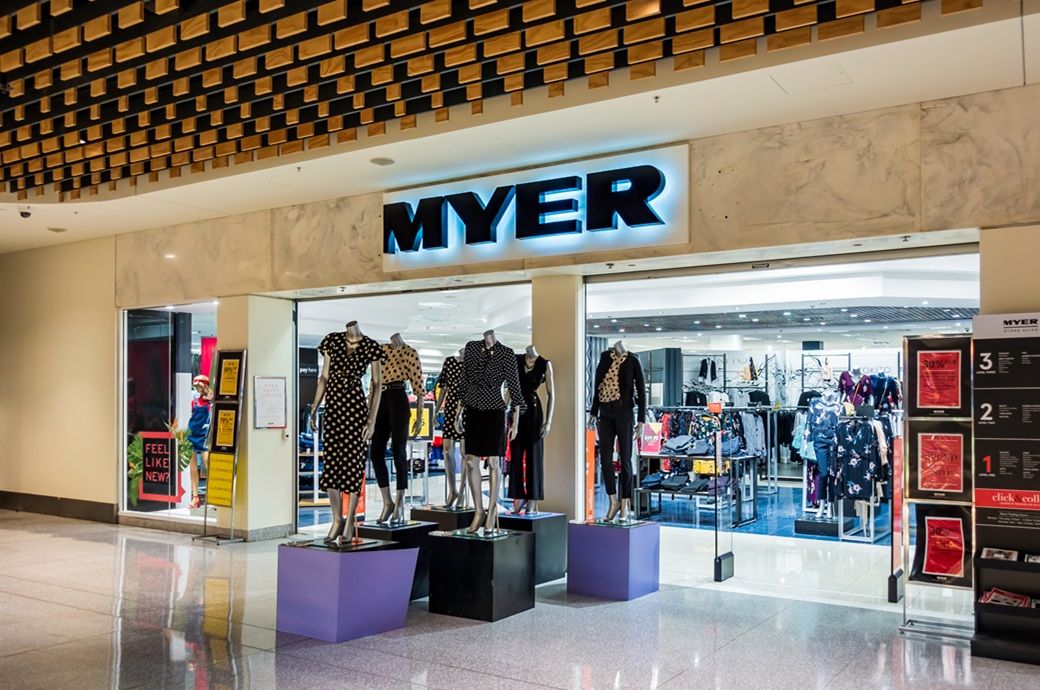
Myer has reported strong H1 FY26 results, with total sales rising 24.5 per cent to $2,279.5 million and NPAT up 21.7 per cent to $51.7 million.
Growth was supported by Apparel Brands integration and strategic investments.
Loyalty members reached 5.1 million.
Early H2 FY26 sales rose 1.7 per cent, though the company remains cautious amid macroeconomic pressures and weak discretionary demand.
The company maintained strong financial discipline, with cost of doing business at 27.9 per cent of total sales, within its FY26 target of around 29 per cent. Myer also reported a robust net cash position of $287 million, reflecting strong cash conversion and balance sheet flexibility, Myer said in a press release.
Myer’s ongoing transformation strategy continued to gain traction during the period, particularly through its customer engagement and brand expansion initiatives. The relaunched Myer one loyalty programme reached a record 5.1 million active members, supported by enhanced personalisation driven by AI-led data modelling.
The company also strengthened its product portfolio, introducing new exclusive brands and securing partnerships with global names such as Fenty Beauty, La Mer, Gap, and Topshop.
“Our H1 result reflects momentum across our business as we continue to implement the Myer Group Growth Strategy. Sales growth was achieved both in store and online, and our disciplined cost management allowed us to make targeted investments including in e-commerce, marketing, product, merchandise and supply chain to deliver on our plan,” said Olivia Wirth, executive chair at Myer.
“We achieved our biggest Black Friday on record for Myer Retail, and total sales for the group through the important trading months of December and January were in line with last year—a good outcome that demonstrates the resilience of the business,” added Wirth.
The integration of Myer Apparel Brands progressed steadily, with the company targeting at least $30 million in annualised synergies, alongside an additional $10 million from integrating sass & bide, Marcs, and David Lawrence.
Operationally, Myer continued to optimise its store network, closing 22 stores and opening 12 during the period, while advancing its omni-channel capabilities. The company is set to launch an expanded Myer Marketplace platform in May 2026.
Supply chain efficiency also improved, with 32 per cent of online orders fulfilled through third-party logistics and distribution centres, compared to 13 per cent a year earlier.
In the first seven weeks of the second half (H2), total sales grew 1.7 per cent YoY, with Myer Retail sales up 2.2 per cent, driven by strong performance in home and kids categories.
Despite the positive momentum, the company remains cautious amid macroeconomic uncertainty and pressure on discretionary spending.
“Given the current volatility in the wider macroeconomic environment and the ongoing pressures on discretionary spending, we are more focused than ever on delivering value for our customers,” added Wirth.
Fibre2Fashion News Desk (SG)
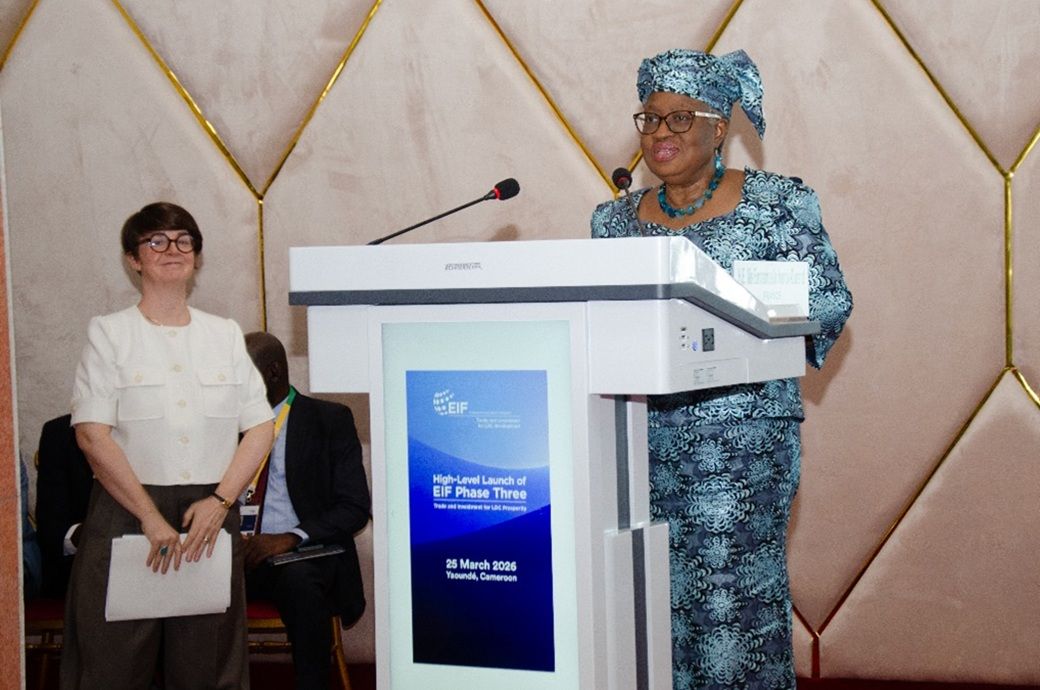
EIF is a mechanism aimed at leveraging and coordinating support for trade and investment priorities in least-developed countries (LDCs).
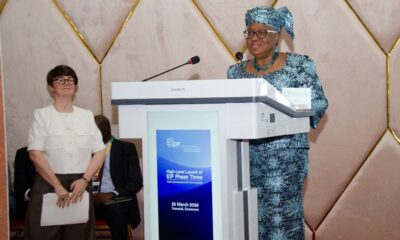
WTO Director-General Ngozi Okonjo-Iweala called for stronger partnerships to achieve the objectives of the Enhanced Integrated Framework’s (EIF) third phase, launched yesterday in Yaounde.
It aims to coordinate support for trade and investment priorities in LDCs.
The latest six-year phase has also secured fresh contribution pledges from Germany, Liechtenstein, Norway, Switzerland and the UK.
The new phase was launched at a side event to the 14th WTO Ministerial Conference (MC14) in Yaounde, Cameroon, co-organised by Cambodia, the United Arab Emirates and the EIF executive secretariat.
The third phase of the EIF introduces a shift from stand-alone projects to multi-year country programming. It is designed to help LDCs better integrate into the global trading system while addressing structural vulnerabilities and seizing new opportunities in areas such as digital trade, services, green value chains and regional integration.
The latest six-year phase also received new contribution pledges from Germany ($1.964 million), Liechtenstein (~$63,139), Norway ($4.15 million), Switzerland ($3.16 million) and the United Kingdom ($6.67 million).
“This third phase of the EIF comes at a defining moment for the LDCs and recently graduated countries. Familiar structural vulnerabilities are being compounded by a disrupted global trading system, power politics, debt pressures, climate change, and global economic uncertainty. At the same time, the current global context offers some important opportunities for LDCs to use trade to drive growth, development, and job creation,” Okonjo-Iweala said in a release issued by the WTO.
The DG also emphasised the need to scale up support and partnerships to match the ambition of the new phase.
Fibre2Fashion News Desk (DS)


Just Eat and Autotrader among five firms under investigation over online reviews

Australia’s Myer posts strong H1 FY26 sales growth, up 24.5% YoY

John Mellencamp wins Icon Award at 2026 iHeartRadio Music Awards

-

 Fashion1 week ago
Sales at US apparel, clothing accessories stores up 4% YoY in Jan 2026
-

 Entertainment1 week ago
Val Kilmer revived 1 year after death through AI
-
 Fashion1 week ago
US’ G-III Apparel’s FY26 sales fall 7% to $2.96 bn
-

 Sports1 week ago
March Madness 2026 – How to watch in SA, start time, schedule, TV channel for NCAA championship basketball tournament
-
 Business1 week ago
Brits cashing in jewellery as gold price hits record high
-

 Fashion6 days ago
China’s textile & apparel exports surge 17% to $50 bn in Jan-Feb 2026
-
 Business1 week ago
Video: The Effects of High Oil Prices
-
 Business6 days ago
Flipkart group CFO to leave co amid IPO plans – The Times of India